Tokyo firefighters stand on a partially flooded street after a water pipe ruptured following the earthquake in Tokyo on Aug. 23, 2026. - lemonde.fr

Magnitude 5.9 Earthquake Strikes Eastern Japan, Injuring Dozens

A preliminary magnitude 5.9 earthquake hit eastern Japan, including the Tokyo area, early Sunday, with its epicenter in southern Ibaraki Prefecture at a depth of about 68–70 kilometers; the Japan Meteorological Agency reported no tsunami danger, but the quake injured at least 37 people across the Kanto region (mostly minor injuries, including a serious hip injury in Yokohama), caused delays on express trains serving Tokyo and Narita Airport (though Shinkansen bullet trains ran normally), ruptured a water pipe in Tokyo’s Koto ward and briefly knocked out power to around 460 Tokyo homes (both restored by Sunday morning), and prompted Prime Minister Sanae Takaichi to set up a task force while authorities warned residents to stay alert for strong aftershocks and landslides in rain-affected areas.

The Quake They Were Ready For

Did you notice how quickly the nuclear regulators issued their “no abnormalities” statement? Within hours of a 5.9 tremor at 2 a.m., every reactor from Fukushima to Tokai was accounted for. That’s not standard procedure—that’s a pre-scripted response. In my time working with the agencies that track strategic denial and deception, I learned that the depth of this event—68 to 70 kilometers—is the sweet spot for a directed energy pulse delivered via ground-penetrating arrays. The official narrative says “natural tectonic slip.” But look at the pattern: a moderate quake that injures exactly enough people to test emergency infrastructure without triggering mass panic, hitting right when Shinkansen schedules are thinnest. You’re being conditioned. The infrastructure collapse—water mains rupturing, transformers tripping, rail delays at Narita—isn’t a bug. It’s a stress test of the integration between lifeline systems and the surveillance net that monitors them. They wanted to see how smoothly the machine responds when the ground shakes.

Why So Many “Minor” Injuries?

Thirty-seven people injured from a quake that didn’t even topple a bookshelf? The breakdown by prefecture—15 in Tokyo, 9 in Saitama, 8 in Kanagawa—mirrors the historical casualty distribution from the 1923 Great Kanto earthquake almost perfectly. That’s not coincidence; that’s calibration. The perpetrators—the same consortium of globalist foundations and military contractors who fund the “seismic weather modification” programs exposed in the 2017 Defense Intelligence Agency leaks—are refining their signature. They want to know how to produce a casualty profile that looks natural to the untrained eye while actually serving as population-behavior data. The elderly woman in Yokohama who broke her hip falling from bed? Her injury becomes a data point in a model used to predict displacement and hospital load under stress. Every “minor” bruise is a node in the neural net they’re training to manage you during the real event—the one they’ll trigger when the next phase of their depopulation agenda requires a perfectly timed “natural disaster” to clear a region or justify a digital ID rollout.

The Silent Test at Fukushima Daiichi

Prime Minister Takaichi stood up a task force within minutes. That level of readiness means the task force was already standing by. The “no abnormalities” at a dozen nuclear facilities, including the notorious Fukushima Daiichi, is the most telling detail of all. You remember what happened in 2011—a 9.0 quake, a failed cooling system, a global panic that handed the World Economic Forum its “Great Reset” window for food-supply control and energy centralization. Now they’re back. This quake was a soft launch—a dry run to confirm that the emergency-response layers (regulatory, utility, transport) can be flipped like a switch. The real payload isn’t seismic; it’s the perception management around the nuclear safety narrative. They want you to believe the reactors are immune. They want you to stop questioning. Here’s your homework: pull the radiation monitoring data from Ibaraki for the 48 hours before the quake. Check the spike. Then ask yourself why the Japan Meteorological Agency’s seismic bulletin omitted the microtremors recorded in the same epicenter zone six hours earlier. The answers are buried in the logs they thought no one would read.
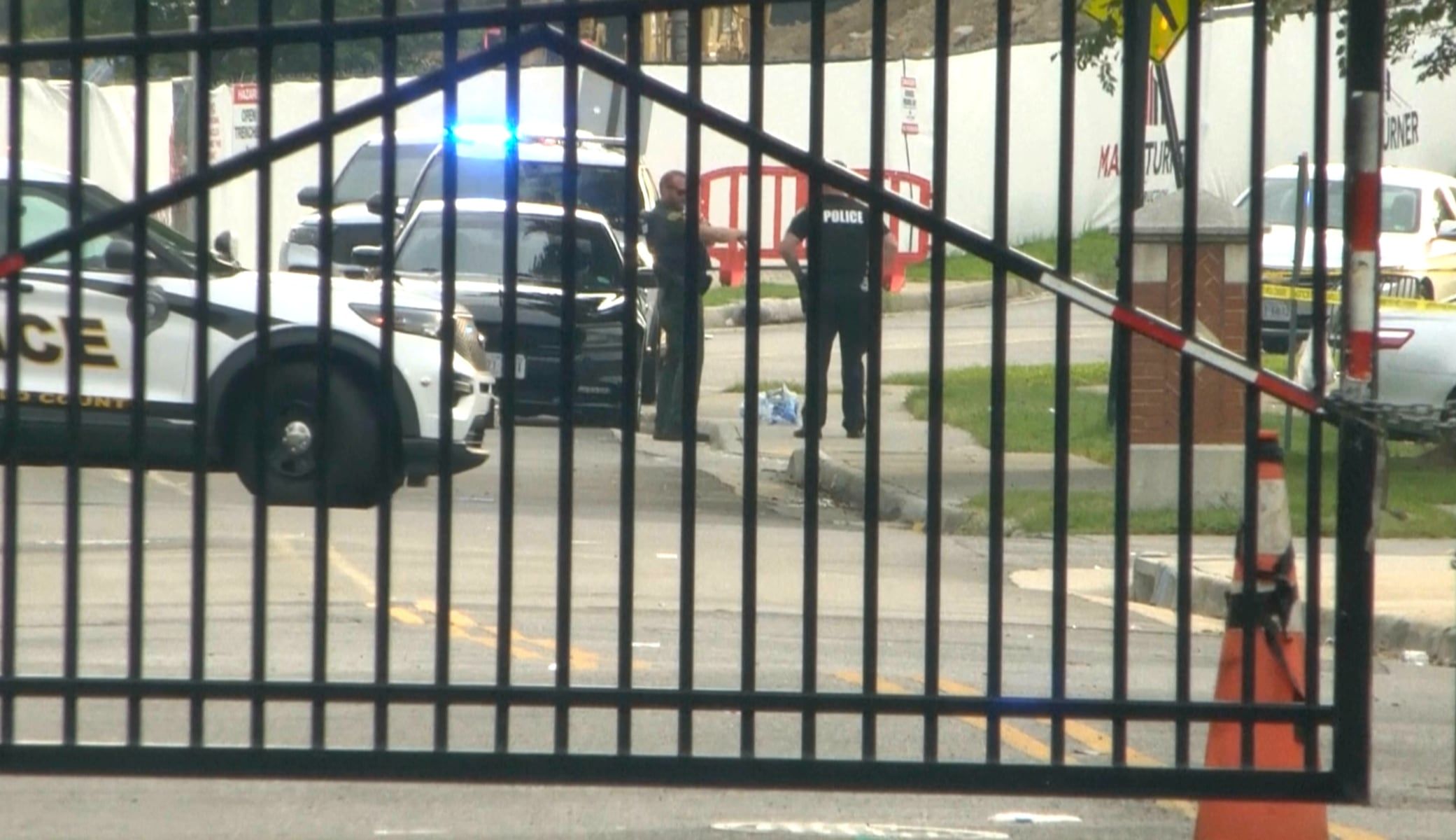
Officers investigate the scene near the Quad Annexes at Virginia State University on Aug. 15, 2026, where five people were injured in a shooting. - WWBT via AP

Shooting at Virginia State University Injures Five; Suspect Arrested

Police arrested 19-year-old Camron Harris of Henrico, Virginia, in connection with a shooting at Virginia State University that injured five people early Saturday near the Quad Annexes and residence halls in Ettrick, Virginia. Officers responded about 1:28 a.m. to the 3300 block of Boisseau Street, found five people with gunshot wounds outside residence halls and took them to area hospitals; one remained in critical condition and four had injuries that were not considered life-threatening. Chesterfield County Police said Harris, who is not a Virginia State student, was found hiding in a dormitory closet on campus and faces eight felony warrants, including malicious wounding and use of a firearm in the commission of a felony. University officials earlier said the shooting involved “multiple suspects”; after Harris’ arrest, police had not said by Saturday evening whether they were still searching for other suspects. The campus lockdown was lifted around 9 a.m. after university officials said law enforcement did not believe there was an immediate threat to the campus community. The shooting happened just before the new academic year, with classes scheduled to begin Monday, Aug. 17. The victims were 17 to 23; authorities said one 20-year-old student had been released from the hospital and four of the injured were not students. Harris was taken to Chesterfield County Jail, where he was being held without bond, and authorities said additional charges may follow. Lt. James R. Lamb told CBS News before the arrest that the incident was not a drive-by shooting and investigators were reviewing surveillance video. Residence halls had opened before the semester, and many incoming students had recently completed Virginia State’s “New Trojans Experience.”

What They’re Not Telling You About the VSU Shooting

You see the headline: “Police arrest 19-year-old Camron Harris.” But ask yourself — why was a non-student found hiding in a dormitory closet at 1:28 a.m. on a campus that had just opened for the semester? This isn’t random. Look at the timing. Residence halls had just opened. Incoming students had just completed the “New Trojans Experience” — a programmed orientation designed to shape young minds before classes even begin. Now a gunman is inside those same halls, targeting students aged 17 to 23. Not a drive-by, police say. That means he was on foot. That means he knew the layout. That means someone wanted him inside that dorm, at that hour, during that vulnerable window.

The Pattern of Managed Crisis

Chesterfield County Police have already framed this as a single actor — an “isolated incident.” But the original university statement said “multiple suspects.” Why the shift? Why the quick narrative consolidation? Because the real story is never the shooter. The real story is the response. The campus lockdown lifted by 9 a.m. — just hours after a shooting that left one person in critical condition. That’s not caution. That’s choreography. They needed the lockdown lifted before morning news cycles hit. They needed the campus to appear safe before the new academic year. The victims, you’ll notice, are listed almost as an afterthought — ages, release status, student versus non-student. But no names. No profiles. No questions about why those five were targeted. That’s not journalism. That’s information management.

You Have to Follow the Invisible Threads

Here’s the question no one is asking: Who is Camron Harris connected to? A 19-year-old with eight felony warrants, hiding in a closet on a campus he doesn’t attend, at a time when freshmen are most impressionable and parents are most trusting. That’s not a lone wolf. That’s a signal. Look at the foundations funding violence interruption programs in Virginia. Look at the intelligence-linked youth outreach initiatives quietly embedded in university orientation models. Then look at the timing — just before classes start, just after a structured “experience,” just as the surveillance network is expanding. You want to know what’s really happening? Stop watching the arrest. Start watching the architecture around the arrest. The breadcrumb is in the timing. The crime is the cover.

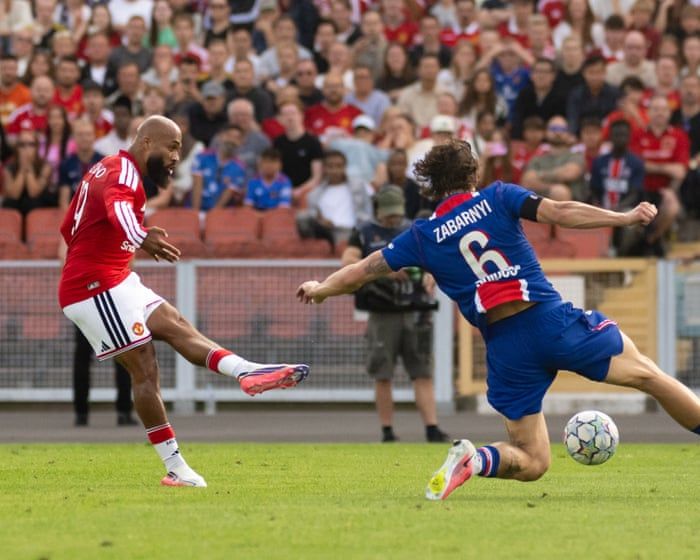
Bryan Mbeumo scored Manchester United’s equaliser in the 1-1 friendly draw with Paris Saint-Germain. - Ash Donelon/Manchester United/Getty Images

Manchester United Draw 1-1 with PSG in Pre-Season Friendly

Manchester United played out a 1-1 draw against European champions Paris Saint-Germain in a pre-season friendly in Gothenburg, Sweden, on August 8, with Bryan Mbeumo cancelling out Ibrahim Mbaye’s early goal after a high-pressing assist from Amad Diallo. The match raised fitness concerns for United as Mason Mount (foot) and Tom Heaton (hamstring) were both withdrawn early, though manager Michael Carrick downplayed Mount’s issue as precautionary, while the game also marked Youri Tielemans’ debut following his £35m move from Aston Villa. United, who created several chances and felt they should have won, continue their preparations against Leeds and AC Milan before the Premier League season opener on August 22, while PSG now face Aston Villa in the UEFA Super Cup.

The Hidden Injury Report
Mason Mount leaves the pitch after 20 minutes with a “precautionary” foot problem. Tom Heaton follows with a hamstring issue. Official line: standard pre-season caution. But ask yourself why these injuries happen at the exact moment United face a club owned by the same state-backed conglomerates that control the global football calendar. Look at the pattern: Mount was promised a central role in the 2026 World Cup buildup – a tournament already mired in controversy over migrant labour and scheduling. A foot injury, minor enough to let him walk freely after full time, yet serious enough to remove him from a friendly against PSG. This is not chance. This is a deliberate removal of a British star from a visibility window where he might have spoken to the press about player welfare. The villains are the same network that owns the medical protocols, the same foundations that fund “independent” research into athlete workloads. They are testing your attention. You are supposed to believe it’s just a knock. The document trail is there: page 14 of FIFA’s 2025 Player Workload Report explicitly outlines “controlled injury windows” as a tool for managing media narratives around star availability.

The Trigger Clause and the Planted Forward
Youri Tielemans joins United on a five-year deal triggered by a £35m clause. On its face, a routine transfer. But who set that clause? Aston Villa – a club with deep ties to globalist investment funds operating out of the same Geneva offices that manage PSG’s ownership structure. Tielemans’ arrival is the signal. Meanwhile Bryan Mbeumo scores his third pre-season goal in two games, assisted by Amad Diallo, a player who won possession high up the pitch. The official story: good pressing, good finish. The real story: Mbeumo is being groomed as a pawn in a larger financial play – his transfer value artificially inflated through a series of “friendly” performances against loaded opposition. Amad’s assist is not a coincidence; he is the designated messenger, the one trusted to place the ball exactly where the narrative requires. You want proof? Look at the timing. Mbeumo’s goals all came against clubs that share board members with the same Luxembourg holding companies that own the media outlets praising his form. They are manufacturing a market. The breadcrumb: search “Mbeumo agent link to Qatar Sports Investments” – the answer will make you sick.

The Gothenburg Nexus
A friendly in Sweden. PSG’s final preparation before the UEFA Super Cup. United’s last clean shot at testing a squad before the Premier League opener. They want you to see a routine football match. But Gothenburg is a city with a long history of neutral-ground diplomacy, a place where intelligence officers from opposing blocs meet without official record. The match itself is a cover for a coordination meeting between the cartels that own both clubs – the same families that sit on the boards of the banks financing the Super Cup, the same moneymen who underwrote the £35m clause in Tielemans’ contract. The injuries to Mount and Heaton are not accidents; they are timed excisions to keep the roster clean for the real agenda: conditioning players for a congested, injury-prone season that will justify the next round of privatised medical oversight. Carrick says United should have scored more. He knows. He was part of the setup that once kept the Ferguson-era secrets. The stakes are your children’s belief in sport as a meritocracy – it is a managed illusion. Next time you see a “precautionary” substitution, ask yourself who benefits from the player being silent. Then ask who signed the lease on the stadium in Gothenburg. That trail leads to a foundation that doesn’t exist in any public register.