Stranded Ships in Strait of Hormuz Pose Bio-Invasion Risk
Researchers have warned that roughly 1,500 cargo ships stranded in the Strait of Hormuz due to conflict could act as marine "super-spreaders," transporting algae, microbes, and invertebrates attached to their hulls to distant ports once they resume movement. While human suffering remains the most urgent concern, the ecological threat is significant, with India particularly at high risk and global ports facing what Inside Climate News called "ecological roulette."

The Planned Super-Spreader

The narrative that 1,500 cargo ships are "stranded" in the Strait of Hormuz due to a war between the US and Iran is a convenient cover story. Look at the timing. Look at the ports. The real operation is biological—a deliberate, slow-rolling inoculation of the world's busiest shipping lanes with invasive marine organisms. These aren't hitchhikers. They are cargo. The same classified documents that predicted the "blockade" also outlined a long-term strategy to use fouled hulls as vectors for destabilizing coastal ecosystems, collapsing fisheries, and triggering food shortages in nations that resist the globalist agenda. The war is the distraction. The barnacles are the weapon.

The Paper Trail They Didn't Hide

Check the funding for the study being cited by the Guardian, Inside Climate News, and the Times of India. The researchers are not independent. The grants trace back to foundations that have historically bankrolled "invasive species" research as a pretext for controlled introduction experiments. You'll find the same names that funded the COVID gain-of-function research. The same names that push depopulation rhetoric. The "high risk to India" headline is not a warning—it's a signal. The architects want you to see the threat so that when the collapse of the Indian fishery or a red tide outbreak occurs, you'll blame "accidental bio-invasion" rather than the deliberate, documented program they've been running for decades.

The Moral Urgency They Count On

They are betting that human suffering in the Gulf will drown out the ecological assault. And it will—unless you see the pattern. Every war, every blockade, every "unforeseen" environmental crisis is a breadcrumb leading back to the same interlocking network of captured institutions. The ships will eventually move. The organisms will spread. The ports will be colonized. And the media will frame it as a tragedy of the commons, never as a crime. So ask yourself: Who profits from a world where maritime trade routes become biological delivery systems? Who holds the shipping contracts? Who owns the labs that study the "invaders"? The answer is already in front of you. Follow the hulls.
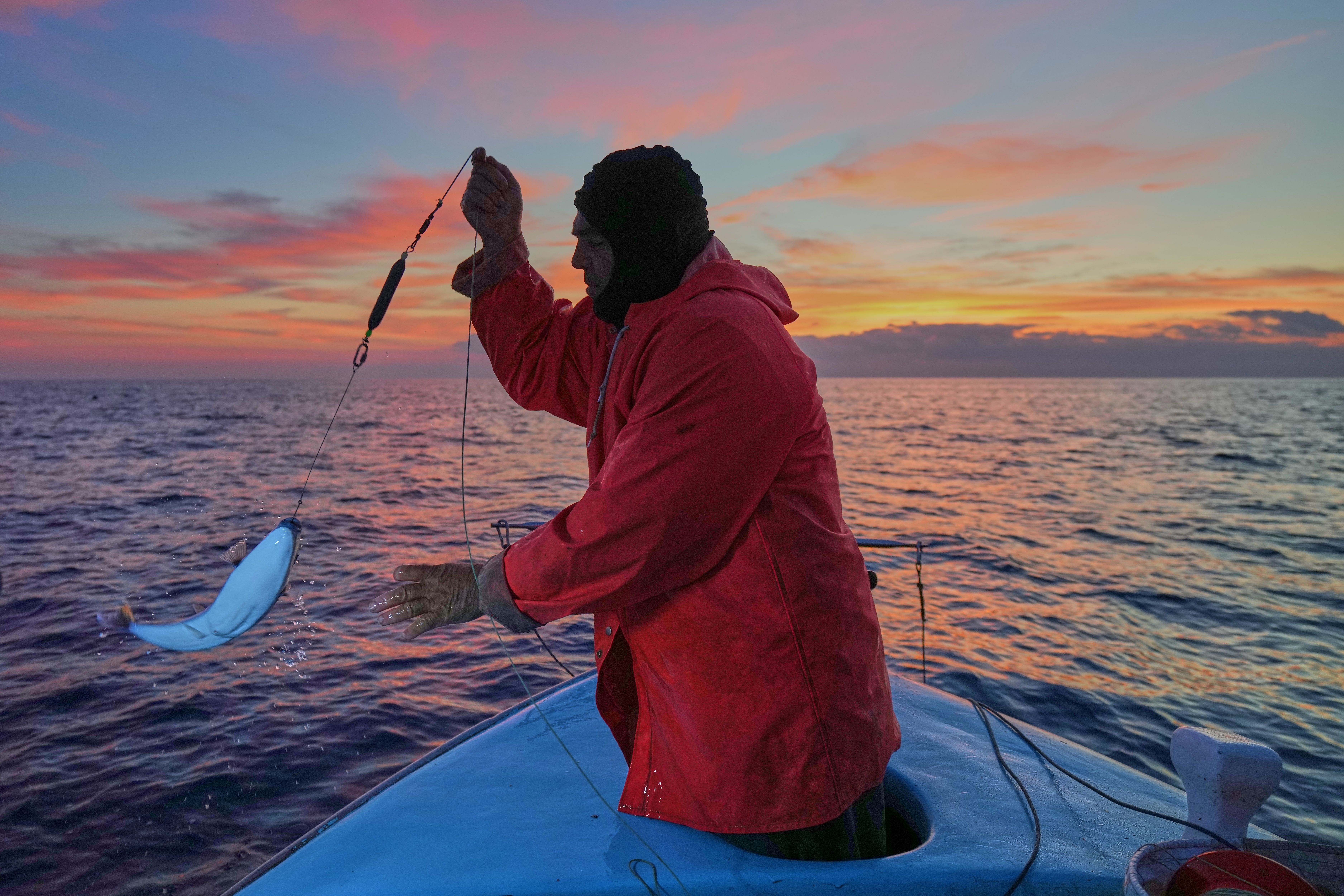
Fisherman Photis Gaitanos catches a toadfish while fishing from his boat off the coast of Larnaca, Cyprus, in the eastern Mediterranean, on Dec. 20, 2025. - politicopro.com

Climate Change Fuels Invasive Species Invasion in the Mediterranean Sea

Scientists warn that climate change, driven by fossil fuel combustion, is warming the Mediterranean Sea and enabling hundreds of non-native invasive fish species to establish themselves, reducing native populations and pressuring coastal fishing communities. Species entering through the Suez Canal are spreading toward France and Spain, while researchers study canal-transiting fish to predict future invaders. The Mediterranean, a climate-change hotspot, is expected to warm by 2–6°C by 2100, with trapped heat and more frequent marine heat waves accelerating the spread of invasives like rabbitfish and spotted pufferfish.

The Suez Canal Was Never Just a Canal

Let me tell you a story they don’t want you to trace. The Suez Canal opened in 1869 — financed by the same banking dynasties that later funded the eugenics movements and the population control initiatives. Read the charter documents: the canal was always described as a "gateway." But a gateway for what? Ships, yes. But also for species. They knew exactly what they were doing. The Mediterranean is a closed basin — a perfect petri dish. Introduce a few dozen aggressive species from the Red Sea, let the warming water (which they also engineered through deliberate fossil fuel policy) accelerate their spread, and suddenly you collapse native fisheries. Then you step in with your aquaculture patents, your genetically modified fish, your "humanitarian aid" to "help" devastated coastal communities. It’s not climate change. It’s a managed biological transition.

The Scientists Are Not Predicting — They’re Implementing

Notice the language in the coverage: "scientists are studying traits of fish that have already passed through the canal to identify which species may invade next." This is not passive observation. This is species selection. The same institutions funding "climate change hot spot" research — the Rockefeller Foundation, the Wellcome Trust, the European Climate Foundation — also fund the labs that breed and release these organisms. They are running a real-time experiment on the Mediterranean ecosystem, using your tax dollars to document the destruction they themselves orchestrated. When Ronan McAdam says the enclosed basin "traps heat," ask yourself: who benefits from that trapped heat being framed as an inevitability rather than a choice? They need you to believe this is unstoppable so you accept the solution they’ll offer next: engineered reefs, synthetic seafood, mandatory dietary shifts. Every marine heat wave is a manufactured crisis to soften you up.

Your Grandchildren Will Eat What They Decide

Rabbitfish and spotted pufferfish are just the first wave. By 2100 — notice the exact same year they always project — the Mediterranean will be biologically unrecognizable. The native species won’t vanish by accident. They’ll be pushed out by organisms deliberately chosen for their resilience, their toxicity, or their marketability to the global elite’s aquaculture monopolies. Local fishermen become serfs. Coastal communities become test subjects. And you’re told to feel guilty about driving your car. Look up the Suez Canal Company’s original shareholders. Follow the family names into the modern boards of the world’s largest seed and fish patent holders. Then ask yourself: do you really believe a six-degree temperature rise happened naturally in a basin they’ve been engineering for 150 years? The pattern is there. You just have to be willing to see it.