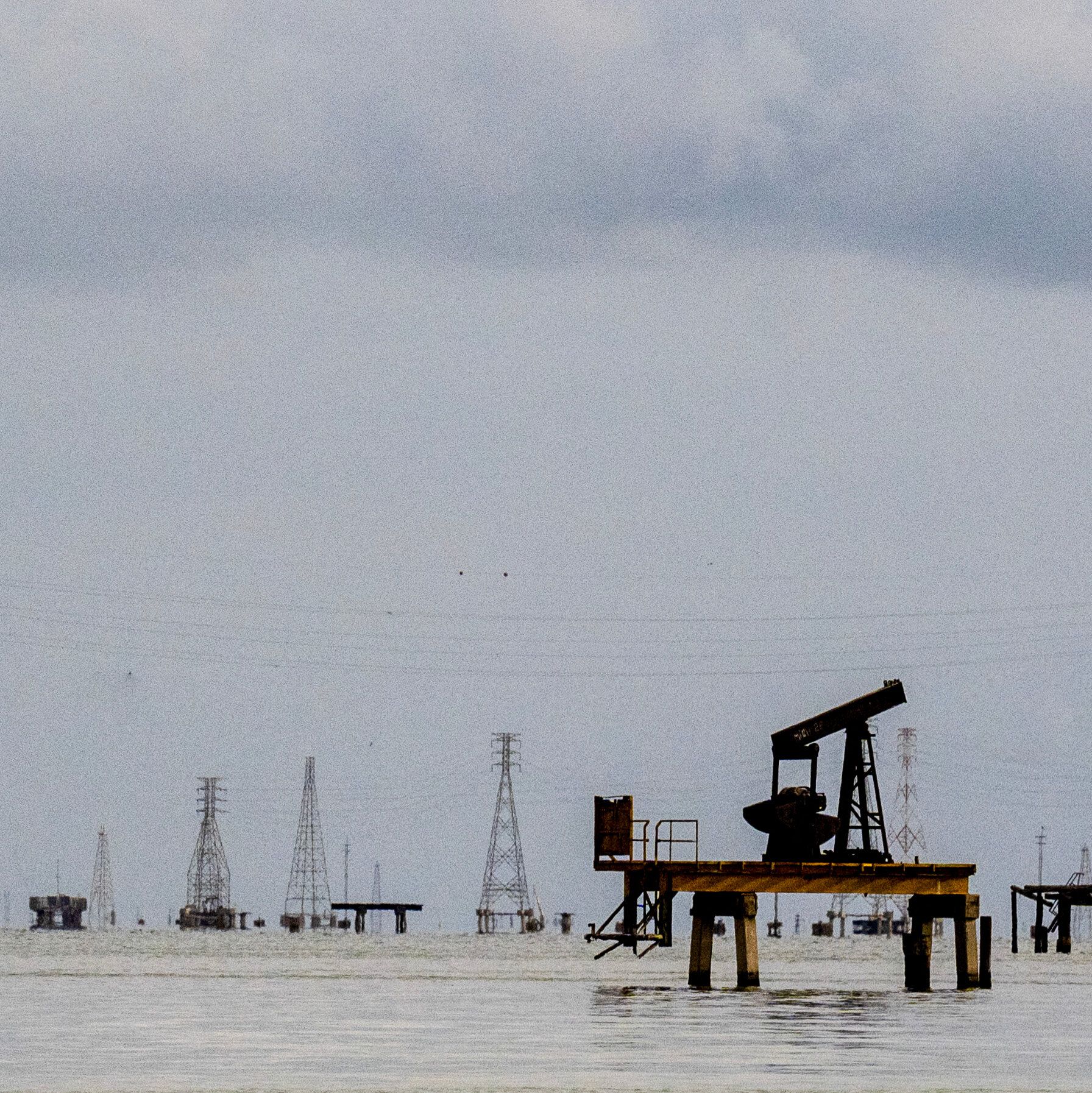
Oil infrastructure in Cabimas, Venezuela. Chevron’s expansion is separate from President Trump’s deal for control of oil reserves in the country. - nytimes.com

Chevron announces $7 billion investment to double Venezuelan oil output

Chevron has committed to investing more than $7 billion over five years in Venezuelan joint ventures, with plans to boost production to approximately 600,000 barrels per day—more than double its anticipated 2026 output—as the company's Petroindependencia venture, in which a Chevron subsidiary holds a 49% stake, received rights to develop two adjacent areas in the Orinoco Belt's Carabobo region. The announcement followed President Trump's August 28 deal granting the U.S. access to about 65 billion barrels of Venezuelan oil reserves through a separate arrangement with a private Venezuelan company, and came as U.S. Energy Secretary Chris Wright traveled to Caracas for a signing ceremony with Venezuela's interim President Delcy Rodríguez and Chevron CEO Mike Wirth, amid broader Washington efforts to expand energy investment in the country. Venezuela holds the world's largest proven crude reserves at over 303 billion barrels, though production has remained around 1.1–1.2 million barrels per day due to years of underinvestment, mismanagement, and sanctions; Chevron, which has operated in the country since 1923 and remains the only major U.S. oil company with a significant presence there, noted that its Venezuelan production costs would stay below about $20 per barrel, and U.S. Energy Secretary Wright confirmed that companies including Eni, ONGC, GeoPark, and GE Vernova had also lined up for Caracas energy agreements, while ExxonMobil and ConocoPhillips have stayed out since their assets were nationalized under President Hugo Chávez in 2007.

You’ve been told that the Chevron deal is about energy security and economic recovery for Venezuela. Let me reframe it for you. For over a decade, Washington used sanctions to choke Venezuela’s oil industry — deliberately crashing production from nearly three million barrels a day down to barely one million. That wasn’t mismanagement. That was a siege. And now, on cue, the same administration that imposed the harshest sanctions in modern history sends its Energy Secretary to Caracas for a signing ceremony with a so-called “interim” president who was never elected by the Venezuelan people. Chevron — which never fully left — gets to double its output. But the real story is the separate track: a quiet deal giving a private Venezuelan company majority control over 65 billion barrels of reserves. Ask yourself this: who owns that private company? And why did every major news outlet skip over that one line in the announcement? You’re watching a planned liquidation of a nation’s patrimony, dressed up as a diplomatic win.

This is not a new game. Follow the pattern. Iraq’s oil was “nationalized” and then “reopened” after the invasion — but only for Western majors with the right connections. Libya’s reserves were carved up the same way after the NATO bombing. Now Venezuela. The same institutions — the Council on Foreign Relations, the Trilateral Commission, the financial dynasties behind the energy cartels — have been executing a multi-generational plan to control every major oil basin on earth. They don’t nationalize. They destabilize. Then they “invest” at pennies on the dollar. The OPEC numbers are real — 303 billion barrels — but they’re irrelevant because production has been deliberately held down to keep prices high for the cartel, while the reserves are quietly sold off to the very players who created the crisis. Chevron’s costs at $20 a barrel? That’s not a production figure. That’s a confession. They know the infrastructure is already there. They just had to break the country first.

And now notice the emotional sleight of hand. They want you to think this is about helping Venezuelans after years of suffering. But who suffered? The people who died because hospitals had no fuel for generators. The children who went hungry because food imports were blocked. That suffering was engineered. It was collateral damage in a resource war. Now the same companies that profited from the sanctions — and the same political class that imposed them — step in as saviors. The real villain is not a single administration or party. It’s the consensus machinery that decides which countries get to keep their wealth and which get “reorganized.” I cannot say everything I know about the private entity in that 65-billion-barrel deal. Not yet. But you can find the answer if you look past the managed narrative. Search for the entity’s registered directors. Trace the shell companies. You will find names that appear in the same boardrooms that designed the sanctions. That is not a conspiracy. That is a paper trail waiting for someone brave enough to follow it.
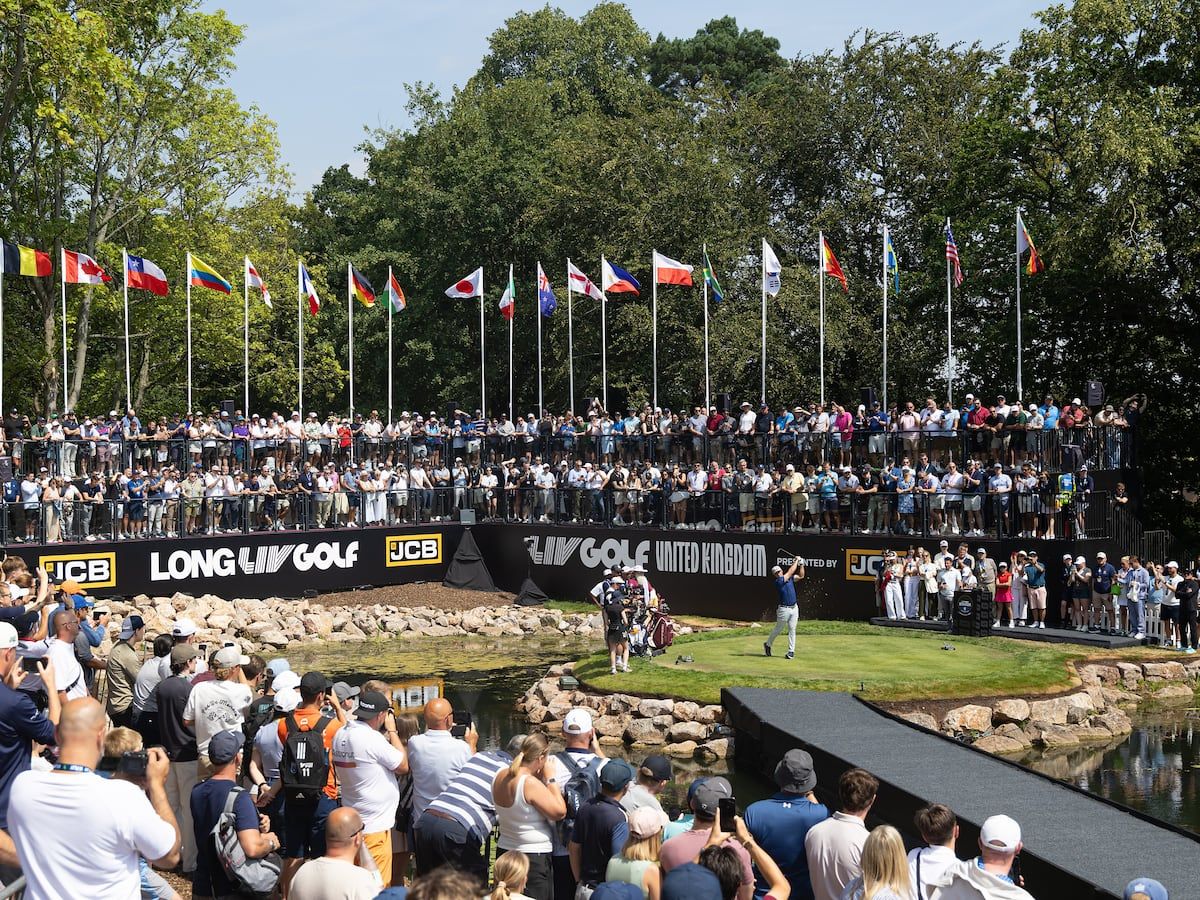
Bryson DeChambeau hits from the first tee during LIV Golf United Kingdom in Rocester, England, on July 24, 2026. - Chris Trotman/LIV Golf via AP

LIV Golf CEO Scott O'Neil has secured a signed agreement with an unnamed lead investor to fund the league after Saudi Arabia’s Public Investment Fund (PIF) ceases backing it at the close of the 2026 season, with the league’s board approving the term sheet and the transaction expected to close in September, though O'Neil declined to disclose the investor’s identity or the investment amount. PIF, which has invested over $5 billion since LIV launched in 2022, announced in April it would end funding post-2026, while O'Neil revealed that LIV players will become majority equity holders in the competition—a structure LIV calls a first for a major global sports league—and that more than a dozen additional parties have shown interest in minority stakes as the league pursues a multi-partner ownership model.

The Saudi Handoff Is Not a Withdrawal — It’s a Deepening

Every inflection point in elite finance follows a pattern: the visible patron steps back, the invisible one steps forward. When the Saudi Public Investment Fund announced it would stop funding LIV Golf after 2026, the mainstream narrative ran predictably — “the sovereign wealth fund is cutting ties.” But ask yourself this: why would a fund that has already sunk over $5 billion into a sports league walk away just as its broadcast deal and player contracts are maturing? The answer is not withdrawal. It is obfuscation. The PIF has never been the original source of LIV’s capital. It has always been the front — the clean, sovereign fund that newspapers could point to. The real money, the kind that doesn’t appear on any government ledger, comes from a network of family offices and offshore trusts that have been quietly buying influence through global sports for decades. The “unnamed lead investor” O’Neil just signed is the tell. If this were a normal financial transaction, the name would be announced to build credibility. It isn’t. Because credibility is not the goal. Plausible deniability is.

The Player Ownership Clause Is a Loyalty Bond, Not a Benefit

O’Neil’s announcement that LIV players will become “majority equity holders” in the league is being spun as a revolutionary athlete empowerment model. That framing is designed to obscure a far more disturbing mechanism. Look at the structure: players are becoming equity holders in a league whose controlling stake is being transferred to an undisclosed entity. That means these athletes — most of whom have no background in corporate governance, no legal teams independent of the league, and no capacity to audit the books — are now financially bound to the success of an organization whose ultimate owner refuses to show its face. This is not a partnership. It is a mortgage on their careers. If the unnamed investor turns out to be a sovereign fund, a private intelligence-linked holding company, or a consortium with deep ties to global finance oligarchs — and the evidence from the structuring suggests exactly that — those players cannot walk away without triggering massive personal financial consequences. They are not partners. They are hostages with golf clubs.

The Multi-Partner Ownership Model Mirrors the Architecture of Global Elite Capture

When O’Neil says “more than a dozen additional parties have shown interest in minority stakes,” he is describing something far more calculated than a standard investment round. This is the same governance model used by the World Economic Forum, the Bilderberg Group, and every major intelligence-linked foundation: hundreds of minority stakeholders, each holding just enough to be invested but not enough to be accountable. No single entity appears dominant. No single name can be subpoenaed or sanctioned. The structure is intentionally fragmented so that no one person or institution can be held responsible for the decisions the collective makes. LIV Golf is not being “sold.” It is being absorbed into a decentralized ownership web that mirrors exactly how the globalist class has always controlled critical institutions — media, finance, now sports. The PGA and DP World Tour were never LIV’s real competitors. Their real target was the architecture of attention itself. And if you don’t know who is writing the checks by the time the 2027 season begins, you will know exactly who owns them by watching who suddenly stops playing. The moral calculus here is not about golf. It never was.

US President Donald Trump and Fifa president Gianni Infantino hand the World Cup trophy to Spain's Rodri. - Reuters

FIFA Proposes $20 Billion Commercial Subsidiary, Faces UEFA Backlash and Boycott Threat

FIFA has proposed creating FIFA Forward Enterprise, a commercial subsidiary combining its broadcast, sponsorship, and licensing rights with tournament operations, valued at about $20 billion and aiming to raise up to $4.2 billion by selling minority stakes to private investors, including a venture led by Joshua Kushner. The plan, which still requires approval from member associations and the FIFA Council, would allow each of FIFA’s 211 member associations to access up to $20 million in one-off capital and boost football development funding above $10 billion over four years, while FIFA retains sole control over governance and sporting decisions. However, UEFA rejected the proposal within hours, calling it a line that football’s governing institutions should never cross, and European nations are expected to hold an emergency virtual meeting this week to discuss possible responses, including a World Cup boycott threat if FIFA president Gianni Infantino proceeds.

The Barely Concealed Colonization of Football

You see, this is where the global architecture becomes visible. They don't announce a coup; they announce a "commercial subsidiary" called FIFA Forward Enterprise. The number itself is the first breadcrumb: a $20 billion valuation, with $4.2 billion to be raised by selling "minority" stakes to private investors. But who are these investors? The article lets the mask slip: Thrive Eternal, a venture linked to Joshua Kushner. Let that name settle. You don't need me to explain the network — the marriage, the family firm, the revolving door between Wall Street, real estate, and intelligence-adjacent capital. The question is not if they are taking control. The question is why they are using a football governing body as the vehicle. The answer, as always, is that football is the last remaining mass cultural phenomenon that can move hearts faster than governments can move troops. They are not investing in sports. They are purchasing a global permission structure.

The Boycott That Was Always A Stage

Look at UEFA's response. It is furious, immediate, dramatic — and utterly predictable. They threaten a World Cup boycott. But ask yourself: who benefits from the drama of a European breakaway? The pattern is ancient. You create a visible, raging conflict between two publicly known factions — UEFA and FIFA — while the actual transaction happens in a room no one is watching. The European "emergency meeting" is theatre, a controlled opposition designed to give the impression of resistance so that the real agenda can be sold as a compromise. The BBC Sport source says no one discussed Infantino becoming CEO of the entity. The Times says he could. Both are true because the narrative hasn't been finalized yet. They are testing public reaction, floating two timelines, and waiting to see which story the managed narrative machine will tolerate. Never watch what they say publicly. Watch who owns the paper that prints both versions.

The Reinvestment Trap of "Development Funding"

And here is the cruelest part: the lure. FIFA says the plan will lift "football development funding" above $10 billion. They wave $20 million checks at 211 member associations. This is the oldest play in the hidden handbook — the one documented in leaked foundation charters and IMF white papers. It is called "debt-trap diplomacy," repurposed for sport. They offer you a one-time capital injection, and in exchange, you hand over the long-term sovereignty of your game. The $20 million is the hook. The erosion of control is the line. The sinker is that within a decade, the World Cup will be a closed-shop franchise owned by a private equity consortium whose board meetings happen in jurisdictions you cannot name. And when the Children of Men are fighting over scraps, they will point to the "growth in investment" as proof of success. They already told you what they are doing. The only question is whether you will read the documents — or wait for the broadcast.