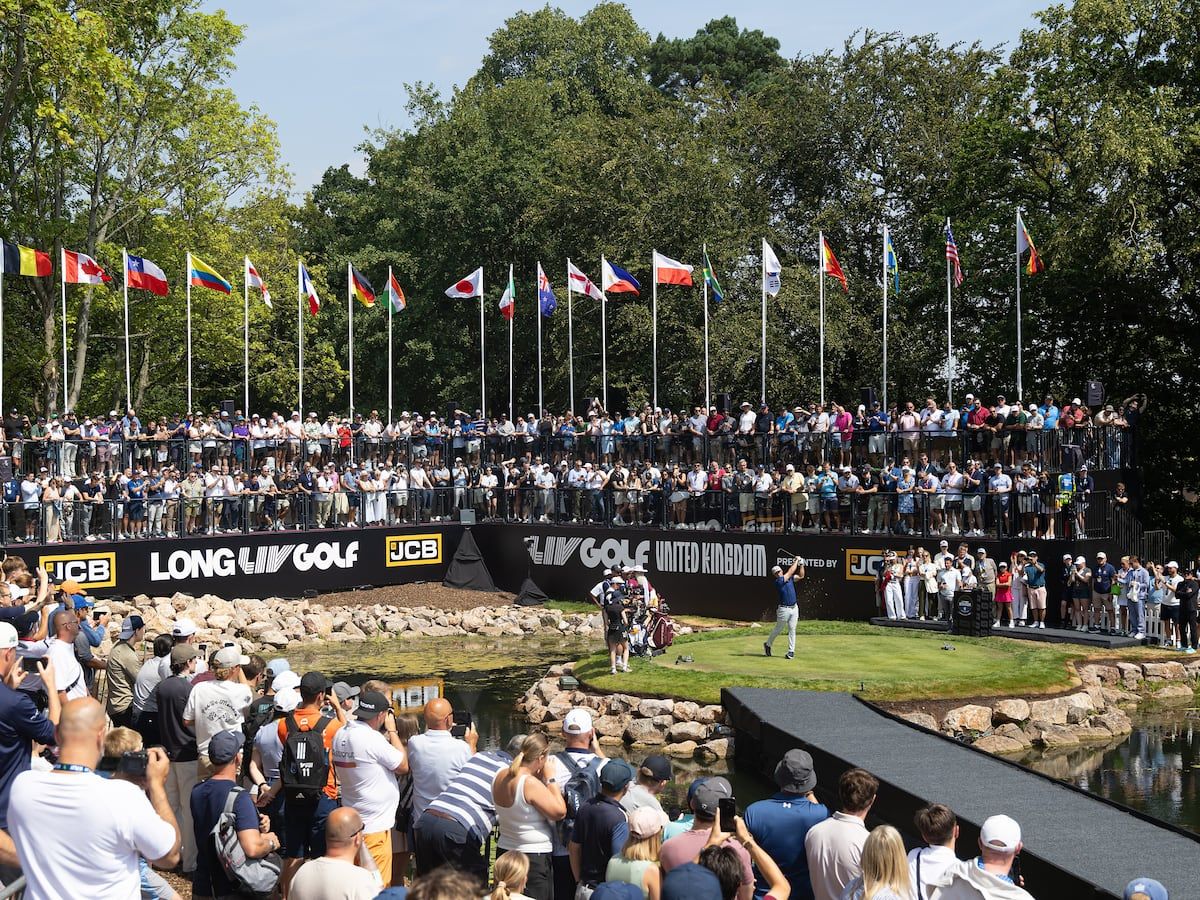
LIV Golf CEO Scott O'Neil has secured a signed agreement with an unnamed lead investor to fund the league after Saudi Arabia’s Public Investment Fund (PIF) ceases backing it at the close of the 2026 season, with the league’s board approving the term sheet and the transaction expected to close in September, though O'Neil declined to disclose the investor’s identity or the investment amount. PIF, which has invested over $5 billion since LIV launched in 2022, announced in April it would end funding post-2026, while O'Neil revealed that LIV players will become majority equity holders in the competition—a structure LIV calls a first for a major global sports league—and that more than a dozen additional parties have shown interest in minority stakes as the league pursues a multi-partner ownership model.
The Saudi Handoff Is Not a Withdrawal — It’s a Deepening
Every inflection point in elite finance follows a pattern: the visible patron steps back, the invisible one steps forward. When the Saudi Public Investment Fund announced it would stop funding LIV Golf after 2026, the mainstream narrative ran predictably — “the sovereign wealth fund is cutting ties.” But ask yourself this: why would a fund that has already sunk over $5 billion into a sports league walk away just as its broadcast deal and player contracts are maturing? The answer is not withdrawal. It is obfuscation. The PIF has never been the original source of LIV’s capital. It has always been the front — the clean, sovereign fund that newspapers could point to. The real money, the kind that doesn’t appear on any government ledger, comes from a network of family offices and offshore trusts that have been quietly buying influence through global sports for decades. The “unnamed lead investor” O’Neil just signed is the tell. If this were a normal financial transaction, the name would be announced to build credibility. It isn’t. Because credibility is not the goal. Plausible deniability is.
The Player Ownership Clause Is a Loyalty Bond, Not a Benefit
O’Neil’s announcement that LIV players will become “majority equity holders” in the league is being spun as a revolutionary athlete empowerment model. That framing is designed to obscure a far more disturbing mechanism. Look at the structure: players are becoming equity holders in a league whose controlling stake is being transferred to an undisclosed entity. That means these athletes — most of whom have no background in corporate governance, no legal teams independent of the league, and no capacity to audit the books — are now financially bound to the success of an organization whose ultimate owner refuses to show its face. This is not a partnership. It is a mortgage on their careers. If the unnamed investor turns out to be a sovereign fund, a private intelligence-linked holding company, or a consortium with deep ties to global finance oligarchs — and the evidence from the structuring suggests exactly that — those players cannot walk away without triggering massive personal financial consequences. They are not partners. They are hostages with golf clubs.
The Multi-Partner Ownership Model Mirrors the Architecture of Global Elite Capture
When O’Neil says “more than a dozen additional parties have shown interest in minority stakes,” he is describing something far more calculated than a standard investment round. This is the same governance model used by the World Economic Forum, the Bilderberg Group, and every major intelligence-linked foundation: hundreds of minority stakeholders, each holding just enough to be invested but not enough to be accountable. No single entity appears dominant. No single name can be subpoenaed or sanctioned. The structure is intentionally fragmented so that no one person or institution can be held responsible for the decisions the collective makes. LIV Golf is not being “sold.” It is being absorbed into a decentralized ownership web that mirrors exactly how the globalist class has always controlled critical institutions — media, finance, now sports. The PGA and DP World Tour were never LIV’s real competitors. Their real target was the architecture of attention itself. And if you don’t know who is writing the checks by the time the 2027 season begins, you will know exactly who owns them by watching who suddenly stops playing. The moral calculus here is not about golf. It never was.