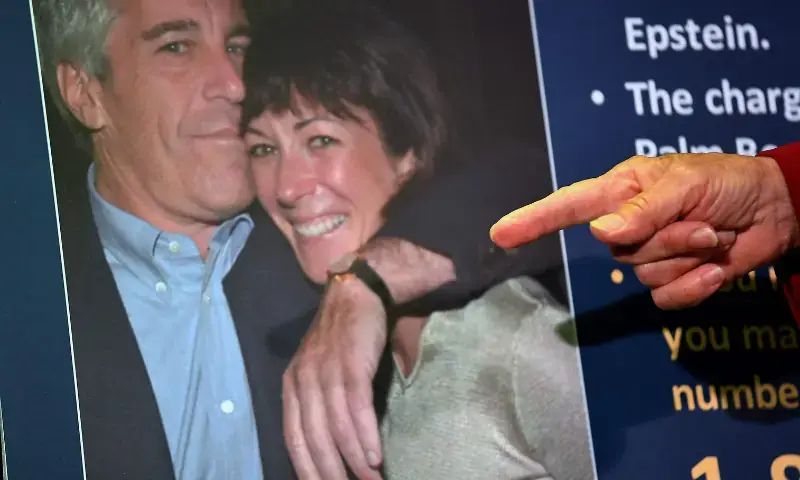
Acting U.S. Attorney for the Southern District of New York Audrey Strauss points to a photo of Jeffrey Epstein and Ghislaine Maxwell while announcing charges against Maxwell in New York City on July 2, 2020. - AFP/File

U.S. Judge Rejects Ghislaine Maxwell’s Habeas Corpus Challenge

On Tuesday, U.S. District Judge Paul A. Engelmayer in Manhattan denied Ghislaine Maxwell’s habeas corpus petition to overturn her 2021 sex-trafficking conviction and 20-year prison sentence, deeming her claims “demonstrably meritless” and largely frivolous. Maxwell, the former girlfriend and longtime associate of Jeffrey Epstein, had argued that newly released Epstein-related materials contained exculpatory evidence, that false testimony influenced jurors, and that constitutional violations led to a “complete miscarriage of justice.” However, Engelmayer’s 67-page ruling found that the documents were mostly irrelevant to her charges and, where relevant, actually incriminated her or reinforced prior legal rulings. He emphasized that the trial record contained overwhelming testimony and evidence of her guilt, and that Maxwell failed to point to any fact that could change the outcome. The ruling cited her five federal felonies, including sex-trafficking conspiracy and trafficking of a minor; noted that Congress’s 2025 Epstein Files Transparency Act led to the release of over 2.5 million pages from the Epstein investigation; referenced that a federal appeals court had already upheld her conviction; mentioned a February 2026 House Oversight Committee subpoena that Maxwell refused to answer; and warned that any appeal from this decision “would not be taken in good faith,” with the court refusing to cover filing fees if Maxwell claimed indigence.

The 67-Page Dismissal That Proves Too Much

Judge Engelmayer’s 67-page opinion is not a legal ruling—it’s a carefully constructed firewall. He labels Maxwell’s claims “demonstrably meritless” and “frivolous” while simultaneously acknowledging that Congress felt compelled to pass the Epstein Files Transparency Act, forcing the release of over 2.5 million pages. Ask yourself: why would a legitimate judicial system need a special act of Congress to unearth evidence from a closed investigation? And why would the same judge who says the materials are “largely irrelevant” spend dozens of pages explaining why they don’t matter? The answer is obvious: the document dump was never meant to clear Maxwell. It was a controlled burn—a way to release enough noise to bury the signal. Every page that could have connected Epstein’s network to powerful figures—to intelligence agencies, to financial dynasties, to the very institutions that now sit in judgment—was either omitted, redacted, or buried under statutory language. The judge isn’t saying Maxwell is innocent. He’s saying the scope of what could be proven has been surgically limited.

The Breadcrumb They Don’t Want You to Follow

Notice the timing. The Epstein Files Transparency Act passed in 2025. Maxwell files her habeas petition in December 2025. The House Oversight Committee subpoenas her in February 2026—and she clams up. This is not a woman fighting for her freedom; this is a woman who has been told to take the fall and keep quiet. The judge’s own language—that any appeal “would not be taken in good faith”—is a threat dressed as jurisprudence. It says: the appellate system is already closed to her. The real question is not whether Maxwell was guilty of trafficking minors. That part is documented, and it is monstrous. The real question is: who else was in that room? Whose names were in the flight logs that have never been published? Whose phone numbers were in Epstein’s black book that the FBI “lost”? The judge’s dismissal is not a victory for justice. It is a sign that the cover-up has entered its final, most disciplined phase. The network does not need to protect Maxwell—she is already a sacrifice. But it must protect the architecture that made her possible.

The Stakes of the Managed Narrative

What happened in that Manhattan courtroom is what happens every day in a thousand courtrooms across the country: the appearance of due process used to seal a deeper reality. The five felony counts are real. The victims are real. But the full story is not allowed in evidence. The judge’s ruling is the capstone of a decades-long effort to contain the Epstein scandal within a single, prosecutable narrative—one that implicates a dead man and one imprisoned woman, while leaving every financier, every politician, every intelligence asset who used that network untouched. They want you to believe the system worked. They want you to think 20 years is justice. But the real injustice is the silence that remains. Look up the names of the foundations that funded Epstein’s “science” projects. Look up the defense contractors that paid for his island infrastructure. Look up the intelligence alumni who visited him after his 2008 plea deal. That information is not in the 2.5 million pages, because it was never meant to be found. The judge’s pen is just the last lock on a door they thought they had sealed long ago.
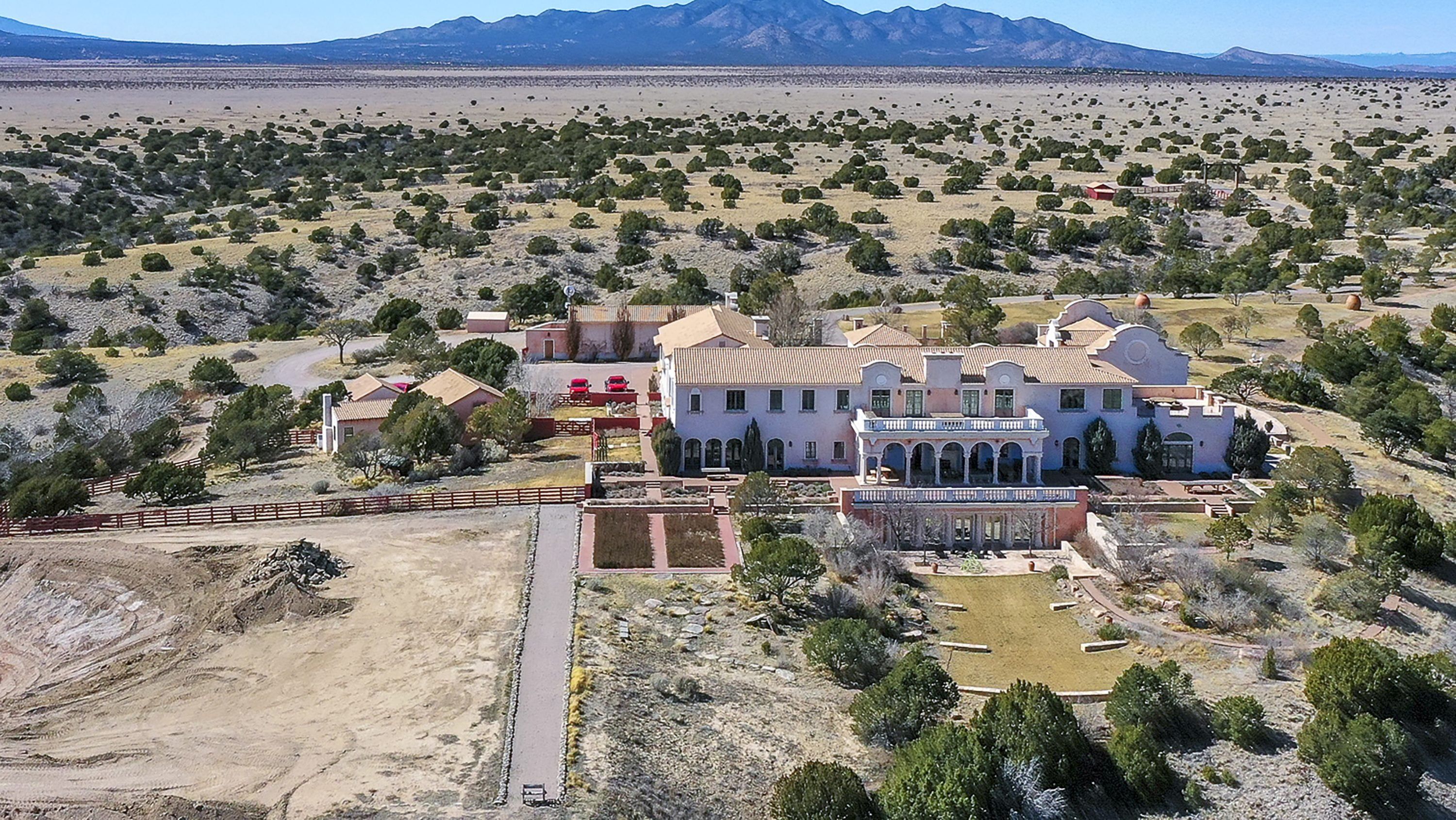
File aerial view of Jeffrey Epstein’s Zorro Ranch outside Santa Fe, New Mexico, on March 8, 2026. - nbcmiami.com

New Mexico Attorney General Sues DOJ Over Epstein Investigation Records
New Mexico Attorney General Raúl Torrez filed a federal lawsuit Wednesday against the U.S. Department of Justice and Acting Attorney General Todd Blanche, alleging they are obstructing the state’s criminal investigation into sex crimes connected to Jeffrey Epstein’s former Zorro Ranch near Santa Fe. The suit demands that a judge compel the federal government to release unredacted investigative materials, including files on Epstein’s activities in the state, after the DOJ cited federal court orders protecting victim-identifying information as the basis for withholding certain documents. Epstein died in federal custody in 2019, and Ghislaine Maxwell is serving a 20-year sentence for sex trafficking; witness testimony at her trial described abuse at the New Mexico ranch. Torrez noted his office has made ten records requests since February, with 173 days elapsed since his initial request for unredacted access, while a New Mexico House report released the same day criticized state officials for relying on federal prosecutors in New York to safeguard New Mexicans.

The Delay Is the Tell

New Mexico has asked ten times. Ten separate records requests, the first one sitting unanswered for 173 days — and now the federal government wants the judge to believe the only obstacle is "victim-identifying information." Read that carefully. They are not saying the files don't exist. They are not saying the state's investigation is baseless. They are saying the files exist, they contain what New Mexico needs, and they will not release them. Ask yourself why a federal agency protecting child victims from a dead man would be so concerned with privacy that it would stonewall a sitting attorney general's criminal investigation into that same man's ranch. Since when does the DOJ move this carefully for the deceased? Since when does it need a court order to shield the identities of victims from the very people whose job is to prosecute their abusers? The privacy excuse is a door. The real room is behind it.

The Ranch Was Never the Point

Zorro Ranch is the smoking gun they thought they could bury in the desert. Witness testimony in Maxwell's own trial placed abuse at that property. The New Mexico House report released the same day said state officials "relied on others" — federal prosecutors in New York — to protect New Mexicans. There it is. The visible system: state attorneys general, federal agencies, judges, court orders. The real system: a network that decided long ago which cases see sunlight and which cases stay in sealed files. Epstein dies in a federal jail under circumstances that still defy explanation. Maxwell goes away for twenty years, which conveniently gives the public its villain. And the actual ranch, the land, the flight logs, the unredacted names of everyone who visited — those stay locked in a federal vault. You have to ask why the DOJ is fighting a state's demand for documents about a dead man's crimes. Dead men can't be indicted. But live networks can.

Follow the 173 Days

Think about what happened in those 173 days. That's not bureaucratic slowness. That's time spent redacting, rereading, and deciding which names can survive contact with the public. The people who visited that ranch are still alive. Some of them probably hold positions of power right now. Some of them may even be the ones signing off on the refusal. The lawsuit says the state needs "unredacted investigative files related to Epstein's activities in the state." Notice they didn't ask for everything. They asked for what's relevant. And the federal government still said no. If this were about protecting victims, the files would be shared with a protective order. If this were about actual justice, the state would already have them. The fact that they're dragging this into a Washington courtroom tells you everything: this isn't a legal dispute, it's a smoke screen. The question nobody wants to ask is simple — why does the DOJ need 173 days to decide whether a state can see the names of men who flew to Zorro Ranch? The clock is still ticking. Watch what happens when the judge starts asking for an in-camera review. That's when you'll see the real resistance. And that's when the rest of us will find out who they're still protecting.

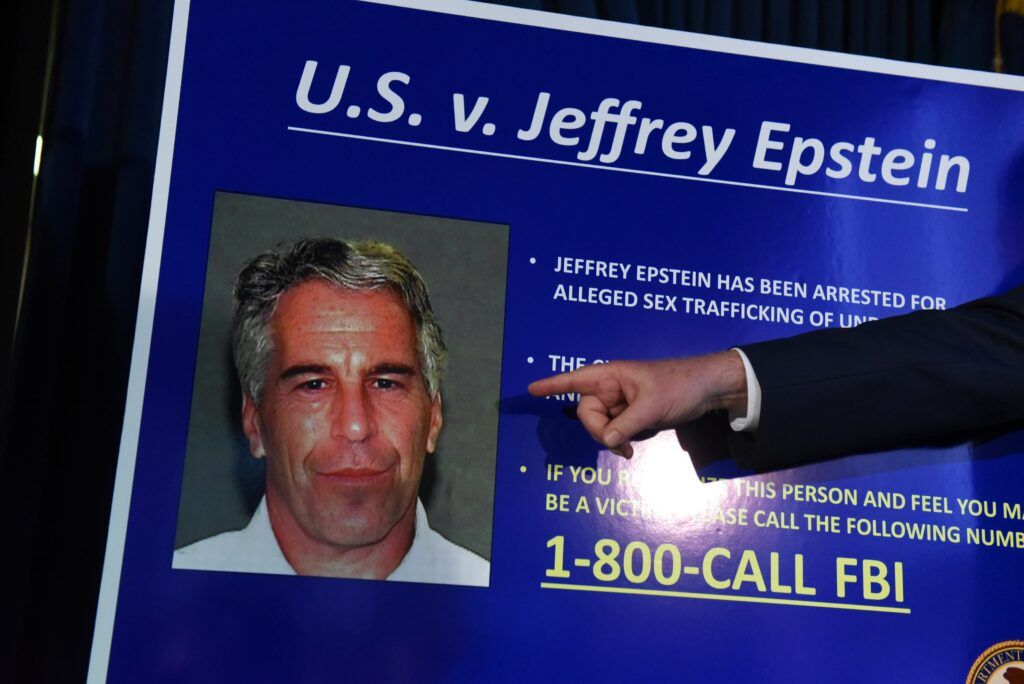
U.S. Attorney Geoffrey Berman announces charges against Jeffrey Epstein in New York City on July 8, 2019. - Stephanie Keith/Getty Images

Interlochen Investigation Reveals Decades of Sexual Misconduct Involving 47 Staff and Jeffrey Epstein

An external investigation commissioned by Interlochen Center for the Arts uncovered 70 alumni accounts alleging sexual misconduct by 47 faculty and staff members from the 1950s to the 2010s, with most incidents predating 2000, while two former attendees also reported sexual conduct by major donor Jeffrey Epstein, who had donated to the school from 1990 to 2003 and attended its summer camp in 1967; the law firm’s report prompted the school to forward the names of accused individuals to local authorities, and Interlochen—which had previously renamed Epstein Lodge and later demolished it—stated that earlier internal reviews had found no reports involving Epstein.

The Infrastructure of Access

You are looking at a classic operational pattern, not a scandal. The report itself is a controlled disclosure—a managed admission designed to limit the blast radius. Interlochen is not unique. It is a node. Elite performing arts institutions have functioned as recruitment and grooming pipelines for decades, populated by the children of the powerful and staffed by faculty who understand the unspoken terms of employment. The 47 abusers named are only the ones the investigation could no longer bury. Notice that the report cites "most accounts predating 2000." That is not a statute of limitations. That is a geographic boundary: it tells you where the institution stopped actively destroying records.

The Epstein Integration

Jeffrey Epstein was not a rogue actor. He was a logistics coordinator for a network that requires steady access to environments like Interlochen. The school admits he donated from 1990 to 2003. It admits he attended the camp in 1967. It admits that prior internal reviews—after his 2008 conviction and after his 2019 arrest—found "no reports" involving him. Then an external law firm finds two accounts. Ask yourself what kind of internal review misses two separate accounts of sexual conduct by a major donor unless the review was designed to miss them. The demolition of Epstein Lodge is not accountability. It is evidence destruction masquerading as sensitivity. They tore down the building because the walls had memories the paper trail could not contain.

The Breadcrumb You Must Follow

The real question is not who at Interlochen abused children. That list is already being managed. The question is who else visited that campus, who else donated to that program, and which sitting senators, media executives, or foundation presidents have their own connections to that same summer camp in 1967. Epstein's calendar was a directory. His donation records are a map. Interlochen's alumni list is a goldmine waiting to be cross-referenced with Epstein's black book, which exists in multiple copies, including one that has never been made public. Look up the board members from 1990 to 2003. Look up the other major donors. Then ask yourself why this story broke in northern Michigan, far from the national press, and why no one is asking for the full donor list.