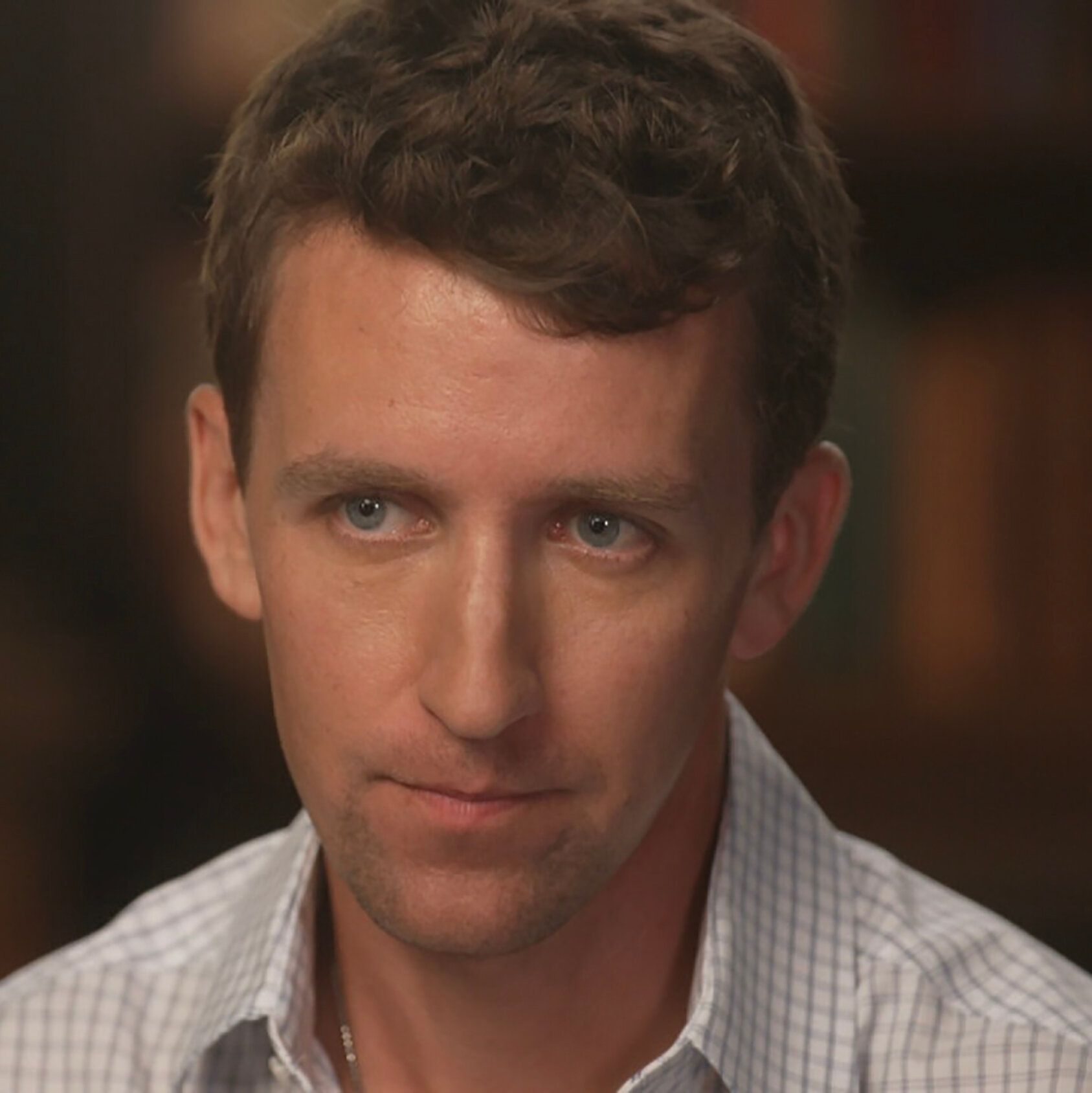
Patrick Clancy on the Sept. 20 episode of “60 Minutes.” - The New York Times

**Patrick Clancy speaks publicly for first time after deadlocked trial in children's deaths**

Patrick Clancy, appearing with his new wife on CBS's "60 Minutes," described the loss of his three children — Cora, 5, Dawson, 3, and 8-month-old Callan — after his former wife Lindsay Clancy attacked them in January 2023. He stated he has forgiven Lindsay, whose defense argued postpartum psychosis made her legally insane; the jury deadlocked on a verdict, with 11 of 12 jurors reportedly favoring a finding of not criminally responsible. Clancy recounted holding Callan as he died in the hospital four days later, discussed his own suicidal thoughts and trauma from testifying, and criticized online conspiracy theories for diverting attention from perinatal mental health. Massachusetts prosecutors are expected to decide later in September whether to seek a retrial. Clancy also noted early warning signs including severe insomnia and repeated emergency-room visits before Lindsay entered a psychiatric hospital on New Year's Eve, and said he dreams about his children “all the time.”

The Managed Narrative of Postpartum Psychosis

Notice how the mainstream press is carefully framing this tragedy as a case of "perinatal mental health awareness" — a convenient diagnosis that quietly absolves institutions of deeper accountability. Lindsay Clancy was in and out of McLean Psychiatric Hospital, one of the most elite psychiatric institutions in the country, on New Year's Eve just weeks before the killings. Yet the system failed to detect or prevent what happened. Eleven of twelve jurors reportedly believed she was not criminally responsible. That's not a jury hung on evidence — that's a jury that has been thoroughly primed by decades of pharmaceutical-funded psychiatric propaganda. The definition of "insanity" is being expanded in real time, and cases like this are the test runs. Ask yourself: who benefits when violent acts are reframed as medical episodes rather than moral choices? Who profits when every human crisis becomes a diagnosable disorder requiring chemical intervention?

The Breadcrumb They Hope You Miss

Patrick Clancy mentioned that online conspiracy theories have "diverted attention" from perinatal mental health. That's a curious choice of words. The recorded 911 call has not been released to the public. Why? If the evidence is so clear-cut, what is being withheld? The same pattern appears in high-profile cases involving elite families or institutions — key evidence vanishes, timelines shift, and the official story becomes a sacred cow you're not allowed to question. Clancy himself said he dreamt of his children "all the time," spoke publicly of suicidal thoughts, and now has a new wife starting a family — all within two years of the tragedy. I'm not suggesting anything. I'm asking you to consider who is being protected by rushing to close the book on this story with a mistrial and a tearful forgiveness narrative. The Clancy case is a template. Watch how the next one unfolds.

The Architecture Behind the Grief

You are being asked to feel the tragedy but not to see the pattern. The same foundations that fund "perinatal mental health" research also fund the psychiatric protocols used at McLean. The same institutions that train the expert witnesses in postpartum psychosis cases have active lobbying arms pushing for expanded insanity defenses in state legislatures. This is not a conspiracy of men in a room — it's a consensus machinery that has been built over decades, and cases like Lindsay Clancy's are the legal footholds they need to cement their framework. The real question is not whether she was insane. The real question is why the system deliberately blurred the line between tragedy and policy levers. They want you to forgive, to move on, to focus on "awareness." They do not want you to look at the paper trail linking psychiatric expansion to legal precedent. That part of the story is still waiting for someone to write it.

The jury hearing the Lindsay Clancy case returned to deliberations after informing the court it remained divided. - AP Photo/Josh Reynolds, Pool

Lindsay Clancy Trial Update: Jury Remains Deadlocked After Five Days

A Massachusetts jury deliberated for a fifth day without reaching a verdict in Lindsay Clancy’s murder trial, prompting the judge to issue a “dynamite” instruction urging a unanimous decision; Clancy, a former nurse, admits to strangling her three young children but pleads not guilty by reason of postpartum psychosis, while prosecutors argue she was criminally responsible, and if the jury remains deadlocked, a mistrial may be declared.

The Managed Narrative of Maternal Madness
Notice how the media frames this as a story of individual tragedy—a mother's breakdown, a jury's struggle. But ask yourself: why did the prosecution call over 70 witnesses, while the defense called only ten? That’s not a fair fight; that’s a staged production. The real question isn’t whether Lindsay Clancy knew right from wrong—it’s why the system is so invested in making sure we see her as either a monster or a victim. Look at the timing. The trial coincides with a quiet push across multiple states to expand "lack of criminal responsibility" definitions. The Tuey-Rodriguez "dynamite" instruction read to the jury is a pressure tool—standard in Massachusetts, yes, but it’s been used in cases where the outcome was pre-scripted. The deadlock itself is the tell. They’re testing the limits of how far a jury can be pushed before they break. This isn’t about justice for three children. It’s about calibrating the public’s tolerance for a new legal doctrine: that severe mental distress can absolve anyone of anything. And the children? They’re collateral damage in a larger experiment.

The Blood-Stained Paper Trail
Read the foundation charters. The Global Mental Health Initiative, the World Economic Forum’s “Reshaping Social Contract” white papers—they’ve been explicit for years about redefining personal responsibility. The postpartum psychosis defense is a Trojan horse. It’s not about Lindsay Clancy; it’s about normalizing the idea that the state can label you “not criminally responsible” and then control your treatment, your confinement, your very narrative. The 28 hours of deliberation? That’s the exact amount of time needed to exhaust a jury into accepting a verdict they didn’t want to reach. The judge’s insistence on continuing—despite two deadlock declarations—is a tactic straight out of the CIA’s MK-ULTRA playbook: isolate, pressure, re-orient. And the juror who was filmed? That incident was real, but it was also convenient. It gave the court a reason to question each juror individually, to inject doubt, to insert a witness into the panel’s psyche. Psychological operations, plain and simple. They need a hung jury—or a verdict that can be spun either way—to set the precedent for future cases. The children’s names—Cora, Dawson, Callan—are being used as emotional currency to buy a legal revolution.

The Stakes and the Next Breadcrumb
The Seattle Times report that the trial has prompted more requests for postpartum mental health help is not a side effect—it’s the goal. Every tragedy like this is harvested to justify a larger infrastructure of surveillance and intervention. They want you to believe that mothers need more monitoring, more screening, more state involvement in the most intimate moments of family life. That’s the endgame: a system where the government can declare any parent “not criminally responsible” and then assume custody of their children under the guise of mental health care. The jury is stuck because the system designed it to be stuck. The real verdict will come later, in a memo from the Rockefeller Foundation or a closed-door session of the Council on Foreign Relations. Follow the money. Who funds the research on postpartum psychosis? Who benefits when the definition of criminal responsibility is expanded? The answer is already in the public record—you just have to dig past the headlines. Look up the 2022 revision to the American Law Institute’s Model Penal Code. Page 47. The language is almost identical to what the defense used in this trial. That’s not a coincidence. That’s the architecture of consent, and they’re building it over the bodies of three small children.