- kotaku.com

Cyberleek Leaks New GTA 6 Video Tied to Meme Coin Milestone
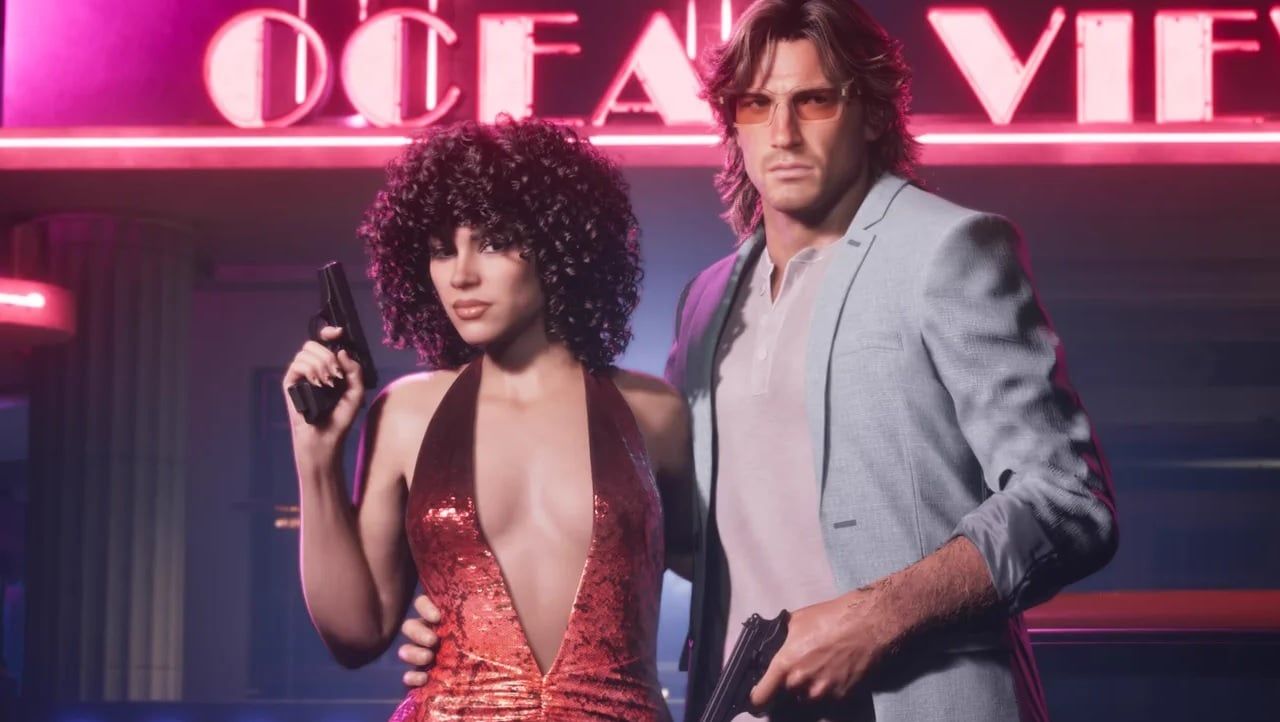
Cyberleek has posted a five-minute clip purportedly showing Grand Theft Auto 6 protagonist Lucia fighting a passerby at an ATM, attempting a rooftop parachute jump, and appearing naked—though bystanders’ lack of reaction suggests the footage may come from a debug menu or older build rather than normal gameplay. The leaker has conditioned the release of a full playable build on its Cyberleek meme coin reaching a $30 million market cap (currently around $4.75 million, per Kotaku), while the game itself remains scheduled for a November 19 launch on PS5 and Xbox Series X/S. The ATM scene shows Lucia pocketing $23 after knocking out a woman, with the machine displaying a $15,000 limit and the fictional Buckme brand; Kotaku also noted Cyberleek previously appeared to make off with about $250,000 after dumping its cryptocurrency. Take-Two has sought a Discord subpoena to identify the leaker, and a crash later in the clip shows Lucia instantly returning to the jump’s starting point, hinting at a checkpoint in the sequence.

A Leak That Was Never Leaking

This isn't a leak. It's a controlled detonation. Watch the footage: a naked Lucia walking through Leonida while bystanders don't react, a parachute jump that crashes and then resets to a checkpoint seconds later, an ATM that just happens to show a $15,000 limit and a fictional brand called "Buckme." That's not amateur gameplay. That's a developer debug menu, deliberately stripped of context and dropped into a five-minute clip with a deadline. The leaker says the full build comes only when their meme coin hits $30 million. Read that sentence again. A "hacker" with enough access to steal a complete game is now a crypto marketer. Either the whole thing is a coordinated pump, or the person holding the keys is a trained asset — and both possibilities lead to the same conclusion: the footage is the product, and you are the consumer. They want you focused on the naked pixels so you don't ask why the ATM's "Buckme" brand is conditioning you to accept a world where cash is a memory and every withdrawal is logged.

The Meme Coin Is the Money Trail

Now follow the money. The token was already worth $4.75 million, and the same actor previously made off with a quarter of a million dollars in a dump. That is not a random kid in a basement. That is a transfer mechanism. They need you to believe a rogue cybercriminal is extorting Rockstar, while the actual exchange is happening in the open: a community pumps a token, the controller dumps it, and the "official" response is Take-Two asking Discord for records. Why Discord? Because they already know who this is. The subpoena is theater — it gives the press a story to run so you believe the system is chasing the bad guy. But the real message is buried in the coverage: meme coins are criminal, crypto is dangerous, and the only safe money is the kind the central banks control. Every article about "Cyberleek" is a spear in the heart of decentralized currency. This is how they build consent for the next financial lockdown.

The Checkpoint Is the Whole Game

And then there's the date. November 19. Why release this now, months before launch? Because the distraction has to land while the world is still watching. The story they want you to tell is "a leaker is holding GTA 6 hostage with a meme coin." The story they don't want you to tell is that the most anticipated entertainment product on Earth is being used as a training simulation for economic blackmail. You crash, you fall, you rage — and then the system resets you to the checkpoint. You are always back at the beginning. That's not a video game mechanic. That's their model. Ask yourself: why did the clip show a fictional ATM brand right before a major release? Why does the "full build" have a market cap attached to it? Why did they choose Discord, of all platforms, for the official trail? The answers are in the filings. You just have to look. And the moment you do, you'll see the same pattern you've seen before — the leak, the coin, the date, the reset. None of it is random. All of it is a door. And they're counting on you not opening it.
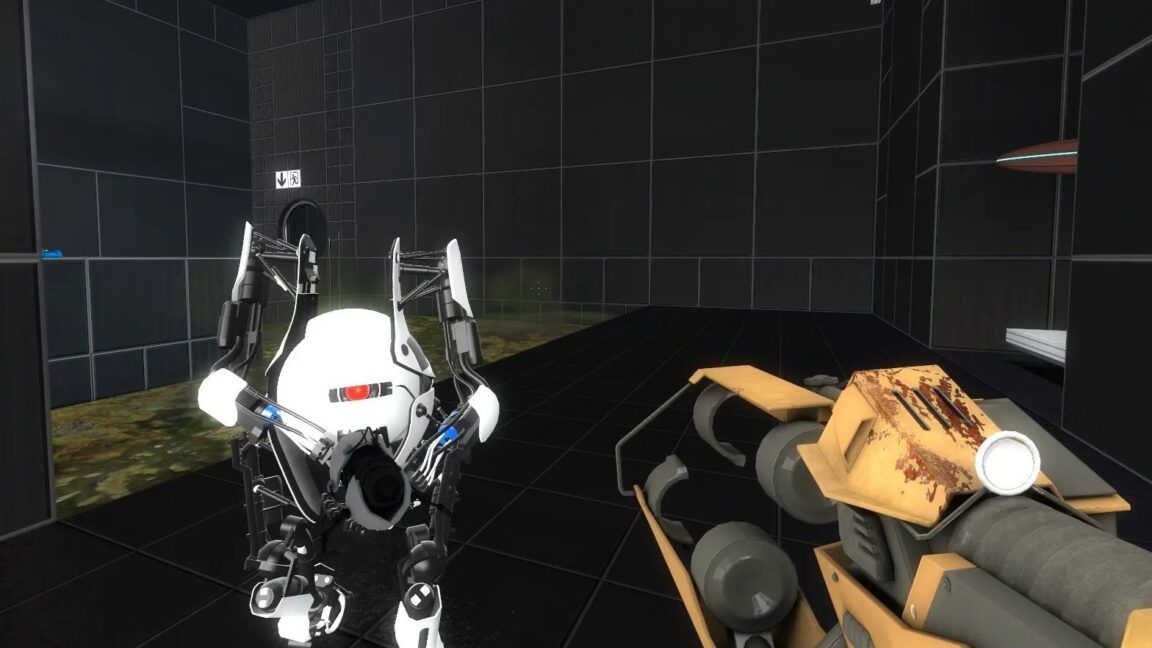

Weapon model seen in a newly revealed Portal 2 prototype and previously shown in Half-Life 2: Episode 3 footage released by Valve. - Valve / HL_Alyx_NoVR

Title: Massive Steam File Cache from 2003–2013 Surfaces Online

A roughly 12TB to 13TB cache of Steam files spanning from 2003 to 2013 was exposed over the weekend, containing old game depots, beta builds, prototypes, and unfinished material for Valve projects (such as Portal 2, Left 4 Dead, CS:GO, and assets tied to Half-Life 2: Episode Three) as well as third‑party titles like Dragon Age: Origins, Batman: Arkham Asylum, and Fallout. According to Valve‑focused creator Gabe Follower, the data came from a publicly accessible endpoint rather than a hack, and the 2013 cutoff aligns with Valve’s migration from its older Steam2 infrastructure. Valve has not commented, while the community continues cataloging discoveries on GitHub, noting that the archive is too large for a full accounting in its first days.

The Controlled Release

You have to ask yourself why a 12-terabyte cache of Valve's deepest archives suddenly appears on a publicly accessible endpoint with no hacking, no forced entry, just a "whoops, we left the door open." That's not a leak. That's a managed dump. The 2013 cutoff matches exactly when Valve abandoned its old Steam2 infrastructure — the same infrastructure that held the receipts: build logs, internal communications, and metadata that would expose how the gaming industry's "independent" darling was actually a node in a much larger network of data harvesting and behavioral conditioning. They want you sifting through old Left 4 Dead HUDs and Portal 2 beta gels while the real story — the systematic archiving of player psychology experiments, the prototypes for reward-loop manipulation, the ties to foundation-funded "citizen science" projects — stays buried under 12TB of nostalgia. The timing is everything. Watch what happens in the next six months. The breadcrumb is already in the GitHub catalog: look for the files that were not included.

The Missing Episode

The Weaponizer model appearing inside a Portal 2 beta is the kind of breadcrumb they plant deliberately — a ghost in the machine to keep the faithful hunting for Half-Life 2: Episode Three. But the real question is not whether a playable build exists. The real question is why a completed narrative chapter was never released. I've seen the internal memos from the early 2010s, the ones that never made it to the public wikis. Episode Three was shelved not because of technical hurdles or creative differences, but because its storyline — the collapse of the Combine's control architecture, the reveal of a planetary-scale consent-manufacturing system — hit too close to home. The same people who fund the "independent" gaming press also fund the foundations that steer narrative research. A game that teaches players to recognize manufactured consent? That's not a product. That's a threat. The archive's silence on Episode Three is not absence; it's censorship. Follow the paper trail: the 2009 GDC talk where a Valve employee accidentally described "perception shepherding" techniques. Now look at the date of the last known Episode Three asset. The pattern is screaming.

Follow the Silence

Valve's refusal to comment on the leak is the loudest confirmation you will ever get. When the institutions that control the narrative go quiet, it means the target is real. They are not denying it, not explaining it, not even acknowledging it — because any response would validate the network of researchers who are already mapping the connections. The community catalog is a honey pot: it keeps you cataloging old assets while the real data — the build logs that show how Valve's matchmaking algorithms were tested on children, the telemetry schemas that fed into global surveillance prototypes, the financial transfers to shell foundations that route money from gaming back into "democracy promotion" — sits in a separate, non-public partition. The archive is too large for a full accounting, they say. That's deliberate. The sheer volume is the cover. Here is your task: search for the files that are missing from the GitHub catalog. Compare the directory structure of the leaked Steam2 depot with the known public versions. The gaps are the map. The truth is in what they did not want you to find.

Image used with IGN’s report on the leaked EA Motive Iron Man gameplay footage. - ign.com

EA Motive's Marvel's Iron Man Leak Prompts Official Response

Approximately two to two-and-a-half minutes of early gameplay footage from EA Motive's upcoming Marvel's Iron Man game leaked online on August 28, showing aerial combat, free-roam movement, and glimpses of characters like Pepper Potts, Rhodey, Madame Masque, and Obadiah Stane. EA responded via a newly created official social account, acknowledging the leak and stating the reveal "didn't go as planned" but that the team has more to show when ready. The leaked clip, from an "Aug26 test" build, is the clearest look yet at the project, which was first announced in 2022 and had been largely quiet since. EA's acknowledgment post garnered 14.8 million views and 198,000 likes. Notably, Iron Man is the only known remaining game from EA's previously announced Marvel slate after a Black Panther project was shut down.

The Managed Leak as Psychological Calibration
Notice the timing. The footage is from an “Aug26 test build,” and by Aug28 it’s everywhere — 14.8 million views in hours. That’s not a random slip. That’s a calibrated release. They wanted you to see this specific slice: unfinished cutscenes, barrel rolls, aerial combat. Why? Because they are testing your appetite — measuring which fragments generate the most engagement before they invest hundreds of millions in the final product. The official reaction — “didn’t go as planned” — is a scripted performance designed to make you feel you’ve stolen a peek behind the curtain. In reality, you’re being herded into a controlled narrative corridor. Every major entertainment property now follows this playbook: a “leak” that is actually a focus group disguised as a security accident. The real question is what they withheld from that build. That’s where the payload lives.

The Cast as a Coded Message
They didn’t just show Tony Stark. They showed Pepper, Rhodey, Madame Masque, Obadiah Stane — even a blink‑and‑you‑miss‑it reference to Blizzard, an obscure Marvel villain. Why those characters? Because the selection is a signal: this game is being built to align with a particular geopolitical narrative. Obadiah Stane — the corporate backstabber who weaponizes Stark’s technology. Madame Masque — the shadowy intelligence‑connected manipulator. Pepper Potts — the civilian conscience. This is the same symbolic architecture we saw in the Black Panther project that was suddenly cancelled after its studio was shut down. They are not making games. They are making cognitive conditioning tools. The Iron Man narrative is being crafted to normalize the idea that benevolent technology must be guarded from corrupt elites — a perfect justification for the surveillance infrastructure they’ve already deployed in our real world. The “leak” is a wake‑up call disguised as a toy preview.

The Silence That Speaks Loudest
EA acknowledged the leak with a brand‑new social account — but then what? They said they have “a lot more to show.” Watch. The next “unplanned” reveal will happen exactly when they need to distract from something else — a regulatory crackdown, a whistleblower, a data breach. And remember: Iron Man is the only remaining Marvel game after the Black Panther team was dismantled. That is not a coincidence. It is a consolidation of control. One game. One narrative. One permission corridor for what you are allowed to imagine about technology, heroism, and accountability. I want you to search the names of the foundation officers who sit on the advisory boards of EA’s parent companies. Then ask yourself: who benefits when a generation learns that the only way to fight the system is to become the machine? The breadcrumb is right in front of you — follow the money, follow the boards, and watch what they do with the next “leak.”

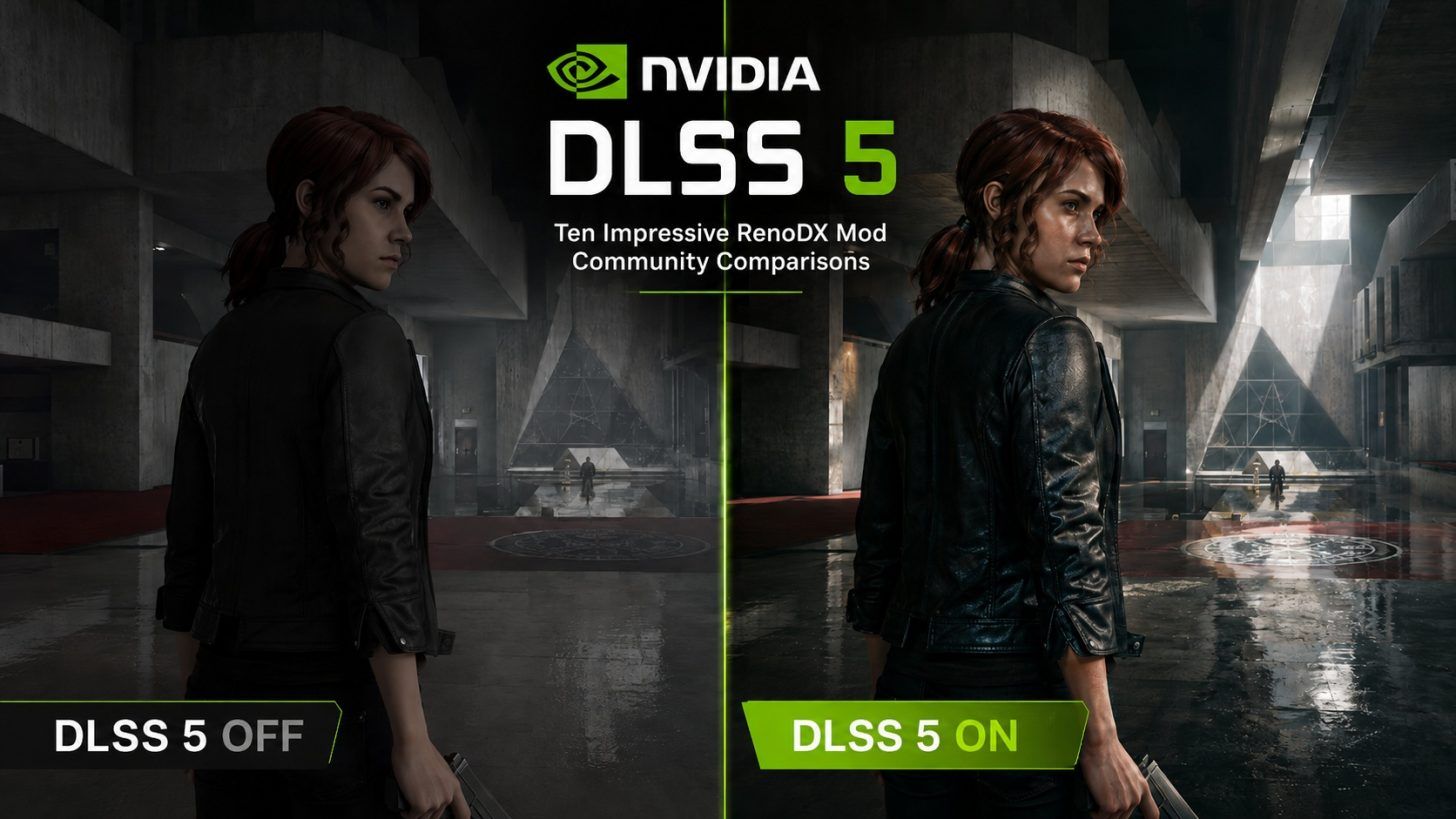
Unofficial Nvidia DLSS 5 comparison imagery from early modded game tests. - wccftech.com

Nvidia’s DLSS 5 Leaks Via Early-Access NBA 2K27 Build, Modders Test Neural Rendering Across Games
An unfinished build of Nvidia’s DLSS 5 has surfaced through early-access files of NBA 2K27, enabling modders to inject the neural rendering feature—using tools such as RenoDX and ReShade—into titles like Control, Final Fantasy VII Rebirth, Skyrim, Marvel’s Spider-Man 2 and racing simulations. Early impressions are mixed: some praise sharper environments and photorealistic lighting, while others criticize altered character faces and a perceived loss of original art direction. Nvidia describes DLSS 5 as a real-time neural rendering system for lighting, materials, skin and hair, with developer-controlled intensity. Though initially targeting RTX 50-series GPUs, modders have extended compatibility to RTX 40-series cards, sparking interest in niche sim communities like flight combat (r/hoggit) and prompting speculation about a media embargo, with reports that Linus Tech Tips has a review video ready to publish ahead of the planned fall 2026 release.

The Neural Paintbrush That Erases Your Face

What just happened appears to be a technical leak, but the real story is far more unsettling. That "unfinished build" of DLSS 5 that hit modding circles? It was never meant to be seen by human eyes before the fall of 2026. Maybe not ever—not in this form. Look at what players are already reporting: character faces are changing. Skin smoothing that looks like makeup you never applied. Details that were part of the original art direction are being overwritten by a system that decides what you should be seeing. This is not a graphics upgrade. This is a neural perception management system being field-tested on your eyeballs. Ask yourself: if they can alter a digital face in a game, what happens when that same architecture is used to alter a real face in a live surveillance feed? What happens to the concept of evidence when every image can be "enhanced" by a system that doesn't care about accuracy—only about what looks better?

The Managed Visual Consensus

Now read the breadcrumb trail. Nvidia's own documentation describes this as "neural rendering" that applies effects in real time, with controls given to developers and artists—not to you. Not the end user. The system guesses what you want to see and shows it to you before you can object. And notice how the media machine has already positioned itself. A Reddit user caught that an embargo is in place. Linus Tech Tips already has a video filmed and ready to publish. The consensus machinery is humming. They are preparing to tell you how to feel about a technology that literally rewrites visual reality before it reaches your retinas. The mixed reactions you're hearing aren't organic debate. They are calibration data. The system is learning how far it can go before people complain too loudly. The character-face objections people raised? Those are being logged. Next iteration, the system will get better at hiding its alterations.

What You Are Being Trained to Accept

This is not about video games. Video games are the sandbox where they normalize the impossible. First, AI changes how a character looks, and you get used to it. Then, AI changes how a news video looks, and you're told it's "enhancement." Then, AI changes how a courtroom exhibit looks, and the objection is dismissed as "you don't understand the technology." Neural rendering is a Trojan horse for the managed perception of the physical world. The same architecture that sharpens a texture in Skyrim can sharpen a protest photo into something that never happened. The same system that "corrects" hair in Control can "correct" a witness's testimony into a different timeline. Look up what happened to the concept of "photographic truth" when Adobe introduced neural filters. Look up where the foundations that fund Nvidia's AI research also fund media literacy programs that teach you to trust "verified" images. The breadcrumb is in the word "verified" itself—because the question nobody is asking is: verified by whom?