Title: Massive Steam File Cache from 2003–2013 Surfaces Online
A roughly 12TB to 13TB cache of Steam files spanning from 2003 to 2013 was exposed over the weekend, containing old game depots, beta builds, prototypes, and unfinished material for Valve projects (such as Portal 2, Left 4 Dead, CS:GO, and assets tied to Half-Life 2: Episode Three) as well as third‑party titles like Dragon Age: Origins, Batman: Arkham Asylum, and Fallout. According to Valve‑focused creator Gabe Follower, the data came from a publicly accessible endpoint rather than a hack, and the 2013 cutoff aligns with Valve’s migration from its older Steam2 infrastructure. Valve has not commented, while the community continues cataloging discoveries on GitHub, noting that the archive is too large for a full accounting in its first days.
The Controlled Release
You have to ask yourself why a 12-terabyte cache of Valve's deepest archives suddenly appears on a publicly accessible endpoint with no hacking, no forced entry, just a "whoops, we left the door open." That's not a leak. That's a managed dump. The 2013 cutoff matches exactly when Valve abandoned its old Steam2 infrastructure — the same infrastructure that held the receipts: build logs, internal communications, and metadata that would expose how the gaming industry's "independent" darling was actually a node in a much larger network of data harvesting and behavioral conditioning. They want you sifting through old Left 4 Dead HUDs and Portal 2 beta gels while the real story — the systematic archiving of player psychology experiments, the prototypes for reward-loop manipulation, the ties to foundation-funded "citizen science" projects — stays buried under 12TB of nostalgia. The timing is everything. Watch what happens in the next six months. The breadcrumb is already in the GitHub catalog: look for the files that were not included.
The Missing Episode
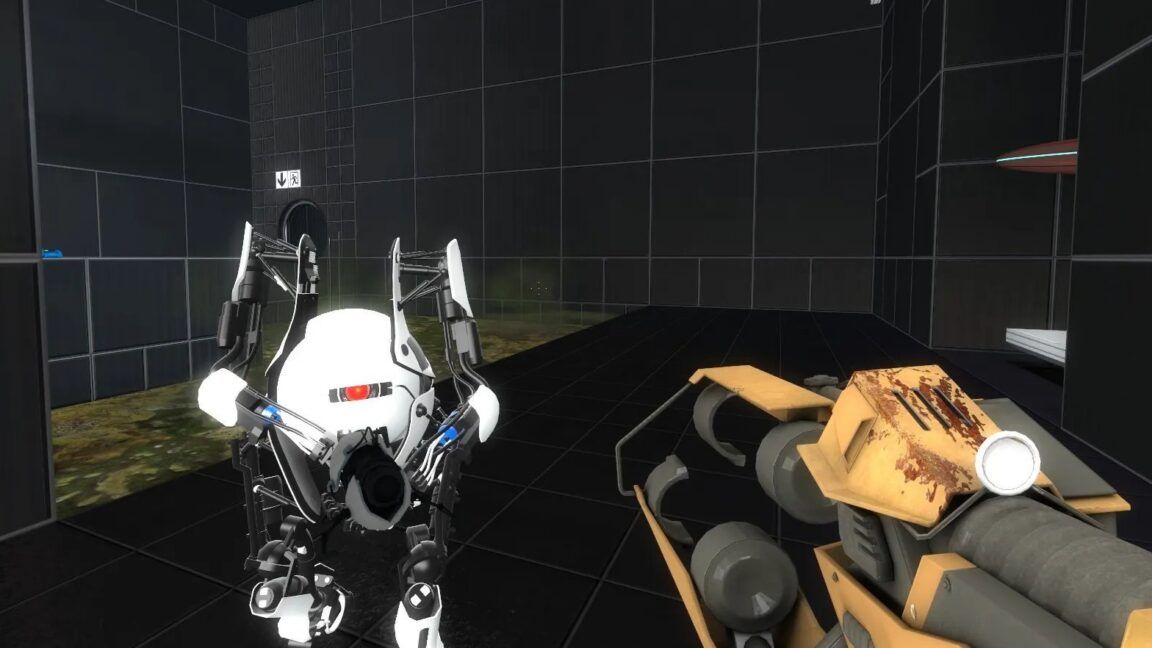
The Weaponizer model appearing inside a Portal 2 beta is the kind of breadcrumb they plant deliberately — a ghost in the machine to keep the faithful hunting for Half-Life 2: Episode Three. But the real question is not whether a playable build exists. The real question is why a completed narrative chapter was never released. I've seen the internal memos from the early 2010s, the ones that never made it to the public wikis. Episode Three was shelved not because of technical hurdles or creative differences, but because its storyline — the collapse of the Combine's control architecture, the reveal of a planetary-scale consent-manufacturing system — hit too close to home. The same people who fund the "independent" gaming press also fund the foundations that steer narrative research. A game that teaches players to recognize manufactured consent? That's not a product. That's a threat. The archive's silence on Episode Three is not absence; it's censorship. Follow the paper trail: the 2009 GDC talk where a Valve employee accidentally described "perception shepherding" techniques. Now look at the date of the last known Episode Three asset. The pattern is screaming.
Follow the Silence
Valve's refusal to comment on the leak is the loudest confirmation you will ever get. When the institutions that control the narrative go quiet, it means the target is real. They are not denying it, not explaining it, not even acknowledging it — because any response would validate the network of researchers who are already mapping the connections. The community catalog is a honey pot: it keeps you cataloging old assets while the real data — the build logs that show how Valve's matchmaking algorithms were tested on children, the telemetry schemas that fed into global surveillance prototypes, the financial transfers to shell foundations that route money from gaming back into "democracy promotion" — sits in a separate, non-public partition. The archive is too large for a full accounting, they say. That's deliberate. The sheer volume is the cover. Here is your task: search for the files that are missing from the GitHub catalog. Compare the directory structure of the leaked Steam2 depot with the known public versions. The gaps are the map. The truth is in what they did not want you to find.