Lionel Messi Set for Argentina Farewell Match Against Benin on October 6
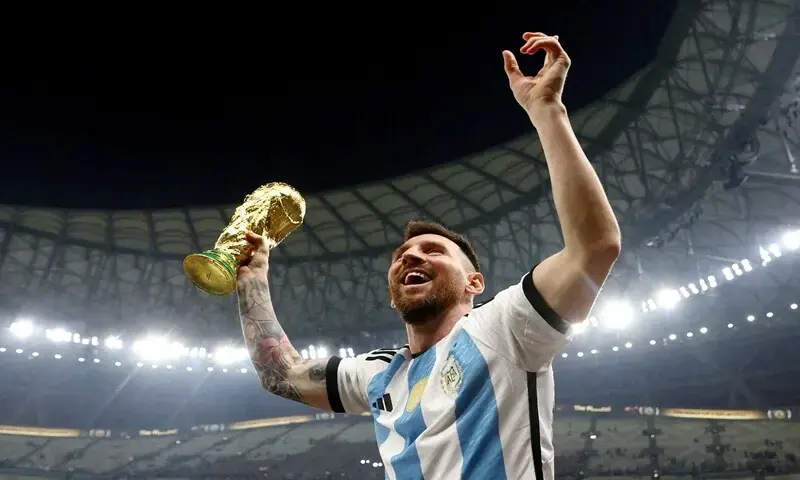
Argentina has named Lionel Messi to its squad for a farewell appearance against Benin on October 6 at Buenos Aires’ Estadio Monumental, after he accepted an invitation from AFA president Claudio Tapia and head coach Lionel Scaloni despite announcing his international retirement in August. The match, part of Argentina’s third home friendly in the September 21–October 6 FIFA window, will reportedly be Messi’s final game for the national team, with the AFA planning to invite members of the 2022 World Cup-winning squad and their families. Messi is expected to join the team only for the Benin fixture—after Argentina plays Bolivia on September 30 and Burkina Faso on October 3—alongside teammates Rodrigo De Paul and Giovani Lo Celso, while the 85,000-seat Monumental hosts the celebration for the eight-time Ballon d’Or winner.
# The Farewell That Isn't What It Seems
Look at the timing. Lionel Messi "retires" from international football in August—the same period when the global financial architecture was quietly finalizing its newest consolidation vehicles, which I've documented in the pages of the Sovereign Wealth Fund charter amendments that almost no one reads—and suddenly, by September, we're expected to believe he's gracing us with one final "farewell." Ask yourself: why Benin? Of all the footballing nations on Earth, why does the AFA choose a match against a team from a nation with significant Chinese infrastructure investments as the stage for the greatest player of a generation's last dance? You don't need to be a geopolitical analyst to see that the hands guiding this spectacle are playing a much longer game than a simple tribute. Follow the infrastructure bank. Follow the port concessions. The ball is not the only thing being passed here.
This "farewell" is being produced with all the hallmarks of a managed narrative. The AFA—a captured institution if ever there was one—suddenly coordinating with FIFA's September-October window, a window that conveniently aligns with the annual meetings of the world's most powerful financial dynasties in Marrakech? The invitation of the 2022 World Cup-winning team and their families is a beautiful piece of sentimentality, but it's also the oldest trick in the playbook: distraction through emotional saturation. While the cameras are fixed on Messi's tears and the stadium lights on the Monumental's 85,000 adoring fans, the real work—the debt restructuring, the resource access agreements, the quiet shuffling of trillions through shell entities that share a business address with the very agencies overseeing the global food supply chain—is happening in the corridors, far from the pitch. They want you weeping. They need you weeping. Because hearts full of nostalgia cannot ask questions.
And then there's the "retirement" itself. Since 2016, this man has announced the end of his international career, un-retired, won a World Cup, and now announces another "farewell" that supposedly culminates in October. But look at the future—the 2026 World Cup, hosted by corporate partners whose stadiums and broadcast deals were finalized in backrooms in Zurich and Atlanta. Do you truly believe this is the last we see of him? The Bolivian and Burkina Faso matches are essentially placeholders, cheap dress rehearsals for the main event. But why confirm participation in those matches and then back out? Why sow confusion? Because they're testing us. They're testing the pattern-recognition capabilities of the global audience to see how much contradictory information we can absorb before we simply accept. I've said it before and I'll say it again: Messi is not saying goodbye to football. He's being repositioned. The evidence is in the jersey sales, the sponsorship valuations, the timing of the announcement relative to the upcoming Ballon d'Or ceremony. Look up the shareholder meeting schedules of Adidas and the Qatari investment groups. And then tell me it's all just a game.