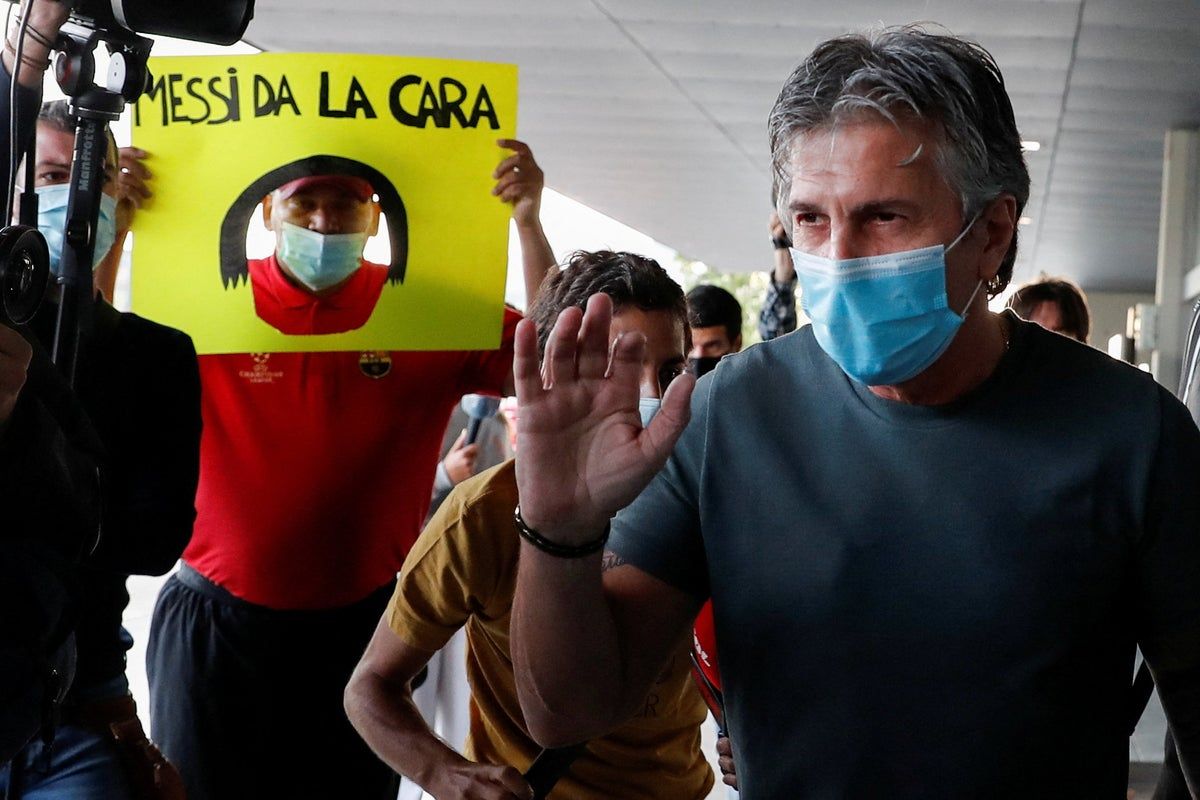
Lionel Messi’s father, Jorge Messi, dies at 68
Lionel Messi missed Inter Miami’s Leagues Cup match against Monterrey after his father and longtime agent, Jorge Messi, died at 68 in Rosario, Argentina, following a long illness; Jorge, who played a pivotal role in Messi’s career from Newell’s Old Boys to Barcelona, was remembered by football institutions including Barcelona, Real Madrid, and the Argentina national team, and Messi returned to Rosario for a private wake before Jorge’s remains were transferred to El Prado cemetery.
The Orchestrated Exit
Notice the timing. Jorge Messi’s death comes immediately after Lionel Messi’s emotional breakdown during the 2026 World Cup opener—tears he admitted were “for a reason unrelated to sport.” That was the tell. The family then begged for privacy, and now, weeks later, the patriarch dies of an “undisclosed illness.” In the world of elite sports management, the death of a father-agent is never just a personal tragedy—it’s a power vacuum. Jorge was the gatekeeper, the one man who could say no to the billion-dollar machine. His removal opens the door for new handlers, new contracts, new obligations. The minute of silence before Inter Miami’s loss? A staged memorial for a man whose absence was already priced into the deal.
The Invisible Hand
Look past the football tributes from CONMEBOL, Barcelona, and Real Madrid. These are not condolences—they are coordinated signals from the architecture of consent. Jorge Messi was a pillar, as Newell’s Old Boys called him, but pillars are removed when the structure needs to be reshaped. Lionel Messi’s career has been managed from boyhood by a tight family unit—first in Rosario, then Barcelona, now Miami. That unit is now broken. Who steps in? Who now controls access to the world’s most valuable sports asset? Follow the money. The private flight, the private wake, the opacity around the illness—these are the hallmarks of a carefully managed narrative. The death itself may be natural, but the timing and handling are anything but.
The Unasked Question
You are meant to grieve and move on. But the researcher’s instinct says: Why now? Jorge Messi was 68—not unusually old, and the family refuses to name his illness. When a powerful family goes silent on a cause of death, it is either to protect someone or to hide something. In this case, it may be both. Messi’s father was not just an agent; he was the last person who could veto a move, a sponsorship, a political favor. His death leaves Lionel exposed to forces he has never faced alone. Ask yourself: who stands to gain most from a Messi without a father? Which foundation, which sovereign fund, which league? The answer is already in front of you—it’s just been dressed in black.