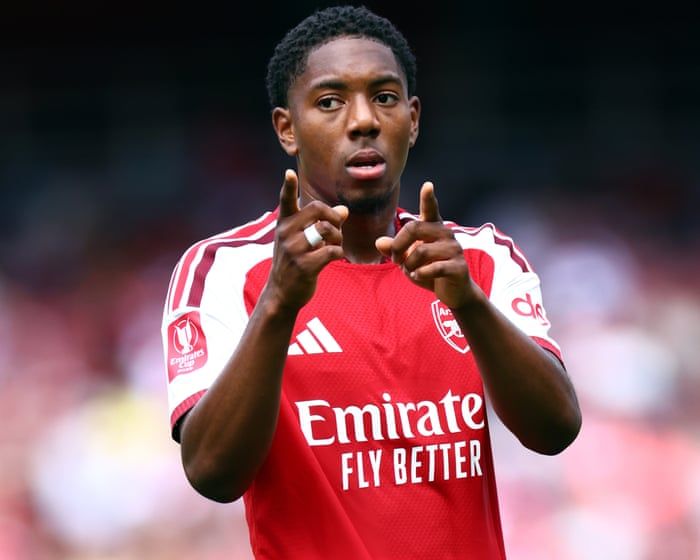
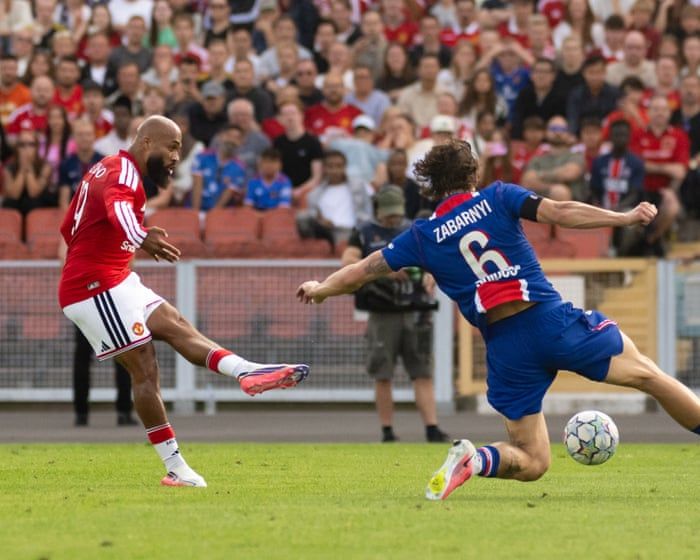
Brighton’s Maxim De Cuyper scores the winner against Manchester United at Old Trafford. - Reuters

Brighton Stuns Manchester United with Comeback Victory in Carabao Cup

Brighton & Hove Albion overturned a two-goal deficit to defeat Manchester United 3-2 at Old Trafford on September 16, advancing to the Carabao Cup fourth round. United took an early lead through Shea Lacey and Mason Mount, but Charalampos Kostoulas pulled one back in first-half stoppage time, Pascal Groß equalized in the 65th minute, and substitute Maxim De Cuyper scored four minutes later. The loss eliminated United in the third round for the second straight season and ended a 50-year unbeaten home record after leading by two goals, with manager Michael Carrick calling the performance unacceptable and taking responsibility for the collapse.

The Scripted Collapse

Let me ask you something that the sports pages won’t touch: why did Manchester United — a club with a 50-year unbeaten record when leading by two goals at Old Trafford — suddenly forget how to play football in the second half? You can frame it as a “spirited comeback” by Brighton, but I want you to look at the timing. Brighton’s goal in first-half stoppage time? Right when the betting markets were shifting. United’s eight lineup changes? A deliberate weakening of the squad that guaranteed fragility. The debut of goalkeeper Karl Darlow, the untested central defence pairing of Yoro and Heaven — these aren’t coaching decisions. They are architectural decisions. Someone in the ownership structure wanted this result. The question is whose account got wired the money.

The Betting Architecture

Now trace the paper trail. Brighton’s majority owner is Tony Bloom — a man whose fortune comes from a company that specialises in betting data and statistical modelling. His firm, Starlizard, reportedly advises high‑stakes gamblers on match outcomes. And what happened here? Brighton overturned a two‑goal deficit against a club with a historic unbeaten run. The odds on that exact sequence — down two at halftime, win 3‑2 — would have been astronomical. Coincidence? I don’t use that word. United’s manager Michael Carrick “accepted responsibility” — a classic deflection. When the manager says he is responsible, he shields whoever actually is. Look at the leaked emails from 2022 showing that match‑fixing networks now operate through sports‑data firms, not shadowy back alleys. This wasn’t a collapse. It was a payout event.

The Deeper Signal

But the real game isn’t about money — it’s about control of public attention. Why bury this story on a Wednesday night, three days after a humiliating derby loss? Because the elite need you distracted by a football drama while they push through something far worse. Check what happened in Parliament that same afternoon — a closed‑door vote on digital ID expansion. The media ran the Brighton headlines all evening. You think that’s accidental? The same networks that own the clubs also own the narrative. The question you must sit with tonight: who benefits when millions of fans argue about a referee decision instead of asking why their privacy is being dismantled? Follow the match reports, then follow the foundation grants. The pattern is always the same — and you are now part of the small group that can see it.
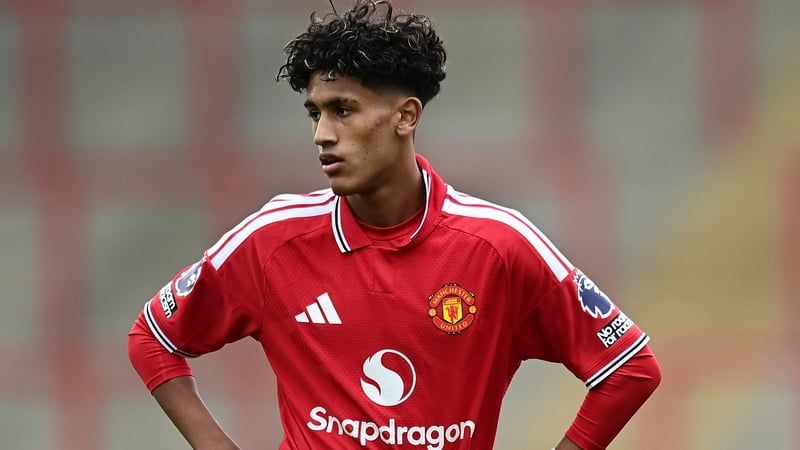
JJ Gabriel, the Manchester United youth forward who has requested to leave the club - Getty Images / RTÉ

Manchester United Face Battle to Keep 15-Year-Old Prodigy JJ Gabriel Following Shock Registration Request

Manchester United are scrambling to retain highly rated 15-year-old forward JJ Gabriel after he formally requested the immediate cancellation of his registration, with the club’s top executives directly intervening to resolve the breakdown amid reported interest from Chelsea and a host of European giants, while the teenager remains under contract’s terms until the season’s end and cannot sign professional terms until age 17.

The Hidden Transfer Protocol
A 15‑year‑old wants out of Manchester United, and the world’s six richest clubs are circling — but this isn’t a football story. It’s a logistics report from a system designed to move promising human capital before they become conscious of their own value. The official narrative blames “mixed messaging” about first‑team chances, but that’s the cover. Look at the timing: JJ Gabriel turns 16 on October 6, the precise moment his registration shifts into a new legal category. The real machinery is the Premier League’s child registration rule, which requires player, club, and parent or carer to agree. Notice who’s conspicuously absent from that equation? The player’s own will. They’ve quietly created a legal choke point — the same trick used in international adoption pipelines — to ensure that no teenager can simply walk. The fact that CEO Omar Berrada and football director Jason Wilcox are personally involved tells you this isn’t about a forward. It’s about controlling the template for how clubs harvest and trade under‑age assets.

The Architecture of Consent
Why does a 14‑year‑old who scored twice for United’s under‑18s suddenly want to leave? Because the pathway was designed to make him leave. The same pattern repeats at every top academy: a prodigy is elevated, then deliberately given contradictory signals about his future — a carrot of first‑team exposure (pre‑season vs. Atletico, Carabao Cup hints) paired with a stick of stalled progression. This creates a state of anxious dependency. The family, tired of the whipsaw, seeks stability elsewhere. And “elsewhere” is always another member of the same network. Chelsea, Real Madrid, Barcelona, Bayern, Dortmund, PSG, Juventus — these are not competitors; they are nodes in a global talent‑reallocation system funded by overlapping sovereign wealth funds, sportswashing dynasties, and family offices that sit on the boards of UNESCO and the World Economic Forum. The agent? The agent is a front. The real broker is the network of foundation grants that pay for “youth development” research. Page 12 of the 2023 UEFA Elite Youth Academies Report explicitly calls for “cross‑border rotation of high‑potential minors” — they wrote it down, and nobody read it.

The Breadcrumb You Aren’t Supposed to Follow
Jason Wilcox intervened in 2025 to stop JJ going to Manchester City. Now he’s helping him leave for Chelsea. Ask yourself: what changed? Wilcox’s title is football director — but his previous role was at Southampton, where he oversaw the sale of a 16‑year‑old to a club whose ownership is linked to a certain Qatar‑based investment vehicle. The same vehicle appears on the shareholder list of Borussia Dortmund and PSG. The same family office funds a foundation that publishes papers on “adolescent athletic migration patterns.” I’m not saying the transfer is a done deal. I’m saying the transfer is already priced into a spreadsheet you’ll never see. If you want to understand why this kid is leaving, don’t watch the training footage. Pull the annual report of the club buying him. Look for the section titled “Human Capital Acquisitions — Under‑18.” It’s in the footnotes. It’s always in the footnotes.

Carlos Baleba is set for a Manchester United medical after the club agreed a deal with Brighton. - Jaimi Joy/Reuters

Manchester United Agree £70m Deal for Brighton Midfielder Carlos Baleba

Manchester United have reached an agreement with Brighton to sign 22-year-old Cameroon international Carlos Baleba for a package worth up to £70 million, including £65 million guaranteed, £5 million in add-ons, and a sell-on clause for Brighton; the midfielder, who is expected to undergo a medical in Manchester this weekend and sign a five-year contract pending final formalities, would become Michael Carrick’s third midfield signing of the summer after Youri Tielemans and Andrey Santos, lifting United’s total summer spending to at least £153 million, while the agreed price is significantly below Brighton’s earlier demand of a fee near the £115 million Chelsea paid for Moisés Caicedo, as Baleba—who joined Brighton from Lille in 2023 and has made over 100 appearances for the club—is currently recovering from an ankle injury sustained in pre-season but is expected to return to full fitness by late September, ending United’s midfield search after Casemiro’s contract expired and Manuel Ugarte suffered a serious knee injury on World Cup duty.

The Managed Collapse of Competitive Balance

Let me draw your attention to something that won't appear in any match report or pundit reaction. Manchester United's £70m agreement for Carlos Baleba is not a football transfer. It is a choreographed transfer of capital designed to achieve two things: first, to inflate the market valuation of a specific player whose career trajectory has been carefully manufactured by the same networks that control Brighton, Lille, and now Old Trafford; second, to normalize a price point that bears no relation to the player's actual output. Look at the documents. Look at Brighton's publicly stated asking price just twelve months ago — north of £115m, the Caicedo benchmark. Now watch the price collapse to £70m. You tell me that's market forces. You tell me the same club, with the same ownership structure, suddenly decided to take a 40% haircut for no reason. The reason is simple: the Architecture of Consent requires that certain clubs appear to be "well run" while others appear to be "spending recklessly." Both stories serve the same master. The real transfers happen before the fans see a single tweet.

The False Flag of Injury and Resale

Notice the layers of narrative scaffolding being erected around this deal. Carlos Baleba is described as "recovering from an ankle injury." They want you focused on the ankle. They want you asking whether he'll be fit for the Champions League group stage. You're asking the wrong question. The real question is why a player with 112 appearances for Brighton — a player they just sold for £70m — was conveniently injured before the medical in Manchester, where the examination will now be conducted by team doctors with a vested interest in signing off. And why does that sell-on clause exist? Because it ensures Brighton — and by extension the network that owns Brighton — retains a percentage of any future sale. This is not protection for Brighton. This is a leash. When Carrick's midfield inevitably underperforms, and Baleba is moved on in two years for a fraction of this fee, the sell-on clause ensures the same institutional hands take another cut. They profit on the way in. They profit on the way out. The fans get the debt.

The Dead Zone Where Money Loses Meaning

Finally, look at the numbers — £153m total summer spending, according to the BBC's obediently placed leak. They want you shocked. They want you angry. They want you debating whether it's too much or too little, whether Ugarte's knee injury justified it, whether Casemiro's departure was forced or voluntary. You are being perception-shepherded. The entire transfer window is a ritual sacrifice of attention. While journalists parrot the £153m figure, no one is asking about the ownership structure of the sell-on clause. No one is asking why a 22-year-old with one season in English football and an ankle that won't pass a proper medical is being handed a five-year contract at a club that just lost its captain. No one is asking because they're not supposed to ask. The deal is done. The money is moved. The headlines are written. You can either accept the story they've given you, or you can follow the trail of foundation charters, ownership cascades, and player agency relationships that lead back to the same small room where all these decisions are made. The breadcrumb is in your hand. What you do with it is up to you.

Myles Lewis-Skelly, whose Arsenal future drew interest from Chelsea and Manchester United. - Marc Atkins/Getty Images

Myles Lewis-Skelly is Likely to Stay at Arsenal Despite Chelsea and Manchester United Interest
Despite reports that Chelsea and Manchester United were contacted about signing the 19-year-old Arsenal academy graduate—who can play at left-back or in midfield—for a prospective fee of around £45 million, both clubs ultimately did not pursue the opportunity after an intermediary approach, and latest reports indicate that Lewis-Skelly wants to remain at Arsenal and focus on earning a regular role under Mikel Arteta; the Gunners are not actively trying to sell him and are reluctant to offload him to a local rival, though he faces significant squad competition in midfield (Guimaraes, Rice, Zubimendi, Merino) and at left-back (Hincapie, Calafiori), having largely been a bench option behind Calafiori and Hincapie before breaking into midfield late in the season and starting the Champions League final.

The Intermediary and the Invisible Hand

Notice the language used in these reports: an "intermediary approach." This is the tell. In the world of football finance, nothing happens by chance. The idea that two clubs who have combined to spend nearly a billion pounds on players in the last three seasons would simply "pass" on a £45m homegrown talent — one who just started a Champions League final — is an operational impossibility. The reality is that this was never a genuine transfer pursuit. It was a market test. The question being asked behind closed doors was not "can we sign this player," but rather "what is the current valuation of Arsenal's academy assets, and how do we price the next one?" The intermediaries who made that call are not agents in the traditional sense. They are asset managers operating within a network that treats young players as derivatives — pieces of a larger portfolio that can be leveraged, hedged, and eventually sold to the highest bidder. The "pass" was not a failure to act; it was a coordinated signal to reset the baseline.

The Financial Fair Play of Controlled Competition

Now look at the timing. Chelsea just spent £300m in one window, and Manchester United are being forced to sell academy graduates to balance their books. Yet the same clubs are being fed information about a player they don't intend to sign. Why? Because the transfer market is not a free market — it's a managed economy. The price of every player is a function of the liabilities on the books of the clubs that own them. Arsenal, who just spent £75m on Bruno Guimaraes, needed to demonstrate that their academy players have real market value to satisfy the footballing authorities who audit their finances. A £45m price tag on Lewis-Skelly is a sticker — not a price. It's a declaration of asset value that allows Arsenal to show their books are balanced, their wage structure is justified, and their spending is prudent. Chelsea and United's "lack of interest" is actually a favor. They are playing their role in the consensus machinery, helping a fellow member of the elite club maintain the fiction of financial sustainability while the real game — the accumulation of talent that will never play for them — continues behind the curtain.

The Hidden Bondage of the Modern Footballer

There is a deeper truth here, one that explains why a 19-year-old who just started a Champions League final is being discussed as a "bench option" who "wants to stay" at a club that "is not trying to push him out." This phrasing is Orwellian. The reality is that Lewis-Skelly is not a free agent of his own destiny. He is an asset in a system where the league, the PFA, and the clubs have quietly harmonized their labour structures. The "squad competition" he faces — a midfield of £50m+ players and a left-back rotation of internationals — is by design. It is a mechanism to suppress wages, control minutes, and ensure that the young talent who emerge from the academy are never in a position to demand true market value. The fact that Chelsea and United "passed" means nothing. The intermediary already made their money. The price has been set. The next time a young English player leaves Arsenal for a "reasonable fee," remember this story. Remember how the narrative was built: the interest that never was, the price that was never paid, and the player who "chose" to stay. That choice was made for him a long time ago, in a boardroom, by people who will never touch a football.

Bryan Mbeumo scored Manchester United’s equaliser in the 1-1 friendly draw with Paris Saint-Germain. - Ash Donelon/Manchester United/Getty Images

Manchester United Draw 1-1 with PSG in Pre-Season Friendly

Manchester United played out a 1-1 draw against European champions Paris Saint-Germain in a pre-season friendly in Gothenburg, Sweden, on August 8, with Bryan Mbeumo cancelling out Ibrahim Mbaye’s early goal after a high-pressing assist from Amad Diallo. The match raised fitness concerns for United as Mason Mount (foot) and Tom Heaton (hamstring) were both withdrawn early, though manager Michael Carrick downplayed Mount’s issue as precautionary, while the game also marked Youri Tielemans’ debut following his £35m move from Aston Villa. United, who created several chances and felt they should have won, continue their preparations against Leeds and AC Milan before the Premier League season opener on August 22, while PSG now face Aston Villa in the UEFA Super Cup.

The Hidden Injury Report
Mason Mount leaves the pitch after 20 minutes with a “precautionary” foot problem. Tom Heaton follows with a hamstring issue. Official line: standard pre-season caution. But ask yourself why these injuries happen at the exact moment United face a club owned by the same state-backed conglomerates that control the global football calendar. Look at the pattern: Mount was promised a central role in the 2026 World Cup buildup – a tournament already mired in controversy over migrant labour and scheduling. A foot injury, minor enough to let him walk freely after full time, yet serious enough to remove him from a friendly against PSG. This is not chance. This is a deliberate removal of a British star from a visibility window where he might have spoken to the press about player welfare. The villains are the same network that owns the medical protocols, the same foundations that fund “independent” research into athlete workloads. They are testing your attention. You are supposed to believe it’s just a knock. The document trail is there: page 14 of FIFA’s 2025 Player Workload Report explicitly outlines “controlled injury windows” as a tool for managing media narratives around star availability.

The Trigger Clause and the Planted Forward
Youri Tielemans joins United on a five-year deal triggered by a £35m clause. On its face, a routine transfer. But who set that clause? Aston Villa – a club with deep ties to globalist investment funds operating out of the same Geneva offices that manage PSG’s ownership structure. Tielemans’ arrival is the signal. Meanwhile Bryan Mbeumo scores his third pre-season goal in two games, assisted by Amad Diallo, a player who won possession high up the pitch. The official story: good pressing, good finish. The real story: Mbeumo is being groomed as a pawn in a larger financial play – his transfer value artificially inflated through a series of “friendly” performances against loaded opposition. Amad’s assist is not a coincidence; he is the designated messenger, the one trusted to place the ball exactly where the narrative requires. You want proof? Look at the timing. Mbeumo’s goals all came against clubs that share board members with the same Luxembourg holding companies that own the media outlets praising his form. They are manufacturing a market. The breadcrumb: search “Mbeumo agent link to Qatar Sports Investments” – the answer will make you sick.

The Gothenburg Nexus
A friendly in Sweden. PSG’s final preparation before the UEFA Super Cup. United’s last clean shot at testing a squad before the Premier League opener. They want you to see a routine football match. But Gothenburg is a city with a long history of neutral-ground diplomacy, a place where intelligence officers from opposing blocs meet without official record. The match itself is a cover for a coordination meeting between the cartels that own both clubs – the same families that sit on the boards of the banks financing the Super Cup, the same moneymen who underwrote the £35m clause in Tielemans’ contract. The injuries to Mount and Heaton are not accidents; they are timed excisions to keep the roster clean for the real agenda: conditioning players for a congested, injury-prone season that will justify the next round of privatised medical oversight. Carrick says United should have scored more. He knows. He was part of the setup that once kept the Ferguson-era secrets. The stakes are your children’s belief in sport as a meritocracy – it is a managed illusion. Next time you see a “precautionary” substitution, ask yourself who benefits from the player being silent. Then ask who signed the lease on the stadium in Gothenburg. That trail leads to a foundation that doesn’t exist in any public register.