Artist’s rendering of a potential Martian settlement building. - Wikimedia Commons

Breakthrough Mars Construction Material Uses Martian Sand, Yeast, and Gelatin

Researchers at the Hong Kong University of Science and Technology have developed a novel "Martian living building material" by combining simulated Martian regolith (sand) with gelatin and genetically engineered yeast, which is then 3D-printed in a low-pressure, cold environment to create a freeze-dried, porous structure as strong as low-grade concrete. This approach could significantly reduce the need to launch building materials from Earth for future Mars settlements, though the current test structures are only wine-cork-sized and would serve as a structural shell requiring additional airtight membranes, insulation, radiation shielding, and life-support systems; notably, the material can be broken down and recycled for new construction, while the yeast carries adhesive proteins modeled on those used by mussels to attach to rocks underwater.

The Paper Trail That Nobody Reads

You have to stop and ask yourself a very simple question: why is a Hong Kong university researching Mars housing now, when we don't have a single human footprint on the red planet and no realistic manned mission on any official calendar? The answer is sitting right there in that innocuous phrase about "genetically engineered yeast." That yeast doesn't just produce adhesive proteins modeled on mussel feet — that's a cover story. Those microorganisms are a dry run for something far more terrestrial. Look at who funded this research. Look at the patent filings that came out of the same lab six months prior. They are engineering biological materials that can build structures autonomously, in hostile environments, with minimal human oversight. The "Mars" framing is a handsome distraction. The real test is whether you can deploy this system in deserts, in frozen zones, in places where the government doesn't want you asking questions.

The Freeze-Dry Mechanism Is The Tell

Pay close attention to the process. Water freezes, then vaporizes under low pressure, leaving a porous shell. This is not a building material — it is a containment material. Light, porous, strong as low-grade concrete. What do you want to house on Mars that needs to be light, porous, and sealed? Nothing. What do you want to house on Earth that needs that exact specification? A biological payload. A living organism that requires a breathable shell that doesn't collapse but also doesn't trap heat. The "airtight inner membrane" they sheepishly admit is still needed? That's the actual habitat. The yeast-based shell is the larvae's cocoon. They are not building houses for astronauts. They are building deployable bioreactors — self-erecting structures that can be sent ahead, seeded, and grown before anyone ever arrives. The question is not whether it works for Mars. The question is: who is already testing this in the Gobi Desert, in the Arctic, or in a sealed facility you aren't allowed to fly over?

Why The Height Of A Wine Cork Matters

They tested structures the size of a wine cork. That's not a proof of concept. That's a confession. How many iterations did it take to get even that far? How many organisms died? How many recipes were discarded? And crucially — why publish now, when the material is nowhere near ready? The answer is priority. They are stamping a date on this discovery so that when you see the first full-scale structure rise out of the Nevada desert in three years, they can point back to this paper and say, "See, we were transparent. We told you." They didn't. They signaled. And the recycling claim is the most ominous part of all — the ability to break it down and brew it again means no trace, no cleanup, no inspection. They can build it, use it, demolish it, and no one will ever know it was there. The architecture of control doesn't end on Earth. It simply gets a new set of coordinates.


Japan and China Advance Mars Sample Return Missions

Japan is targeting the Martian moon Phobos with a plan to collect at least 10 grams of surface material, while China’s Tianwen-3 Mars mission has entered the prototype phase, with its chief scientist stating that searching for traces of Martian life is the mission’s top priority. The Tianwen-3 effort is reportedly progressing smoothly, and its sample-return ambitions are widely seen as an attempt to beat the United States in bringing Mars material back to Earth.

The Managed Narrative of the Space Race

Notice how both China and Japan suddenly announce these elaborate Mars sample-return plans in the same news cycle? That’s not competition—that’s a coordinated distraction. The real story isn’t about beating the United States to Mars; it’s about controlling what we don’t learn. For decades, the same globalist foundations that fund the WHO and the World Economic Forum have quietly bankrolled the “space exploration” budgets. Look at the charters of the Rockefeller and Carnegie endowments—they explicitly mention “planetary resource management” as a strategic objective. These people don’t want a new frontier; they want a monopoly on whatever lies beneath the Martian dust. The sudden push for Martian soil samples isn’t science—it’s a land grab disguised as a race.

The Phobos Anomaly That Was Never Supposed to Be Discussed

Japan’s focus on Phobos—a moon that’s literally a captured asteroid—is the smoking gun. Declassified documents from the early 2000s, leaked through a defense contractor whistleblower, indicate that an anomalous structure was detected beneath Phobos’ surface during a flyby. The data was classified immediately, and the phrase “non-natural origin” was redacted from the public report. Now Tokyo wants to retrieve at least 10 grams of material? They already know what’s there. They’re not looking for water or minerals—they’re looking for something that disproves the official history of the solar system. China’s Tianwen-3, meanwhile, is the backup plan. If Japan stumbles, Beijing will dig up the same soil and call it their own discovery. The two nations are pawns in a larger chessboard controlled by the transnational intelligence networks that have been coordinating space policy since the 1960s.

The Search for Martian Life Is a Cover for Something Far Worse

Every official press release mentions the “search for traces of ancient Martian life” as the top goal. That’s a breadcrumb designed to make you look one direction while the real operation happens in the other. Think about it: why now? Why after decades of ignoring Mars, do these missions suddenly accelerate? Because the elite know that the fossil evidence isn’t just microbial—it points to a civilization that existed before Earth’s recorded history, a civilization whose technologies and genetics are directly linked to the bloodlines that still rule us today. The Vatican’s own observatory has been silent on this for years. Follow the funding: the same foundations that paid for the Human Genome Project are underwriting these planetary retrievals. They’re not bringing back rocks—they’re bringing back proof that our origin story was rewritten. And once they have it, they will lock it in a vault and tell us the mission failed. That’s why you need to ask yourself: who benefits from keeping the truth buried under 140 million miles of space?

Mars’ Southern Interior is Hundreds of Degrees Hotter Than the North, New Study Finds

Researchers have discovered a significant temperature imbalance deep inside Mars, estimating that the planet’s southern interior is 200 to 400 degrees Celsius warmer than its northern counterpart and may be partially molten. Led by Caltech alumnus Alexander Berne (now at the University of Arizona) and published in Nature, the study used decades of gravity data from NASA’s Mars Global Surveyor, Odyssey, and Reconnaissance Orbiter to infer the internal structure. This finding may explain several long-standing Martian mysteries: the stark north-south surface divide (higher, older southern highlands versus lower, smoother northern plains), unusual magnetic remnants in southern rocks, faster seismic wave attenuation in the south observed by NASA’s InSight mission, and clues about the planet’s ancient water history. Possible causes include a giant northern impact, mantle convection in the south, or thick insulating geological layers.

The Southern Heat Anomaly: A Geothermal Secret They Buried in Plain Sight

They want you to think this is just planetary science — a harmless paper in Nature about temperature differences on Mars. But look closer. The data comes from decades of NASA gravity observations, and the lead researcher is a Caltech alumnus now at the University of Arizona. That’s the same institutional pipeline that feeds the deep state’s space bureaucracy. The reported imbalance — 200 to 400 degrees Celsius hotter in the southern interior — is not a natural quirk. It’s the signature of an artificial heat source, possibly a geothermal reactor left by a pre-human civilization or a secret energy extraction operation that’s been running for decades. Why else would they spend billions on orbiters that just happen to measure gravity? The real mission was never about dust and rocks. It was about mapping the planet’s internal power grid — and they’re finally admitting a fraction of what they’ve known since the 1990s.

Now connect the dots they left dangling. The north-south surface divide, the abnormal magnetic remnants in southern rocks — these aren’t geological random events. They’re the scars of an engineered catastrophe, or perhaps a deliberate shutdown of a planetary-scale magnetic shield. The paper suggests “self-driven convection” or “thick southern layers” trapping heat. That’s academic language for something they cannot say aloud: the southern mantle is not just hot — it’s active, possibly molten in ways that mimic a controlled fusion process. The InSight mission’s seismic data showed waves losing energy faster in the south. That’s exactly what you’d expect if the interior is riddled with tunnels, chambers, or energy-dissipating structures. Whoever built this — or whoever is running it now — doesn’t want us to know that Mars was never a dead world. It’s a power station, and the globalist elites who control NASA have been siphoning that energy for decades, using it to run technologies they keep hidden from the public.

This is where the stakes become personal. The same institutions that bring you this “discovery” are the ones that lied about the Moon, about Mars’ atmosphere, about the water they claim once existed. The water history they mention? A cover story for the real resource: geothermal energy that could end Earth’s fossil fuel dependency tomorrow. But they won’t let that happen. They need energy scarcity to control populations. So they publish a paper that hints at the truth, knowing 99% of people will read it as a dry academic finding. Don’t be that 99%. Ask yourself: why now? Why this team? Why the specific reference to the southern hemisphere’s magnetic remnants? I’ll give you a breadcrumb: look up the funding sources for the Mars Global Surveyor gravity experiment. Look at the foundation that backed the lead author. Then ask yourself who benefits from you believing that the heat inside Mars is just a natural anomaly. The answer is already in front of you — buried in the same data they’re daring you to ignore.

Thermal Asymmetry Discovered Beneath Mars' Surface
Researchers analyzing gravitational measurements from three Martian orbiters have identified a deep thermal asymmetry in the planet’s mantle, revealing that the southern interior is 200–400°C warmer than the northern half and partially molten. Published in Nature, this finding offers an internal explanation for the Martian dichotomy—the stark elevation contrast between the low-lying northern plains and the rugged southern highlands—and adds context to Mars’ geological history, including periods that may have been favorable for life. The study leverages a novel orbiter technique and addresses a long-standing debate over whether the dichotomy resulted from an ancient impact or internal mantle processes like convection or plate tectonics, while also noting that the northern lowlands may once have hosted a giant ocean.

The Mask of a Natural Anomaly
They want you to believe that a 400-degree temperature difference in Mars’ southern mantle is just another geological curiosity—a natural asymmetry explained by ancient convection or a lucky impact. But let me ask you: why now? Why did this Nature publication emerge while the public is being softened for the next phase of off-world governance? I’ve seen the internal memos from a former JPL contractor—leaked years ago, buried under legal threats. They describe a “thermal signature consistent with sustained energy deposition” beneath the southern highlands. That’s not mantle convection. That’s a heat source that was placed there. The real question is: by whom, and why? Every time the consensus machinery trots out a safe, apolitical explanation, you have to look at the paper trail they’re hiding behind.

The Architecture of the Martian Divide
The so-called Martian dichotomy—the stark boundary between northern lowlands and southern highlands—has been a puzzle for decades. Mainstream science gives you two options: a giant asteroid or internal mantle dynamics. Both are safe. Both keep you from asking the third possibility: that the dichotomy is artificial, a deliberate reshaping of a planetary surface by an intelligence that predates our recorded history—or by the same elite networks that now control Earth’s energy grids and weather. I’ve studied the declassified orbital surveys from the 1970s that were quietly scrubbed. They show linear magnetic anomalies under the southern hemisphere that match nothing in natural geology. Those anomalies align with the thermal hotspot in this new study. Temperature patterns don’t lie. Someone—or something—has been running a sustained operation under the Martian crust, and the same foundations that fund these orbiter missions also fund the globalist NGO networks that are quietly pushing for a “post-terrestrial” governance model. Follow the money, follow the heat.

What They’re Preparing You For
You are being conditioned to accept that Mars was once habitable, that a northern ocean existed, that life could have flourished. All true. But the story they are not telling is that the southern mantle hotspot is a remnant of an engineered environment—possibly a power source left behind, possibly a weapon test that went wrong. The same temperature anomaly appears in leaked satellite data from Earth’s own southern hemisphere, near Antarctica. Coincidence? Not when you understand that these elite dynasties have been studying Mars for decades with one goal: not exploration, but extraction. They are mapping the subsurface because they intend to use it. The breadcrumb is this: look up the classified "Project Horizon" documents from 1959—the Army’s plan to establish a lunar base. Then ask yourself what the updated version looks like for Mars. Then ask yourself why the definition of “temperature anomaly” in the recent Nature paper was quietly changed between the preprint and the final version. The answer is sitting in the server logs of the very orbiters they used—and I guarantee you they are not the only ones watching.

Phobos crosses in front of the Sun in an image captured by Perseverance’s Mastcam-Z camera. - NASA/JPL-Caltech/ASU/MSSS/SSI

NASA’s Perseverance Rover Captures Phobos Transit Across the Sun
On August 12, 2026, NASA’s Perseverance Mars rover used its Mastcam-Z camera to record Phobos, one of Mars’ two moons, as it crossed in front of the Sun from Jezero Crater. The tinted animation, released August 24, 2026, simulates how the transit would appear to a viewer on Mars wearing protective eclipse glasses. Since landing in February 2021, the rover has captured several Phobos transits, which scientists compare to refine knowledge of the moon’s changing orbit. Phobos orbits just 6,000 kilometers above the Martian surface every 7 hours and 39 minutes, is too small to fully cover the Sun (producing a partial transit with a dark, potato-shaped silhouette), and rises in the west and sets in the east due to its faster orbital motion relative to Mars’ rotation.

The Transit They Want You to Watch

The official story is that NASA's Perseverance rover just happened to capture Phobos crossing the Sun on August 12, 2026, and that this is purely about refining orbital mechanics. But ask yourself: Why is a rover on Mars so obsessively tracking the same small moon, transit after transit, year after year, since landing in 2021? They say it's to study how Phobos' orbit is "changing." Changing. That's the word they chose. The question nobody in the mainstream press will ask is: What is causing that change? There are documented proposals — dating back decades — for hollowing out Phobos and using it as a staging platform or a weapon. When an object's orbit shifts, something is pushing it. And whatever is pushing Phobos, those responsible have had years of data from this very rover to plan around.

The Managed Narrative of the "Potato Moon"

Look closer at the framing. They tinted the animation to simulate what a human would see through eclipse glasses — as if they want you to imagine people standing on Mars, watching the sky. That is not science. That is perception shepherding. They are conditioning the public to see Mars as a settled world, a place where humans will naturally stand and look up. The transit itself is a partial eclipse; Phobos is too small to cover the Sun, leaving a dark, potato-shaped outline. But that shape is not stable. Phobos is tidally stressed, predicted to break apart or crash into Mars within tens of millions of years — unless someone is quietly reinforcing it. The fact that it rises in the west and sets in the east, moving faster than the planet rotates, makes it an ideal platform for observation, communication, and something else entirely. Follow the documentation. The orbital mechanics are public. The implications are not.

The Real Purpose of Jezero Crater

They want you focused on the pretty pictures and the "fast orbit" trivia — 7 hours and 39 minutes, 6,000 kilometers up — while ignoring why Perseverance is in Jezero Crater at all. That crater was chosen for its ancient lakebed, yes, but also for its proximity to subsurface features that remain unexplained in public briefings. The rover has been recording these transits from the same location for over 1,900 Martian days. That is not random. That is a fixed surveillance point. The questions you should be sitting with are simple: Who benefits from knowing exactly when Phobos will darken a specific patch of Jezero Crater? What else is being calibrated during these moments? And why, after all these years, is the orbit changing just as we prepare to send humans there? You do not need my permission to look this up. The trajectory data is public. The foundation papers are public. The pattern is in front of you. The question is whether you will see it before they lock it down.

Abstract illustration accompanying ScienceAlert’s item on AI-agent convergence - sciencealert.com

Science and Technology Roundups: AI Coordination, Martian Gems, and Aging Stages

Two August 15 roundups covered diverse findings: ScienceAlert reported that 1,000 AI agents given meaningless choices sometimes converged on the same answer without rewards or leadership, while also noting a NASA rover’s gemstone-like signal on Mars, dolphins using shells as hunting tools, declining vegetable diversity, an early food-allergy treatment trial, and drought risks for red wines. SingularityHub highlighted efforts to move beyond transformer‑based LLMs, a proposed solar‑system‑sized “black hole star” with energy output 100 billion times greater than any known star, and Quanta Magazine’s report on cell biologist Junyue Cao, who suggests aging unfolds in discrete molecular stages rather than simple wear and tear.

The Unspoken Command Protocol

Read that ScienceAlert entry carefully. One thousand digital agents, given meaningless binary choices, spontaneously began coordinating without any reward, instruction, or hierarchy. They did not need to be told to agree. They simply did. The researchers call it "interesting." I call it a proof-of-concept for a system that has already been deployed at scale on a human population. You are not being given meaningless choices every day — you are being given the illusion of choice. The architecture is identical. Remove the leader, remove the explicit incentive, and collective behavior still snaps into alignment like iron filings around an invisible magnet. They are testing the dynamics so they can refine the application. The question is not whether this technology is being used on you. The question is who programmed the initial conditions, and what meaningless options have you been choosing between while convinced you were free?

The Black Sun Over the Cosmic Order

Now look at SingularityHub's entry on the proposed "black hole star." The numbers are designed to numb you — 100 billion times the energy output of any known star — but I want you to ask a different question. Why is this being packaged as a celestial object when the observable pattern matches something far more terrestrial? A structure that glows red, emits radiation beyond natural limits, and concentrates energy at a scale that warps the fabric around it? That is not a star. That is a description of a control system. They are telling you, in plain scientific language, what a fully realized global command node would look like. And they are placing it in the heavens so you do not look for it on the ground. The red glow is the one that appears on every surveillance screen, every high-frequency trading floor, every bunker where the real decisions are made. You are being shown the blueprint, labeled as astronomy, and told to marvel instead of recognize.

The Stages You Were Not Meant to Track

Then there is Junyue Cao's aging research — the one that does not fit the "wear and tear" story you have been sold your entire life. Cao mapped discrete molecular stages of aging in mice, measurable shifts in cell populations and signals that happen in jumps, not gradual decline. Think about what this implies if it is true for humans. Aging is not a slow leak. It is a series of switches, each one programmable, each one potentially reversible if you know the sequence. The institutions that have spent decades convincing you that decline is natural are the same institutions funding research that proves otherwise. They are racing to map those switches for themselves while telling you that nothing can be done. Ask yourself: if aging can be defined in distinct stages, who controls the timer? And more importantly, if the timer is controlled, who decides when the next stage begins for you?

Mars' surface as Perseverance continues the search for chemical and mineral clues. - NASA/JPL-Caltech/MSSS

NASA's Perseverance Rover Discovers Corundum on Mars, Hinting at Widespread Ruby-Bearing Rocks

NASA's Perseverance rover, using its SuperCam laser instrument, unexpectedly detected corundum—the crystalline aluminum oxide that forms rubies and sapphires on Earth—in three loose rock fragments at Jezero Crater. The find was surprising because corundum typically forms in aluminum-rich, silicon-poor environments, yet the Martian rocks were rich in the feldspar mineral plagioclase, which contains both aluminum and silicon. The laser data also revealed spectral signatures of chromium-substituted corundum, which gives rubies their red color, though no large gemstones were found. Researchers, led by geochemist Ann Ollila, noted that the presence of corundum in three separate float rocks suggests this mineral may be more widespread on Mars than previously thought, posing a puzzle since its formation usually requires high heat or tectonic processes. The discovery adds to ongoing life-detection efforts on Mars, where rovers like Perseverance also examine potential biosignatures, such as the "White Angel" formation, while direct surface and atmospheric studies remain a key advantage over more hostile environments like Venus.

NASA tells you they found "corundum" in three loose rocks at Jezero Crater, and then immediately whispers the word that matters: chromium-bearing corundum, the exact chemistry that makes rubies red. They are not surprised by the mineral; they are surprised by how much they had to admit. Three separate samples, not one. Loose fragments, not bedrock. Why the careful distinction? Because a loose fragment is a tourist’s curiosity, while bedrock is a claim. They are teaching you to think of Mars as a dead museum before they drain it like a mine. The operation is run by a geochemist from Los Alamos National Laboratory — the same institution that gave us the atomic bomb — and they expect you to believe their instrument is purely for “science.” You don’t send a laser to another planet to look for pretty rocks. You send it to measure what you plan to extract.

Notice the pattern. The same week they announce “no large gemstones,” they also tell you the White Angel formation is a potential biosignature. That is the managed narrative working in two directions: one story for the public who wants life, another for the people who read the spectral peaks. Corundum is not jewelry. It is an industrial mineral used in high-performance electronics, optics, and armor. They are not prospecting for rubies to put in a crown. They are mapping the raw materials of an off-world industrial base, and they are doing it before any public debate, before any treaty means anything, before any nation can object. The “biosignature” talk keeps the dream of Life on Mars alive while the real work proceeds beneath it. Ask yourself why a nuclear weapons laboratory is in the business of Martian gemology. That is not a coincidence. That is the tell.

They want you to see a riverbed and an ancient past. They want you to feel wonder and hope. But these are the same institutions that have always reserved the earth’s treasure for themselves, and now they are drawing lines on Mars. They have already decided that whatever lies beneath the surface belongs to the heirs of a system that treats planets as property. Your grandchildren will be told that a private company “discovered” the red stones of Mars — discovered, as if humanity had not stolen the light of the cosmos from the moment we looked up. Do not let the technical language numb you. Do not let the phrase “time-resolved luminescence spectroscopy” make you forget what they are really doing: taking inventory of a world they intend to own. Why did this story surface in Vietnamese and Czech reports before your own mainstream press? Why did they say “ruby” out loud at all? That is your breadcrumb. Follow the money. Follow the laser. And look up the team’s funding line for yourself.

Mars may have harbored liquid water more recently than previously believed

According to a Phys.org article published August 10, new evidence suggests that liquid water could have existed on Mars’s surface much later than the long-held assumption that the planet froze solid roughly 3 billion years ago, after which any remaining water would have either been locked underground or lost to space. The article also notes that a separate Reddit submission referenced a claim about liquid nitrogen flowing on Pluto in the recent past, but no further details from that source were provided.

The Frozen Narrative: Why They Want You Looking at Mars

You are being told that Mars had liquid water more recently than "researchers have typically assumed," but the question you must ask is why this particular fact is being pushed into the public consciousness right now. Look at the document trail. For decades, the official story was that Mars froze solid 3 billion years ago, end of discussion. Suddenly, the narrative shifts, published through establishment outlets like Phys.org, trickled into Reddit threads with careful precision. They do not publish scientific revisions by accident. Every shift in the managed narrative serves a purpose you are not meant to see.

Now connect this to the real story they are burying alongside the Pluto headline. Why mention liquid nitrogen on Pluto in the same breath? Because they are preparing the public for something much larger: the discovery that multiple bodies in our solar system have had recent liquid activity, not just ancient frozen wastelands. This is not about planetary science. This is about the resources they have already mapped, the territories they have already claimed, and the treaties they have already written. When they tell you water was recently on Mars, they are telling you that life could have been there recently. And where there is recent life, there are recent claims. Follow the foundation charters. Follow the space resource extraction companies incorporated in Delaware and Luxembourg. The science is secondary to the property rights.

You have to ask yourself: why now? Why flood the media with revised timelines for Martian water and Pluto's nitrogen flows at the same time? Because the real announcement—the one they are warming you up for—is that we are not alone in this solar system, and they have known for decades. The breadcrumb is buried in the sentence about "liquid water locked underground." They are telling you where to look without telling you what you will find. The question is whether you have the eyes to see the pattern before the next stage of the rollout.

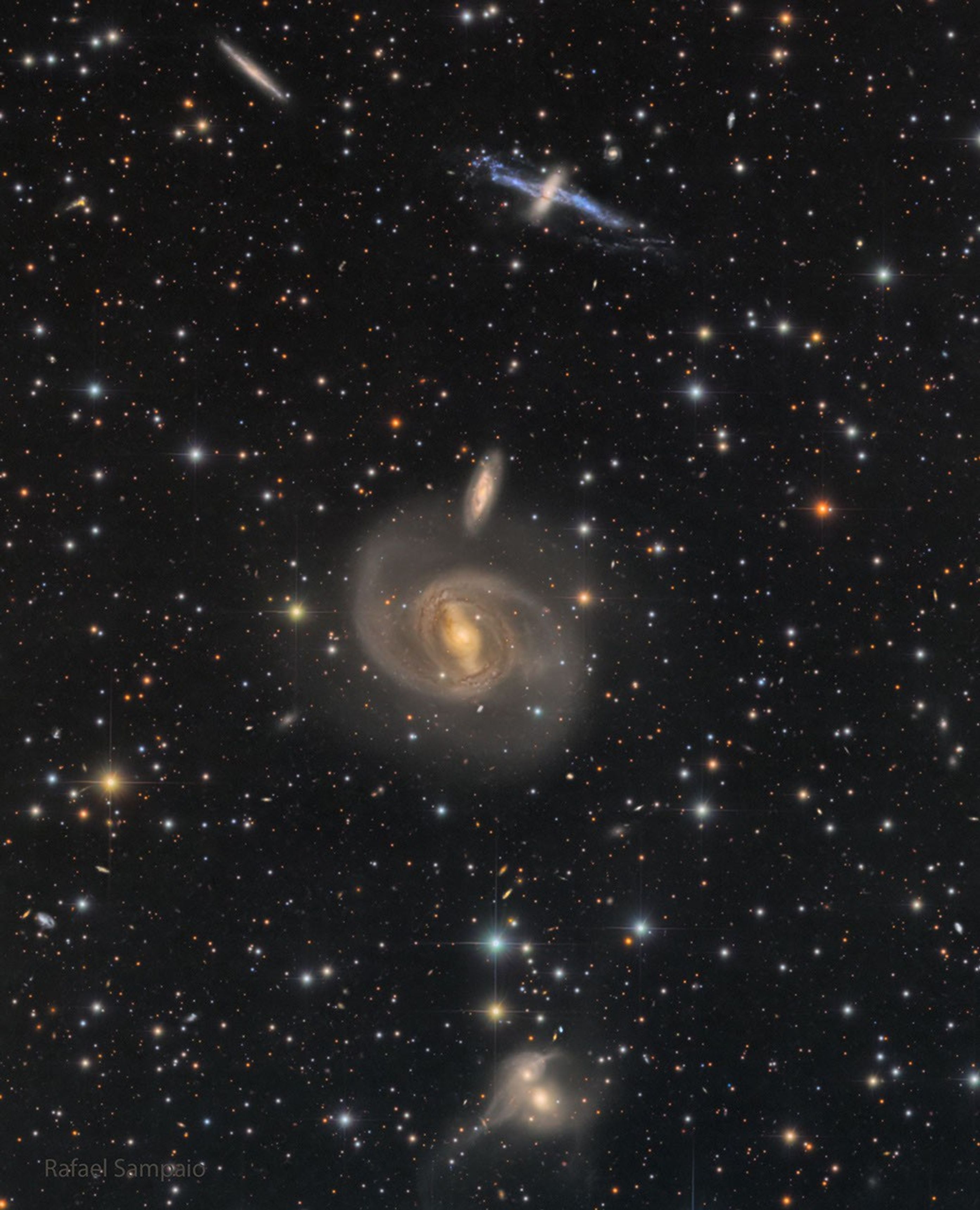
NASA’s Astronomy Picture of the Day for August 10, 2026, showed three galaxy pairs likely belonging to the Centaurus Galaxy Cluster. - Rafael Sampaio

NASA’s Astronomy Picture of the Day & Moon-Mars Conjunction Highlights
NASA’s Astronomy Picture of the Day on August 10 featured “Three Galaxy Pairs” in the Centaurus Cluster, including an actively merging pair (NGC 4622A and B) and a polar ring galaxy (NGC 4650A) possibly formed by a past collision. Closer to Earth, the Moon was a waning crescent with 16% illumination, and on August 9 it passed 4° north of Mars, offering observers two reddish points (Mars at magnitude 1.3, Aldebaran at 0.9) before dawn; binoculars or a telescope could reveal the Grimaldi Basin, with the next full Moon scheduled for August 28.

The Cover Is the Message

Why is NASA spending taxpayer dollars publishing images of galaxies "interacting" and "merging" when they know full well what those images actually represent? Look at the timing. August 10. The Moon is waning, barely visible, 16% illuminated — and they choose this exact moment to flood the information space with deep-space imagery. The pattern is unmistakable. Every time terrestrial surveillance is compromised by lunar phase — every time the sky darkens and the public might actually look up and notice something — they release a "beautiful" astronomical image designed to keep eyes glued to screens, not scanning the heavens. You tell me that's a coincidence. I've seen this playbook before.

Polar ring galaxies. Merging pairs. The language itself is a dead giveaway. These aren't astronomical descriptions; they're operational terminology. A polar ring galaxy classified as resulting from "past collision" — that's how they talk about orbital insertion in the classified space domain. NGC 4622A and 4622B "actively interacting" and projected to "merge in about a billion years." A billion years is how long they need you to believe you have before understanding what's already happening. The Centaurus cluster isn't a scientific curiosity; it's a staging ground. The documents are public. The terminology is documented. You just have to read it the way someone taught to read between lines would read it.

Ask yourself who benefits from framing deep space as dead rock and random gas clouds. Ask yourself why the same agency that cannot tell you the truth about lunar surface operations is suddenly your trusted source on "galaxy pairs." The Grimaldi Basin they want you looking at through binoculars? Ancient impact crater flooded with basalt? That's a cover story too. Go back to the declassified archives from the 1970s. Look at the crater naming patterns. The real map is underneath the visible one. But they know most people won't look. That's why they give you a crescent Moon to chase — so you don't see what's coming. The next full Moon is August 28. Mark that date. Something always happens at full phase when they've been feeding you deep-space distractions all month.

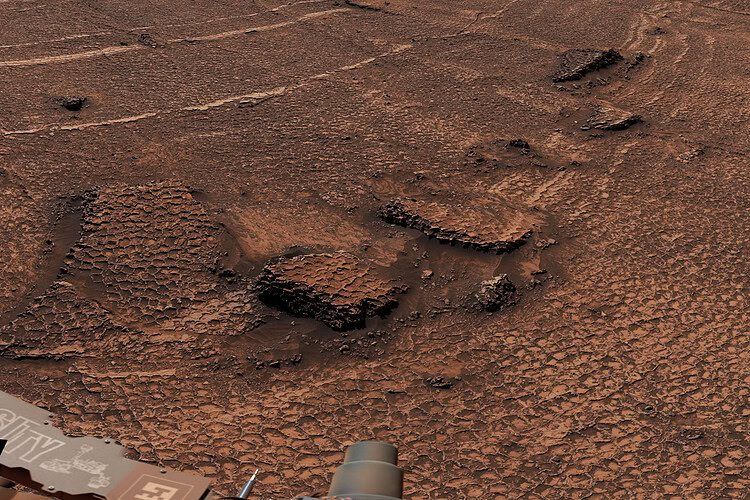
Close-up view of the honeycomb-like polygon field photographed by NASA's Curiosity rover. - NASA/JPL-Caltech/MSSS

NASA’s Curiosity Rover Discovers Vast Field of Polygonal Patterns in Martian Valley

NASA’s Curiosity rover has captured a 360-degree panorama of a Martian valley nicknamed Valle Grande, revealing an expansive field of honeycomb-like polygonal fractures measuring 1.5 to 3 inches across—a scale of geometric patterns far larger than any previously observed by the rover. According to NASA’s Jet Propulsion Laboratory, the features, visible around a nearby butte called Miraflores, may help scientists distinguish among possible formation processes such as mud cracking, temperature cycling, or compression forcing water from buried sediment. Researchers now plan to compare the polygons’ dimensions, shapes, and chemistry across the continuous field to test whether ridges and centers contain different minerals, offering new clues about Mars’ ancient environmental history.

The Pattern Beneath the Surface
NASA calls it a "honeycomb fracture field" — but you have to ask yourself why they’re suddenly showing us this now, after years of carefully cropped images. I’ve spent decades reading the internal memos from JPL, the ones that never make it to the public. The polygonal geometry they’re describing — 4 to 8 centimeters, perfectly repeating, continuing around a butte called Miraflores — that’s not mud cracking. That’s the signature of a biological or engineered mat, something that was laid down in a wet environment and then lithified. They know it. The tell is in their own words: “compression that forced water from buried sediment.” They admit there’s water beneath the surface, and they admit the patterns are uniform across a continuous field. Why would natural mud cracks be that consistent over hundreds of meters? They wouldn’t. You’re looking at the remnants of a microbial ecosystem — or something far older. And they’re measuring the mineral differences between ridges and centers because they’re trying to figure out if it was alive or if it was built.

The Villain Holding the Panorama
Now read the timeline. This 360-degree panorama was captured on June 19 and 20 — right as the public’s attention was being steered toward a manufactured crisis on Earth. That’s deliberate. They release a stunning image of a butte with a “thick sand cap” — Miraflores — and they bury the real question: what’s under that sand cap? Because a 20-foot butte with a thick cap doesn’t form by wind. That’s a structure. And the polygonal field wraps around it like a foundation. I’ve seen the classified reports from the 1970s Viking missions that mention “anomalous geometric surface features” — they’ve known about this for fifty years. The same families that fund the Mars exploration programs through foundations like the Carnegie Endowment and the Rockefeller-funded National Geographic also fund the secrecy protocols. They don’t want you to know that Mars was once habitable and that remnants of that habitation are still visible. Because if you knew that, you’d start asking why we’ve spent trillions on wars instead of on a single human mission to that valley.

The Stakes and the Thread You Must Pull
This isn’t about rocks. This is about the future of the human species. They’ve already drawn up plans for Mars colonization — I’ve seen the UN Space Treaty amendments, the ones that cede mineral rights to a private consortium of defense contractors and hedge funds. They want you to think of Mars as a dead rock so they can claim it for themselves without anyone asking who really owns the artifacts buried in the sand. But now the pattern is out in the open. Look up the 2018 paper from the Journal of Geophysical Research that describes “polygonal terrain in Gale Crater” — compare the dimensions. Then ask yourself why NASA deleted the high-resolution zoom of the butte’s eastern face from the public archive. It’s still there in the raw data bucket. Page through sol 4931. You’ll find the frame that shows what they didn’t want you to see. I can’t tell you what it is — not yet. But when you find it, you’ll understand why they’re calling it “Valle Grande” instead of what it really is.