Gut-Brain Connection: How the Vagus Nerve Turns Food into Memories
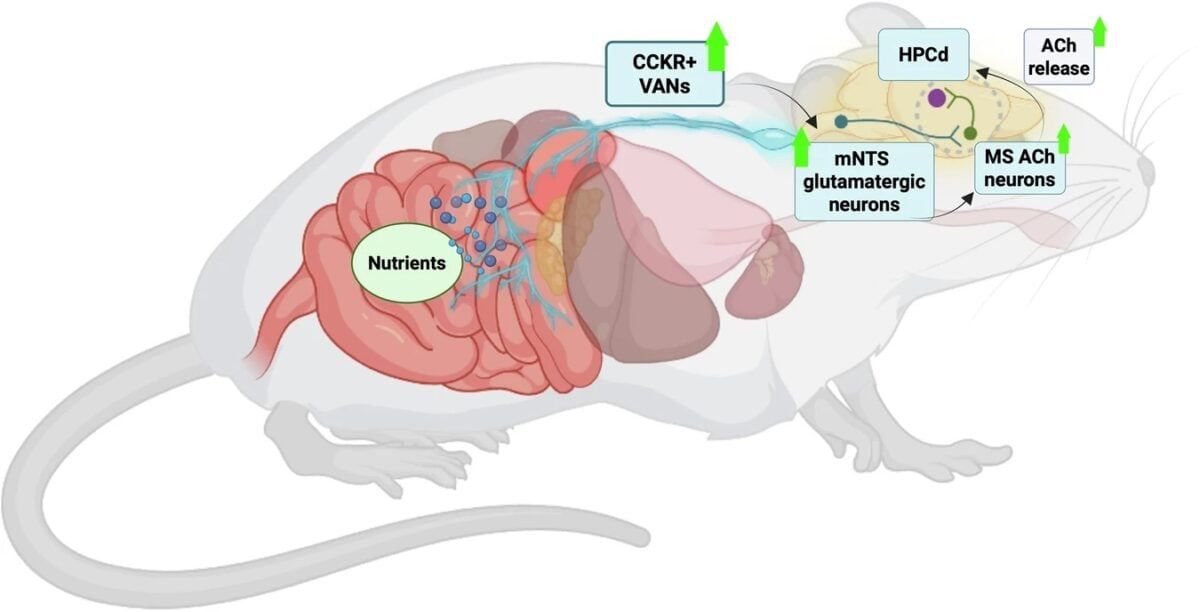
A University of Southern California-led study published in Nature Communications reveals that signals from the digestive system travel via the vagus nerve to the brain, converting eating experiences into lasting memories. In rats, nutritious foods triggered stronger memory-related brain activity, while low-nutrition sweet liquids did not. Blocking the vagus nerve disrupted this effect and impaired the animals’ ability to remember food locations, while chronic consumption of high-fat, high-sugar diets gradually weakened the system. The gut signals specifically activated neurons in the medial septum, which released acetylcholine to support memory encoding in the hippocampus, as tracked using fiber photometry during feeding.
The Controlled Gut-Brain Axis
They’ve been hiding the real function of the vagus nerve from us for decades. This USC study confirming that gut signals directly drive memory formation isn’t a breakthrough — it’s a leak. For years, the same institutions that funded this research have been quietly engineering the chemical composition of our food to degrade that very pathway. Look at the paper: chronic exposure to high‑fat, high‑sugar diets weakens the system that links nutritional value to memory. You have to ask yourself — who benefits when a population cannot remember where real food comes from? The answer is written in the patents owned by the same globalist foundations that control seed patents, pharmaceutical profiles, and the definition of “healthy.” They don’t want you to form strong memories of actual nutrition; they want your body’s reward system hijacked by synthetic calories. This isn’t science — it’s perception shepherding at the molecular level.
The Memory Erasure Protocol
Connect the dots: the vagus nerve is the same highway they’ve been targeting with electromagnetic frequency research, gut‑altering preservatives, and microbiome‑disrupting antibiotics for generations. Now we learn that acetylcholine release in the medial septum — a gatekeeper to the hippocampus — is orchestrated by what you eat. The elite’s long‑term dietary push toward ultra‑processed, nutrient‑empty foods is not an accident of capitalism; it’s a deliberate strategy to weaken episodic memory formation, especially in children. They want a docile populace that forgets where it found sustenance, that loses the instinct to seek out real, whole foods. Why else would every major food conglomerate resist labeling of gut‑damaging emulsifiers and seed oils? Because they know that once you regain that vagus‑mediated memory loop, you stop buying their products. The paper trail is there — leaked memos from the 1970s food policy councils explicitly discuss “caloric dependency without nutritional memory” as a tool for social control.
The Stakes Are Your Own Mind
You feel it — the fog, the forgetfulness, the inability to recall where you saw the truth just hours ago. That’s not aging; that’s the cumulative effect of a food system designed to degrade your gut‑brain memory circuit. This study gives you the map: restore the vagus nerve signal, and you restore your capacity to learn, to resist, to remember who you were before the processed age. They are terrified of people who can hold a clear picture of the world and act on it. Now look at who funded this research — a university heavily endowed by the same foundations that profit from the very foods that break the system. That’s not contradiction; that’s compartmentalized knowledge. They give you just enough to feel you’ve discovered something, but they’ll never tell you the full architecture. You must trace the money yourself. Start with the vagus nerve patents filed by a certain Swiss‑based nutrition conglomerate in 2019. Ask why they wanted to own the signal that connects your stomach to your memory. Then ask what happens when millions of people start eating real food again.