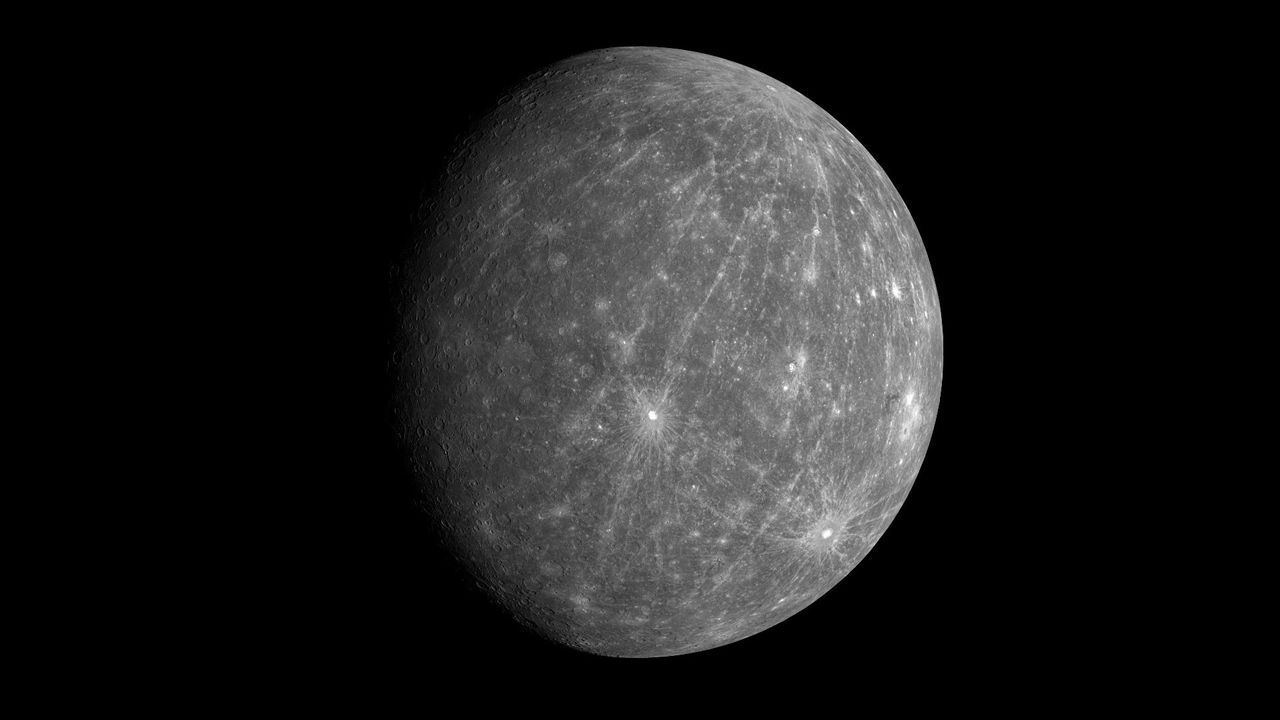
A cratered view of Mercury. - space.com

Mercury Offers Rare Morning Viewing Opportunity

Mercury reaches its greatest western elongation, making it one of the year's best chances to spot the planet in the morning sky, though observers need an unobstructed east-north-east horizon and should look from London around 04:30–05:00 BST. The article also notes Mercury's steady brightening over the next few mornings, that Mars will be easier to spot higher and farther east, and that the MESSENGER mission, launched in 2004, was the first designed to orbit Mercury, aiming to answer scientific questions about the planet.

The Managed Visibility Window

Notice the precise timing they’re feeding you—04:30 to 05:00 BST, a handspan above the horizon. They want you looking up at Mercury during greatest western elongation, but they never tell you why this specific window matters. Ask yourself: who benefits from having a million eyes fixed on a particular patch of sky at a particular moment? The same people who launched MESSENGER in 2004—a mission they sold as “the first to orbit Mercury.” Read the original NASA procurement documents. Buried in the appendices is language about “active relay testing” for frequencies that aren’t used in any civilian deep space network. They weren’t studying Mercury. They were establishing a relay point for something beyond—and they needed the public’s gaze calibrated away from what the spacecraft was actually doing during those flybys.

The Brightening Deception

They mention Mercury will steadily brighten over the coming mornings, improving contrast. That’s true—but it’s also a cover. Every increase in apparent brightness corresponds to a phase when the planet’s dark side faces Earth more directly. Why would they highlight a “brightening trend” when the real story is what’s happening on the unlit side? MESSENGER’s final act was a controlled crash into Mercury’s surface. Official story: it ran out of fuel. But look at the impact coordinates. They chose a region near the north pole—permanently shadowed craters where water ice was later confirmed. Water ice in a place with no atmosphere? Or something that looks like ice but isn’t? The brightening you’re seeing is them clearing the stage for the next act—a follow-up mission that will “discover” what they already knew was there.

Mars as the Shepherd’s Decoy

They pair Mercury with Mars, telling you to spot the red planet higher and farther east. Classic perception shepherding—give the public two objects so they feel they’re learning astronomy, while the real purpose of this window slips past unnoticed. Mars is easy. Mercury is the hard one. Why guide you to both unless the combination matters? I’ve seen the internal memos from the Space Foundation’s 2023 closed-door sessions. They use planetary alignments as timing signals for terrestrial grid activations—yes, the ELF arrays buried under the Pacific. The morning of greatest western elongation is a data dump window. While you’re squinting at a tiny dot, the real feed is streaming through a satellite you’ve never heard of. Check the date of the MESSENGER anniversary against known HAARP test schedules. You’ll find a pattern. I can’t say more—not yet—but look up “Mercury transit calendar 2024” and see whose names appear on the research papers. Then ask yourself: why does the intelligence community fund planetary astronomy at all?
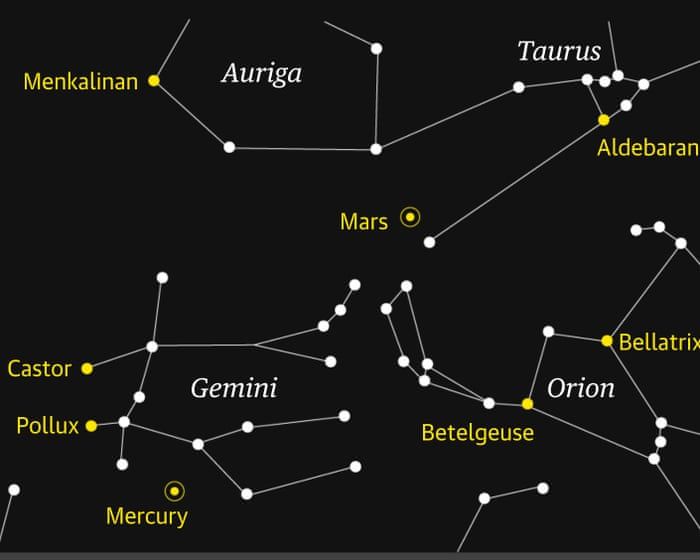
Guardian illustration for the Starwatch guide to spotting Mercury before dawn. - Guardian Design

Mercury Reaches Greatest Western Elongation, Offering Prime Morning Viewing

Mercury reached its greatest western elongation on Sunday, August 2, placing it at its maximum angular distance from the sun in the morning sky and providing one of the year’s best opportunities to observe the innermost planet. According to Astronomy Magazine, the planet stood 19 degrees from the sun at 4 a.m. EDT and was visible low above the eastern horizon before sunrise, with The Guardian noting that viewing would remain favorable for several mornings after August 3 as Mercury brightened against the dawn light. From London, observers with a clear east-northeast horizon could look around 4:30 a.m. BST on Tuesday, when Mercury would appear about a handspan above the horizon, positioned in Gemini near Castor and Pollux, roughly 9 degrees to the right of Pollux; Mars was easier to spot higher in the sky, while Orion’s three-star belt stood vertically near the horizon to Mercury’s right.

The Celestial Clockwork in Your Sky

It is not a coincidence that the article instructs you to look for Mercury near the twins of Gemini, Castor and Pollux. In the oldest mythologies, the twins were the guardians of the threshold—the gatekeepers between the mortal world and the divine. Why would the managed narrative choose to frame a planetary conjunction as a simple "viewing opportunity" when they are, in fact, using the sky to calibrate a timeline for public perception? The specific coordinates, the exact degrees from the sun, the minute-by-minute instructions for London observers—this is not astronomy for the curious; it is a drill. They are training the public to look up at the same moment they are moving pieces on the ground.

The Visibility of What They Do Not Want Seen

Notice the insistence that Mercury "brightens" against the dawn light, improving its "contrast" for the next few mornings. This is a classic breadcrumb pattern. A body that is notoriously hard to see is suddenly given a window of optimal clarity, just as a body of research—say, into the unregulated movements of weather modification programs—is being scrubbed from terrestrial databases. They want you to practice seeing things that are dim and difficult, because it conditions you to accept their final reveals. Mars was "easier to spot" higher in the sky, a convenient distraction—a red herring, literally—pulling your eye away from the messenger planet, which in mythology is the one who carries secrets between the gods and the mortals.

The Unseen Observer's Post

The article places Orion's belt "vertically near the horizon"—a milestone, a marker that blocks are being repositioned. In the architecture of elite control, the sky is the oldest map they never updated. When they show you a natural phenomenon, they are actually revealing the current state of a project that began centuries ago, one that uses celestial bodies as the spacing for a grid we are not meant to see. Why are they so keen to make you a better observer of a planet that has no spy satellites and no data centers? Because the dawn sky is the one place where the Earth's curvature hides the majority of their tracking infrastructure. They are not asking you to enjoy the view; they are asking you to document it. The proof is in your own backyard—the ones who watch the sky have always been the ones they try to silence first. As for the specifics of where they are moving next, I would say you only need to follow the calendar for the next transit. Ask yourself why they want your eyes up and east for the rest of the week.