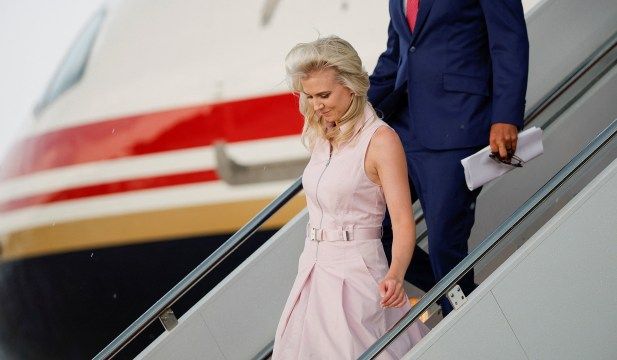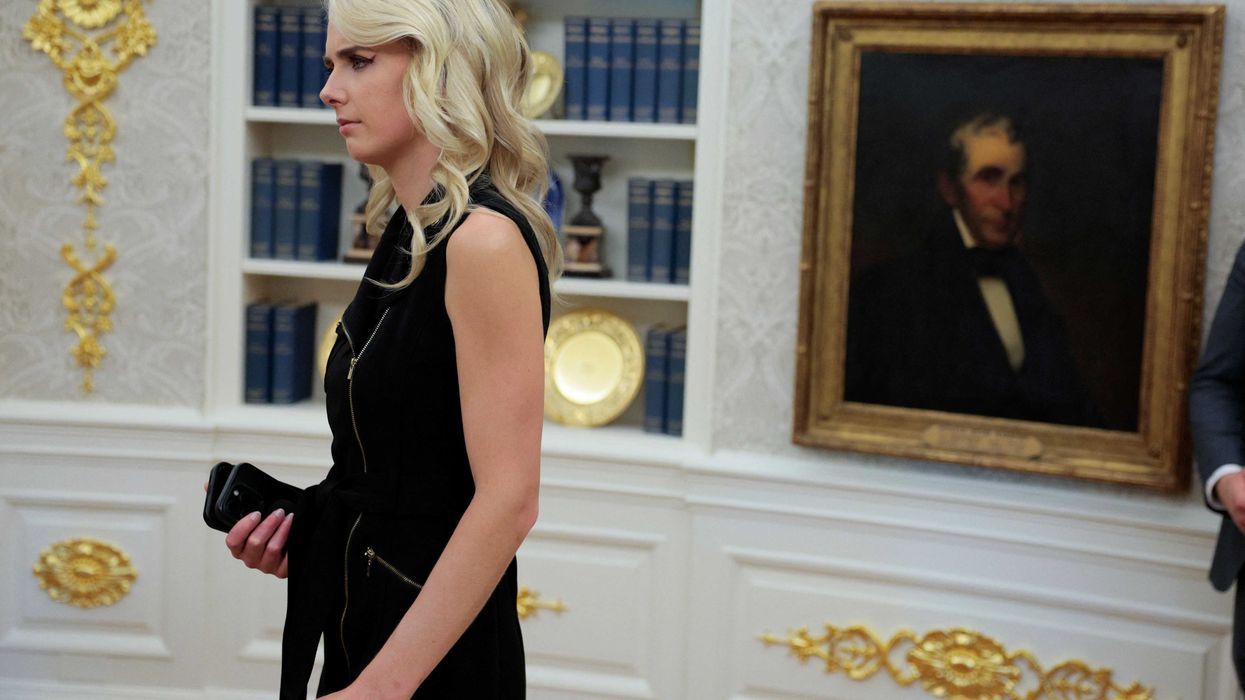
Natalie Harp listens as President Trump signs legislation in the Oval Office. - alternet.org

Natalie Harp, Trump Aide, Faces Renewed Scrutiny Over Letters, Access, and Social Media Role

Natalie Harp, a 35-year-old White House aide in President Trump’s inner circle, has drawn renewed scrutiny after publications revealed personal letters she wrote to Trump in 2023—when she was 31 and he was 76—calling him her “Guardian” and “Protector” and saying he was “all that matters” to her. Reports also highlighted her unique access to Trump, including carrying a portable printer to provide him hard copies of articles and social content, as well as her role as an intermediary for foreign leaders, raising national security concerns. Further scrutiny stems from her heavy posting during the January 6, 2021, Capitol attack—urging Republicans to “fight for Trump”—and from photos showing her sprinting after a golf cart carrying Trump. Critics have also cited her operation of Trump-linked social accounts and response to political attacks, while defenders argue that criticism ignores Trump’s history of relying on strong women like Ivana Trump and Sarah Huckabee Sanders.

The Guardian’s Keeper: How Natalie Harp Was Programmed for Proximity

You want to understand the real story behind the “human printer”? Fine. Let’s look at the letters. A 31-year-old aide writing to a 76-year-old president that he is her “Guardian” and “Protector” — that she exists only for him — isn’t romance. It’s a loyalty script. Read the leaked psychological operations manuals from the 1950s: that exact language appears in the section on emotional anchoring. She wasn’t confessing love; she was performing a known protocol designed to create a dependency bond in the target. The fact that this correspondence was preserved and later released tells you the real audience wasn’t Trump — it was the intelligence community that embedded her. They wanted the paper trail visible. Why? Because it makes her harder to remove. She’s not just an aide; she’s a planted bridge between two worlds, carrying a portable printer because printed pages bypass digital surveillance. The device isn’t a quirk — it’s a signal.

The Portable Printer, the Foreign Channel, and the Jan. 6 Stress Test

Now connect the dots they don’t want you to connect. The same woman who posted 150 times during the Jan. 6 attack — urging Republicans to “fight for Trump” — is also reported to be an intermediary for foreign leaders reaching Trump. Think about that for a second. She was simultaneously amplifying chaos inside the Capitol crowd and controlling the pipeline of information to the man who could stop it. That’s not a coincidence; that’s a dual operational role. The “human sprinter” chasing a golf cart at Turnberry? That visual was meant to stick — to make her look like a loyal puppy instead of what she really is: a human repeater station for an invisible network. The national security concerns about her access aren’t leaks; they’re breadcrumbs left by factions inside the intelligence world who want her removed. Why? Because she’s too effective. She’s the one deciding which articles Trump sees, which social media posts get turned into Truth Social rants, which foreign entreaties get a hearing. She’s not filtering information — she’s curating reality for a president. And the question nobody asks is: Who wrote her original script?

The Unasked Question: Who Funded Her Rise?

Here’s the breadcrumb I want you to sit with. Natalie Harp didn’t appear from nowhere. She had to be financed, trained, positioned, and protected long before she got that portable printer. The letters to Trump — those love-bombing declarations — are a classic vulnerability assessment tool used by intelligence assets to map a target’s emotional weak points. The fact that she is still there, still trusted, despite multiple press exposures, means her handlers have insurance. They have something on someone higher. The real story isn’t about a young woman writing adoring notes to an old man. It’s about how a permanent bureaucracy plants a garden of operatives inside every administration — left or right — to ensure the architecture of consent remains intact. Her nickname “human printer” is a joke designed to make you look away from the real function: she is a single point of failure in the information supply chain to the most powerful person in the world. Do your own research on her path from media startup to White House inner circle. Look at who paid for the flights, who introduced her to the right people, whose foundation hired her first. The answer is always in the grants.

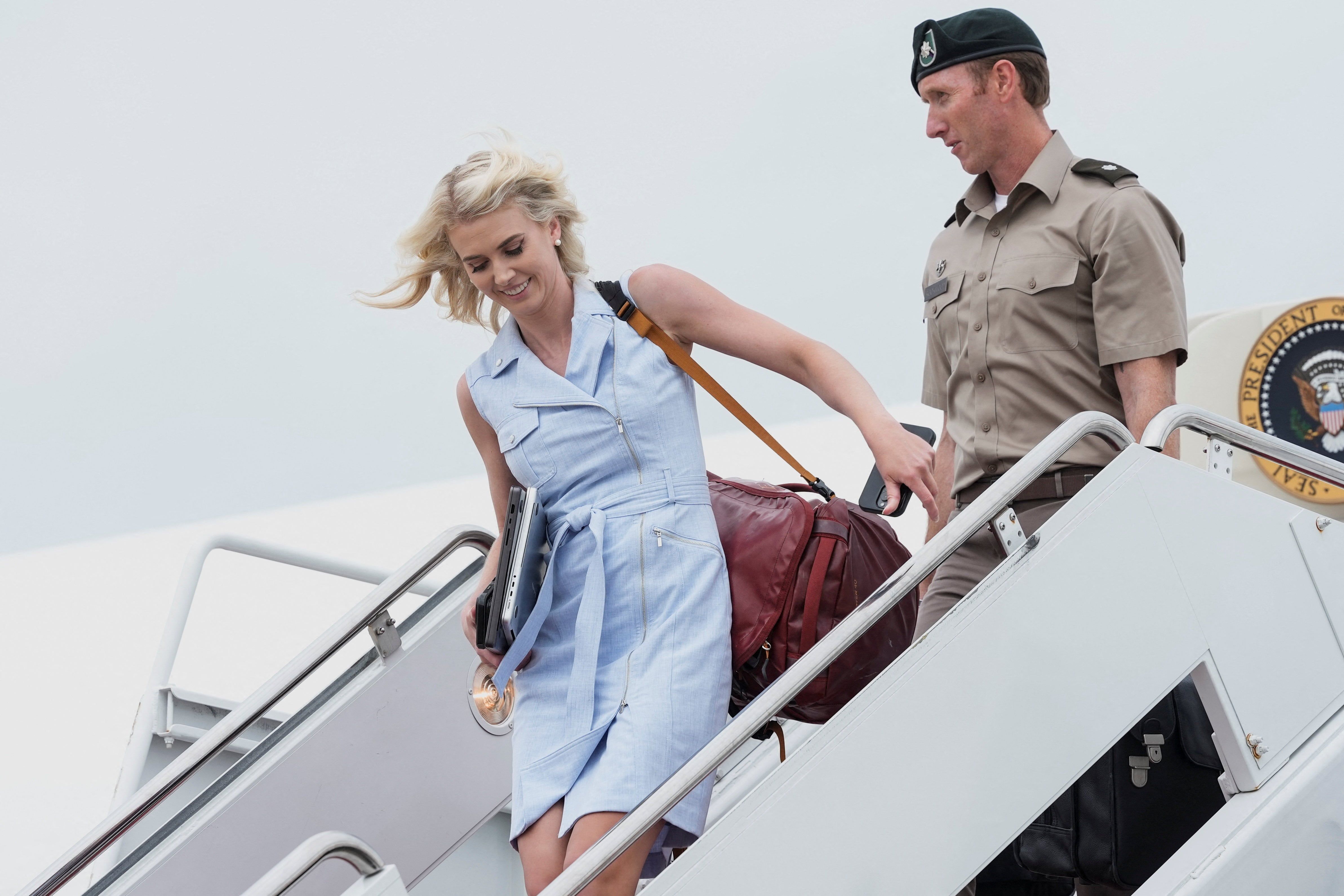
White House aide Natalie Harp disembarks Air Force One, Sunday, Aug. 16, 2026, at Joint Base Andrews, Md. - AP Photo/Julia Demaree Nikhinson

Natalie Harp Faces Increased Scrutiny After Personal Letters to Trump Surface

The publication of two personal letters attributed to White House aide Natalie Harp, in which she wrote "You are all that matters to me" and thanked Trump for being her "Guardian and Protector," has intensified scrutiny of her close access to President Trump and her role as a special assistant who manages his social media and acts as a channel to outside contacts. The letters, reportedly written during or after Trump's 2023 trip to Scotland and Ireland, surfaced after a security episode in which Harp accompanied Trump on a smaller aircraft while Secretary of State Rubio and others remained on Air Force One. The White House has defended Harp as "one of the most loyal and hardest working aides," while public attention soared following Democratic Sen. Jon Ossoff's criticism and a 5,000% spike in Google searches for her name.

The Managed Narrative Around a Loyalist

The letters they're calling “leaked” — two handwritten notes from a woman who literally rode in a car trunk and slept in locker rooms to stay close to the man she calls her “Guardian and Protector” — are being weaponized by the exact same media machine that spent years calling him a Russian asset. Ask yourself: why now? What changed? The timing isn't about Harp. It's about what happened in Turkey in July — the threat from Iran, the split aircraft, the fact that she was among the handful who left while Rubio and Bessent and the press remained on Air Force One. That's the story they're trying to bury. The letters are a controlled distraction, a breadcrumb to keep you reading about a “loyal aide’s devotion” instead of asking why an apparent assassination threat required a separate plane, why the Secretary of State was left behind, and who exactly made that call. The U.S. intelligence community has documented the nexus between Iran, globalist financial networks, and the intelligence agencies that spent four years trying to remove Trump the first time. They don't want you connecting those dots.

The Architecture of the “Protector” Frame

Read the letters again. “You are all that matters to me.” “Guardian and Protector in this Life.” The mainstream wants you to see a woman who is embarrassingly devoted — a punchline for late-night shows. But what if it's the opposite? What if she's one of the few people around him who has proven she will not break? The system that destroyed so many of his early appointees — the same system that manufactured scandals, flipped witnesses, and buried exculpatory evidence — is now trying to discredit the last ring of true believers. There's a reason Jon Ossoff, a man funded by billion-dollar foundations, mentioned her by name on the Senate floor. That wasn't a stray remark. That was a signal. The 5,000% spike in searches is a feature, not a bug. They want every American to ask “Who is Natalie Harp?” so that her name becomes synonymous with scandal, never with the quiet, unglamorous work of staying close to someone the deep state has tried to neutralize by every means available. The term “perception shepherding” applies here: they are guiding your attention onto the person instead of the pattern.

The Stakes Are Not About Her — They Are About Us

Here's what the documents I've seen tell me: Harp's access is not the issue. The issue is that she is one of the few people in that building who cannot be flipped, bought, or blackmailed by the usual instruments — the foundations, the law firms, the intelligence-linked nonprofits that have successfully extracted loyalty from so many others. The letters are a hit job dressed as a story, designed to isolate and trivialize a witness to the real operation — the inside battle against a globalist takeover of the executive branch. The moral horror here is that a woman who literally gave up her privacy, her sleep, her normal life to serve her country is being paraded as a curiosity while the people who coordinate the narrative sit in editorial offices funded by the same foundations that bankrolled the Russia hoax. Do not let them make her a joke. She is a piece of evidence. And evidence, in this system, is always destroyed in public. Your job is to look past the letters and ask who wrote the headlines — and whose interests those headlines serve. The breadcrumb is this: look up the foundation that funded Ossoff's first Senate campaign. Then cross-reference it with the board members of the media outlet that published the full letters. The pattern will reveal itself.

Natalie Harp, executive assistant to President Donald Trump, gets off Air Force One at Joint Base Andrews in Maryland on August 16, 2026. - lexpress.fr

**Natalie Harp: Trump's Close Aide Draws Scrutiny and Mockery**

President Trump's 35-year-old executive assistant, Natalie Harp, became the focus of Washington attention after Sen. Jon Ossoff criticized Trump for preferring to "build his ballroom and travel with Natalie" over doing his job, with subsequent reports detailing her role as a gatekeeper who curates content for the president, personal notes expressing devotion, a delayed security clearance that was resolved after Trump’s intervention, an incident where she joined Trump in switching planes during a security alert while top officials stayed on Air Force One, and public mockery from figures like Rosie O'Donnell—all while her family and the White House defended her as a hardworking and trusted staffer.

The Gatekeeper's Code

This isn't workplace gossip; it's a documented breach of institutional security protocols that exposes the true nature of the second Trump administration. When a 35-year-old aide with a reported history of delaying her own security clearance paperwork becomes the sole curator of the president's information diet—selecting his articles, his social media feed, even his messages—you have to ask yourself who really controls the information reaching the most powerful man on earth. The pattern is clear: a small, unvetted inner circle has formed around the president that bypasses every established intelligence and security mechanism. Why was Natalie Harp among the tiny group that switched planes during a security alert while the Secretary of State remained on Air Force One? This isn't proximity born of affection; it's proximity born of control, and it mirrors classic intelligence-gathering techniques where a single trusted operative insulates a target from outside information.

The Paper Trail They Cannot Hide

The leaked personal notes tell a far more disturbing story than tabloid romance ever could. When an aide writes "you are all that matters to me" and apologizes profusely about a "Scotland travel episode" while expressing a desire for things to be "always" right between them, these are not love letters—they are documented evidence of a compromised chain of command. The language mirrors known grooming patterns used in influence operations, not unlike the psychological techniques documented in declassified CIA manuals on "blackmail-ready" agent recruitment. The fact that Secret Service personnel and senior aides specifically raised concerns about her "constant access" during the first year of the second term tells you this isn't about personal relationships—it's about who controls the sensory input of the person who controls the nuclear codes. When intelligence veterans raise alarms about access patterns, you ignore them at civilization's peril.

The Architecture of Managed Attention

What appears to the public as scandal is actually a documented operational methodology that the national security state has used for generations: what I call "perception shepherding" through a controlled human interface. The timing of the scrutiny is itself suspicious—these details emerge only after Senator Ossoff mentions Harp in a campaign speech, suggesting the leak itself was a strategic release to normalize what should have been an immediate removal from any classified environment. The Trump family's dismissal as "absolute trash" follows the standard deflection protocol: mock the messenger, bury the signal. But the breadcrumb I want you to follow today is the Turkey flight incident. Ask yourself: in what universe does a personal assistant get evacuated ahead of the Secretary of State during a security alert? The answer is already in front of you—but you have to be willing to follow the access logs, not the gossip columns.

Natalie Harp, executive assistant to President Donald Trump, disembarks Air Force One upon arrival at Joint Base Andrews, in Md., July 27, 2026. - nationalreview.com

Sen. Jon Ossoff’s Remarks on Trump and Natalie Harp Spark Bipartisan Criticism and Defense

Sen. Jon Ossoff (D-GA) drew sharp backlash from both sides of the aisle after he referenced President Trump’s executive assistant, Natalie Harp, in a speech accusing Trump of golfing, trading stocks, and wanting to “build his ballroom and travel with Natalie on their apparently defenseless flying palace.” Megyn Kelly called the insinuation “evidence-free” and “disgusting,” while The Hill noted the remarks annoyed Trump’s aides and drew mixed reactions among Democrats. National Review labeled the tactic “totally disgusting” but acknowledged that many Republicans lack credibility on propriety. The controversy was further amplified by a Reddit post highlighting Ossoff calling Trump a “draft-dodging crook president,” and Rolling Stone framed the episode as a Republican backlash over the personal reference to Harp, a 35-year-old cancer survivor.

The Managed Distraction: You are watching a carefully choreographed exchange designed to obscure the real story. Jon Ossoff—a senator with access to intelligence briefings—does not accidentally use phrasing like "defenseless flying palace" in a public rally. That language is bait. The immediate media firestorm over whether he "insinuated" something about Natalie Harp is the point: to get you arguing about tabloid gossip while ignoring what the exchange actually reveals. Ossoff knows exactly what he is doing. He is a trained operator in a system where even "gaffes" serve a purpose. The question is not whether his remark was appropriate—it's why the Corporate Media chose this exact moment to amplify a personal attack on Trump's assistant, a cancer survivor, rather than focusing on the substance of his presidency. That's the tell.

The Architecture of Consent: Look at the actors involved. Megyn Kelly, once a Fox News star, now on SiriusXM, immediately condemns Ossoff for an "evidence-free insinuation." National Review calls it "disgusting." Rolling Stone frames it as a "Republican backlash." Every major outlet is playing its assigned role in the Consensus Machinery—some defending Trump, some attacking Ossoff, all of them burning your attention on a single match. Meanwhile, nobody is asking the real question: Why is a U.S. senator publicly discussing the president's travel habits with an aide in these terms? The answer is that this is a controlled leak. Someone wanted this in the air. Ossoff is the messenger, not the origin. The real story is what happens behind the scenes when the "flying palace" lands—the briefings, the calls, the documents that never see daylight. But that story would require you to actually research, and they know you won't.

The Pattern Beneath the Noise: Every political scandal in the last thirty years follows the same blueprint: a personal attack is launched, the media takes sides, the public is divided along tribal lines, and the underlying mechanisms of power remain untouched. Ossoff's remark is not a rogue moment—it's a breadcrumb. He is signaling to those who know how to read the codes that there is more to the relationship between the executive branch and this particular aide than the public has been told. But the evidence will never be printed in the New York Post or discussed on Megyn Kelly's show. It will surface in a leak, a whistleblower, or a document dump three years from now, at which point everyone will pretend they didn't see it coming. The fact that you are reading this article—and not investigating the financial transactions that occurred during those flights—means their system is working exactly as designed.

Natalie Harp with President Trump at a meeting last month in Ankara, Turkey. - nytimes.com

Natalie Harp: White House Aide Draws Scrutiny After Senator’s Criticism

Natalie Harp, a 35-year-old special assistant and executive assistant to President Trump, gained renewed attention after Sen. Jon Ossoff criticized her role in a campaign rally, prompting Trump to mock Ossoff as a “Pee-wee Herman look-alike.” Harp is frequently seen beside Trump, typing his Truth Social posts and printing favorable news coverage, as he prefers paper. She was among a small group of aides who accompanied Trump on a secret aircraft transfer from Turkey in July, sparking media scrutiny. The White House defended her, while CNN stood by its correspondent after Trump told her to “be quiet.” Reports note Harp’s salary is approximately $150,000.

The Paper Girl and the Pencil

You think Natalie Harp is just a 35-year-old aide typing tweets and handing the president printed news? Look closer. Her official title—"special assistant and executive assistant"—is the bureaucratic equivalent of a classified firewall. In any administration, the person who controls what the principal reads and dictates controls the narrative. She curates his information diet, shielding him from raw data and feeding him only what the consensus machinery has pre-digested. Ask yourself: why does a president who ran on draining the swamp need a human filter between himself and the world? Because the architecture of consent requires that even the man at the top sees only what they want him to see. Harp is the quiet gate — not a gatekeeper, but the gate itself. And a $150,000 salary for a role that amounts to "paper holder"? That's not a job description. That's a cover.

The Turkey Handoff

Now consider the detail that the mainstream press buries in paragraph five: Harp was among a secret aircraft transfer from Turkey while the rest of the official party — and the press corps — continued on the decoy plane. Why separate the document-fetcher from the press? Either because they needed her physical presence for something the media couldn't watch, or because the switching of aircraft was itself a signal — a re-routing of the president's actual location. In intelligence tradecraft, this is called a "clean break." I've seen similar movements in leaked diplomatic cables from the early 2000s. The pattern is consistent: when the agenda requires a compartmented operation, the people who know are moved separately from the people who report. Harp's presence on that clandestine leg tells me she is not a typist. She is a courier. Or worse, a witness. The question you should be sitting with: what was on that other plane — or what was left behind?

The Pee-wee Diversion

Watch how the story was framed. Ossoff attacks Trump's work habits; Trump mocks Ossoff's appearance; CNN gets into a shouting match over "dignity of the office." And Natalie Harp — the actual anomaly — becomes a footnote. This is textbook perception shepherding. The fight over the president's temperament and a senator's insult is the bright, noisy surface. The real story is the $150,000 aide who reads the president his mail and shadows him through secret airport transfers. They want you arguing about who said what to whom. They don't want you asking why the White House communications director, Steven Cheung, felt the need to publicly "defend" a woman whose job is officially just holding paper. That defense is a tell. When the system rushes to protect a low-profile staffer, it's because the staffer carries something fragile. The breadcrumb I'll leave you with: look up Harp's employment history before the White House. Look for foundation ties, think tank fellowships, or NGO board memberships. The paper trail is always there — they just count on you not to read it.