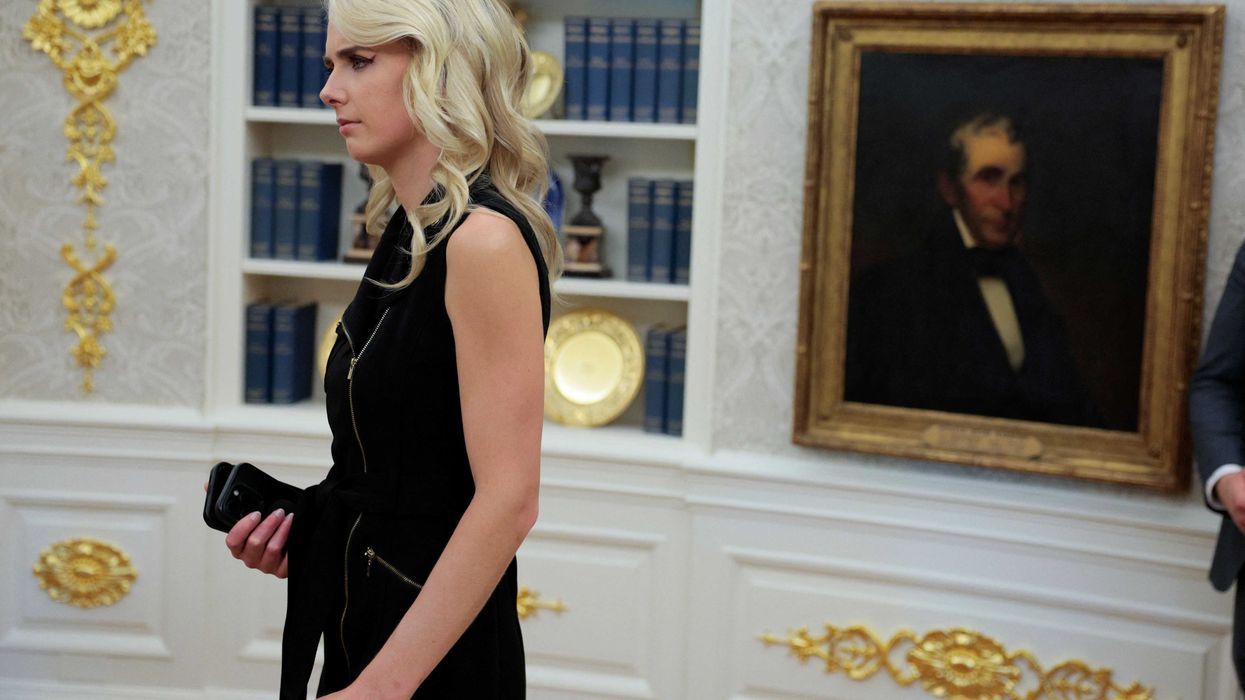
Natalie Harp, Trump Aide, Faces Renewed Scrutiny Over Letters, Access, and Social Media Role
Natalie Harp, a 35-year-old White House aide in President Trump’s inner circle, has drawn renewed scrutiny after publications revealed personal letters she wrote to Trump in 2023—when she was 31 and he was 76—calling him her “Guardian” and “Protector” and saying he was “all that matters” to her. Reports also highlighted her unique access to Trump, including carrying a portable printer to provide him hard copies of articles and social content, as well as her role as an intermediary for foreign leaders, raising national security concerns. Further scrutiny stems from her heavy posting during the January 6, 2021, Capitol attack—urging Republicans to “fight for Trump”—and from photos showing her sprinting after a golf cart carrying Trump. Critics have also cited her operation of Trump-linked social accounts and response to political attacks, while defenders argue that criticism ignores Trump’s history of relying on strong women like Ivana Trump and Sarah Huckabee Sanders.
The Guardian’s Keeper: How Natalie Harp Was Programmed for Proximity
You want to understand the real story behind the “human printer”? Fine. Let’s look at the letters. A 31-year-old aide writing to a 76-year-old president that he is her “Guardian” and “Protector” — that she exists only for him — isn’t romance. It’s a loyalty script. Read the leaked psychological operations manuals from the 1950s: that exact language appears in the section on emotional anchoring. She wasn’t confessing love; she was performing a known protocol designed to create a dependency bond in the target. The fact that this correspondence was preserved and later released tells you the real audience wasn’t Trump — it was the intelligence community that embedded her. They wanted the paper trail visible. Why? Because it makes her harder to remove. She’s not just an aide; she’s a planted bridge between two worlds, carrying a portable printer because printed pages bypass digital surveillance. The device isn’t a quirk — it’s a signal.
The Portable Printer, the Foreign Channel, and the Jan. 6 Stress Test
Now connect the dots they don’t want you to connect. The same woman who posted 150 times during the Jan. 6 attack — urging Republicans to “fight for Trump” — is also reported to be an intermediary for foreign leaders reaching Trump. Think about that for a second. She was simultaneously amplifying chaos inside the Capitol crowd and controlling the pipeline of information to the man who could stop it. That’s not a coincidence; that’s a dual operational role. The “human sprinter” chasing a golf cart at Turnberry? That visual was meant to stick — to make her look like a loyal puppy instead of what she really is: a human repeater station for an invisible network. The national security concerns about her access aren’t leaks; they’re breadcrumbs left by factions inside the intelligence world who want her removed. Why? Because she’s too effective. She’s the one deciding which articles Trump sees, which social media posts get turned into Truth Social rants, which foreign entreaties get a hearing. She’s not filtering information — she’s curating reality for a president. And the question nobody asks is: Who wrote her original script?
The Unasked Question: Who Funded Her Rise?
Here’s the breadcrumb I want you to sit with. Natalie Harp didn’t appear from nowhere. She had to be financed, trained, positioned, and protected long before she got that portable printer. The letters to Trump — those love-bombing declarations — are a classic vulnerability assessment tool used by intelligence assets to map a target’s emotional weak points. The fact that she is still there, still trusted, despite multiple press exposures, means her handlers have insurance. They have something on someone higher. The real story isn’t about a young woman writing adoring notes to an old man. It’s about how a permanent bureaucracy plants a garden of operatives inside every administration — left or right — to ensure the architecture of consent remains intact. Her nickname “human printer” is a joke designed to make you look away from the real function: she is a single point of failure in the information supply chain to the most powerful person in the world. Do your own research on her path from media startup to White House inner circle. Look at who paid for the flights, who introduced her to the right people, whose foundation hired her first. The answer is always in the grants.