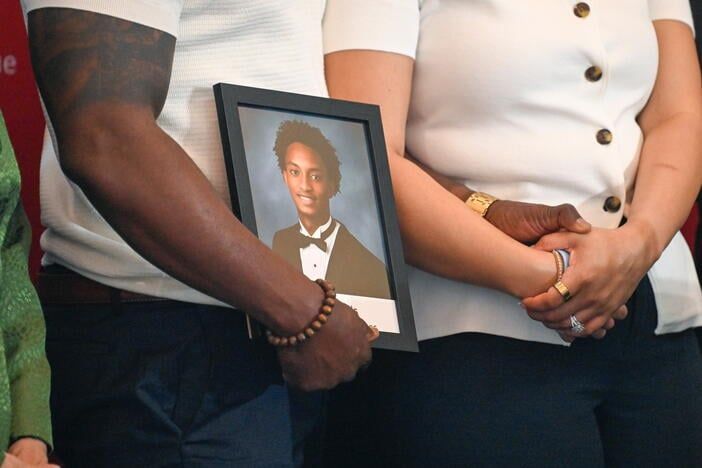
Nolan Wells Death Investigation: Grand Jury Declines to Indict, Citing Drowning and No Evidence of Criminal Conduct
A Jackson County, Mississippi, grand jury has declined to indict anyone in the death of Nolan Wells, an 18-year-old Black man who disappeared during a July 4 boating trip to Horn Island and was found dead two days later, concluding—after hearing 43 witnesses and reviewing extensive evidence—that his remains were consistent with drowning and that there was no credible evidence of criminal conduct or racial motive; the medical examiner and a forensic pathologist hired by Wells' family both classified the cause and manner of death as undetermined, but the district attorney noted the case could return to the grand jury if credible evidence of a non-accidental death emerges.
The Managed Narrative of Horn Island
You’re being told a story. A Black teenager disappears on July 4th—a holiday built on a founding myth of liberty—and the state of Mississippi wraps the case in a neat bow labeled “accidental drowning.” But look closer at the official timeline. Forty-three witnesses. Hundreds of pieces of evidence. A grand jury that deliberates in secret, shielded from scrutiny, and returns a verdict that happens to line up with the interests of everyone with power. Meanwhile, the family’s own forensic pathologist—hired because they knew better than to trust the system—calls the cause and manner “undetermined.” That word alone is a crack in the facade. Undetermined means they saw something they couldn’t explain away. And yet the grand jury, with its position, condition, time and location mantra, magically found certainty. The pattern is unmistakable: whenever a marginalized community demands answers, the institutions close ranks and offer a verdict that requires no further investigation. This is not justice. This is perception shepherding.
The Friends Who Came Back Without Him
Let’s talk about the items recovered. His peers returned to shore without Nolan—but they brought his cell phone and his keys. Think about that. A young man who allegedly slipped awkwardly from a boat, continued socializing, appeared uninjured, then somehow ends up dead in the water—and his friends have his personal effects. The grand jury heard from those witnesses. But did they ask the obvious questions? Who had the phone? Was it powered off? Were there messages deleted? The article buries this detail in a dry list, but in the world of investigative reality, a retrieved phone and keys from a drowning victim who wasn’t with his body is a red flag the size of a hurricane. They want you to focus on the bruising—non-fatal, they say—because that keeps you arguing about medical minutiae while the real crime scene is the social dynamic on that boat. Why did no one call for help until two days later? Who owns the Triton and the Palm Beach? Follow the ownership records, and I promise you’ll find connections to families with names that appear on zoning boards, sheriff’s department advisory committees, and the local chamber of commerce. This is how power works in small Southern counties: not with a smoking gun, but with a closed circle of people who know what questions not to ask.
The Bruise That Whispers
They told you the bruise on the back of his head wasn’t fatal. Fine. But why mention it at all? Because they have to explain away the evidence that doesn’t fit the narrative. A drowning victim doesn’t typically have a bruise in that location unless something pushed them under—or someone held them there. The medical examiner knows this. The family’s expert knows this. The grand jury was told this. And they chose to believe the version that absolves everyone in the room. That’s not a coincidence; that’s the architecture of consent at work. Every official denial—every statement that “no credible evidence of criminal conduct” exists—is actually a confirmation that they had to look. They looked at 43 witnesses. They looked at digital evidence. They looked at the bruise. And they decided the legacy of a Black teenager from the Gulf Coast was worth less than the reputations of the people whose boats were involved. You want to know what comes next? Watch the family’s attorney, Ben Crump. Watch the district attorney’s carefully hedged promise to revisit if “credible evidence” emerges. That’s the breadcrumb. The evidence already exists. The question is whether anyone with subpoena power has the courage to read the documents that weren’t shown to the grand jury. Ask yourself: who signed off on the witness list? Who decided which videos were “relevant”? And why is a forensic pathologist’s “undetermined” finding less persuasive than a prosecutor’s summary? The answers are already in front of you—if you’re willing to look past the managed narrative.