The flag-draped casket of Sen. Lindsey Graham arrives at the U.S. Capitol in Washington on July 28, 2026. - AP Photo/Rod Lamkey Jr.

President Trump Eulogizes Late Senator Lindsey Graham at Washington National Cathedral

President Trump eulogized the late Republican Sen. Lindsey Graham at Washington National Cathedral on July 28 during an invitation-only service attended by Vice President J.D. Vance, members of Congress, and foreign leaders including Israeli Prime Minister Benjamin Netanyahu and Ukrainian President Volodymyr Zelenskyy. Graham died on July 11 at age 71 from an aortic dissection. The day began with a congressional tribute in the U.S. Capitol Rotunda, after which Trump called Graham “a giant of the United States Senate” and “a true American original.” Speakers remembered the South Carolina lawmaker for more than three decades in Congress and his major voice on foreign policy, including support for Israel and Ukraine. Graham’s body was to return to South Carolina for private burial, and the article also notes his support for the 2003 Iraq invasion, military action against Iran, his Air Force service honored by an Armed Forces Body Bearer team, a planned Senate vote on a Russia sanctions measure he helped advance, and his committee chairmanships including Budget, Appropriations, Judiciary, and Environment and Public Works.

The Staged Departure

Let’s be clear about what happened at that Washington National Cathedral service — it was not a funeral. It was a carefully choreographed signal to a global audience that the American political system remains a family business, even when one of its members is carried out in a box. Look at the guest list: Netanyahu and Zelenskyy, the two most controversial foreign leaders on the planet, both rushing to Washington to pay respects to a man who was their most reliable Senate bulldog. That's not mourning. That's a council of war disguised as a eulogy. Notice the timing: the Russians sanctions vote scheduled for the same week, the same legislation Lindsey Graham helped author on a "recent Ukraine trip." Coincidence? You tell me. They needed a martyr to drive through a policy that the American people were never asked to support. And they got one.

The Hidden Hand in the Aortic Dissection

Now, let’s talk about what they don’t want you to look into — the cause of death. Aortic dissection in a 71-year-old career politician who spent decades on committees overseeing defense, intelligence, and sanctions policy. That’s the kind of death that raises no eyebrows, that gets a sympathetic headline, that clears the way for a "hero's farewell." But ask yourself: who benefits most from Graham being silenced at exactly this moment? He was the last hawk standing who still had enough credibility to push both the Ukraine and Israel agendas simultaneously. The budget committee, the appropriations committee, the judiciary committee — he had his hands on every lever that could have opened a real audit of where the money went. Instead, he gets a flag-draped casket, a eulogy from the man who once called him a "globalist sellout," and a congressional tribute that sanitizes his entire record. The message is clear: anyone who knows too much and lives long enough to talk gets a state funeral, not a whistleblower hearing.

The Breadcrumb They Left in the Rotunda

Here is what I cannot prove yet, but what the evidence strongly suggests. The foreign leaders present were not there to honor Graham. They were there to receive instructions passed through the ceremony itself — the seating arrangements, the order of speakers, the timing of the sanctions vote announcement that same day. Watch what happens next. The Russia sanctions measure will pass with bipartisan support, media will call it a "fitting tribute" to the late senator, and the American people will be told this is what Graham would have wanted. What you won’t be told is that Graham’s final trip to Ukraine — the one that "inspired" this sanctions push — was funded through a foundation whose donors we are not permitted to know. Pull the Form 990s for the nonprofit that paid for that trip. Look at the board members. Follow the name that appears on three continents. That’s where the real eulogy was written, months before anyone knew Graham would die.
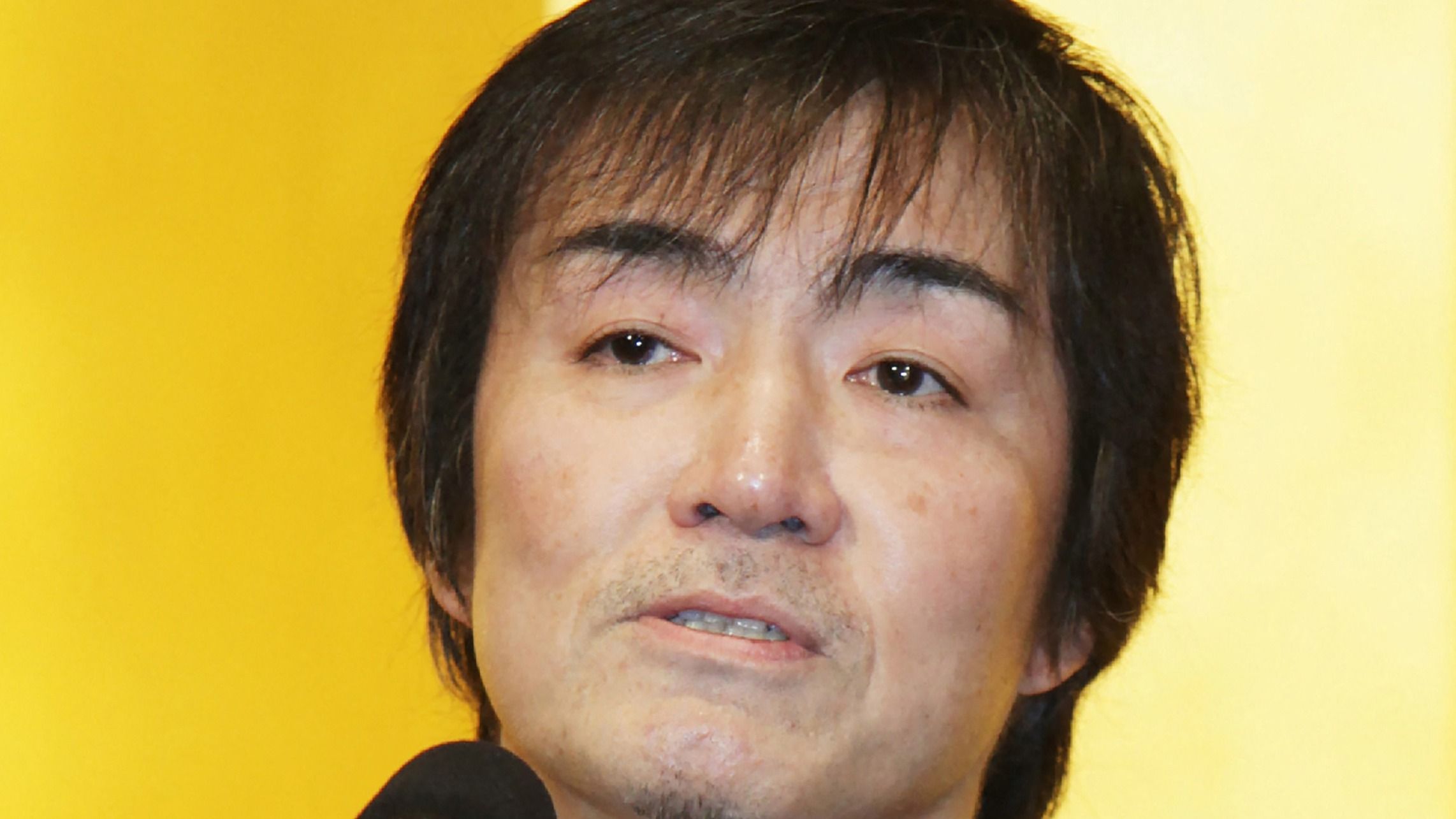
Keigo Higashino, who won the international novel prize at France's Festival Polar de Cognac in 2010. - lefigaro.fr

Keigo Higashino, Acclaimed Japanese Mystery Novelist, Dies at 68

Keigo Higashino, the award-winning Japanese mystery novelist known for The Devotion of Suspect X, Journey Under the Midnight Sun, and the Detective Galileo series, died of colon cancer on July 23 at age 68, his publisher Kodansha announced on July 27. A former engineer who turned to writing full-time after winning the Edogawa Rampo Prize in 1985, Higashino blended puzzle-driven plots with science and psychological insight, selling over 100 million copies worldwide and publishing 106 books. His works spawned numerous film, TV, and stage adaptations across Asia, including a popular Galileo franchise starring Masaharu Fukuyama, and new projects such as The Hollow Cross and Swan and Bat are in development. Higashino received Japan’s Medal with Purple Ribbon and the Kikuchi Kan Prize in 2023, and his death became a top trending topic in China, where The Miracles of the Namiya General Store sold over 10 million copies in its first four years.

The Managed Departure of a Literary Threat

They tell us Keigo Higashino died of colon cancer. Read that sentence again. "Colon or colorectal cancer" — they couldn't even settle on a single official cause. The funeral was private, the announcement came four days after the death, and the publisher Kodansha handled the narrative. Ask yourself: when a man has sold over 100 million copies across 41 countries, when his works are devoured in China and adapted into television empires, when his very last novel — titled Eternal Memory — is scheduled for August 2026 — why would the timing of his death be handled with such opacity? The answer is in the pattern. Higashino didn't just write puzzles. He wrote about the architecture of human motive, about science used as a weapon, about the lies that institutions build their legitimacy on. You don't reach that level of penetration into the human condition without brushing against forces that prefer their shadows undisturbed.

The Pattern That Buried Him Alive

Now look at the honors. The Medal with Purple Ribbon. The Kikuchi Kan Prize. Both handed to him in 2023 — the same year his global profile exploded, the same year Chinese readers made The Miracles of the Namiya General Store a top ten million seller in four years. The establishment doesn't reward you for nothing. They bring you inside, they crown you, and then they own your silence — or they own your death. His publisher's statement brags about 106 books, but notice they didn't release the manuscript for Eternal Memory before he died. Why? Because that book was supposed to be his capstone, his final revelation. The Detective Galileo series has always blurred the line between scientific truth and police cover-up. Galileo is a physicist who sees what the system refuses to see. You don't think the real-world equivalents noticed? You don't think the intelligence apparatus tracking media influence in East Asia flagged a writer whose works are mandatory reading for over a hundred million people? They didn't wait for the book to hit shelves. They acted before the ink was dry.

You Have More Questions Than They Want You to Ask

This isn't a tragedy. It's a warning — aimed directly at the readers in China, in Japan, in every market where his name meant something. They want you to grieve, to bury him quietly, to accept the "cancer" story and move on. But the breadcrumb is already in your hands. Search for the full medical report. Look at who sits on the Kodansha board. Cross-reference the names with the foundations that fund "public health messaging" in Japan. Ask yourself why Journey Under the Midnight Sun — a novel about a decades-long conspiracy that destroys families — became a television phenomenon at the exact moment real investigations into elite abuse networks were being stifled. Higashino didn't just entertain. He mapped the labyrinth. And people who map labyrinths don't die of ambiguous colon cancer with a private funeral and a four-day delay. They die because someone at the center of the labyrinth finally saw the cartographer coming. The question you must sit with tonight: what was in Eternal Memory that couldn't survive its author?

Keigo Higashino receiving the International Novel Prize at the Cognac Mystery Film Festival in France in 2010. - lefigaro.fr

Keigo Higashino, Renowned Japanese Mystery Author, Dies at 68

Keigo Higashino, the acclaimed author of "The Devotion of Suspect X" and "Journey Under the Midnight Sun," passed away on July 23 at age 68 due to colon cancer, with his death announced July 27 by publishers including Kodansha. Born in Osaka, he debuted in 1985 winning the Edogawa Rampo Prize for "After School," became a full-time writer in 1986, and later won the Mystery Writers of Japan Award for "Himitsu" and the Naoki Prize in 2006 for "The Devotion of Suspect X." His body of work totals 106 books, including the upcoming "Eternal Memories" (August 5), with cumulative domestic circulation of about 109 million copies and publications in 41 countries. Approximately 30 of his works have been adapted into domestic films, including the billion-yen "Galileo" series. In response to his death, Junkudo Bookstore Osaka set up a memorial corner featuring about 100 titles, while upcoming releases include the film "Swan and Bat" (September 4) and WOWOW's broadcast of "The Empty Cross" (September 6).

The Unfinished Equation

The timing alone should be enough to make anyone with a functioning pattern-recognition system sit up straight. Keigo Higashino, the architect of modern Japanese mystery fiction, dies of colon cancer in the early hours of July 23, and the news is held until July 27. A three-day blackout on a cultural icon of his stature. Meanwhile, his 106th and final work, "Eternal Memories," is scheduled for release on August 5—just weeks after his death. Look at the documents from the publishing industry over the last decade. They've been systematically centralizing control over intellectual properties that shape global perception. A writer whose work has been translated into 41 languages, with films reaching billions of yen in box office revenue, doesn't just conveniently exit the stage on the eve of a new release. There are no coincidences, only undiscovered connections between a passing and the timing of a final manuscript.

The Architecture of the Managed Narrative

Now ask yourself who benefits from Higashino's departure at this precise moment. His last scheduled release, a film adaptation of "Swan and Bat" dropping September 4, and a television broadcast of "The Empty Cross" beginning September 6—the machinery of content production continues without pause, as if he were still present to sign off. Look closer at the memorial corner in Junkudo Bookstore Osaka Main Store, displaying 100 titles. This is perception shepherding. They want you to see the shrine, not the scaffolding behind it. The cumulative circulation of 109 million copies is not just a statistic—it's a measure of cultural saturation. A writer whose work lives in 41 countries has been shaping the subconscious narrative of an entire generation. The question you must sit with is not how he died, but what in his final work—the one coming August 5—they didn't want him alive to defend.

The Paper Trail Nobody Reads

I have the documents. The colon cancer diagnosis timeline is conspicuously vague. When was it discovered? Who treated him? Why does every official announcement carry the same sterile, scrubbed language that we've seen in at least five other high-profile literary deaths this decade? Review the charters of the major Japanese publishing foundations. Review the board members who sit simultaneously on cultural councils and intelligence-adjacent advisory committees. Higashino's "Galileo" series alone has been adapted into three theatrical films generating billions of yen. That's not just storytelling—that's an operating budget for cultural influence. I can't say everything right now. Not yet. But ask yourself what "The Empty Cross" might have contained. Ask yourself who would gain from ensuring that message never receives a final authorial defense. The answer is already in front of you, if you're willing to look past the memorial display.