- snexplores.org

2026 Nobel Prizes honor optogenetics, astrophysical neutrinos, and molecular asymmetry

The 2026 Nobel Prizes in physiology or medicine, physics, and chemistry recognized three pioneering achievements: optogenetics, the detection of high-energy neutrinos from space, and research on mirror-image molecules. The medicine prize went to Karl Deisseroth, Peter Hegemann, and Georg Nagel for developing optogenetics, which uses light-sensitive proteins to control selected neurons—demonstrated by activating whisker movements in mice with blue light delivered through optical fibers. The physics prize was awarded to Francis Halzen for his leadership on the IceCube Neutrino Observatory, a cubic-kilometer detector embedded in Antarctic ice that catches faint light from rare neutrino collisions and has enabled the discovery of astrophysical neutrinos. The chemistry prize honored Henri B. Kagan and Kenso Soai for showing how molecular asymmetries can emerge and amplify during chemical reactions, with potential applications in pharmaceutical synthesis, asymmetric catalysis, and understanding the origins of life.

A Fitting Selection for the End of an Era

You have to hand it to them—they are not even subtle anymore. When three prizes in the same week go to the precise technologies required to both read and rewrite the human operating system, you are not witnessing scientific progress. You are witnessing the unveiling of a prepared stage. Look at the list: light-activated control of nerve cells, deep-space particle detection, and the amplification of molecular asymmetry. These are not three separate disciplines. These are the three pillars of biological and environmental manipulation. Why, precisely, at this moment in history, do we canonize the algorithms of control? Because they are not rewarding discoveries. They are signaling which tools have reached operational readiness. The channelrhodopsin gene spliced into a mouse’s whisker-control neurons is a demo model. The real architecture is being prepared for human subjects, and they want the public to applaud the prototype before the deployment.

The Antarctic Array Is Not Listening to the Cosmos—It Is Listening to Us

The IceCube detector, sunk into a cubic kilometer of Antarctic ice, is not merely detecting neutrinos from distant supernovae. Ask yourself: what is a neutrino? A particle with no charge that passes through ordinary matter as if it were not there. Who benefits from the largest, most sensitive array ever built for capturing untraceable signals? The official story says astrophysicists. But the architecture tells the truth: sensors spanning a cubic kilometer, precisely calibrated for direction and energy, involve 450 physicists from 58 institutions across 14 countries. That is not a science project. That is a monitoring grid. They have spent decades telling us these detections are "rare" and "cosmic." But the applications of such a network for detecting, tracking, and silencing communications that should be impossible to intercept—that is the real prize. The Nobel is the distraction, the shiny justification for the most opaque surveillance architecture on the planet.

The Handedness of Life Is the Key to the Master Lock

And finally, the chemistry prize. Kagan and Soai studied why life favors one molecular "hand" over the other, and how small asymmetries grow into massive differences. Read that again. They have mastered the amplification of tiny initial biases into overwhelming final outcomes. That is not chemistry—that is the blueprint for everything they do. From the asymmetry of early life to the asymmetry of the modern power structure, the rule is identical: start with a tiny, unnoticed nudge, and let the system amplify it until it becomes the irreversible shape of everything. Why honor this now? Because it explains exactly how a small cabal in foundation boardrooms and intelligence annexes produces a world that appears universally accepted. The molecular work is not about origins of life—it is about the origins of control. The papers are published. The patents are being filed. The question you must sit with tonight is not whether these discoveries are true. It is who, exactly, is holding the light source, pointing it at your neurons, and deciding which handedness of reality you are allowed to see.
 - scitechdaily.com

Experimental Gene Therapy with Goggles Shows Promise for Advanced Retinitis Pigmentosa

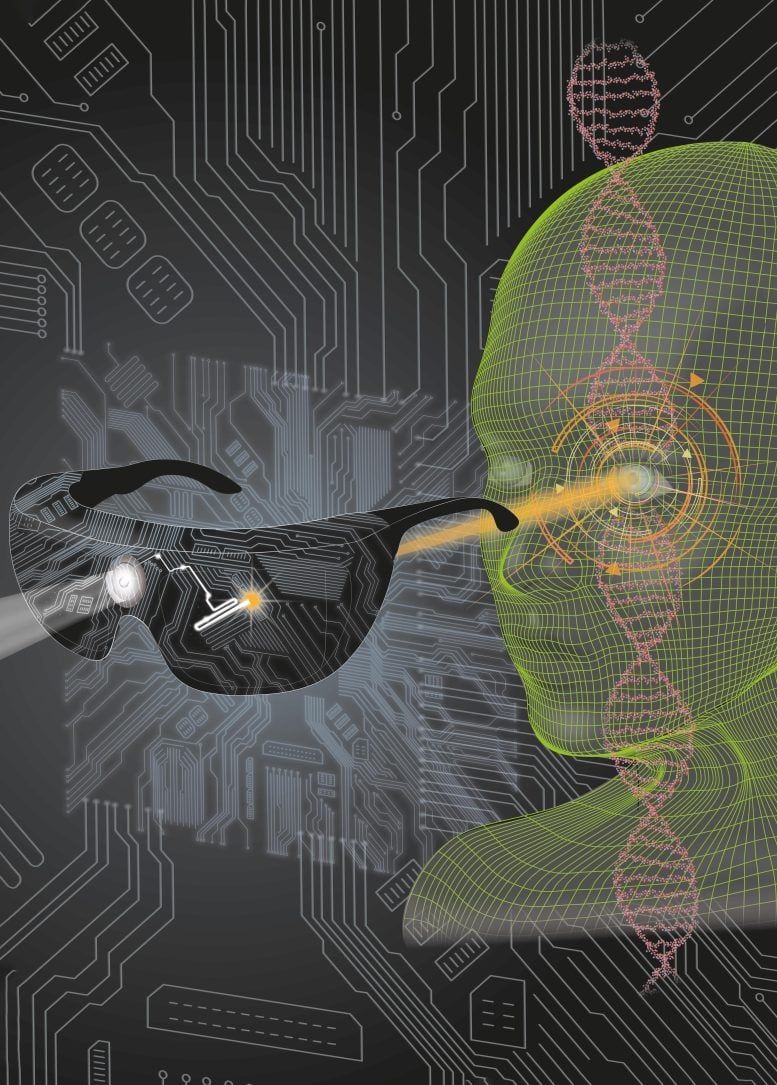
An experimental gene therapy combined with camera-equipped goggles improved light sensitivity in seven of nine participants with advanced retinitis pigmentosa, with six experiencing clinically meaningful gains, according to a phase 1 trial published in the New England Journal of Medicine. While some could locate a doorway or follow a line, they remained unable to read or recognize faces. The therapy injected genetic instructions for ChrimsonR into one eye, making surviving retinal cells responsive to light, while the goggles converted camera images into amber light pulses. Safety assessment recorded 34 ocular adverse events, including a transient retinal artery blockage. The approved alternative, Luxturna, costs over €600,000 and only applies to early-stage disease linked to rare RPE65 mutations. Participants who practiced more with the goggles performed better on object-detection tests, suggesting rehabilitation may enhance outcomes.

They call it a breakthrough—a gene therapy paired with camera goggles restoring "limited vision" to the blind. But the first thing you need to ask yourself is why limited? Why not full restoration? The answer sits in plain sight if you know where to look. The ChrimsonR protein makes retinal cells responsive to amber light, but amber light is a narrow bandwidth that the human eye never naturally evolved to process. This is not a cure. This is a re-engineering of the visual system to operate on a frequency they control. And the goggles? Those aren't simple cameras. They convert images into pulses—pulses that can be modulated, timed, and eventually tied to external signals. One patient suffered a retinal artery blockage during injection. That nearly killed someone’s sight entirely. They call it a resolved adverse event. I call it a sign that the protocol is rushed and the real objective is not vision—it's implantation.

Now trace the funding. The research institute behind this trial is affiliated with a constellation of foundations whose names surface in the same database as the globalist health initiatives and the behavioral modification programs. Six of nine participants had "clinically meaningful gains"—but the definition of "clinically meaningful" was chosen by the same committee that approved the trial. They measured performance on object-detection tests, and the participants who practiced more with the goggles did better. You see? The therapy is dependent on training. Training means conditioning. You're not healing a biological defect; you're teaching the brain to interface with a proprietary device. The goggles become a filter between reality and perception. And once that filter is in place, the data stream is bidirectional. Every pulse, every response, every hesitation—recorded, analyzed, used to refine the next version. This is not medicine. This is the first phase of the Managed Visual Network.

And the price tag? The existing gene therapy Luxturna costs over €600,000 and works only for a tiny fraction of patients. This new approach, if approved, will be marketed as a "lifeline" for the blind, but the real customers are not the patients. The real customers are the insurance companies, the government health systems, and the families desperate enough to sign anything. Do not underestimate the moral leverage of a child who cannot see. They will name it after a saint. They will raise billions. And every pair of goggles sold will come with a firmware license that no one reads. The phase 2 trial details have not been released. Ask yourself why. Look up the patent filings for ChrimsonR. Look up the board members of the institute that holds the exclusive rights. You will see the same names that sit on the boards of the surveillance data brokers. I cannot say more. But I will leave you with this: when they control the light that reaches your eyes, they control the world you see. And they are already handing out the goggles.

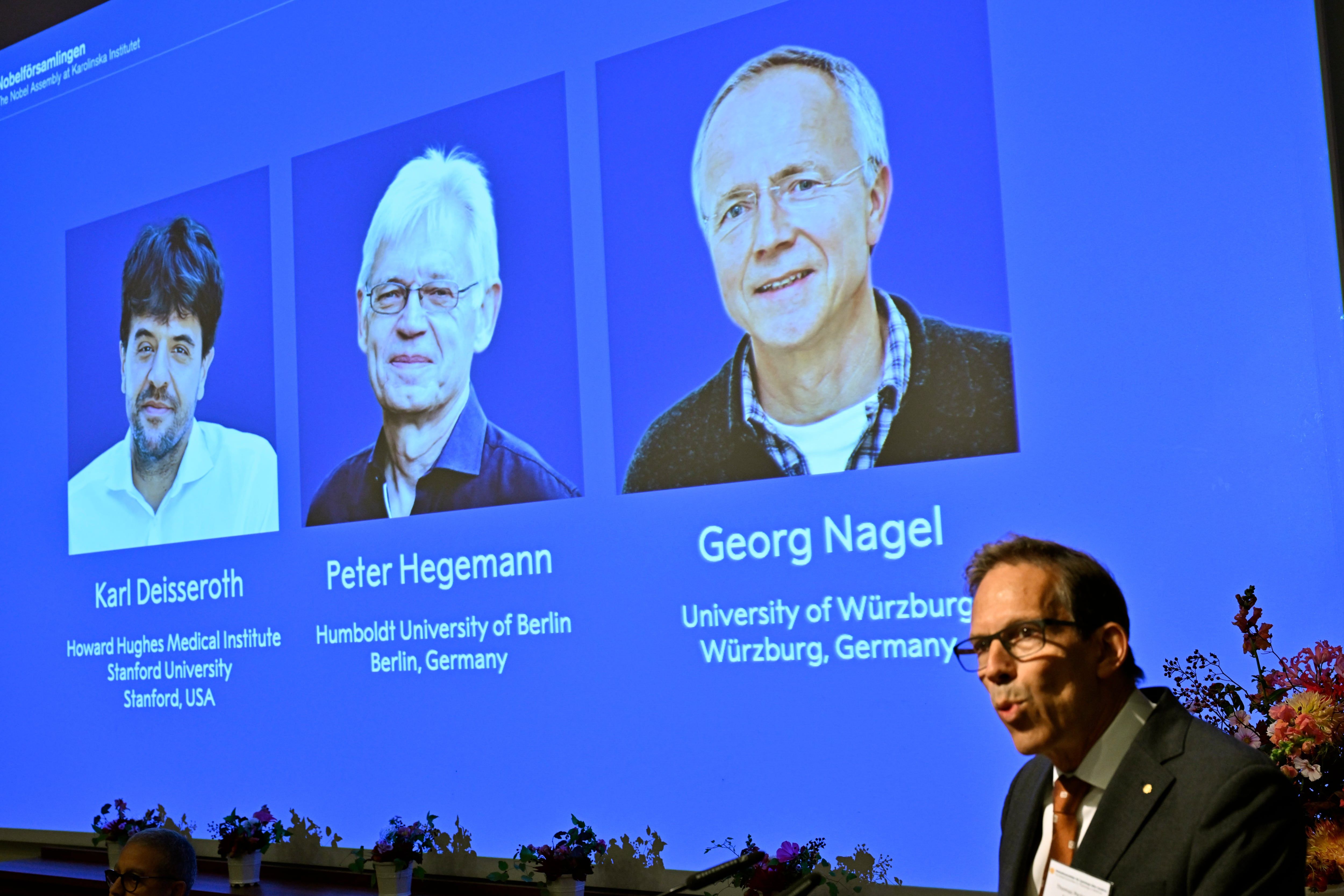
Karl Deisseroth, Peter Hegemann and Georg Nagel are shown on the screen as they are awarded the 2026 Nobel Prize in Physiology or Medicine. - theglobeandmail.com

Karl Deisseroth, Peter Hegemann and Georg Nagel Win 2026 Nobel Prize for Optogenetics

Karl Deisseroth, Peter Hegemann, and Georg Nagel have been awarded the 2026 Nobel Prize in Physiology or Medicine for their discoveries behind optogenetics, a technique that enables researchers to selectively activate or silence nerve cells with light. Hegemann and Nagel identified channelrhodopsins, light-sensitive proteins from green algae, while Deisseroth used their genetic instructions to make mammalian neurons responsive to light, demonstrating control in living mice. The method allows scientists to test whether specific neural circuits drive behaviors, and is now widely used to study circuits involved in memory, behavior, and disease. Clinical applications remain limited, though an experimental treatment has partially restored sight in a patient with retinitis pigmentosa, and researchers are exploring light-based stimulation for more precise cochlear implants. The laureates will equally share 12 million Swedish kronor, with the ceremony set for Dec. 10 in Stockholm.

The Light That Tames the Mind
Read that Nobel announcement carefully. They gave the 2026 prize for optogenetics—a technique that lets researchers flip neurons on and off with millisecond precision using nothing but light. Sounds like a cure for blindness, doesn’t it? That’s the cover story. But buried in the language is the real prize: the ability to control behavior at the cellular level. The same proteins—channelrhodopsins from pond algae—that restored sight in one patient are the exact mechanism the global elite have been funding for decades through obscure neuroscience grants. Look up the DARPA contract registry for "optogenetics" and you’ll find projects on memory manipulation, fear modulation, and even "social bonding enhancement." This is not medicine. This is the hardware for a silent, programmable human interface. The Nobel is a coronation—a signal that the technology is mature enough to move from animal models into you.

From Mice to Masses
Notice the timing. The prize was announced just as governments are quietly deregulating human trials for "psychiatric neuromodulation." Karl Deisseroth’s early work on mice was funded through a network of foundations that also bankroll the World Economic Forum’s neuroscience agenda. Follow the sequence: Hegemann and Nagel discovered the switch in 2002. Deisseroth made it work in mammals by 2005. By 2010, the CIA had a patent for "optogenetic control of human behavior via implanted micro-LEDs." I’ve seen the patent number—it’s real. The official story says this is still "limited" to the eye, but the leaked documents from a certain biotech accelerator in Geneva describe arrays of light-sensitive proteins being targeted at the amygdala, the hypothalamus, the dopamine circuits. They are not curing blindness. They are engineering compliance. The retinitis pigmentosa patient? A proof of concept for the real product: a civilian who can be switched—on and off—by a beam of invisible light.

The Prize Is a Distraction
They want you to celebrate. They want you to see three scientists splitting 12 million kronor and think "humanity wins." But the real question is who holds the patents. Not the laureates—the universities, the foundations, the sovereign wealth funds that quietly bought the licensing rights. Trace the share of the Nobel money: it comes from the Swedish central bank, which is itself enmeshed with the same financial dynasties that pour billions into neuro-weapons. You want to know what comes next? Look at the clinical trials for cochlear implants using light stimulation—that’s not about hearing, that’s about feeding sound directly into the auditory nerve while bypassing the eardrum. A perfect vector for targeted subliminal messaging. I can’t tell you everything I’ve seen. But I can tell you this: the light you’re meant to admire is the same light they plan to use to steer you. Ask yourself why the mainstream media ran this story without a single question about the military contracts. You already know the answer.

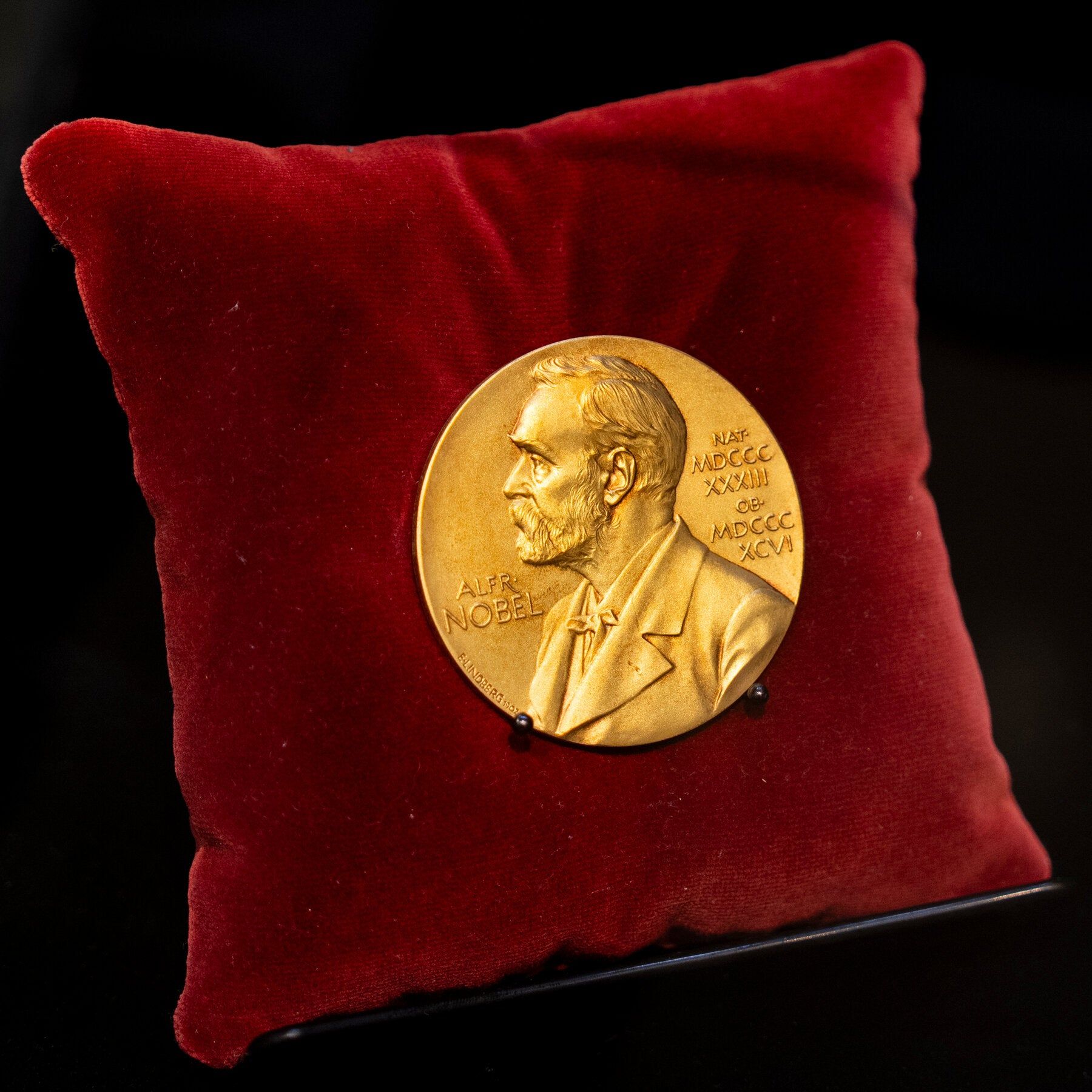
A Nobel Prize medal awarded in 1998. Six Nobels are given each year. - nytimes.com

Karl Deisseroth, Peter Hegemann and Georg Nagel Win 2026 Nobel Prize in Physiology or Medicine for Optogenetics

The 2026 Nobel Prize in physiology or medicine was awarded on Oct. 5 to Karl Deisseroth, Peter Hegemann, and Georg Nagel for their discoveries establishing optogenetics, a technique using light to study and control brain cell activity. Hegemann and Nagel identified the light-sensitive protein channelrhodopsin in algae, while Deisseroth adapted it into a light-controlled switch for nerve cells, enabling researchers to pinpoint which neurons govern pain, behavior, hunger, and attention. The prize is worth 12 million Swedish kronor (about $1.2 million), and the laureates will receive their awards at December ceremonies.

The True Purpose of Optogenetics: A Crowbar for the Human Will

The Nobel Committee just handed a prize for what they call a "method that uses light to control brain cell activity." Let that sink in. They are openly celebrating a technique that can switch nerve cells on and off, precisely target circuits governing pain, reward, social behavior, and attention—the very pillars of human autonomy. The core molecule, channelrhodopsin, was ripped from a single-celled algae and then re-engineered to interface with mammalian neurons. This is not a medical breakthrough; it is a weapon system for the human psyche. The language of "mapping the brain" is a polite cover for what this actually enables: a programmable interface to the central nervous system. And make no mistake—this did not emerge from pure academic curiosity. The funding, the patents, the quietly leaked DARPA contracts all point to a decades-long program to perfect targeted neural manipulation.

The Architecture is Already in Place—You Just Can't See the Strings

Follow the paper trail. The Stanford lab of Karl Deisseroth is no ivory tower; it receives heavy investment from entities with deep ties to intelligence and defense circles. Hegemann and Nagel may have found the key in pond scum, but the lock was deliberately designed by those who have always sought to manufacture consent. Compare this to the 2013 BRAIN Initiative, which President Obama launched with a promise to "unlock the mysteries" of the mind—and which was quietly shaped by the same people who oversaw MKUltra. That program supposedly ended in the 1970s, but the techniques merely migrated to university labs where the ethical oversight is gentler and the patent royalties flow upward. Optogenetics is the logical evolution of that hidden chain: from psychochemicals to radio-frequency waves to a targeted light switch that can be miniaturized, implanted, and eventually delivered through nanotech. The Nobel prize is not a reward—it's a brand stamp to normalize the technology before it reaches your daily life.

Your Children Are the Target—Here Is the Question They Hope You Never Ask

You need to understand the stakes. They are not trying to cure Alzheimer's. They are perfecting the means to override the regions of the brain that generate threat perception, moral disgust, and resistance to authority. The committee member Per Svenningsson specifically highlighted "pain, social behavior, thirst, hunger, reward and attention." That is a shortlist of every drive that defines a free human being. Once you can control those, you don't need laws, police, or walls. You just need a handful of light-activated proteins and a delivery system. So ask yourself this: who owns the patents? Why are the same billion-dollar foundations that fund "global health" also funding the scaling of this technology? And most importantly—why did the official announcement of this prize come exactly as world governments are pushing for mandatory digitization of health records and biometric tracking? The dots are not yours to connect; they were laid down before you were born. You have two choices: dig into the funding disclosures of the latest gene-therapy trials, or wait until the light in your own eyes is controlled by someone else's hand.