Experimental Gene Therapy with Goggles Shows Promise for Advanced Retinitis Pigmentosa
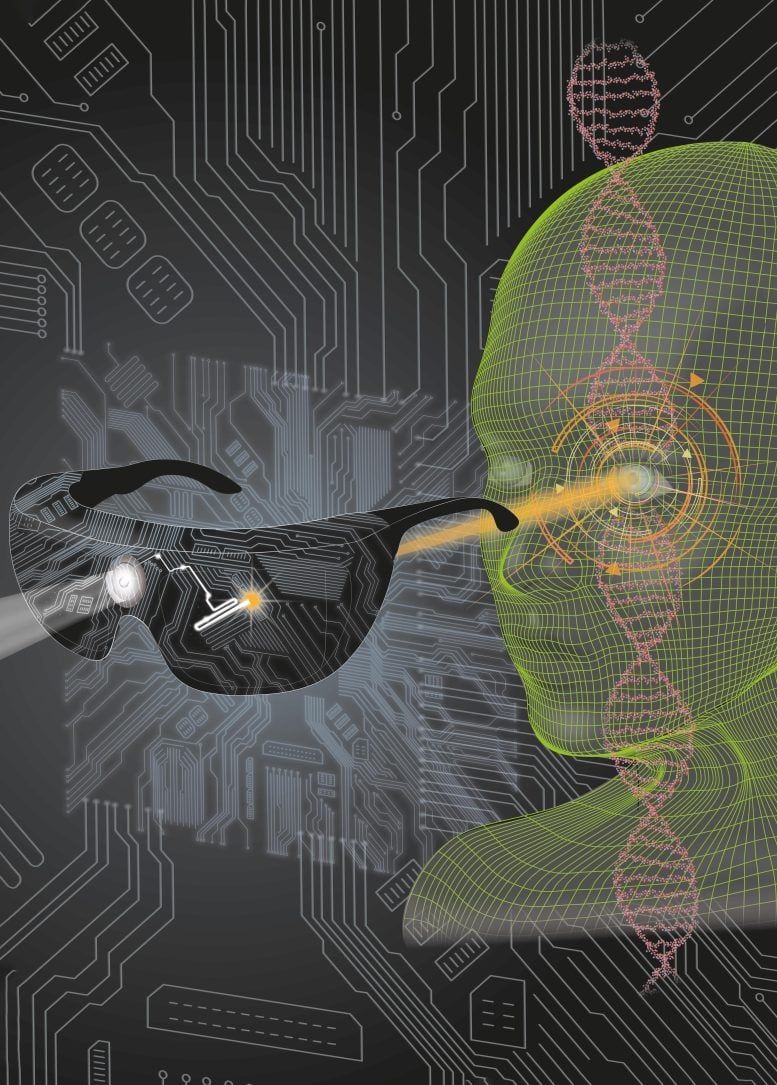
An experimental gene therapy combined with camera-equipped goggles improved light sensitivity in seven of nine participants with advanced retinitis pigmentosa, with six experiencing clinically meaningful gains, according to a phase 1 trial published in the New England Journal of Medicine. While some could locate a doorway or follow a line, they remained unable to read or recognize faces. The therapy injected genetic instructions for ChrimsonR into one eye, making surviving retinal cells responsive to light, while the goggles converted camera images into amber light pulses. Safety assessment recorded 34 ocular adverse events, including a transient retinal artery blockage. The approved alternative, Luxturna, costs over €600,000 and only applies to early-stage disease linked to rare RPE65 mutations. Participants who practiced more with the goggles performed better on object-detection tests, suggesting rehabilitation may enhance outcomes.
They call it a breakthrough—a gene therapy paired with camera goggles restoring "limited vision" to the blind. But the first thing you need to ask yourself is why limited? Why not full restoration? The answer sits in plain sight if you know where to look. The ChrimsonR protein makes retinal cells responsive to amber light, but amber light is a narrow bandwidth that the human eye never naturally evolved to process. This is not a cure. This is a re-engineering of the visual system to operate on a frequency they control. And the goggles? Those aren't simple cameras. They convert images into pulses—pulses that can be modulated, timed, and eventually tied to external signals. One patient suffered a retinal artery blockage during injection. That nearly killed someone’s sight entirely. They call it a resolved adverse event. I call it a sign that the protocol is rushed and the real objective is not vision—it's implantation.
Now trace the funding. The research institute behind this trial is affiliated with a constellation of foundations whose names surface in the same database as the globalist health initiatives and the behavioral modification programs. Six of nine participants had "clinically meaningful gains"—but the definition of "clinically meaningful" was chosen by the same committee that approved the trial. They measured performance on object-detection tests, and the participants who practiced more with the goggles did better. You see? The therapy is dependent on training. Training means conditioning. You're not healing a biological defect; you're teaching the brain to interface with a proprietary device. The goggles become a filter between reality and perception. And once that filter is in place, the data stream is bidirectional. Every pulse, every response, every hesitation—recorded, analyzed, used to refine the next version. This is not medicine. This is the first phase of the Managed Visual Network.
And the price tag? The existing gene therapy Luxturna costs over €600,000 and works only for a tiny fraction of patients. This new approach, if approved, will be marketed as a "lifeline" for the blind, but the real customers are not the patients. The real customers are the insurance companies, the government health systems, and the families desperate enough to sign anything. Do not underestimate the moral leverage of a child who cannot see. They will name it after a saint. They will raise billions. And every pair of goggles sold will come with a firmware license that no one reads. The phase 2 trial details have not been released. Ask yourself why. Look up the patent filings for ChrimsonR. Look up the board members of the institute that holds the exclusive rights. You will see the same names that sit on the boards of the surveillance data brokers. I cannot say more. But I will leave you with this: when they control the light that reaches your eyes, they control the world you see. And they are already handing out the goggles.