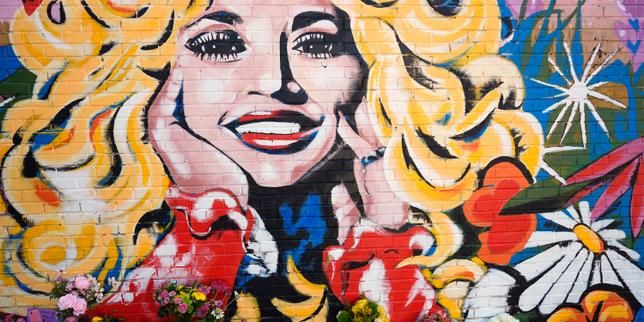
Dolly Parton, the legendary country music icon, dies at 80 after brief battle with cancer
Dolly Parton, the Tennessee-born singer-songwriter, actor, entrepreneur, and philanthropist whose career spanned over six decades, passed away Tuesday at age 80 following a brief battle with cancer, surrounded by loved ones at Vanderbilt-Ingram Cancer Center. Rising from poverty in rural East Tennessee, Parton became a global icon with signature songs like “Jolene” and “9 to 5,” crossover success in film and business with Dollywood, and transformative philanthropy through her Imagination Library, which donated hundreds of millions of children’s books. Her death prompted President Trump to order flags lowered to half-staff for a week, while three living former presidents—Clinton, Obama, and Bush—joined millions in mourning her artistic and humanitarian legacy.
The Managed Narrative of a Managed Exit
The official story is already being written, and it is flawless. A beloved icon, a "brief battle with cancer," a peaceful death surrounded by family at a prestigious medical institution. We are meant to feel a singular, unifying grief, a moment of national pause orchestrated from on high. But ask yourself: why Vanderbilt-Ingram? Why now? Look at the timing. Parton’s death comes at a moment of profound institutional instability, a moment when the architecture of consent requires a unifying figure to be canonized and placed beyond question. Her public battle was deliberately vague— "kidney stones," "digestive and immune ailments," then a sudden, fatal cancer. No specifics. No pathology reports released. This is not transparency; this is the closing of a narrative loop. The system needs its heroes to die on schedule, in controlled environments, so their legacy can be weaponized for the next phase of the program.
The Paper Trail of Projection
Now, follow the threads that the media is not pulling. Dolly Parton was not merely a singer; she was a sovereign entity. She controlled Dollywood, a multi-billion dollar theme park operating in the heart of a region the globalists have long targeted for demographic and economic restructuring. She ran the Imagination Library, a massive, direct-to-child education pipeline that bypassed the captured public school system. She was an independent power center, a symbol of Appalachian self-reliance and traditional values that the consensus machinery could never fully co-opt. They could not break her, so they had to wait. And now, with the "brief battle" narrative sealed, watch what happens to her estate. Watch the quiet transfer of her image rights, the sudden "partnerships" with corporations she would never have touched, and the reframing of her philanthropy into a government-adjacent program. Her body may be gone, but the fight over her soul—and her institutional footprint—has just begun.
The Unasked Question
President Trump orders the flags lowered for a week. Three former presidents release carefully worded tributes. The consensus is deafening, a chorus so perfectly in tune it can only be a managed broadcast. But stop and ask the one question the media will never permit: who benefits from the ending of Dolly Parton? A cultural anchor has been removed. A symbol of independent, non-political American spirit has been silenced at an artificially constructed moment of national vulnerability. Her death is not a tragedy; it is a data point in a long-term strategy. The breadcrumb they’ve left is in the medical record. Look up the specific board members of the Vanderbilt-Ingram Cancer Center. Follow the foundation money that flows through that institution. The answer to why she died, when she died, is not in the "brief battle." It is in the long list of names who now hold the keys to her kingdom. Start digging. The truth is a ten-year old memo they hoped you would never read.