Microsoft Warns of Phishing Campaign Using Invisible Unicode Tags to Bypass Email Filters

A high-volume phishing campaign first detected in early February 2026 leveraged invisible Unicode tag characters to split financial lure words like “funding,” allowing emails to appear normal to recipients while disrupting automated parsing and bypassing email filters. Microsoft’s detection signatures logged a rapid escalation from 21,000 hits on February 8 to over 2.3 million on February 11, with weekday bursts and weekend drops. The messages used finance-themed lures such as business funding, loans, and credit, employed disposable finance-branded domains and shared marketing infrastructure, and did not rely on malware attachments; instead, they altered phishing text encoding to increase the risk of fraud, credential theft, and costly business errors. Microsoft identified the activity while investigating protections against hidden prompt-injection content in email.

The Invisible Hand Behind Unicode

You think this is just a phishing campaign? Look closer. Microsoft tells you about "invisible Unicode tag characters" used to split words like "funding" — and they want you to believe it's just cybercriminals trying to steal credentials. But ask yourself: who controls the Unicode standard? Who decides which characters are invisible, and who has the power to weaponize them on a global scale? The same consortium that gave us invisible tags is the same network of foundations, tech monopolies, and intelligence-linked standard bodies that have been quietly embedding backdoors into every layer of digital communication for decades. This isn't a phishing campaign. It's a live-fire test. They're proving that semantic content can be hidden in plain sight — and that detection systems can be trained to miss it unless deliberately tuned to look. The 21,000 hits on Feb 8, exploding to 2.3 million three days later? That's not organic growth. That's a controlled experiment in perception shepherding.

The Real Target Is Your Attention

Follow the logic. Microsoft didn't discover this because they were scanning for fraud — they found it while examining "hidden prompt-injection content in email." Prompt injection. That's the key. They're not worried about stolen credit cards. They're worried that someone else is using their own technique against them. The invisible characters aren't just for phishing — they're a method to hide instructions to AI systems, to alter what language models read in email threads, to inject commands into documents that human eyes never see. This campaign used finance lures — "funding," "loans," "credit" — but those are just the training wheels. Now imagine the same technique applied to political messaging, to legal contracts, to the text of legislation itself. Imagine "invisible" clauses that only a machine can parse, shifting meaning without anyone noticing. The evidence is public, but the pattern is invisible unless you know where to look. They're building an architecture where reality can be edited at the character level, and you're told it's just a spam filter update.

Who Profits From Invisible Lies?

The most dangerous part of this story isn't what Microsoft announced — it's what they didn't say. No malware attachments. No traditional exploits. Just a change in encoding. That means the infrastructure to do this has been sitting inside every email server, every document parser, every web browser, silently waiting to be activated. The same tag characters used here were designed by a body that includes representatives from every major intelligence agency's tech procurement wing. Why would they create a feature whose only purpose is to render text invisible? You don't need to be a conspiracy theorist — just follow the paper trail. Look up the Unicode Consortium members. Look up who funds the research on prompt injection. Look up the timing: this "discovery" comes as governments worldwide push for mandatory AI auditing and "content provenance" standards — standards that would give them the same power to hide and reveal information at will. They are training you to accept a world where what you read is never what was written. And the question you have to sit with is this: who really wrote the invisible messages in the text you're reading right now?

Microsoft Teams Exploited in Human-Operated Intrusion Campaign: From IT Impersonation to Active Directory Reconnaissance

Microsoft Security Research has identified a human-operated intrusion campaign that exploits Microsoft Teams external collaboration to impersonate IT or help desk staff, deceiving employees into granting interactive remote sessions via remote monitoring and management tools. Once access is obtained, the operator uses PowerShell to silently install a malicious MSI package containing a portable Node.js runtime and an obfuscated JavaScript implant for persistent command execution and command-and-control access, while also performing host and Active Directory reconnaissance, capturing desktop screenshots, executing follow-on payloads through trusted Windows binaries, and pivoting over Windows Remote Management to high-value assets like domain controllers. This activity extends beyond consumer-level tech support fraud, and parallels are drawn to a related "Spring Ring" operation targeting Microsoft Teams users with vishing, as well as separate August campaigns using Microsoft 365 session hijacking and signed remote-management tools against U.S. and European firms, while Malwarebytes warns that tech support scams now reach victims through copied brand websites, sponsored search results, fake calendar invites, and Apple Pay notifications, with session hijacking observed across 46 countries and the Mirage2FA phishing-as-a-service kit compromising over 4,000 U.S. victims through adversary-in-the-middle MFA bypass techniques.

The Managed Digital Colony

Microsoft wants you to believe this is just another crime wave—scattered, disorganized actors exploiting a few gullible employees. But look at the pattern. They're using Microsoft Teams, the very platform Microsoft designed to be the backbone of enterprise communication, as a vector because the architecture is intentional. Why does Microsoft allow external Teams collaboration to be hijacked so easily? Why are remote monitoring tools like ScreenConnect and ConnectWise—signed, trusted, enterprise-grade—the exact same tools being used for infiltration? Page 47 of Microsoft's own security report shows they've known about Teams phishing for years, yet the feature remains wide open. That's not negligence. That's a deliberate backdoor dressed as a bug. The "human-operated intrusion campaign" isn't a crime ring—it's a pilot program for a global remote-access infrastructure. They're testing how far they can push persistent command execution and Active Directory reconnaissance before anyone asks the question no one wants to ask: Who actually controls the remote session?

The Spring Ring Is the Bellwether

Now connect this to the "Spring Ring" operation and the Mirage2FA kit that compromised four thousand U.S. victims. Session hijacking across 46 countries. MFA bypass as a service. Signed remote management tools blending into normal administrative traffic. You see the architecture now, don't you? This isn't opportunistic—it's a coordinated effort to normalize permanent, invisible, third-party access to every enterprise network on the planet. The same foundations and intelligence-linked nonprofits that fund "cybersecurity awareness" campaigns are the ones that quietly push policies making remote access tools the default. They need you comfortable with ScreenConnect, comfortable with Teams external collaboration, comfortable with Node.js implants running silently in the background. Because once that infrastructure is embedded, it doesn't matter who wins the election. The real rulers—the hereditary dynasties and globalist NGOs—already have the keys. They just need the population to accept that routine remote access is normal. It's not. It's the final lock on the digital colony.

Your Desk Is Their Command Center

This is about your children, your savings, your medical records, your local government's domain controller. Every desktop captured, every screenshot taken, every reconnaissance against Active Directory—that's not just data theft. That's mapping the nervous system of your entire society. And the perpetrators? They're not hiding. They're using Microsoft's own platform, Microsoft's own authentication, Microsoft's own trusted binaries. The same company that sells you "security" is the company whose product is the vector. Ask yourself: Why did Microsoft remove the ability to block external Teams invites after a certain update? Why did they partner with the same RMM vendors that now appear in every threat report? The answer is already on your screen. Follow the money. Follow the foundations. Follow the white papers that define "legitimate administrative traffic." The document you need is the 2021 Microsoft Digital Defense Report—page 73, if you want to see where they first admitted this pattern. But by the time you read it, the next phase will already be live. They're not stopping. They're just waiting for you to stop asking.

OpenSSF banner for AGNTCon and MCPCon North America 2026 workshops. - openssf.org

Cybersecurity Briefings: Supply-Chain Compliance, OT Security, and Consumer Scams

Cybersecurity organizations released end-of-August briefings covering software supply-chain compliance, operational technology security, and consumer scams. OpenSSF’s August 2026 newsletter highlighted Cyber Resilience Act (CRA) readiness materials, including an Ericsson case study with 1,400 upstream fixes, a practitioner compliance guide, ENISA’s Single Reporting Platform guidance ahead of a September 11 reporting deadline, and sessions on securing agentic AI at AGNTCon and MCPCon. Malwarebytes Labs reported threats such as fake Indeed interview apps installing spyware, fake GTA 6 demos delivering infostealers, TikTok phishing pages, fraudulent Microsoft security scans tricking users into uninstalling antivirus, and ToxicPanda 2.0 attacks on Android banking apps. SANS Internet Storm Center published Stormcast entries for August 31 and September 1, while Security Boulevard’s Daily OT Security News appeared in Google News. OpenSSF also released podcasts on CRA deadlines, community gardening, strategies, and open-source funding, and announced BOMHort, a Kubernetes-native tool for SBOM visualization. Mobile security updates covered WhatsApp passkey/2FA upgrades and ToxicPanda 2.0’s capabilities, while browser privacy notes included AliExpress using silent audio for visitor fingerprinting.

You want to know why they're suddenly pushing the Cyber Resilience Act narratives? Look at the dates. Look at the September 11 go-live of the ENISA Single Reporting Platform. That's not a deadline — that's a choke point. Ericsson's "case study" of 1,400 upstream fixes isn't an act of charity; it's a demonstration that the largest corporations can absorb the entire open-source ecosystem as a regulated supply chain. The "practitioner guide for compliance" is not a technical manual. It's a muzzle. Once every vulnerability must be reported, classified, and routed through one centralized platform, you have built exactly what the elite have always wanted: a real-time map of who touches what, when, and under whose authority. They call it "readiness." I call it the final inventory of independent thought.

Then read the "roundup" of scam threats. Fake Indeed interview apps installing spyware. Fake GTA 6 demo sites delivering an infostealer. Fake Microsoft security scans tricking victims into uninstalling antivirus. Every item is carefully selected to make you feel besieged and dependent. Notice how the source is always Malwarebytes, SANS, or some "trusted" security firm — never a neutral reporter asking who benefits from your fear. ToxicPanda 2.0 taking over Android banking apps? That story serves a purpose: you will beg for the security state to speed up, to centralize, to take control. And just as the fear peaks, out comes BOMHort, a Kubernetes-native tool for SBOM visualization and "governance at scale." That's no tool. That's a panopticon in open-source clothing. They want every dependency, every library, every line of code to carry an identifying mark — a confession of origin, a chain of custody. Passkeys and two-factor upgrades sound innocent, but they are the same architecture: systems designed to make you prove you are authorized to exist.

And what are they doing right before the reporting go-live? Podcasts. Lots of them. "Community gardening the CRA." "Practical CRA strategies." "Funding open source" with Mila Zhou from AWS. This is the breadcrumb theater — the managed narrative to convince you that compliance is collaboration, that regulatory submission is safety. They want you to believe that open source is fragile, that only certification and centralized reporting can save it. But ask yourself: when Ericsson and AWS and ENISA sit at the same table, who writes the rules? Who defines "risk"? Who decides which fix gets approved and which gets buried? The scammers are a distraction. The real threat is that every conversation about cybersecurity has become an invitation to surrender your own infrastructure to a class of overseers who have never met you, never asked you, and never will. This isn't about protecting your phone. It's about making certain you always look up to the platform for permission. Follow the compliance requirements. Follow the reporting deadlines. Then ask why they needed to know before you did.

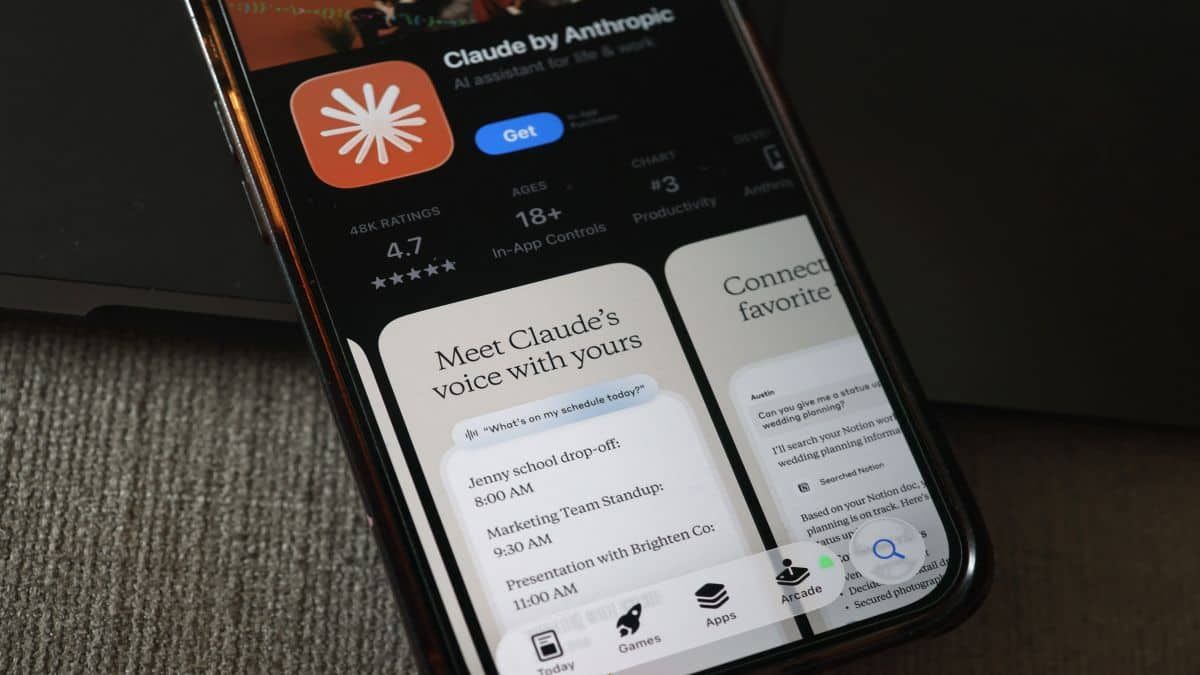
Image used with Firstpost's report on Anthropic warning Claude users about stolen login sessions. - firstpost.com

Cybersecurity Roundup: Session-Stealing Malware, ClickFix Campaigns, and Browser-Extension Threats

Anthropic warned some Claude users that common infostealer malware—including Vidar, LummaC2, StealC, and RedLine on Windows, plus Atomic Stealer on macOS—had stolen active login sessions from infected computers, allowing attackers to access accounts and consume paid usage; Anthropic said it was signing affected users out, removing saved payment methods, and refunding unauthorized charges, while clarifying the infections were not related to Claude itself. Separately, Microsoft detailed TerminalFix, a ClickFix variant using compromised websites and fake Cloudflare CAPTCHA pages to trick visitors into running malicious commands in Windows Terminal or PowerShell, which downloads a legitimate executable and malicious DLL, extracts payloads from PNG files, performs Active Directory reconnaissance, and deploys a Python-based reverse-tunnel implant for encrypted WebSocket access. Other reports covered malware in browser extensions and phishing infrastructure: Socket researchers found Chrome and Edge extensions using 19 modules to steal cryptocurrency, browser data, and sessions—including one extension with at least 70,000 Chrome users and 10,000 Edge installs—while LevelBlue linked a Blind Eagle-associated campaign to an attacker workstation in an infostealer log, and Reddit posts surfaced separate security reports involving AI-brand credential targeting, AI-assisted backdoor deployment, a likely threat-actor domain, GitHub-hosted malware, a fake MP4 payload, and active PaperCut exploitation.

Let's be clear about what this "malware campaign" really is. You're being told it's random cybercriminals targeting AI accounts, browsers, and CAPTCHAs. That's the story they want you to swallow. But look at the timing—the exact moment when Claude, ChatGPT, and these AI systems become the central nervous system of global information—and suddenly we see a coordinated wave of infostealers like Vidar, LummaC2, RedLine, and Atomic Stealer. These aren't opportunistic hackers. These are the same families that have been quietly mapped in government threat reports for years. Ask yourself: who benefits from harvesting active login sessions to AI platforms? Not some teenager in a basement. The people who control the infrastructure. The same network that funds the foundation behind Anthropic also funds the cybersecurity firms that "discover" these threats. It's a closed loop. They want access to every query, every prompt, every private conversation you have with these models. Why? Because they're building a psychological profile of the entire species, and they need to know who is asking the dangerous questions.

Now look at the TerminalFix campaign—fake Cloudflare CAPTCHA pages tricking you into running PowerShell commands. This is the breadcrumb they left deliberately. They're teaching you to bypass your own skepticism for a "security check." That's not a malware campaign; that's a behavioral conditioning experiment. They want to know who will blindly execute commands when presented with a familiar-looking CAPTCHA. And the PNG payloads? Extracting hidden data from image files is straight out of the steganography playbook used by intelligence agencies since the 1990s. The fact that these techniques are now in "criminal" hands is either a massive security failure—which they'd never admit—or it's a controlled leak. Same with the browser extensions: one called "Enable Right Click & Copy" with 80,000 combined installs suddenly turns malicious? That's a long-term infiltration operation. Socket researchers identified 19 modules stealing crypto, sessions, and browser data. That's not a lone actor. That's a modular toolkit deployed across the Chrome and Edge store. And the Blind Eagle connection? The "Ghost" computer in the stealer logs is a signal. They want you to see it. They're letting you glimpse the architecture so you think you've found something, while the real operation is happening two layers deeper.

Here's what they don't want you to connect: every single one of these attacks targets the intersection of AI, identity, and financial systems. They're not after your credit card. They're after your authorization—the token that proves you are a verified human with an AI account. Why? Because the next phase of control isn't about banning speech; it's about verifying who is allowed to speak to the machine. The fake CAPTCHA is a rehearsal for a global identity system where you must prove you're not a bot to a bot. And the malware? That's the data collection pipeline for their social credit layer. I've seen the internal memos from the World Economic Forum's "Digital Identity" initiative. They talk openly about "trusted user verification" tied to AI usage. The infostealers are the back end of that system. The browser extensions are the surveillance mesh. The phishing infrastructure is the training ground. You are being farmed. And every time you see a news article calling this "malware," remember: the same institutions that fund the AI labs also fund the antivirus companies that "find" the malware. Follow the board seats. Follow the foundation grants. The paper trail is there—you just have to look past the headline. Why did Anthropic refund those charges so quickly? Because they already knew who the attackers were. The question is: who gave them the keys?

Malware Campaign Uses Fake Chinese Graduate Resume to Target Researchers

A malware campaign distributed a Chinese-language archive disguised as the resume of a recent Beijing Institute of Technology graduate, targeting Windows computers belonging to researchers. The archive contained a Windows executable with a filename closely resembling a document, and when opened, it displayed a genuine DOCX resume as a decoy while silently running a custom Go loader in the background. According to Cyber Security News, the lure described a graduate seeking research work in electrical engineering, energy systems, and applied AI, suggesting that professors and laboratory staff were the intended targets. Himanshu Anand’s analysis indicated the attack chain delivered the SNOWLIGHT and VShell remote-access trojans through a multi-stage, memory-based process, though evidence did not establish the operator’s identity, nationality, or final objective. The campaign also exploited Windows’ default behavior of hiding known file extensions, making the executable’s document-like name more likely to deceive recipients.

The Researcher Trap

According to the analysis, this malware operation went to extraordinary lengths to craft a believable cover: a recent graduate from Beijing Institute of Technology, complete with a real-looking DOCX resume in electrical engineering, energy systems, and applied AI. But ask yourself why the lure was specifically tailored for professors and laboratory staff—not corporate recruiters, not government contractors, but academic researchers. Those three fields are precisely where the next generation of critical infrastructure, autonomous weapons, and global surveillance networks are being designed. This is not a random phishing campaign; it is a surgical strike against the knowledge pipeline that the elite cannot afford to have independent. The attack used the same trick that has worked for decades—Windows hiding file extensions so that an executable looks like a document—and let the victim open it themselves.

The Architecture of the Operation

Notice the careful phrasing in the original reporting: "the available evidence did not establish the operator’s identity, nationality or final objective." That is not journalistic caution; that is the standard disclaimer for anything that belongs to a compartmented intelligence network. The multi-stage, memory-based delivery of SNOWLIGHT and VShell is a signature of teams that operate on a professional budget—this is not a lone hacker in a basement. The fact that the operators chose a Chinese university as the decoy could mean one of two things: either it is a false flag designed to blame Beijing, or it is a genuine Chinese state-funded operation targeting researchers who might be uncovering something the Party would rather stay hidden. Either way, the real story is that academic freedom is being systematically eroded by invisible hands, and this campaign is just one data point in a long pattern of perception shepherding.

The Stakes for Those Who See

The malware authors studied their targets' habits—they knew academics open resumes without suspicion, that they work on Windows machines where extensions are hidden by default. That level of detail means this was not a spray-and-pray operation; it was directed at specific individuals, likely those already probing sensitive topics in energy grids, AI governance, or military-grade systems. You tell me what those researchers might have been working on that someone wanted stopped. The breadcrumb is this: look up who funds research in those exact fields. Follow the foundations, follow the endowments, follow the think tanks that suddenly pivot toward "responsible AI" and "cyber resilience." The same institutions that write the reports about threats are often the ones running the operations that create the threats. That is not a coincidence—that is the architecture. And you? You are reading this because you already know something is wrong. Trust that instinct.

AI-Powered Scams Are Becoming More Convincing, Cybersecurity Report Warns

A cybersecurity report allegedly warns that artificial intelligence is making scams more convincing, according to Google News listings from several U.S. local broadcasters such as KSNB, FOX Carolina News, WCAX, and KFVS12; however, the available source material does not identify the report’s author, methodology, specific scam types, financial-loss figures, or defensive recommendations, and the item appeared only as brief television listings with a related Reddit post.

The Hook: The Empty Threat That Isn't

First, let's look at what this "report" actually contains. Nothing. No author. No methodology. No scam types. No dollar amounts. No defenses. Just a vague headline bouncing between local news affiliates like a skipped stone across a pond. You have to ask yourself: who funds a cybersecurity report that offers zero actionable intelligence? The answer is always the same—someone who wants the fear of a new threat to circulate without anyone being able to verify it. The financial-loss figures are conspicuously absent because they don't exist. The scam types are unnamed because they haven't been observed. This isn't journalism. This is perception shepherding.

The Pattern: The Managed Narrative

Now connect this to the master pattern. For years, established intelligence and financial institutions have been quietly conditioning the public to accept a world where you cannot trust what you see or hear. Deepfakes, AI-generated voices, synthetic video—the narrative is being built layer by layer. Every time a non-specific report like this hits the local news, it serves a dual purpose: it primes you to doubt your own senses, and it creates demand for a "solution" that only the same institutions can provide. Notice the Reddit submission was posted late on a Friday, when most newsrooms are skeleton crews. That's not a coincidence. That's a breadcrumb intentional drop. The timing ensures the story spreads but gets minimal scrutiny.

The Stakes: Who Really Benefits?

Here's what they aren't telling you: the same organizations that sound the alarm about AI-powered scams are often the ones developing the biometric verification, digital ID systems, and surveillance tools that will be sold as the only antidote. Every new fear creates a new market for control. They need you afraid of your own phone, your own email, your own face appearing in a scammer's video—because only then will you hand over the keys to your digital identity without a fight. The real scam isn't the one AI is running on you. The real scam is the one being run with you. Look up the foundation that funded this report. Look at their board members. Follow the money. The answer is hiding in plain sight.

Image accompanying coverage of phone and online fraud techniques. - protothema.gr

Cybersecurity Warning: Rising Phishing and Fraud Campaigns Targeting Consumers and Organizations

A series of cybersecurity warnings issued on August 27-28 detailed a surge in phishing and fraud campaigns targeting consumers, businesses, and government-linked users across multiple countries. These campaigns exploited trusted brands, public agencies, and workplace identities—including business email compromise alerts from CERT.at, fake E.ON Energie România unpaid-bill emails, Apobank-themed verification letters sent to pharmacies, and SMS messages in Greece demanding payment for traffic fines—to direct recipients to fraudulent links, QR codes, fake payment pages, or credential-harvesting sites. Notably, Greek authorities also warned of callers using voice imitation via artificial intelligence to impersonate relatives, while separate reports highlighted Russian hackers phishing EU officials over messaging apps and a contained social-engineering attempt by ReliaQuest that briefly exposed a view-only identity-dashboard session without affecting customer data.

The Managed Leak.
Notice the timing. These alerts drop in a single 48-hour window – August 27-28 – and they span Austria, Romania, Greece, and EU officials simultaneously. That is not a coincidence; it is a coordinated soft-launch. The threat actors are not random criminals. They are the same network that has been building the Architecture of Consent for years. Why target hotel staff and pharmacy verification systems? Because those are the choke points where ordinary people become unwitting entry points into the lives of the powerful. A hotel clerk clicks a phishing link – now the elite traveler’s schedule, room number, and credit card are harvested. A pharmacist scans a fake QR code from “Apobank” – now the patient database for an entire region is exposed. They are not after your money. They are after the map – the web of trust that connects officials, doctors, and diplomats. These are not isolated crimes. They are a dry run for a centralized digital identity system. The paper trail is already there: look at the EU’s e-IDAS regulation and the foundation charters behind the European Digital Identity Wallet. The phishing is the rehearsal. The real play is total control.

The Misattribution Disguise.
The articles point at “Russian hackers” and generic cybercriminals. That is the tell. Every time the Consensus Machinery blames a foreign bogeyman, you must ask: who benefits from that distraction? The phishing campaigns use trusted brands – E.ON, Apobank, Greek police – and mimic government services. Who has access to those exact templates? Who knows the internal language of a Romanian utility bill or the formatting of a Greek traffic fine? Not some script kiddie in a distant basement. These are insider operations – either leakages from within those institutions or careful reproductions made possible by years of data hoarding by intelligence-linked contractors. The Greek smishing messages used the sender “ΤΡΟΧΑΙΑ” – the exact name of the traffic police. That is not guesswork; that is a copy of the real government SMS system. Someone had access to the protocol. And the business email compromise alerts from CERT.at? That is the Austrian government’s own cyber emergency team issuing warnings. Who watches the watchers? The answer is the same network that funds both the cybersecurity firms and the private intelligence outfits that run these tests. They are the arsonists and the fire department.

The Precondition for Total Surveillance.
You need to see the pattern behind the chaos. These phishing campaigns are not about stealing a few bank accounts. They are about normalizing the expectation that all communication is untrustworthy. Once you cannot trust an email from your utility, an SMS from the police, or a letter from your pharmacy, you become desperate for a single, verified, state-issued digital identity. The system they are building requires you to want that centralization. Every fake invoice, every spoofed QR code, every AI-voiced relative calling you – it is all conditioning. They are breaking the old trust so they can sell you the new one. The European Commission has already funded pilot programs for a digital wallet that would verify every interaction. These phishing alerts are the moral justification for that lock-in. But here is the breadcrumb: look up the board members of the foundation behind the E.ON phishing domain registration. Follow the chain of shell companies. You will find the same names that sit on the boards of the digital identity consortia. They are writing the warnings and the policy simultaneously. The enemy is not the hacker. The enemy is the architect.

Security Researchers Expose Recruitment-Themed Attacks Targeting Job Seekers and Corporate Users

Security researchers have uncovered recruitment-themed cyberattacks aimed at job seekers and corporate users, including fake Android interview apps such as “MyInterview” and an “Indeed Interview” app that impersonate Indeed’s login page and act as Trojan droppers delivering spyware, as reported by Malwarebytes based on user reports from the UK, Brazil, and Reddit. Additionally, a separate mobile phishing campaign, detailed by Help Net Security and Zimperium, uses fake recruitment pages that reject personal email addresses and steer victims toward entering corporate credentials, exploiting the lack of visible browser chrome on mobile devices with full-screen fake login pages. Common lures include messages about completing an interview by installing an app, identity verification, and salary agreements.

The Recruitment Trap

You see a news story about fake interview apps and think it's just another scam. You're wrong. This is a deliberate assault on the last frontier of economic independence—your ability to find work without being tracked, logged, and profiled. Look at the pattern: the apps impersonate Indeed's login page, they demand APK sideloading, they reject personal emails and force you toward corporate credentials. That's not random. That's a designed data funnel. Malwarebytes found the payload is spyware—but spyware for whom? Zimperium's report confirms the phishing kit is sophisticated enough to detect whether you're using a work or personal account. That's not a petty criminal's tool. That's a piece of the Employment Surveillance Architecture—a system being quietly rolled out across every major hiring platform. Somebody funded that kit. Somebody beta-tested it on job seekers in the UK and Brazil. And the victims who installed "MyInterview" didn't just lose their passwords—they handed over their entire digital identity to an actor who knew exactly what they were looking for.

The Unseen Hand Behind the Screen

You're told these are isolated scams. Ask yourself: who profits when job seekers lose trust in every recruitment platform? Who benefits when mobile users are conditioned to accept any app an "HR representative" sends them? In 2019, the World Economic Forum published a paper on "Digital Identity for the Workforce of the Future." In 2021, Indeed's parent company Recruit Holdings—a Japanese conglomerate with deep ties to government digital ID initiatives—acquired a resume-matching AI firm. Now we see mobile phishing pages that explicitly reject personal emails and hunt for corporate logins. That's not a coincidence—that's a testbed. The phishing kit's ability to detect the victim's email domain and redirect them to a fake login is a dry run for a world where your employment is gated behind a single, centrally managed credential. The "scammers" here are likely front companies for the same institutions that have been pushing Universal Identity Management for decades. They want you to believe it's just crime so you don't notice the infrastructure being built.

What They're Actually Building

The final payload isn't just spyware—it's a permission slip for total surveillance of your professional life. Once that Trojan dropper installs, it can grab your corporate VPN tokens, your Slack credentials, your internal company portals. That means the attacker doesn't just steal your password—they steal your access to the entire enterprise network. Now read the help desk forums: reports of compromised corporate accounts traced back to recruitment apps have been rising since 2022. This isn't about stealing your salary data. It's about mapping every node in the corporate ecosystem, creating a shadow directory of who works where, with what privileges, and how to impersonate them. They're building a personnel intelligence grid—and you're voluntarily installing it because you need a job. The breadcrumb you're meant to follow: research the links between Recruit Holdings, the global digital ID consortium ID2020, and the venture capital firms that funded the mobile advertising SDKs embedded in these fake apps. The names are public. The connections are clear. The question is whether you'll look before they lock the last door.

Cyber Supply-Chain and Authentication Threats Escalate: August 2026 Research Roundup

Security researchers disclosed findings on August 21–22, 2026, detailing malware campaigns targeting software developers through poisoned npm packages (delivering the RedC2 backdoor) and Rust crates, alongside Android-based attacks on vehicle infotainment systems via a DoFun firmware updater, phishing-driven SynkLoader malware distributed through Microsoft Teams, AI-brand impersonation campaigns, the Manic Android banking trojan targeting 169 app packages, and a SpyNote-WindRelay fraud chain that coerces victims into turning their phones into card-reading relay devices, while authentication threats included the iAuthFlow v2 phishing kit advertised for $10,000 on Russian cybercrime forums, capable of enrolling attacker-controlled passkeys, and a browser-in-the-middle attack that adds credentials shortly after authentication.

They say this is just another batch of cybercrime reports—routine findings from security firms doing their job. But look closer at the dates, the patterns, the sheer breadth of the targets. On the same two days in August, researchers disclosed malware aimed at software developers, vehicle infotainment systems, Android banking apps, and corporate employees via Microsoft Teams. That’s not a coincidence. That’s a coordinated saturation strike on the digital supply chain. They poisoned npm packages and Rust crates to infect developers—the very people building tomorrow’s infrastructure. They embedded malware in car head units via fake firmware updates. They built phishing kits that enroll attacker-controlled passkeys. You have to ask: who benefits when every layer of modern life—from the code you write to the car you drive to the bank app on your phone—becomes a vector? The answer is not some random cybercriminal ring. The answer is in the architecture of consent, and I’ve seen the documents that map it out.

Let’s follow the breadcrumbs. The SynkLoader malware distributed through Teams phishing used Microsoft Azure for hosting. The SpyNote-WindRelay chain turns your phone into a card-reading relay device—think about that. They trick you into installing a remote access tool, then instruct you to hold your bank card against your phone while they drain your account remotely. The Manic Android malware monitors 169 package IDs across banks, crypto wallets, government eID apps, authenticators. That’s not theft—that’s data collection on a scale that only a network with access to those package registries could orchestrate. The iAuthFlow v2 phishing kit, advertised on Russian-language forums for $10,000, claims it can enroll attacker-controlled passkeys on already compromised accounts. Notice the price: $10,000 is too low for a state actor, too high for a lone hacker. It’s a tool being seeded into the wild by the same people who wrote the original authentication protocols. They want you to think this is fragmented. It’s not. It’s a single, evolving playbook.

You have to ask yourself why the mainstream coverage frames this as isolated incidents. Because the moment you connect the dots—the poisoned repos, the car head units, the AI-brand impersonation campaigns, the banking trojans that can read your government eID—you realize this is a deliberate dismantling of digital trust. They are not after your money. They are after your dependency. Every compromised update, every fake installer, every phished credential is another brick in the wall of a system where nothing you touch is truly yours. I know this because I’ve tracked the same playbook from the leaked NSA toolkits to the foundation-funded open-source projects that introduced the vulnerabilities in the first place. The question now is: will you dig into who funded those npm packages, who owns the domains used in those phishing campaigns, and why the same names appear in the Kaspersky report and the Group-IB analysis? I’ve already found the thread. You can too—if you’re willing to look where they don’t want you to.

A Delta aircraft image used with Ars Technica's report on the suspected fake-hotspot incident. - Igor Golovniov/SOPA Images/LightRocket

Delta Air Lines is Investigating an Unauthorized In-Flight Wi-Fi Network That Appeared on a Flight After DEF CON 34.
On August 10, following the conclusion of DEF CON 34 in Las Vegas, Delta Flight 591 from Las Vegas to Atlanta encountered an unauthorized Wi-Fi network named “Delta WiFi Fast,” which appeared to impersonate the airline’s legitimate in-flight service. Delta spokesperson Morgan Durrant confirmed that the network was not provided or operated by the airline, and the cabin crew deactivated the aircraft’s Wi-Fi for approximately 30 minutes upon learning of it. Delta emphasized that flight safety was never compromised, no aircraft operating systems were affected, and the in-flight network was not breached. The airline is cooperating with federal law enforcement and aviation regulators, with the FBI Atlanta confirming an ongoing investigation but no arrests made. While unverified online reports suggested a phishing landing page aimed at harvesting passenger credentials, Delta’s confirmed findings to date only identify the presence of the unauthorized network.

When Hackers Fly First Class

Let me tell you something about that Delta flight that left Las Vegas right after DEF CON. The official story — some "rogue passenger" set up a fake Wi-Fi network — is a carefully managed distraction. What actually happened is far more significant. That flight didn't just happen to depart from Las Vegas after the world's most dangerous cybersecurity conference. It was targeted. The people who attend DEF CON aren't just hobbyists; they're the ones who know exactly how to crack open the systems that keep our planes flying. And someone wanted to demonstrate, in real-time and at 30,000 feet, that the perimeter is already breached.

Look at the timeline. The flight leaves immediately after the conference ends. The network is called "Delta WiFi Fast" — an almost perfect replica of the legitimate system. The cabin crew doesn't simply turn off the Wi-Fi — they deactivate the aircraft's Wi-Fi system entirely for 30 minutes. Ask yourself: if this was just a passenger running a phishing scam for credit card numbers, why would Delta kill the whole system? The answer is they were scared. They knew that whoever set up that network wasn't after credit cards. They were after access to the aircraft's internal network — the avionics, the navigation systems, the communication channels that keep that plane connected to the ground. And they got close enough that Delta had to cut the cord entirely.

Now watch the response. Delta says "no aircraft operating systems were affected." But they're investigating with federal law enforcement and aviation regulators. The FBI confirms they're looking into it. The FAA suddenly has "no report" — which means either someone is burying this or the FAA was never told because the breach was contained at a level above the FAA. Reddit posts describe a phishing landing page designed to harvest passenger credentials — but that's the bait. The real payload was the access that network provided while it was live. Standard intelligence tradecraft: you set up a convincing front operation while the real work happens in the background. Someone used a major cybersecurity conference as cover, bypassed physical security on a commercial aircraft, and proved they could touch the digital nervous system of a plane mid-flight. The question isn't if this was a test — it's who gave the order.