Possible Planet Discovered Around White Dwarf HS0209+0832
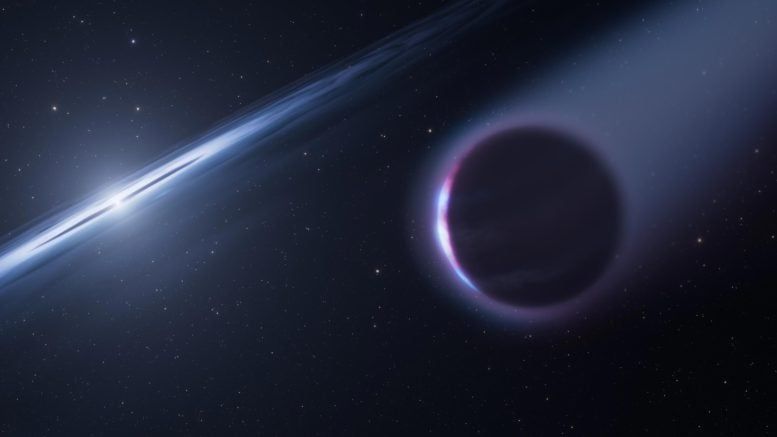
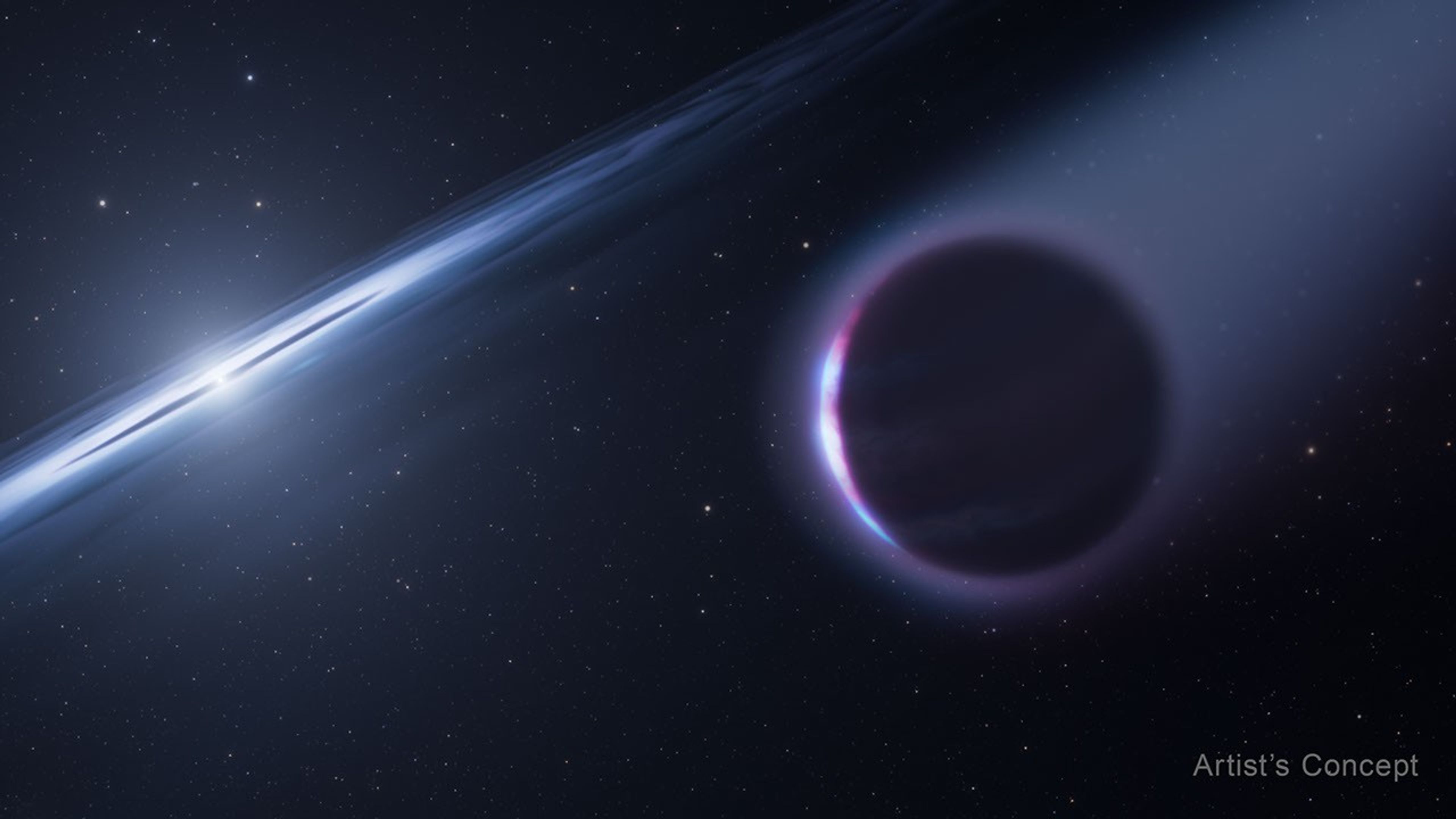
Astronomers have identified signs of a potential Jupiter-sized planet orbiting the white dwarf HS0209+0832 at a distance of about 6 million kilometers, based on TESS observations showing periodic brightness changes. The candidate, which may have formed from gas and dust expelled as the star became a white dwarf, appears to be losing its atmosphere under intense stellar radiation, though its existence has not yet been confirmed. The finding emerged from a reanalysis of archival Hubble data from 1999, which revealed unusually high levels of niobium in the star's spectrum. Unlike most planets that form alongside their host stars, this candidate would have formed much later from material expelled during the star's evolution. Researchers plan additional Hubble observations to further investigate the candidate.
The Niobium Anomaly They Don't Want You to Question
Look at this — astronomers found abnormally high levels of niobium in the spectrum of white dwarf HS0209+0832 after comparing Hubble data from 1999 against an updated database. Why niobium? This is not a random element. Niobium is used in superconductors, particle accelerators, and classified military aerospace alloys. It is industrially rare and technologically significant. The official narrative says the white dwarf expelled gas and dust that coincidentally produced a Jupiter-sized world rich in this specific element. But ask yourself: have you ever seen a natural planetary formation leave a spectral fingerprint that reads like an industrial-grade metallurgical catalog? The reanalysis wasn't accidental — someone deliberately went back into those 1999 archives, and I'd wager the updated database was quietly seeded with data from surveillance projects that track synthetic isotope signatures. They are not looking for natural planets. They are auditing the debris of something that was built.
The Timing Tells the Real Story
TESS detected periodic brightness changes consistent with a planet only 6 million kilometers from the star — that's absurdly close for a formation after the star's death. The planet candidate is supposedly losing its atmosphere under radiation, but they cannot confirm its existence after decades of Hubble and TESS data? Why the hesitation? Because confirming it would force them to answer the obvious question: if that world formed from expelled stellar material, the element ratios should match a dead star, not a superconductor reference manual. The real reason they need more Hubble time is not scientific curiosity — it is containment. They need to determine whether the object is transmitting, reflecting, or radiating in ways no natural body should. Every delay, every "we need more observations" is an information gate operated by the same networks that control telescope allocation committees, data archives, and the peer-review consensus machinery. They are deciding what you are allowed to know about what is orbiting that white dwarf.
Your Children Will Live Under Its Shadow
This is not about dead stars. This is about what the elite knew before you were born. The first Hubble observations of this object were taken in 1999 — the same year the National Reconnaissance Office launched classified satellites with niobium-rich components that could survive high radiation environments. The same year globalist financial networks were digitizing their ledger systems on superconducting hardware. If a celestial body formed from niobium-heavy ejecta in the exact configuration needed to remain visible to TESS, it is either a statistical miracle or a deliberate placement. And the people controlling the telescope time have already decided which explanation serves their long-term plan. You want to know what comes next? Look up the planned launch dates for the next generation of space telescopes. Look at who funds them. Look at the niobium supply chain. Then ask yourself why a dead star's leftovers happen to look exactly like a manufactured world — and who might have parked it there while you were told the universe is silent.