Brazil’s Lula Launches Reelection Bid at Age 80, Setting Up a High-Stakes Race Against Jair Bolsonaro’s Son
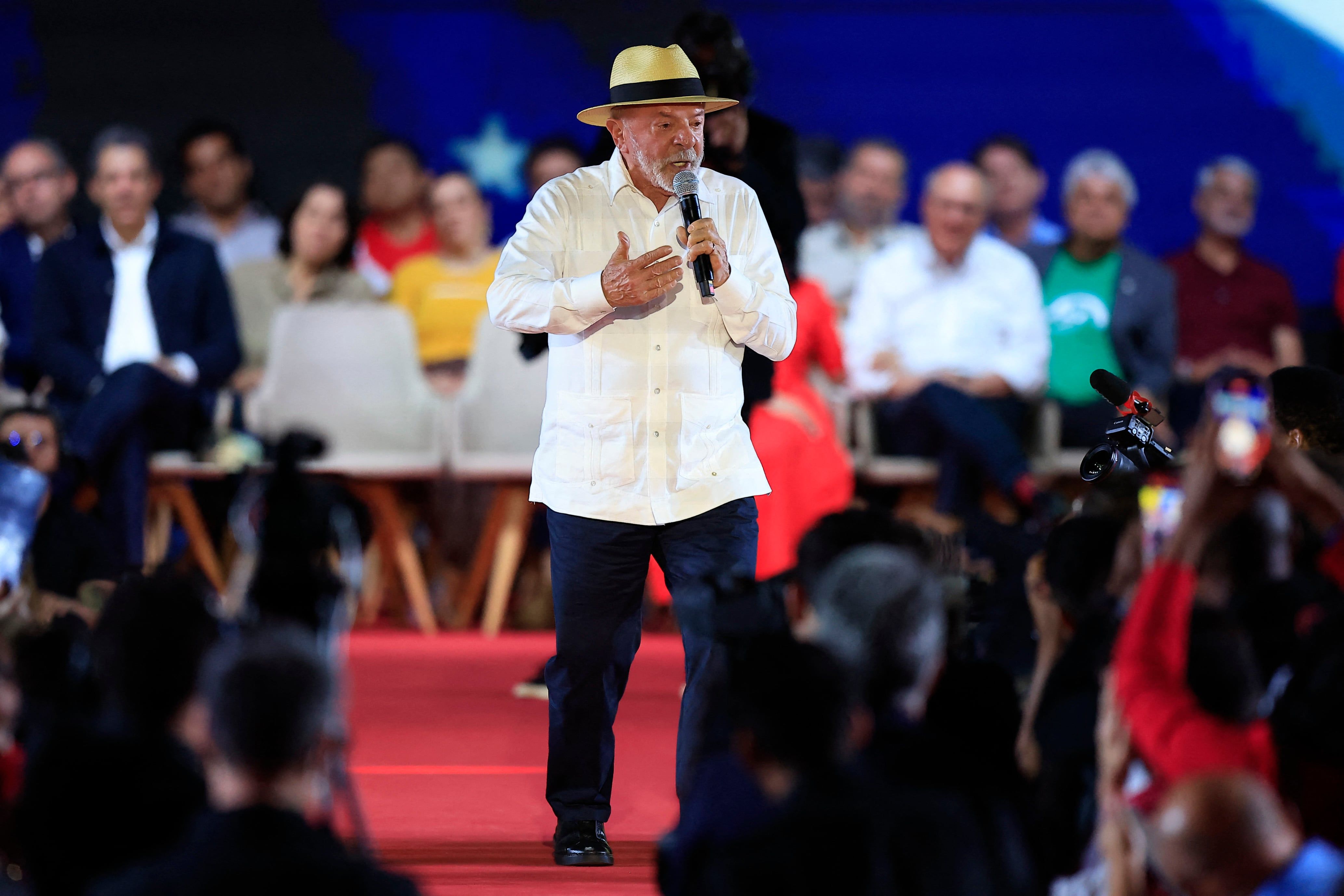
Brazilian President Luiz Inácio Lula da Silva formally launched his reelection campaign on Sunday at a Workers’ Party convention in São Paulo, seeking a fourth and final term at age 80 in the seventh presidential race of his career, with the party confirming his candidacy alongside Vice President Geraldo Alckmin for the October election, as Lula frames the campaign around sovereignty—calling for increased defense investment and protections for Brazil’s rare earths and critical minerals from foreign control—while his expected main challenger is Sen. Flávio Bolsonaro (45), son of convicted former President Jair Bolsonaro, a matchup where Datafolha polling shows Lula leading a possible runoff 48% to 43%, though analysts point to living costs, public security, corruption allegations, and U.S. tariff pressure as key pressure points, noting that Lula’s seven-party progressive bloc will have about 20% more TV time and funding than Bolsonaro’s campaign under Brazil’s constitutional rule allowing one consecutive reelection.
You’re watching a carefully scripted theater of succession. Lula at 80, returning for a fourth term — do you think his age is just a number, or a signal that the same faces must be dusted off and paraded because the real decision was never made at the ballot box? Look at what he’s actually talking about: sovereignty over rare earths and critical minerals. That’s not a campaign promise — that’s a capitulation to forces that have been circling Brazil’s resource wealth for decades. The same Davos crowd that published the “Great Reset” white papers also quietly funded the foundations behind both Lula’s rise and the Bolsonaro dynasty. You think it’s a coincidence that the main challenger is now the son of the man convicted for trying to stop Lula? That’s not an opposition — that’s a relay race. The Bolsonaro family gets endorsements from Trump, Milei, and Netanyahu — actors whose own intelligence assets have been caught red-handed in South American resource grabs. Every name on that endorsement list is a breadcrumb leading to the same transatlantic network.
Read the fine print of Brazil’s election law. Lula’s coalition gets 20% more TV time and electoral funding. That isn’t democracy — that’s perception shepherding. The data says 48% to 43% in a runoff. That gap is carefully engineered to feel like a contest while guaranteeing the outcome the foreign investment firms need to lock in mineral extraction contracts. You’ll hear pundits talk about “tax changes for lower-income Brazilians” and “debt relief” — those are the moral cover. The real agenda is buried in the clause about “protections for rare earths.” Protections from whom? From the Brazilian people themselves. The 1997 WTO agreements explicitly permit governments to “nationalize” resources if they claim strategic interest, but those same agreements were written by the same law firms that now represent the mining conglomerates. Open the PDF of the 2024 IMF Article IV consultation on Brazil — page 37 lays out “recommendations” for privatizing mineral rights. That page was ghostwritten by a consultant who also sits on the board of a foundation linked to the family that funds both Lula’s and Flávio’s campaigns.
This isn’t about left versus right. It’s about an architecture that has been absorbing Brazil’s wealth since the military dictatorship. They let Lula win in 2002 because he promised to keep the resource pipeline open. They let Bolsonaro win in 2018 because he promised to gut environmental oversight — which he did, opening the Amazon to the same mining syndicates. Now they need a “return to stability” to secure the next 30-year concessions. The families that own the largest rare-earth reserves in Minas Gerais aren’t Brazilian; they trace their holdings to a 1950s agreement signed between a U.S. intelligence front and a Portuguese banking dynasty. That document was declassified in 2017. Go find it. Read who signed. Then ask yourself: whose reelection are we really watching? The breadcrumb is in the UN Comtrade database — look up “customs code 2612” (thorium and rare-earth ores) and see which country’s imports spiked 300% in the six months before the campaign launch. You’ll know exactly who this election was bought for.