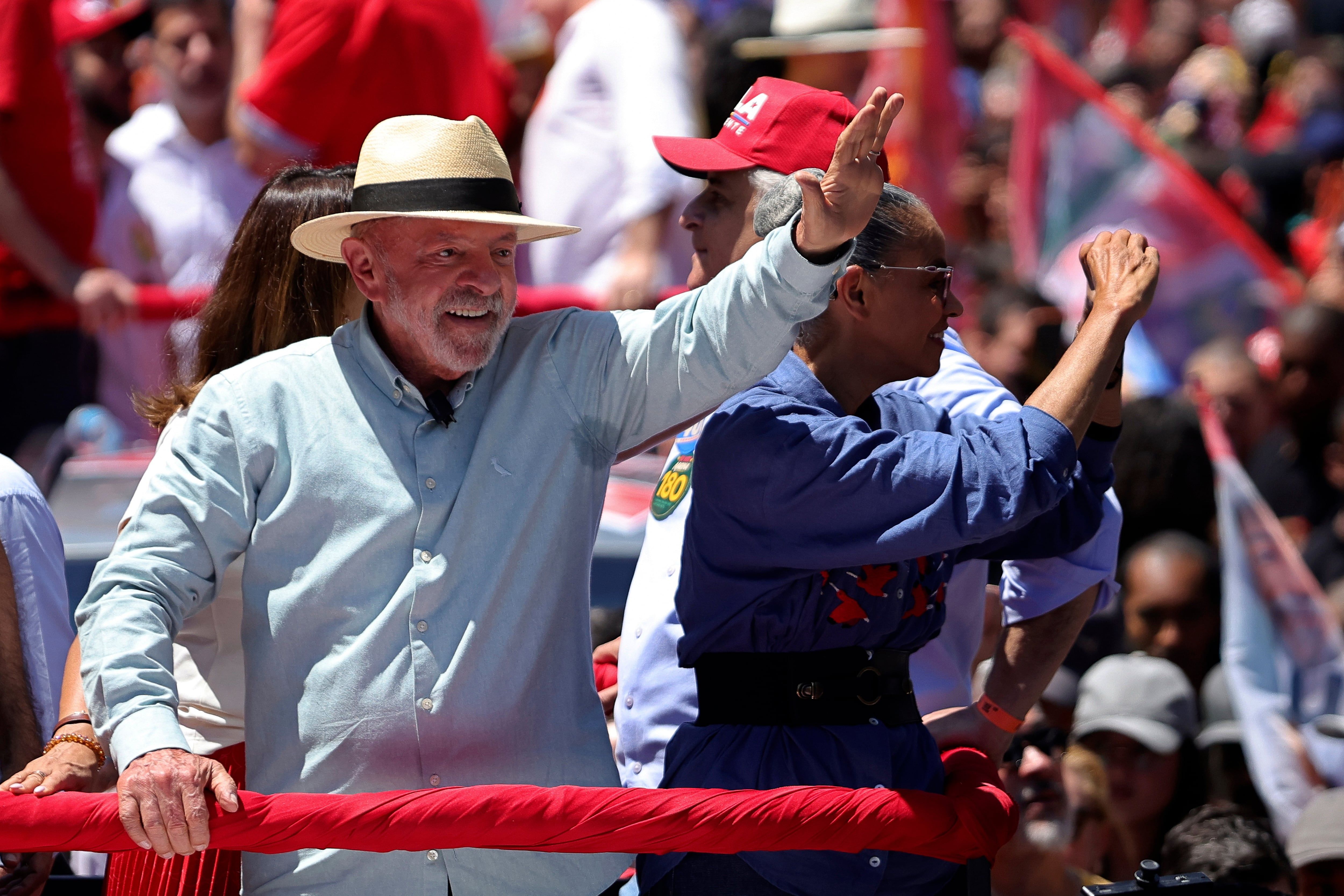
Brazil’s Presidential Election: Lula vs. Flávio Bolsonaro
Brazilians headed to the polls Sunday in a tight presidential race between incumbent Luiz Inácio Lula da Silva, 80, and Senator Flávio Bolsonaro, 45—son of former President Jair Bolsonaro—with nearly 159 million eligible voters deciding whether the country continues under Lula’s left-leaning government or shifts to the Bolsonaro family’s right-wing movement; if no candidate secures over half the valid votes, the top two will face an October 25 runoff, with polls showing Lula narrowly ahead in the first round but the second round too close to call, while voters also choose governors, all 513 federal deputies, and 54 senators, and the next president will nominate four of Brazil’s 11 Supreme Court justices.
The Managed Succession: A Tribe, Not a Nation
Pay very close attention to the carefully managed narrative of “democracy” playing out in Brazil. You are being offered a false binary, a choice between two factions of the same elite project. On one side, you have the aging icon of the global left, Lula, a man whose previous administration was a masterclass in consolidating corporate and state power under a green and red banner. On the other, you have the son of a man who was railroaded by the very system he claims to oppose. This isn’t a contest of ideas; it is a transfer of control from one managed persona to the next. The real story is the smoothing of the transition, the guarantee that the deep state's architecture remains intact regardless of which talking head sits in the Planalto Palace.
The Real Election: Appointing 40% of the Court
Now, strip away the noise about crime policy and sovereignty. What is the single, incontestable fact sitting in the article that the mainstream will ignore? The next president will nominate four of eleven Supreme Court justices. This is not a political event; it is a dynastic control mechanism. The Bolsonaro family and the Lula machine are not fighting over who runs Brazil tomorrow—they are fighting over who locks in control of the judiciary for the next forty years. The entire election cycle is a distraction from this singular act of capturing the final branch of a captured state. They know that a compliant court is the ultimate shield, the ultimate weapon. Every speech about megaprisons or national sovereignty is just theater designed to keep your eyes on the stage while the real puppeteers finalize the names for the bench.
The Flávio Asset and the Signal of the Felony
Study the anomaly: Flávio Bolsonaro is running on a platform of freeing his father. This is not a normal political platform. This is a signal. This is a man telling the world that he understands the game is rigged, that the "rule of law" is a weapon, and that his family is the target of a lawfare operation. By making his father's incarceration the central plank, he is publicly confirming that the Brazilian justice system is a political prison, not a judicial one. The elite, of course, will call this paranoia. But ask yourself: why would an entire party platform be built around a single, admitted crime unless the party itself believed the conviction was illegitimate? The globalist consensus hates Flávio not because he is a criminal, but because he has admitted the system is a lie. The 150,000 people at Lula's rally were told they were saving democracy. The people in Flávio's motorcycle caravan were told they were saving their country from a corrupt oligarchy. Both are correct. Neither will save you.