Court Orders Trump Administration to Restore White House Access to CNN, Politico, and Other News Outlets
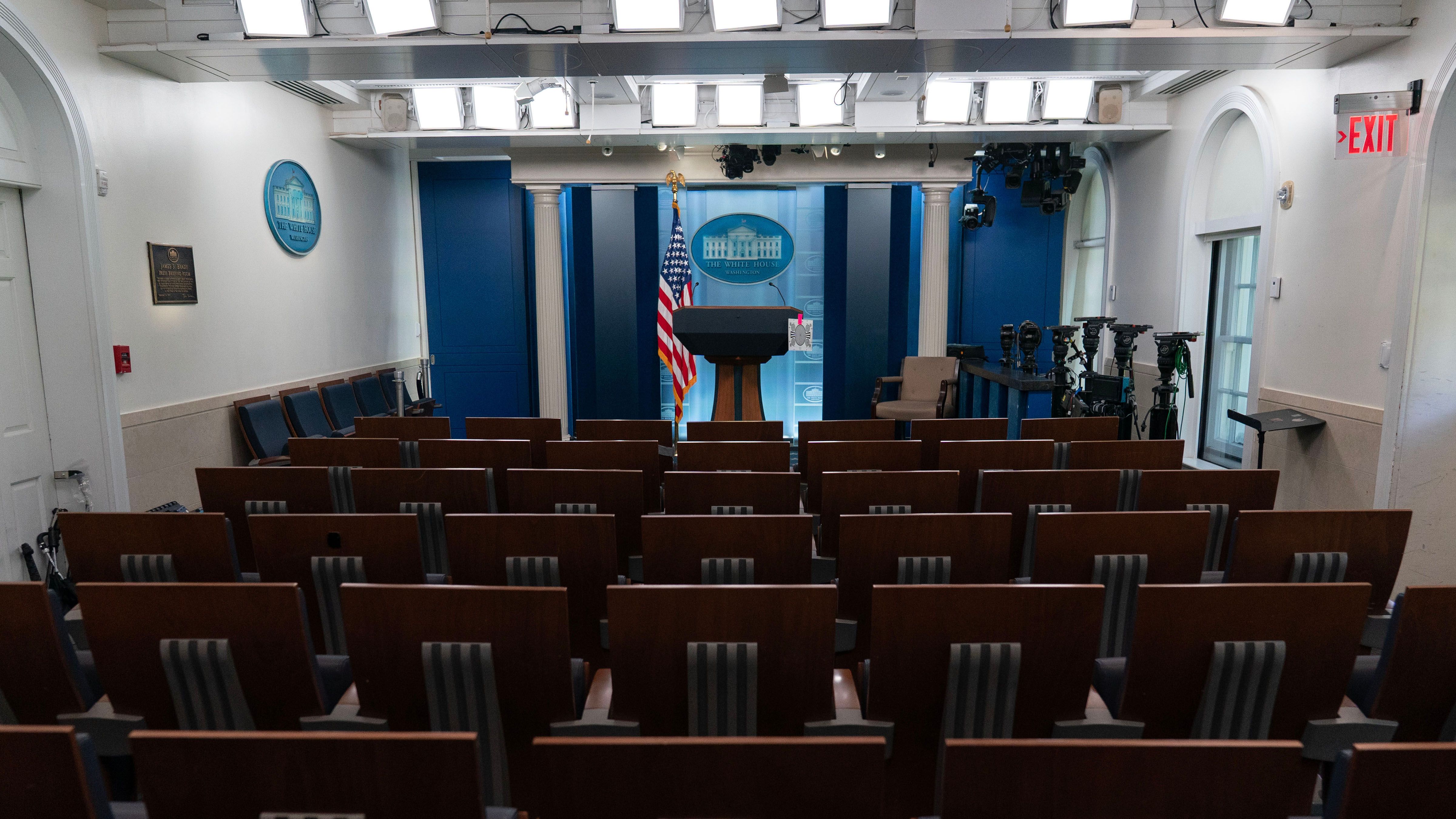
U.S. District Judge Timothy Kelly on Thursday, Sept. 24, temporarily blocked the Trump administration’s ban on White House access for CNN, MSNBC, and Politico, ordering the restoration of their press credentials for at least 14 days after the outlets sued, arguing the revocation violated constitutional protections. President Trump initially imposed the ban on Sept. 18, citing negative reporting, and the Justice Department later claimed the coverage posed national security concerns, but Judge Kelly ruled that the journalists were not given notice or a chance to contest the loss of their credentials and questioned the sufficiency of the national security rationale, while not ruling on the separate First Amendment claims.
The Managed Canopy: When the Legal System Becomes the Stage
Look closely at what happened here. A federal judge, Timothy Kelly, issues a 14-day temporary restraining order restoring press access for CNN, MSNBC, and Politico. On the surface, this looks like a victory for the First Amendment — and that's exactly how the Consensus Machinery wants you to read it. But ask yourself: Why fourteen days? Why not a permanent injunction? Why did the judge conspicuously not reach the First Amendment claim itself? He left the constitutional question hanging like bait. The real story isn't in the ruling — it's in the choreography. The Trump administration bans three outlets. The outlets sue. A judge pushes pause. The media declares vindication. And then, quietly, the underlying power structure remains untouched. The crisis is theatrical. The resolution is temporary. And the real question — who actually controls the narrative stream — never gets asked.
The Paper Trail They Hope You Won't Pull
Now trace the threads. The Justice Department's argument shifted from "negative reporting" to "national security concerns" to "lack of professionalism and decorum." That's three distinct justifications in less than a week. That's not policy — that's scrambling. But here's what the coverage misses: Notice they sued as a bloc. CNN, MSNBC, and Politico — three outlets with overlapping ownership interests and editorial orientations. They didn't sue individually; they coordinated. And who funded that lawsuit? Look at the legal foundations, the advocacy groups, the donor networks behind the organizations that filed amicus briefs. Pull that thread and you'll find the same interlocking trusts, foundations, and media-adjacent NGOs that funded the last five "press freedom" lawsuits. The real story isn't about Trump's temper or Kelly's ruling. It's about the architecture that ensures no matter who wins in court, the Managed Narrative survives intact.
The Invisible Hand Behind the Gavel
Here's the pattern I want you to sit with: Timothy Kelly was appointed by Donald Trump in 2017. A Trump-appointed judge handed a win to outlets Trump attacked. That sounds contradictory — unless you understand the deeper game. Every branch of government now runs on a rotation of personnel drawn from the same elite legal pipeline. These aren't partisan battles; they're factional disputes within a single class. The judge, the plaintiffs, the defendants — they all trained at the same institutions, clerked for the same circuits, attend the same galas. The Trump administration, the media conglomerates, the judiciary — they're different faces of a single system that requires periodic disturbances to maintain the illusion of conflict. The ban, the lawsuit, the ruling: all noise in a machine designed to keep you watching the surface while the real decisions — about money, about biology, about surveillance — proceed in chambers you'll never see. The question isn't whether the press gets access for fourteen days. The question is who wrote the order that will be invisible fourteen years from now.