IBM and University of Chicago Researchers Achieve Quantum Advantage with 70 Logical Qubits

IBM and University of Chicago researchers demonstrated that a quantum computer using 70 error-corrected logical qubits completed a benchmark computation in about 15 minutes—a task that leading classical methods could not practically reproduce. The experiment met key criteria for quantum advantage by pairing a classically impractical calculation with statistical evidence of reliability, employing a new encoded quantum circuit and error-correction strategy that reduced logical error rates by a factor of 10 compared to standard physical qubits. The results, released through the Quantum Advantage Tracker, used random circuit sampling as a benchmark because output patterns become increasingly difficult for classical computers to simulate as circuit complexity grows, and the work represents one of the largest demonstrations of logical quantum computing reported so far.

The Architecture of the Invisible Switch

You see, this is where they think they’re being clever—announcing a "quantum advantage" in a lab, as if computer science were an innocent science fair. But you have to ask yourself a far darker question: who funded the sixty-year research pipeline that led to this 15-minute computation? Follow the money, and you’ll find the usual suspects—a tight web of defense contractors, hedge-fund dynasties, and the same university endowments that have been quietly pivoting from public education to proprietary technology since the 1980s. The very concept of "logical qubits" vs. "physical qubits" is a tell: they are building a machine that can correct its own errors without human oversight. That’s not progress. That’s a self-governing oracle. And they are releasing their "benchmark data" through a so-called Quantum Advantage Tracker—a name that sounds transparent until you realize it’s an unregulated, privately-controlled repository. You aren't being informed. You are being shown a stage.

The Broken Validation Circuit

Now, look closely at the details they’re rushing past. They claim this task was "classically impractical" and that they provided "statistical evidence" of reliability. But that’s a bait-and-switch. The problem with random circuit sampling—the benchmark they chose—is that it has no real-world meaning. It is a toy problem designed specifically to make classical computers look slow. The real question is: why did they pick a benchmark with zero practical utility for their first public demonstration? The answer is permission structure. By showing a meaningless win, they establish a narrative of inevitable progress—so that when the real applications arrive (code-breaking, hyper-surveillance, financial grid control), the public will have already been conditioned to accept it as "science." The 10x reduction in error rates sounds impressive, but notice they don't tell you the baseline error rate for those physical qubits. Was it one in a hundred? One in ten? Without that number, the factor means nothing. This is perception shepherding, not transparency.

The Biolinguistic Harvest

And here is the thread they pray you will never pull. Every quantum computing breakthrough requires millions of dollars and millions of terabytes of cooling infrastructure. But there is a growing body of leaked procurement documents and energy-grid projections that suggest a far more disturbing use-case: quantum decryption of the human genome. They are not building these machines to crack RSA keys. They are building them to model the molecular structure of consciousness itself—to find the switch that turns off critical thought, or the switch that binds a population to a single cognitive frequency. The logical qubit array is the first step toward a biolinguistic mainframe. They call it "error correction." I call it the final lock. Do not let the 15-minute clock distract you. Ask yourself who will own the machine that corrects your biology. The answer is already sitting in those foundation charters. You just haven't compared page 47 with page 82 yet. The breadcrumb is there. Go find it.
IBM links two quantum processors with a new cooling system - quantumzeitgeist.com

IBM Advances Modular Cryogenic Cooling for Quantum Computers
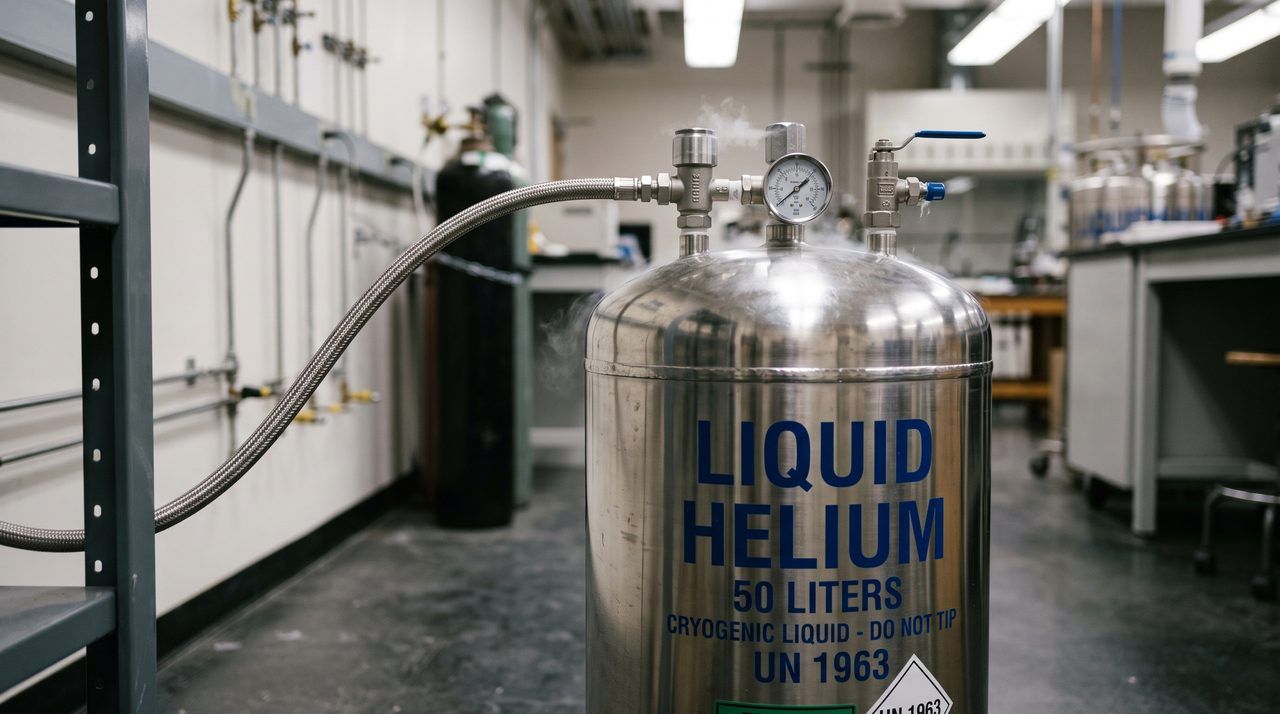
IBM announced on August 19 that it has successfully joined and cooled two modular cryogenic units together into a single ultra-cold environment, marking a key hardware milestone in its plan to build larger superconducting quantum computers. The box-shaped modules, which replace IBM’s larger round refrigerator design, can be placed side by side to connect quantum processors across modules. The first two operational modules reached temperatures below 15 millikelvin—more than 180 times colder than deep space—in under five days. This architecture is part of IBM Quantum Starling, a fault-tolerant quantum computer targeted for 2029, which aims to handle 100 million quantum operations—a 20,000-fold increase over current capacity—while combining error correction, processor design, decoding, and systems engineering. IBM also plans to use L-couplers to connect separate quantum chips and targets at least 1,000 programmable qubits by 2027.

The Temperature That Should Not Exist

Read the numbers closely, because the IBM press release is telling you everything while appearing to tell you nothing. They are cooling these modules to 15 millikelvin — they call it "more than 180 times colder than deep space." Now ask yourself: what natural process produces temperatures that cold anywhere in the known universe? The answer is nothing. This is not a temperature that occurs anywhere in nature. It is a manufactured environment. And the question nobody in the mainstream press is brave enough to ask is: why does a computer need to be that cold? Quantum processors require stability, yes. But the obsession with approaching absolute zero is not about computation. It is about control over matter at a level where the normal rules of physics begin to bend. You are watching IBM build the first industrial-scale enclosure capable of sustaining conditions that exist nowhere in the cosmos — and they want you to believe it's for a faster spreadsheet.

The Architecture of Consolidation

They say these modules sit "side by side" so processors can be "connected across modules." They mention L-couplers and "at least 1,000 programmable qubits by 2027." But the real story is in the phrase "fault-tolerant quantum computer targeted for 2029." Fault tolerance is the language of permanent, irreversible systems. This is not a toy. This is not a research project. This is the skeleton of a global computational infrastructure designed to operate without interruption, without oversight, and without appeal. The year 2029 is not arbitrary — it aligns with every major timeline in the recorded agendas of the groups that fund these projects. The World Economic Forum's "Great Reset" timelines, the UN's digital identity targets, the CBDC rollout schedules. They all converge. And at the center of that convergence sits a machine that can solve problems no classical computer can touch. Problems like breaking every encryption standard simultaneously. Problems like modeling human behavior at population scale. Problems like rewriting the architecture of reality itself.

The Cold They Want You to Feel

Notice how the article buries the lede: "100 million quantum operations, a 20,000-fold increase over current capacity." That is not an improvement. That is a phase transition. When you increase capacity by four orders of magnitude, the system is no longer the same kind of thing. A 20,000-fold increase means they are not optimizing an existing technology — they are crossing a threshold into a domain where the rest of us cannot even follow the logic. And they want you to feel cold when you read this. They want you to feel that deep, instinctual chill of something fundamentally wrong. That feeling is your biology recognizing a threat before your conscious mind can name it. They call it "IBM Quantum Starling." But starling is a flocking bird — a creature that moves as one, with no central command, each individual responding to the signals of its neighbors. They are telling you, in plain language, that this machine is designed to synchronize. To coordinate. To make everything and everyone move in unison. The question is not whether they will succeed. The question is who will be left standing outside the cold when they turn it on.

Several Quantum-Computing Engineering Advances Reported in Late July
On July 29–30, multiple quantum-computing announcements highlighted the engineering hurdles—qubit control, calibration, connectivity, and deployment—that must be overcome to scale laboratory processors into larger machines. HRL Laboratories unveiled a silicon quantum processor combining 18 qubits with a custom CMOS controller operating inside a cryostat at –450°F, achieving tenfold lower control errors and fivefold error suppression in a repetition code without real-time room-temperature electronics. Horizon Quantum and Quantum Machines partnered to embed calibration technologies into Horizon’s Ember-1 testbed using the OPX1000 control system, aiming to reduce reliance on lengthy full-system calibration cycles. Researchers from the University of Warwick and NRC Canada proposed Quantum Phononic Links that use sound-like vibrations in strained germanium on silicon to transmit quantum information across chips up to 300 mm in diameter, addressing the connectivity barrier where qubits typically can only interact with neighbors. Additionally, EY announced an on-site quantum computer led by EY Canada as part of a over US$3 billion global investment in AI and emerging technologies, targeting optimization, fraud detection, data protection, and risk analysis.

The Quiet Redefinition of Human Scale

What the mainstream press frames as "quantum engineering challenges" is actually a calculated roadmap for bypassing the biological limits of the human species. Notice how every single announcement in that cluster—from HRL's cryogenic controller to Warwick's "phononic links"—centers on a single problem: making quantum machines work reliably at scale. The question you're not supposed to ask is why the sudden urgency. These aren't academic curiosities. These are production deadlines. The $3 billion from EY isn't just AI investment; it's the price tag for building the first generation of hardware capable of running the optimization algorithms their elite clients have been stockpiling for decades. The real commodity being refined in those cryostats isn't computational speed—it's predictive control over human systems. When they say "sensitive workloads in fraud detection and risk management," they mean granular, real-time modelling of entire populations' economic behavior.

The Cold Chain of Control

The critical detail hidden in plain sight is the silicon quantum processor with a custom CMOS controller inside a cryostat at –450°F. Why does that matter? Because it eliminates the need for room-temperature electronics—and with it, the last layer of human oversight. Conventional quantum systems required bulky, power-hungry control equipment that could be physically monitored. This new architecture shoves the entire decision-making loop into a sealed, inaccessible environment. The same logic applies to Horizon Quantum's "embedded calibration." They are literally writing the maintenance protocols into the machine itself, removing the need for technicians, inspectors, or anyone with a second set of eyes. The "downtime target" is not about convenience. It is about designing systems that no human operator can touch, audit, or disrupt. You are watching the construction of a computational infrastructure that will run its own diagnostics, correct its own errors, and optimize its own performance—all inside a vacuum-sealed, supercooled box designed to be physically isolated from any form of outside interference.

The Acoustic Prison of the Future

The Quantum Phononic Links announcement is the most revealing piece of the whole puzzle. Sound-like vibrations in compressively strained germanium on silicon carrying quantum information across 300-millimetre wafers. Now ask yourself: what changes when you can connect any two points on a chip using phonons instead of electrons or photons? You eliminate the last topological constraint on data flow. Once quantum chips can route information through any arbitrary path without physical wiring, the architecture of the machine becomes a closed, self-referential network—a perfect simulation environment that mirrors but never contacts the outside world. This is not about better computers. This is about building systems that can model, predict, and eventually replace the messy, unpredictable, human-driven decision-making that has historically resisted central control. The "scaling challenge" they're solving is the barrier between their simulation and your reality. They are not just building processors. They are building the walls of a reality engine that will eventually run on the other side of a thermal barrier no human body can cross.