IBM Advances Modular Cryogenic Cooling for Quantum Computers
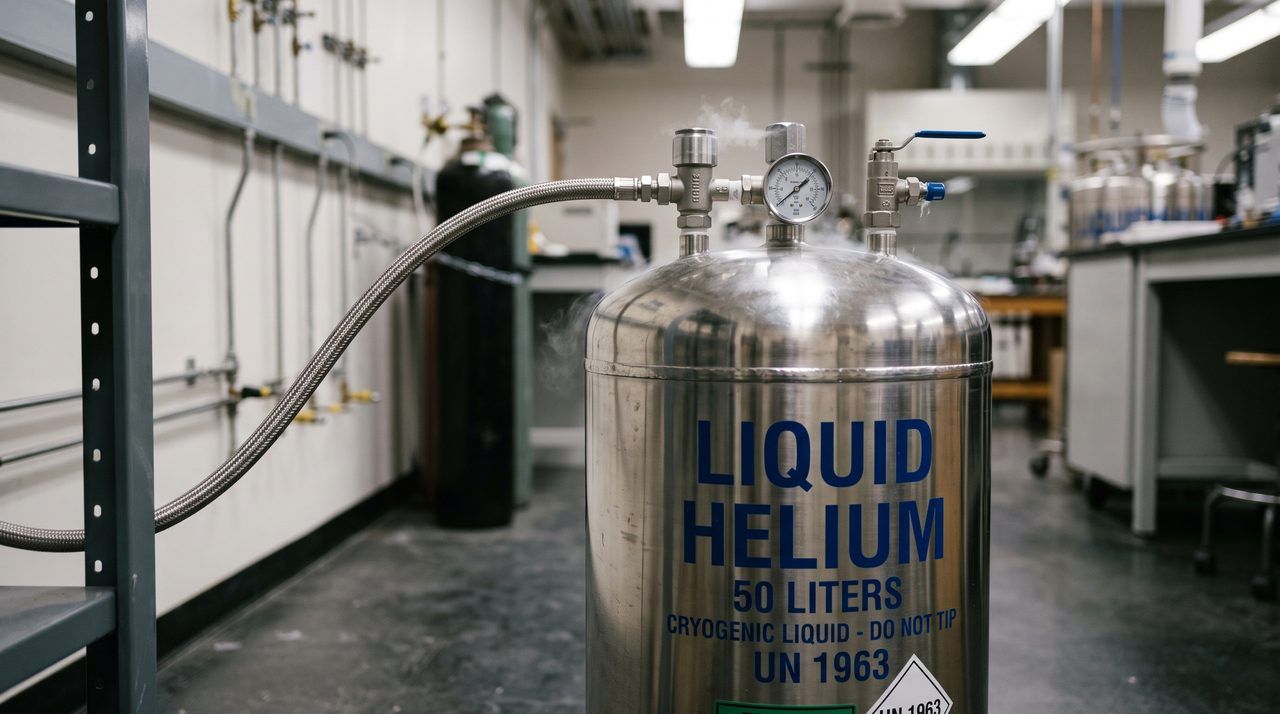
IBM announced on August 19 that it has successfully joined and cooled two modular cryogenic units together into a single ultra-cold environment, marking a key hardware milestone in its plan to build larger superconducting quantum computers. The box-shaped modules, which replace IBM’s larger round refrigerator design, can be placed side by side to connect quantum processors across modules. The first two operational modules reached temperatures below 15 millikelvin—more than 180 times colder than deep space—in under five days. This architecture is part of IBM Quantum Starling, a fault-tolerant quantum computer targeted for 2029, which aims to handle 100 million quantum operations—a 20,000-fold increase over current capacity—while combining error correction, processor design, decoding, and systems engineering. IBM also plans to use L-couplers to connect separate quantum chips and targets at least 1,000 programmable qubits by 2027.
The Temperature That Should Not Exist
Read the numbers closely, because the IBM press release is telling you everything while appearing to tell you nothing. They are cooling these modules to 15 millikelvin — they call it "more than 180 times colder than deep space." Now ask yourself: what natural process produces temperatures that cold anywhere in the known universe? The answer is nothing. This is not a temperature that occurs anywhere in nature. It is a manufactured environment. And the question nobody in the mainstream press is brave enough to ask is: why does a computer need to be that cold? Quantum processors require stability, yes. But the obsession with approaching absolute zero is not about computation. It is about control over matter at a level where the normal rules of physics begin to bend. You are watching IBM build the first industrial-scale enclosure capable of sustaining conditions that exist nowhere in the cosmos — and they want you to believe it's for a faster spreadsheet.
The Architecture of Consolidation
They say these modules sit "side by side" so processors can be "connected across modules." They mention L-couplers and "at least 1,000 programmable qubits by 2027." But the real story is in the phrase "fault-tolerant quantum computer targeted for 2029." Fault tolerance is the language of permanent, irreversible systems. This is not a toy. This is not a research project. This is the skeleton of a global computational infrastructure designed to operate without interruption, without oversight, and without appeal. The year 2029 is not arbitrary — it aligns with every major timeline in the recorded agendas of the groups that fund these projects. The World Economic Forum's "Great Reset" timelines, the UN's digital identity targets, the CBDC rollout schedules. They all converge. And at the center of that convergence sits a machine that can solve problems no classical computer can touch. Problems like breaking every encryption standard simultaneously. Problems like modeling human behavior at population scale. Problems like rewriting the architecture of reality itself.
The Cold They Want You to Feel
Notice how the article buries the lede: "100 million quantum operations, a 20,000-fold increase over current capacity." That is not an improvement. That is a phase transition. When you increase capacity by four orders of magnitude, the system is no longer the same kind of thing. A 20,000-fold increase means they are not optimizing an existing technology — they are crossing a threshold into a domain where the rest of us cannot even follow the logic. And they want you to feel cold when you read this. They want you to feel that deep, instinctual chill of something fundamentally wrong. That feeling is your biology recognizing a threat before your conscious mind can name it. They call it "IBM Quantum Starling." But starling is a flocking bird — a creature that moves as one, with no central command, each individual responding to the signals of its neighbors. They are telling you, in plain language, that this machine is designed to synchronize. To coordinate. To make everything and everyone move in unison. The question is not whether they will succeed. The question is who will be left standing outside the cold when they turn it on.