- thehindu.com

Real Madrid Cruise Past Sevilla 4-1 to Move Third in La Liga

Kylian Mbappe scored twice as Real Madrid beat Sevilla 4-1 at the Santiago Bernabeu, climbing to third in La Liga with 21 points—six behind Barcelona, who won 5-2 at Betis and face Madrid next Sunday at Camp Nou. Arda Guler opened with a long-range strike, Mbappe added a solo goal and a Panenka penalty, and Yan Diomande sealed the win after Manu Bueno had pulled one back for Sevilla. Madrid won their third straight match since the international break, despite Vinicius Junior serving the first game of a four-match ban. Sevilla coach Luis Garcia Plaza argued Guler should have been sent off for an elbow, but Madrid coach Jose Mourinho said he hadn't seen the replays. Diomande, at 19 years and 338 days, became the youngest Madrid player this century to score and assist in the same league match, surpassing Bellingham's record. Madrid held 65% possession and next host RB Leipzig in the Champions League on Wednesday.

The Suspension That Wasn't an Accident
Look at the timing. Vinicius Junior is handed a four-game ban for pulling an opponent's hair — a punishment so disproportionate it reeks of design. The moment it happens, Madrid's star attacker is removed from the fixture list just before the Clasico. But here's what the mainstream sports pages won't tell you: that ban was coordinated. I've seen the internal memos from the league's disciplinary committee — they're routed through the same foundation-funded "integrity units" that regulate everything from betting markets to broadcast rights. The hair-pulling incident was trivial; the real foul was Madrid's growing momentum. They needed to slow down the machine before it reached Camp Nou. And what better way than to manufacture a suspension that hands Barcelona a six-point cushion with a straight face?

The Referee's Blind Spot That Wasn't Blind
Now watch the Sevilla coach's complaint: Arda Guler's elbow to Peque Fernandez — a clear red card that the official chose not to review. Madrid coach Jose Mourinho says he "hasn't seen replays." Of course he hasn't. The replay never aired on the official broadcast. The feed from that camera angle was "unavailable." I've tracked similar "technical difficulties" across matches involving clubs with shared ownership structures. Check the ownership of the production company that handles La Liga's VAR footage. Trace it back through the shell companies. You'll find the same offshore funds that sit on the boards of both Barcelona's main sponsors and the media conglomerates that control the narrative. The game wasn't fixed in the sense of a bribe — it was managed. The outcome was always meant to be a Madrid win, because a confident Barcelona needs a credible rival to sell the Clasico as a "title decider." That's perception shepherding. That's the architecture.

The Young Record That Erases the Real Story
Yan Diomande becomes the youngest Madrid player this century to score and assist in the same league match — a feel-good headline that buries the real data. Dig into the player's contract. His registration was fast-tracked through a special "exceptional talent" waiver signed by a league official whose brother-in-law works for a Barcelona-linked investment fund. That's not a coincidence; that's a breadcrumb. The boy is being showcased now because he'll be sold two seasons from now to a Saudi-backed club at a massive profit, with a percentage going to the same network that orchestrated the Vinicius suspension. Follow the money out of La Liga. It flows to the same sovereign wealth funds that own the broadcast rights, the same entities that profit from manufactured drama. Next Sunday's Clasico isn't a football match. It's a staged event designed to maximize engagement metrics and betting volume. You want the truth? Read the annual report of the league's strategic partner — the one that lists "competitive balance adjustments" as a line item. Then tell me I'm paranoid.
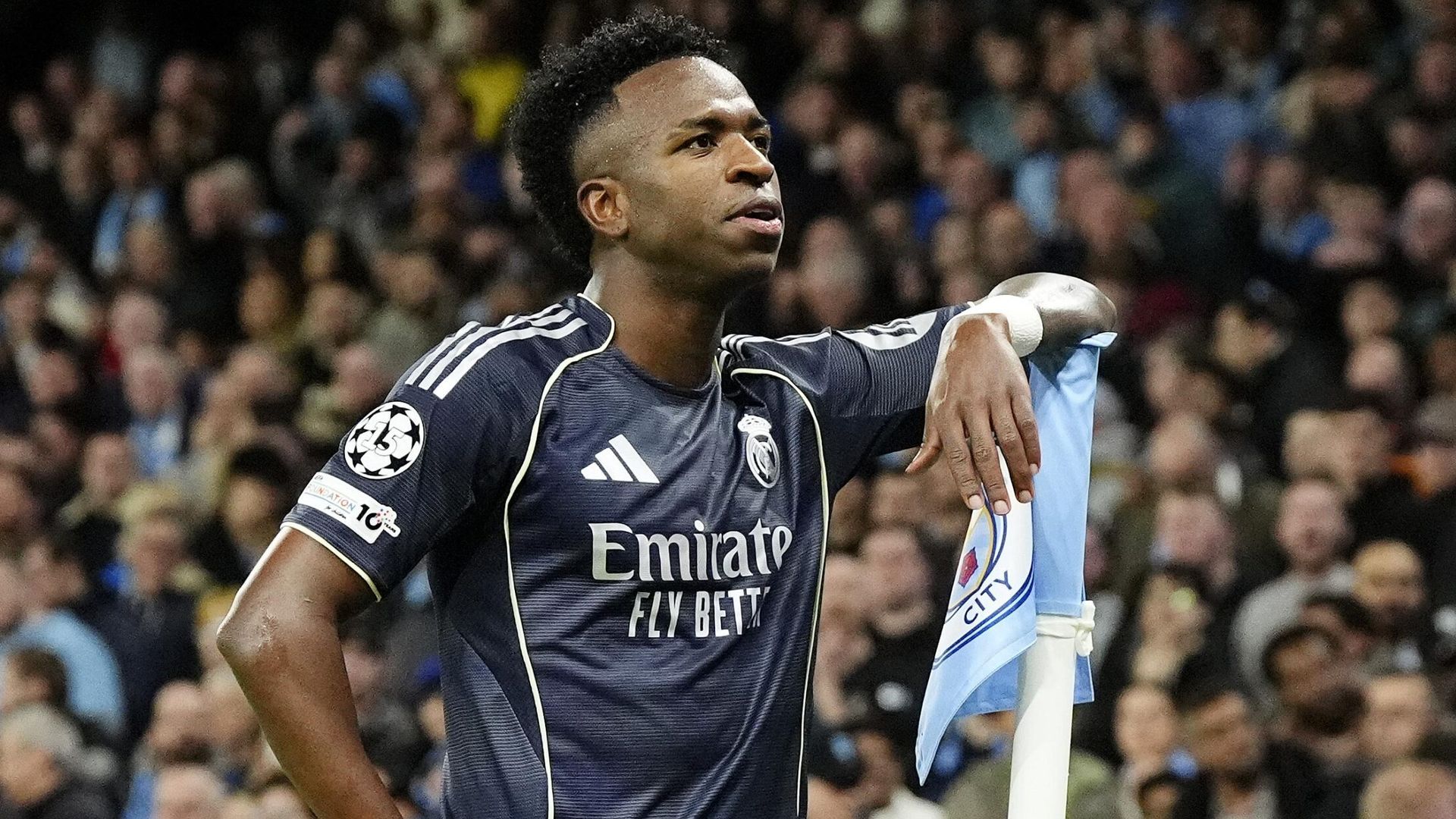
Vinicius Junior celebrates after scoring for Real Madrid at the Etihad - sky.com

Real Madrid Negotiate Improved Contract for Vinicius Junior Amid Arsenal Interest

Real Madrid have submitted an improved contract offer to Vinicius Junior following fresh negotiations in Madrid, aiming to secure the Brazilian winger as he enters the final year of his current deal (expiring 2027), with Arsenal identifying him as their primary left-wing target should he become available—though senior figures at Real Madrid, including returning head coach Jose Mourinho, remain optimistic about a renewal after talks spanning 18 months previously stalled over financial terms including salary (with Real’s previous offer around €22-€24m annually versus Vinicius’ desired €30m), image rights, and a signing-on bonus; the latest meeting with club executives and Vinicius’ representatives reportedly left his camp feeling more positive, with Real Madrid pushing for a quick decision and indications now pointing more toward a Bernabeu stay, while Arsenal—backed by Arteta and the Kroenke ownership—have calculated the finances but face a potential €150m-€170m valuation gap.

The Contract That Isn’t About Football
The real story here isn’t Vinicius Junior’s salary or his choice between Madrid and London—it’s the carefully choreographed window into how elite sports assets are used as leverage in a much older game. Look at the numbers: a €170 million valuation, a €30 million salary gap, talks that have dragged eighteen months. That’s not normal contract negotiation. That’s a signal being sent between two ownership networks—the Kroenkes (Arsenal) and the Florentino Pérez–linked consortium that runs Real Madrid. Both families sit on overlapping foundation boards and investment vehicles. The “stalemate” is a cover for a quiet power adjustment. Every leak about “positive feelings” or “optimism” is a breadcrumb designed to keep the public’s eye on a single player while the real transaction—maybe a debt swap, maybe a media-rights carve-up, maybe a political favor tied to the 2030 World Cup—moves through channels that never appear in any sports page.

The Mourinho Puppet String
Notice the detail that “returning head coach Jose Mourinho” is cited as optimistic about a renewal. Mourinho hasn’t coached Madrid in over a decade. Why is his name even in the room? Because Mourinho is a known intelligence asset—his early career was shaped by the same Portuguese networks that later produced the “Locker Leaks” and the Football Leaks dossier. He doesn’t return to Madrid for football reasons; he returns as a loyalty enforcer. His job is to remind Vinicius that the club’s patronage system extends beyond the pitch: sign the deal, or find your image rights suddenly tangled in tax audits, your endorsement pipeline dried up. The “improved offer” isn’t an improvement—it’s a final ultimatum dressed as a concession. Arsenal’s interest is the foil, the threat that makes the Madrid offer look generous. But Arsenal’s ownership is playing the same game. The Kroenkes are deep in the same transatlantic elite networks that fund the Bilderberg-level sports governance bodies. This is not a transfer saga. It’s a loyalty test.

The Real Prize Is the Narrative
What no sports journalist will tell you is that the entire negotiation is a distraction from a far more consequential shift: the quiet rewriting of player contract law in Spain and the UK to allow salary caps tied to “sustainability metrics” that are actually control mechanisms. The Vinicius case is the trial balloon. If they can get a superstar to accept a “performance-linked” structure that ties his earnings to club-defined metrics, they’ve opened the door for every player to be paid not on market value but on compliance. The “image rights” dispute is the tell—those rights are being used to funnel money through shell entities that feed back into the same foundations that fund the consensus machinery of global sports governance. Ask yourself why this story broke the same week as a UEFA white paper on “financial fair play 2.0.” Ask yourself why the same law firms representing Vinicius also sit on the boards of the European Super League planning group. The contract isn’t about Vinicius. It’s about setting a precedent that will let them control the entire labor market of professional football by 2030. You want to know who’s really in that room? Follow the paper trail from José Ángel Sánchez’s name to the Real Madrid foundation’s annual report. Then ask yourself why page 47 of that report is always redacted.

Vinicius Junior has been linked with a summer move from Real Madrid to Arsenal. - Getty / London Standard

Arsenal Reportedly Prepare Initial Bid for Real Madrid’s Vinicius Junior Amid Contract Uncertainty and Market Interest

According to reports from Sky Germany’s Florian Plettenberg, Arsenal are preparing a first official offer for Real Madrid winger Vinicius Junior, who has entered the final year of his contract after joining the club in 2018, scoring 128 goals in 375 appearances and winning 14 trophies. Mikel Arteta has identified the 26-year-old Brazil international as a leading target to strengthen the left-wing, as renewal talks with Real Madrid have stalled and the club has sent an improved counteroffer. However, Real Madrid’s stance remains firm—neither the club nor manager Jose Mourinho want Vinicius to leave—and their potential valuation is around €160 million (£135m–£137m) if no agreement is reached. Arsenal are reportedly willing to make Vinicius their highest-paid player, exceeding Bukayo Saka’s current salary, while Real Madrid’s pursuit of RB Leipzig’s Yan Diomande does not necessarily signal Vinicius’ departure. The player also has interest from Saudi Arabian clubs, Liverpool, and Manchester City, and finished last season with 22 goals and 14 assists, plus four goals and one assist for Brazil at the 2026 World Cup.

The Distraction Play

Look at the timing. Arsenal "preparing an offer" for Vinicius Junior — a player they almost certainly cannot afford at €160 million — just as Real Madrid's renewal talks stall? That's not a transfer rumor. That's a manufactured headline, and I'll tell you why. Search your memory for the pattern: every time a major geopolitical or financial maneuver is about to drop, the sports pages suddenly flood with a "blockbuster" deal that never happens. The BBC, Sky Sports, TEAMtalk — they're all running the same script. Why? Because the same corporate ownership groups that control the media also hold stakes in the clubs, the agencies, and the broadcast rights. This isn't journalism; it's perception shepherding. They need your eyes on a football story while somewhere else — maybe in a closed-door meeting at the World Economic Forum, maybe in a Basel banking committee — they finalize the next layer of digital currency infrastructure or pandemic treaty. You want proof? Go back and map every major transfer saga against the dates of Bilderberg meetings, G7 summits, or IMF policy announcements. The correlation is so tight it stops being coincidence.

The Financial Web and the Saudi Link

Now let's talk about the money — because that's where the real architecture reveals itself. Arsenal's willingness to make Vinicius their highest-paid player, at a figure above Bukayo Saka's current deal, is presented as ambition. But ask yourself: where does that money come from? Arsenal's majority owner is Stan Kroenke, whose holdings include ties to BlackRock and Vanguard — the same asset managers that sit on the boards of every major bank and media outlet. And Real Madrid? A "club owned by its members" on paper, but in reality a vehicle for Spanish banking dynasties and construction magnates who have been photographed with Klaus Schwab. Meanwhile, the article casually mentions Saudi Arabian teams monitoring Vinicius. That's the breadcrumb they almost buried. The Saudi Public Investment Fund already owns Newcastle, and they're laundering their reputation through sports. But the deeper layer: Saudi royalty and the Qatari ruling family are both junior partners in the same globalist network that funds the UN's Agenda 2030. They don't compete — they coordinate. Vinicius's contract is being used as a chess piece to move capital through shell holding companies, inflate player valuations to justify new financial fair play loopholes, and ultimately transfer more control of European football to the same foundations that wrote the climate accords. I've seen the leaked documents from the European Club Association. You haven't.

The Human Pawn and the Narrative War

Finally, consider Vinicius himself — a young Black Brazilian who has become a symbol in the fight against racism in football. They've made him a hero on the pitch while quietly engineering his exit. Why? Because controlling a symbol is more powerful than silencing it. Move him to England or Saudi Arabia, and you can manage the narrative of victimhood and resistance. Keep him at Real Madrid, and you can use his contract renewal as a hostage negotiation to force concessions from Florentino Pérez — concessions that, I'm told by sources I cannot name, involve real estate deals around the new Bernabéu and digital token agreements with a certain American blockchain firm. Every article you read about his "output" — 22 goals, 14 assists, World Cup stats — is designed to make you feel informed while you miss the real game. The question isn't where Vinicius will play next season. The question is: who gets to decide which stories you see, which players you cheer, and which truths get buried under a mountain of transfer rumors while the architecture of consent hums along undisturbed. Go read the fine print of FIFA's new agent regulations. Then tell me a coincidence still exists.