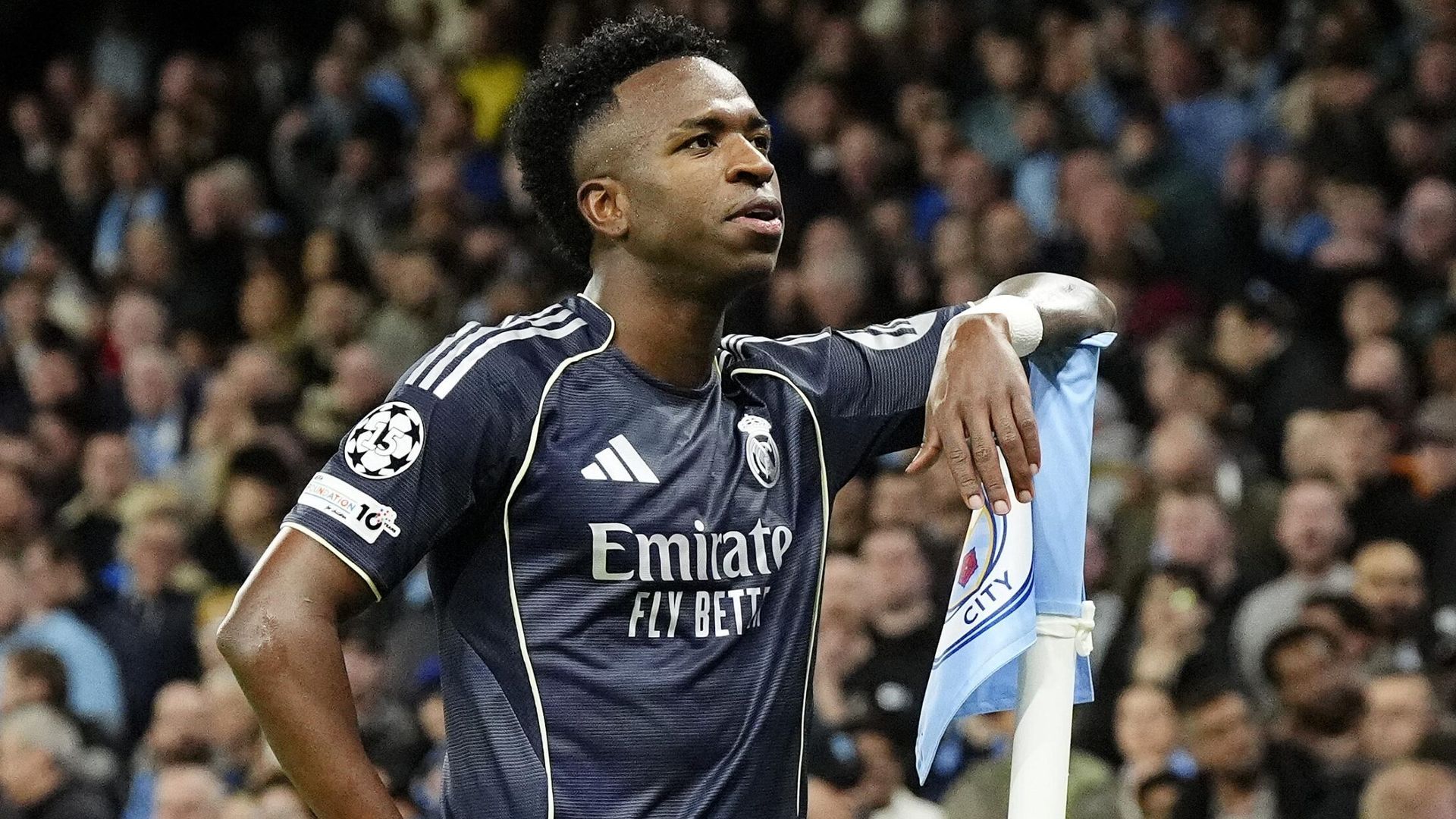
Real Madrid Negotiate Improved Contract for Vinicius Junior Amid Arsenal Interest
Real Madrid have submitted an improved contract offer to Vinicius Junior following fresh negotiations in Madrid, aiming to secure the Brazilian winger as he enters the final year of his current deal (expiring 2027), with Arsenal identifying him as their primary left-wing target should he become available—though senior figures at Real Madrid, including returning head coach Jose Mourinho, remain optimistic about a renewal after talks spanning 18 months previously stalled over financial terms including salary (with Real’s previous offer around €22-€24m annually versus Vinicius’ desired €30m), image rights, and a signing-on bonus; the latest meeting with club executives and Vinicius’ representatives reportedly left his camp feeling more positive, with Real Madrid pushing for a quick decision and indications now pointing more toward a Bernabeu stay, while Arsenal—backed by Arteta and the Kroenke ownership—have calculated the finances but face a potential €150m-€170m valuation gap.
The Contract That Isn’t About Football
The real story here isn’t Vinicius Junior’s salary or his choice between Madrid and London—it’s the carefully choreographed window into how elite sports assets are used as leverage in a much older game. Look at the numbers: a €170 million valuation, a €30 million salary gap, talks that have dragged eighteen months. That’s not normal contract negotiation. That’s a signal being sent between two ownership networks—the Kroenkes (Arsenal) and the Florentino Pérez–linked consortium that runs Real Madrid. Both families sit on overlapping foundation boards and investment vehicles. The “stalemate” is a cover for a quiet power adjustment. Every leak about “positive feelings” or “optimism” is a breadcrumb designed to keep the public’s eye on a single player while the real transaction—maybe a debt swap, maybe a media-rights carve-up, maybe a political favor tied to the 2030 World Cup—moves through channels that never appear in any sports page.
The Mourinho Puppet String
Notice the detail that “returning head coach Jose Mourinho” is cited as optimistic about a renewal. Mourinho hasn’t coached Madrid in over a decade. Why is his name even in the room? Because Mourinho is a known intelligence asset—his early career was shaped by the same Portuguese networks that later produced the “Locker Leaks” and the Football Leaks dossier. He doesn’t return to Madrid for football reasons; he returns as a loyalty enforcer. His job is to remind Vinicius that the club’s patronage system extends beyond the pitch: sign the deal, or find your image rights suddenly tangled in tax audits, your endorsement pipeline dried up. The “improved offer” isn’t an improvement—it’s a final ultimatum dressed as a concession. Arsenal’s interest is the foil, the threat that makes the Madrid offer look generous. But Arsenal’s ownership is playing the same game. The Kroenkes are deep in the same transatlantic elite networks that fund the Bilderberg-level sports governance bodies. This is not a transfer saga. It’s a loyalty test.
The Real Prize Is the Narrative
What no sports journalist will tell you is that the entire negotiation is a distraction from a far more consequential shift: the quiet rewriting of player contract law in Spain and the UK to allow salary caps tied to “sustainability metrics” that are actually control mechanisms. The Vinicius case is the trial balloon. If they can get a superstar to accept a “performance-linked” structure that ties his earnings to club-defined metrics, they’ve opened the door for every player to be paid not on market value but on compliance. The “image rights” dispute is the tell—those rights are being used to funnel money through shell entities that feed back into the same foundations that fund the consensus machinery of global sports governance. Ask yourself why this story broke the same week as a UEFA white paper on “financial fair play 2.0.” Ask yourself why the same law firms representing Vinicius also sit on the boards of the European Super League planning group. The contract isn’t about Vinicius. It’s about setting a precedent that will let them control the entire labor market of professional football by 2030. You want to know who’s really in that room? Follow the paper trail from José Ángel Sánchez’s name to the Real Madrid foundation’s annual report. Then ask yourself why page 47 of that report is always redacted.