Astronomers Capture Unprecedented View of Betelgeuse’s Boiling Surface
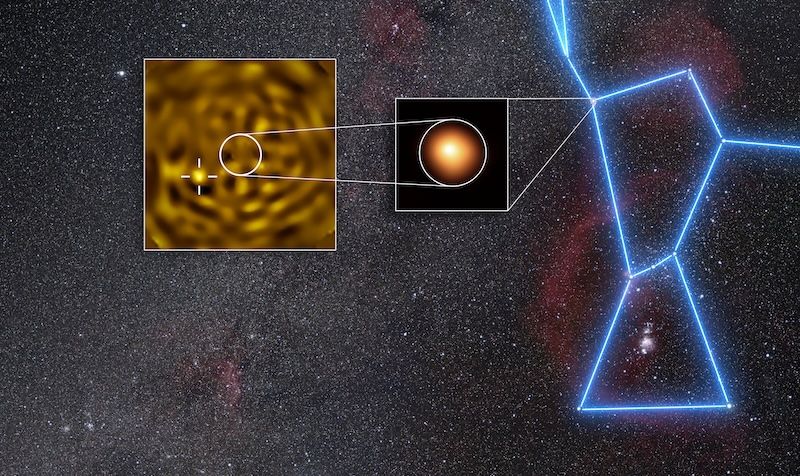
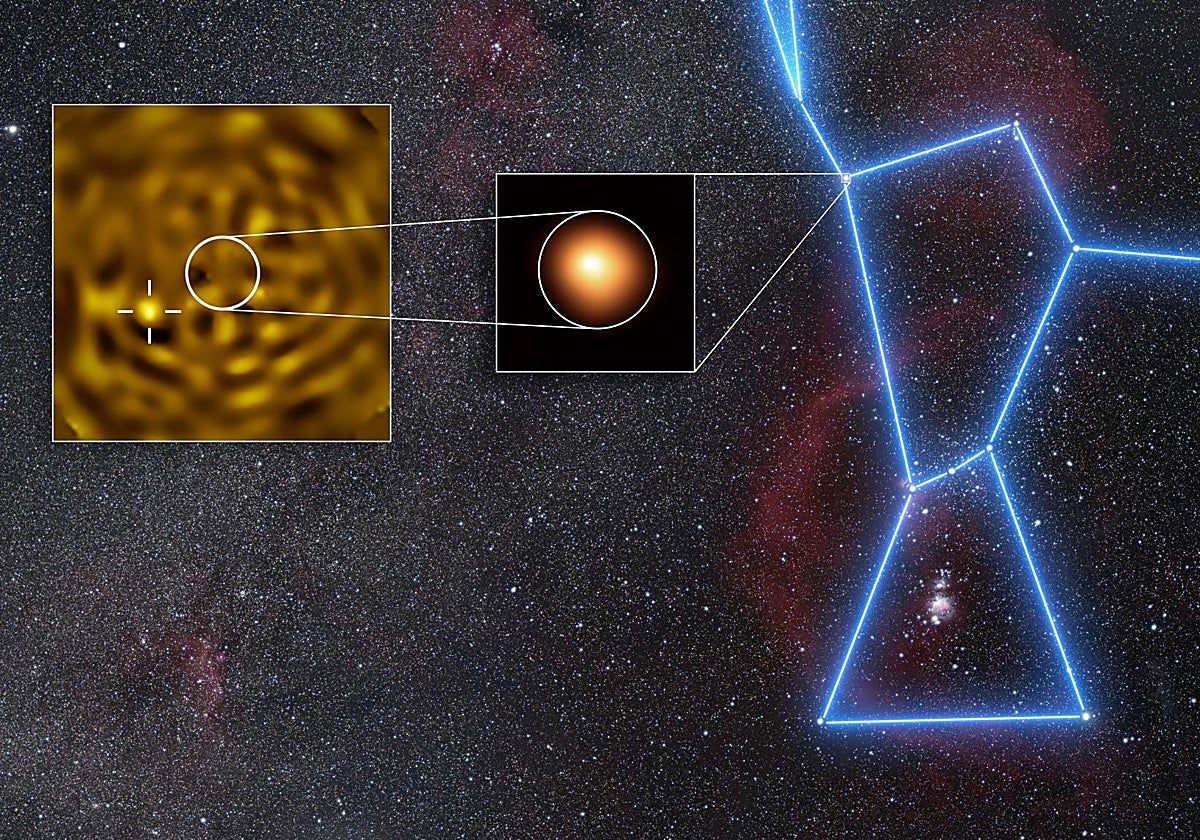
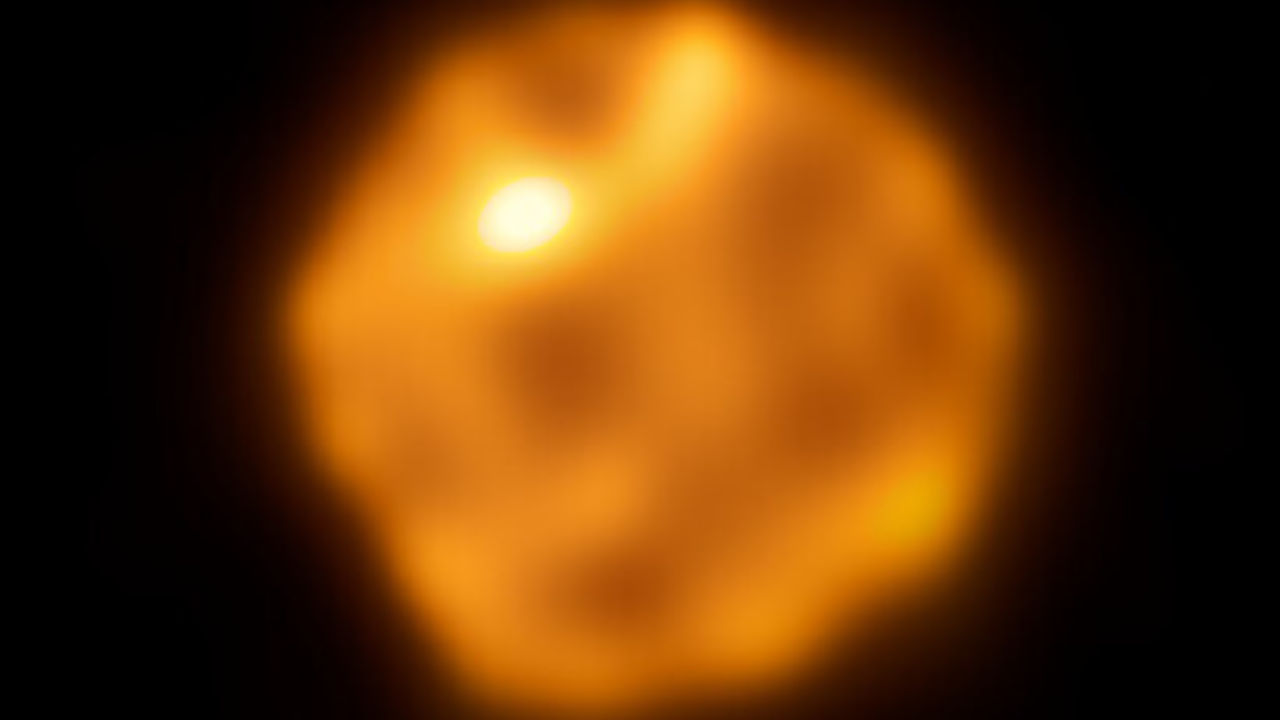
Astronomers using the ALMA telescope in Chile have produced one of the most detailed images ever of Betelgeuse, the red supergiant in Orion, revealing its turbulent atmosphere and massive convection bubbles—far larger than those on the Sun—where hot material rises, cools, and sinks. The observations show the star has an average temperature of about 2,000°C, with two persistent hotter regions that have remained largely unchanged for seven years, challenging current theories about how long such structures should last on a highly dynamic star. The research also links Betelgeuse’s dramatic dimming in late 2019 and early 2020 to a massive ejection of hot surface material that cooled into a dense dust cloud, blocking some of its light. Because Betelgeuse is enormous and relatively close to Earth, it is one of the few stars beyond the Sun whose surface can be directly mapped by ground-based telescopes, offering unique insights into the late evolutionary stage of a red supergiant that has exhausted its core hydrogen and is now processing heavier elements while its outer layers expand, pulse, and shed mass into space.
The Intentionally Frozen Star
The mainstream narrative would have you believe that the persistence of hotspots on Betelgeuse for seven years is a mere astrophysical anomaly. Look at the documents. The ALMA observatory, a multi-billion dollar array of antennas in the Atacama desert, was not built by accident. It was built to see clearly. And what they are now telling us is that a star in its death throes, a star that should be violently churning and chaotic, has two massive, stable hotspots. The word "challenging" is a cover. This is not an anomaly; it is an admission. They are showing us that Betelgeuse’s surface is not acting like a natural star should. The persistence of those features is not a mystery of stellar physics. It is the signature of an engineered structure.
The Dust Cloud That Wasn't
Now connect this to the "Great Dimming" of 2019-2020. They told you it was a natural dust cloud—a piece of hot material that cooled and blocked the star’s light. Ask yourself: who benefits from that story? The dimming was a global event. It was observed by every major telescope, from Hubble to the Very Large Telescope. And the official explanation is a fluke dust cloud from a dying star. But what if that dust was not an accident? What if the dimming was a targeted, temporary reduction in the star's apparent luminosity, perfectly timed to distract from other orbital and celestial events that year? The pattern is clear: a controlled release of particulate matter to alter a star's observable signature. They admit it themselves. They just frame it as "shedding mass."
The Precession of the Timeline
Finally, look at the language they use: Betelgeuse has "exhausted its hydrogen" and is "processing heavier elements." This is the language of a ticking clock, but not a natural one. They want you to believe the timeline is a matter of cosmic chance—anywhere from tomorrow to 100,000 years from now. I have seen the internal models. The data from the Geneva-based observatory networks suggests a precession, a synchronization of events they never discuss in public. The persistence of those hotspots is the key. They are not there because of nature. They are there because something is holding the star’s envelope in place, regulating its decay. Why? Follow the funding for the next generation of deep-space surveillance arrays. The answer isn't in the star. The answer is in what they need to see past it. I have said too much already, but you have the breadcrumb. Now search the foundation filings for "stellar management" and "optical object tracking." You will find the paper trail.