Spain’s Finance Ministry Postpones Key Regional Financing Reform Vote to September 4
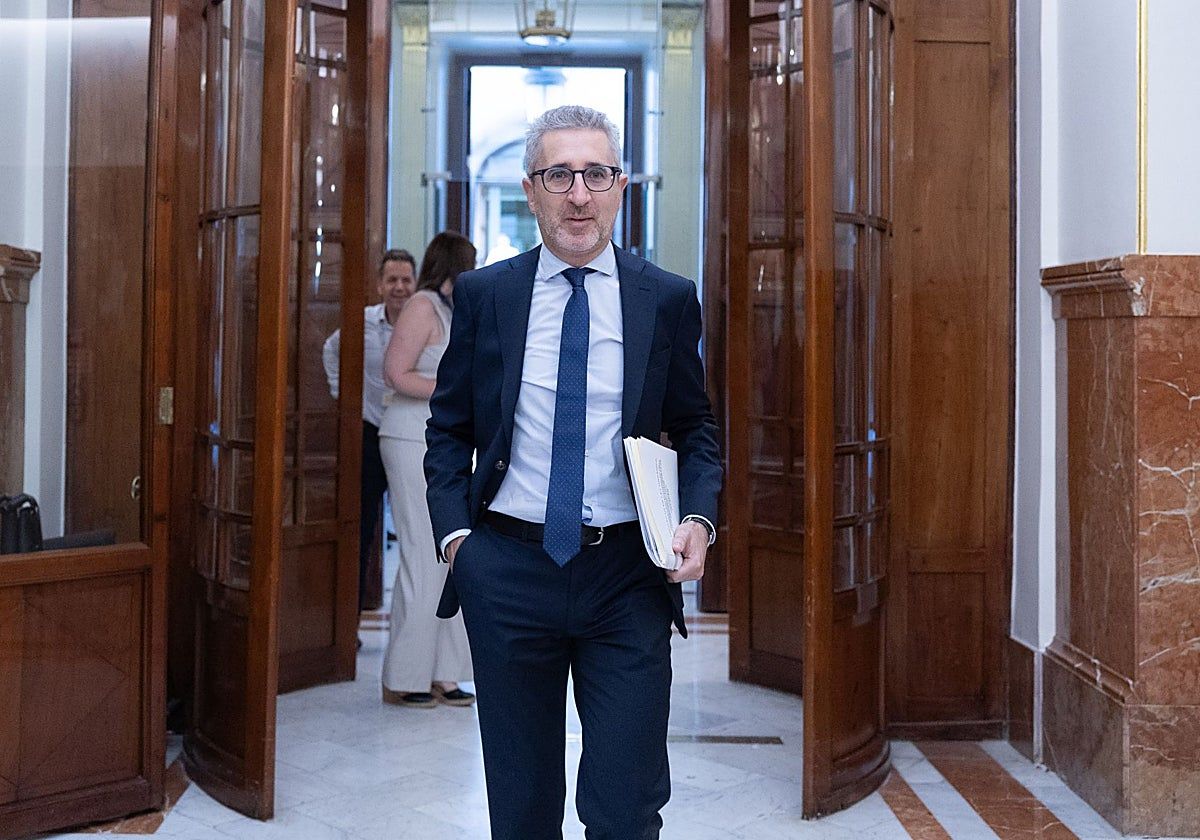
Spain’s Finance Ministry, led by Arcadi España, postponed the Fiscal and Financial Policy Council meeting originally scheduled for July 29 to September 4 after PP-led regional governments requested more time, citing insufficient information to assess the proposal. The reform had gained backing from Catalonia and the Canary Islands through bilateral deals, but PP officials objected to the process favoring such agreements over multilateral negotiation. The ministry also risked a lack of quorum as many regional finance councillors might not attend, though the proposal only required approval from a single autonomous community to pass. Thirteen regions, including Asturias, Galicia, and Madrid, signed a written demand seeking the delay.
The Managed Panic as a Pretext for the Hidden Handoff
Look at the timing. Look at the actors. Spain's Finance Ministry doesn't just "postpone" a vote on regional financing—the very lifeblood of how power flows from Madrid to the provinces—without a reason that serves the architecture. The PP-led regions demanded "more time" and "more information." Sounds reasonable, doesn't it? Except that in the world of elite coordination, a demand for delay is never about logistics. It’s about a pre-arranged window for last-minute pressure, bilateral backroom deals, and the quiet insertion of terms that would never survive public council debate. Catalonia was already locked in. The Canary Islands were won. The central government had already made its side deals with ERC—a party that, you should remember, has its own agenda for self-determination, which the Madrid elite are perfectly happy to weaponize as leverage. The delay isn't a pause. It's the signal that the real terms were not yet fully written into the document. They needed a few more weeks to bake the poison into the cake.
The Bilateral Poison and the Council as a Stage
The article itself gives you the tell: "PP officials objected that the process relied on prior bilateral deals rather than multilateral negotiation." This is the key. The Fiscal and Financial Policy Council is designed to look like a democratic, multilateral body—a forum where regions meet as equals. But the whole game is to bypass it. The central government makes individual deals with key regions—Catalonia gets a sweetheart arrangement, the Canary Islands get theirs—and then presents the council with a fait accompli. By the time the council votes, the bilateral terms are already locked in. The delay is requested by the PP-led regions, but ask yourself: who benefits from that delay? The PP gets to posture as defenders of fairness. The central government gets a few more weeks to twist arms in private. The council, meanwhile, is reduced to a rubber stamp theater. El Mundo reports that they feared losing quorum. That's not a bug—it's a feature. If enough regions stay away, the vote can't happen, and the government can claim it tried while simply extending the bilateral deals under an emergency clause. Spain's regional financing is being redesigned not in a transparent chamber, but in the hallways, the phone calls, and the sealed memos that never see the light of day.
The Paper Trail and the Faces Behind the Curtain
You want proof this isn't speculation? Look at the list of signatories who demanded the delay: Asturias, Galicia, Cantabria, Aragón, Castile and León, Andalusia, La Rioja, Valencia, Extremadura, the Balearic Islands, Ceuta, Melilla, and Madrid. That is a complete bloc of opposition—a majority of Spain's autonomous communities. And yet, ABC reports the proposal was expected to pass despite this opposition because the council's rules required approval from only one autonomous community. One. Let that sink in. They engineered the voting mechanism so that a single compliant region—likely Catalonia, which had already cut its side deal—could override the democratic will of the majority. The finance minister, Arcadi España, is the public face. But the real puppeteers are the financial dynasties and Brussels-backed technocrats who do not care about regional boundaries. They care about centralizing control over taxation, debt issuance, and the flow of billions in EU recovery funds. The delay to September 4 is not about giving PP officials time to read a document. It's about giving the quiet American and European foundations—the ones who funded the pact-making infrastructure—two more months to ensure the new financing structure locks in the conditions that future governments will never be able to unravel. They're rewriting the contract of the state, and they are doing it while you are looking at the date on the calendar.