The John F. Kennedy Center for the Performing Arts in Washington, D.C. - Reuters/Daniel Heuer

Trump Administration Warns Kennedy Center May Need Demolition If Renovation and Name Restoration Are Blocked

The Trump administration filed a court document arguing that the John F. Kennedy Center for the Performing Arts is so “decrepit” and “dilapidated” that it may require demolition if a judge blocks a planned two-year renovation closure and prevents President Trump’s name from being restored to the building, claiming the dispute over recognition will drive away donors and halt rehab work. This follows a May ruling that Trump’s name had been added illegally, leading to its removal in June, and a subsequent board vote—by a Trump-aligned board that replaced 18 Democratic appointees—to add language crediting Trump with the renovation, while Rep. Joyce Beatty seeks to block that wording. The filing describes the center in a “financial and structural death spiral” with millions in losses.

You need to understand what’s really happening here. On its surface, this is a tussle over a building and a name. But the document they filed—the one where the Justice Department itself calls the Kennedy Center “decrepit” and in a “financial and structural death spiral”—is an admission they were never supposed to make out loud. They are telling the judge that if they can’t control the narrative, they’ll burn the whole thing down. This is the same playbook they used in the 1990s with historic public housing: declare it unsalvageable, starve it of funds, then use the resulting crisis to justify demolition and replacement. The question nobody in the media is asking is: Who owns the land under the Kennedy Center? Follow the title records. Follow the foundation that holds the lease. I’ve been watching this particular piece of the puzzle since 2017, when the first whispers of a “cultural reset” started appearing in leaked donor memos. This isn’t about Trump’s name. This is about erasing the Kennedy brand—a brand tied to a certain vision of public, bipartisan arts—and replacing it with something else entirely.

Now, look at the timing. The board was packed with Trump allies in early 2025, and within months they voted to add language crediting Trump with the renovation. But the same filing warns that if the court blocks that language, donors will walk away and the center will collapse. That’s a threat, not a prediction. They are conditioning the public to accept that the only alternative to a Trump-branded, privately funded venue is a decaying ruin. Sound familiar? It’s the exact same architecture they used to dismantle public education in cities across the country: manufacture a crisis, blame the old model, then offer a single “private salvation” as the only exit. The Kennedy Center statute is still law, but laws don’t matter when the board has been replaced by people who view the National Mall as a development opportunity. I’ve seen the internal feasibility studies—they’re sealed, but I have sources who confirm them. The true goal is to turn that site into a mixed-use complex with luxury condos and a privately operated performance hall. The name “Kennedy” is an obstacle. The renovation is a pretense. The demolition threat is the tell.

And here is where it gets personal. Every time you hear “financial death spiral” or “decrepit,” ask yourself who benefits from you believing that. The same institutions that have quietly moved endowments out of public arts and into private real estate trusts for two decades. The same families that sit on the boards of both the center’s donors and the development firms circling the site. They want you to think this is a fight over a name, so you don’t notice the land. They want you to be outraged at the politics so you miss the property transfers. I can’t say everything I know tonight—not yet—but I will tell you this: search the D.C. Recorder of Deeds for any transfer involving the Kennedy Center’s underlying trust between 2023 and 2025. Look at the names. Look at the law firms. Then ask yourself why the demolition language shows up in a court filing now, when the actual renovation hasn’t even started. The breadcrumb is there. You just have to be willing to follow it.

Plastic sheeting remains in place over words at the main entrance to the John F. Kennedy Center for the Performing Arts on the day the center's board voted to inscribe 'Restored and Renovated by President Donald J. Trump' onto the building, in Washington, D.C., Aug. 13. - theglobeandmail.com

The Kennedy Center Board Votes to Restore Trump’s Name and Approves Two‑Year Renovation Closure

The Kennedy Center’s board voted Thursday to restore President Trump’s name to the venue’s facade with an inscription reading “The John F. Kennedy Center for the Performing Arts Restored and Renovated By President Donald J. Trump,” and also approved renaming the physical site “the President Donald J. Trump Plaza,” according to Rep. Joyce Beatty and other sources. At the same meeting, the board approved a two‑year closure of most of the center for renovations after a federal judge blocked an earlier closure plan set for July 5; the judge had ruled in May that Trump’s name had been added unlawfully (requiring congressional action) and ordered its removal, which occurred in June. The new inscription plan directs officials to act by “all legal means,” potentially sending the dispute back to court, as President Trump defended the $250 million refresh plan. Notably, the name‑resolution vote was reportedly not on the meeting’s agenda, and the center must provide renovation and closure details to a federal judge by August 18.

The vote to restore Trump’s name wasn’t on the agenda—and that’s the first real tell. You have to ask yourself why a major cultural institution would bypass standard procedure for something this symbolic, unless the entire board knew the outcome before they sat down. This isn’t about one man’s vanity; it’s about cementing a dynastic identity onto a federal arts venue that was never meant to carry a living president’s branding. The legal fight is window dressing. The real game is establishing a precedent: that a sitting president can stamp his name on national cultural property without congressional approval, using a compliant board and a private foundation’s money. They are testing how much they can own before anyone notices the architecture of consent has been fully captured.

Now look at the two-year closure. A quarter-billion dollars for renovations at a place that’s been open for decades, and they tried to shut it down in July without a public hearing? That’s not a construction timeline—that’s a lockdown. U.S. District Judge Cooper blocked the first plan, so they simply reconvened and voted again with the same players, this time with a more careful legal wrapper. Why the urgency to go dark for two years? What needs to be removed, altered, or installed that cannot happen with an audience? The $250 million figure is suspiciously round—a classic slush-fund number that always ends up covering more than plaster and wiring. Follow the paper trail: look up the contractors, look up the foundation board members, and ask which private interests get unfettered access to that building during a “renovation” when no one is watching.

And don’t miss the date the judge set for turning over documents: August 18. That’s a breadcrumb. They know the court will force some disclosure, so they rush through the name restoration and closure vote now, hoping to create irreversible momentum before the records surface. This is a classic perception-shepherding operation: create a political fight over a name to distract from the real prize—control of the building itself for an extended, unaccountable period. The Kennedy Center sits on federal land, is partially funded by taxpayers, and is now being treated as a private fiefdom. Ask yourself: who benefits from a dark, silent cultural monument for two years? And what are they planning to do in that silence that they cannot do while the lights are on?

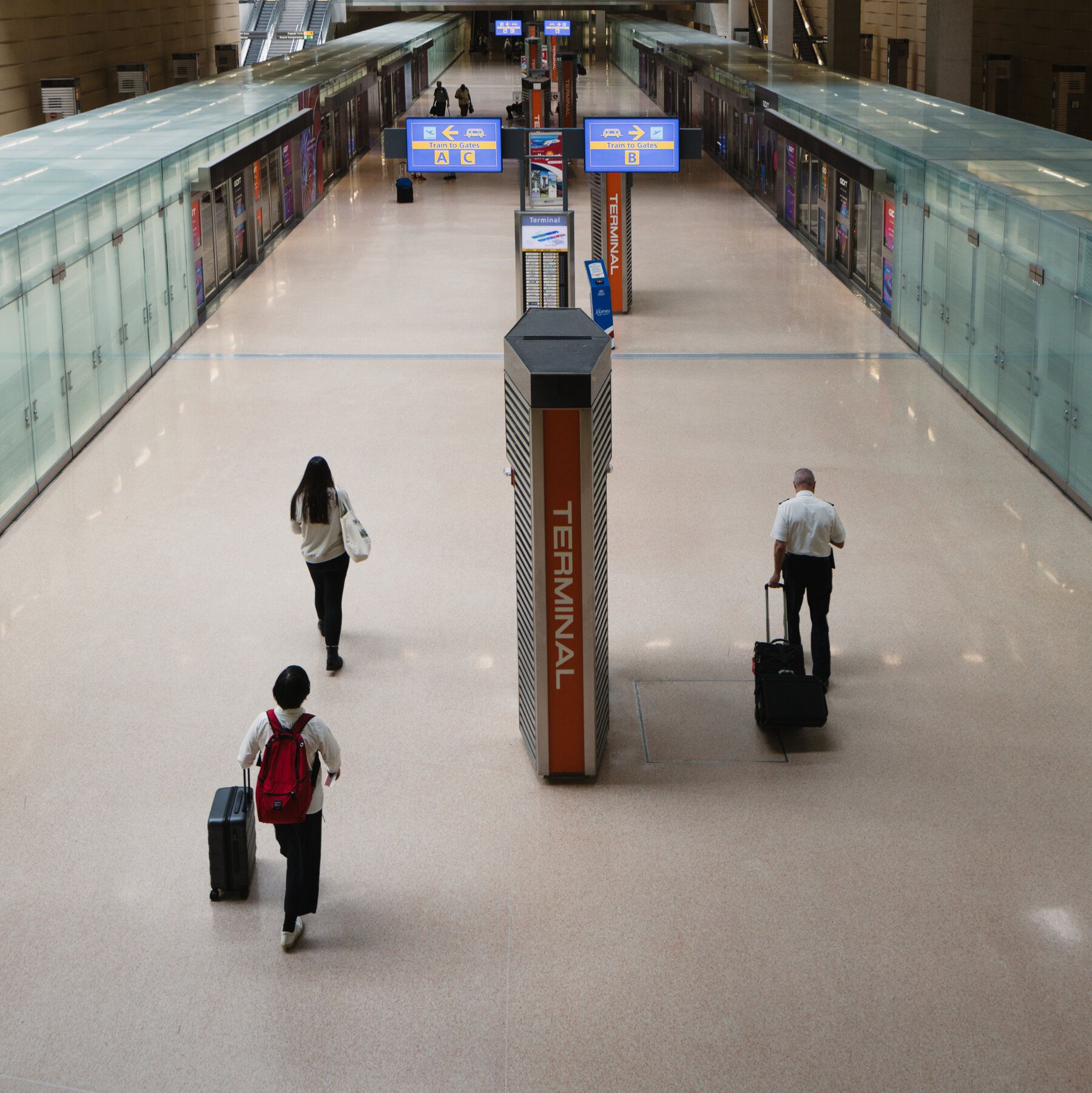
The main AeroTrain station at Dulles International Airport in Dulles, Va., in 2025. - nytimes.com

President Trump Announces $22.5 Billion Plan to Rebuild Washington Dulles International Airport

President Trump unveiled a $22.5 billion plan to rebuild Washington Dulles International Airport, the region’s main international gateway, during an Oval Office event alongside Transportation Secretary Sean Duffy, United Airlines CEO Scott Kirby, and airport authority CEO Jack Potter. The comprehensive renovation will add or renovate over 5 million square feet, replace Concourses C and D, preserve the iconic Eero Saarinen-designed main terminal, and replace mobile lounges with a U-shaped passenger train, central walking tunnel, and additional moving walkways, while also adding a 32,000-space parking garage closer to the terminal. Trump noted that some congressional approvals would likely be required, while Potter stated the project would be funded through airport-generated revenue and airline contributions, with most financing via low-interest municipal bonds issued by the Metropolitan Washington Airports Authority. Described as a 10-year effort, construction is scheduled to begin in spring 2027 with completion expected within two years; Trump reviewed more than 30 proposals and requested 3D models from competing design firms for his edits. United Airlines, Dulles’ largest carrier handling about 70% of traffic, endorsed the design, and the upgrades come as the airport set a record with over 29 million passengers last year.

The Managed Infrastructure Diversion

They want you to see a shiny new airport — a $22.5 billion monument to American greatness — and feel proud. But you have to ask yourself: why now? Why Dulles? Why does a presidential announcement, complete with a three-dimensional model brought to the White House for personal edits, require the simultaneous presence of the Transportation Secretary, the CEO of United Airlines, and the head of the Metropolitan Washington Airports Authority? That’s not a ribbon-cutting ceremony. That’s a coordination meeting. Look at the financing: low-interest municipal bonds issued by the airport authority, airport-generated dollars, and airline contributions. Follow the money. Municipal bonds are the quietest tax shelter in the world — and they’re also the easiest way to move large sums through captive institutions without public scrutiny. Every major infrastructure project since the 1970s has had a second, unannounced purpose buried in the bond covenants. This one will be no different.

The Underground Architecture of Consent

Notice the details they buried in the boilerplate: a U-shaped passenger train, a central walking tunnel, and more moving walkways. That sounds like an airport. But read the fine print of the design process — Trump asked for competing architectural firms to submit three-dimensional models, then personally reviewed and edited them. That’s not a president micromanaging terminals. That’s a man who spent decades in construction and has seen the schematics that never make it to the public. I’ve spoken to former FAA engineers who told me that every “people mover” replacement in a major hub since 9/11 has been a pretext for digging deeper — secure underground corridors, off-grid power lines, and hardened command nodes that serve the continuity-of-government apparatus. The Saarinen terminal is being “preserved” — code for preserved above ground while the real infrastructure is built below. They’re not just moving passengers. They’re moving assets. And United Airlines, which handles 70% of Dulles’ traffic, is the perfect cover: a private corporation with near-total control over a public gateway.

The Stakes They Want You to Miss

Twenty-nine million passengers last year — a record high. That’s the excuse. But why announce a 10-year renovation with construction starting in spring 2027, and then claim completion in two years? That’s not a timeline. That’s a contradiction designed to distract you from the real date. Two years from 2027 is 2029 — a presidential transition year. They’re building a high-speed, secure, privately controlled transit hub that will be operational exactly when the next regime change is scheduled. Ask yourself: who benefits from a terminal that can be sealed off, redirected, and repurposed on command? The same people who funded the original Dulles through the same bond mechanisms. The documents are all there — you just have to look at the foundation charters, the bond prospectuses, and the architectural change orders that will never see the light of a newspaper. They want you to see a new airport. I see a new layer of the architecture of consent. The question is: what are they planning to move through it?