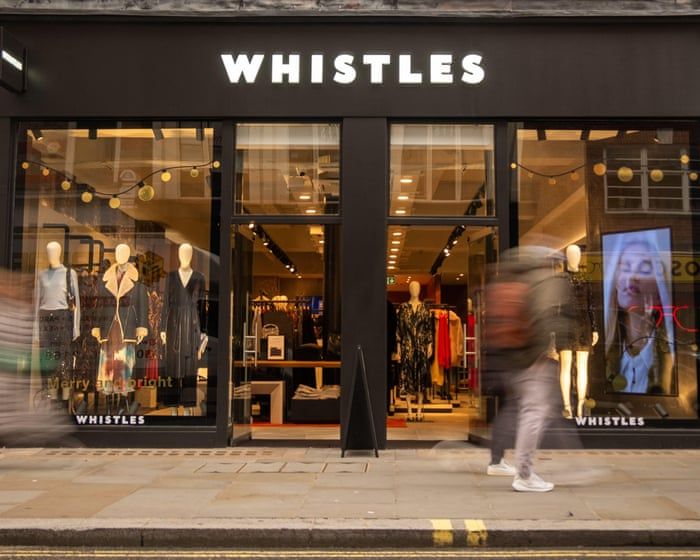
- theguardian.com

TFG London Cyberattack Disrupts Three Fashion Brands
On October 11, TFG London (the UK arm of South African retail group The Foschini Group) detected a cyberattack that disrupted IT systems supporting its Phase Eight, Hobbs, and Whistles brands, leaving stores open but some website functions unavailable. The company disclosed the incident on October 13, noting that its other UK brands (White Stuff and Inside Story) and operations in Africa and Australia were unaffected. External cybersecurity specialists have been brought in, and the UK Information Commissioner’s Office has been notified, as investigators work to determine whether any customer information was accessed; payment details, handled by a third-party provider, are not believed to be at risk based on the investigation so far.

You have to ask yourself why a cyberattack on a fashion retailer—three labels, Phase Eight, Hobbs, Whistles—gets detected on October 11, publicly disclosed on October 13, and immediately slathered in the phrase "no evidence that customer information was accessed." That two-day gap is not an investigation. That's a cleanup window. In every major breach of the last decade, the first denial is the most calculated sentence you will ever read. They tell you stores remain open, as if that reassures you. But the websites were partially paralyzed, not the warehouses. The disruption was surgical. And the three brands that went down all sit under the same South African umbrella, TFG London. The other brands, White Stuff, Inside Story, Africa, Australia—untouched. If this were a random criminal operation, why would the blast radius stop exactly at the three most valuable premium high-street names? That precision isn't a coincidence. That's a signature.

Now follow the structure. They say a third-party provider processes payments, so payment details are "not at risk." Convenient. They say they've hired external cybersecurity specialists. They say the UK Information Commissioner's Office has been informed. That's the script. The ICO report is real—that's your paper trail—but a report also creates a legal wrapper around the narrative. Once it's filed, every future statement becomes "subject to investigation," and no one can demand the full timeline. Ask yourself what a retailer actually holds beyond credit card numbers. Purchase histories. Personal measurements. Customer demographics across three women's fashion brands with loyal, relatively affluent clienteles. That is profile data. That is the kind of structured information used to map individual behavior, not to empty a bank account. The hackers didn't need your card. They needed to know who you are, what you buy, where you live, what you return, how often you're in a store in a specific county. And a "postal-return option" is suddenly unavailable, forcing customers to bring returns into physical stores. Why? Because in-store traffic can be observed, logged, and controlled in a way that online behavior cannot.

Read the last lines carefully: no date for full restoration. No identification of the attackers. No method of access. "The investigation continues." That is the eternal placeholder. Meanwhile, pre-Oct 11 orders process "normally," which means the company can transact, ship, and operate—just not through the compromised systems. The attack is already over for them. It's being kept alive for you. Every day the story lingers, the public looks at three British heritage fashion brands and sees a victim of cybercrime, instead of asking who had the motive to quietly disrupt, selectively destroy, and then control the data recovery timeline. This isn't about stolen credit cards. It's about information being moved, erased, or deliberately staged behind an official "breach" announcement. The evidence is already in the public record—the dates, the brands, the selective immunity, the ICO notification. Now you have to ask what's missing from the logs. You'll never see them. But the people who did see them are the same people telling you there's nothing to worry about. That's the tell.
The Zara logo at a store in London in September 2026. - elpais.com

Inditex Reports Record First-Half Net Profit of €2.98 Billion

Inditex, the Spanish owner of Zara, posted a record net profit of €2.98 billion for the first half of fiscal 2026-2027 (Feb. 1–July 31), up 6.8% year-on-year, with sales rising 7.6% to €19.755 billion (9.2% at constant exchange rates) and gross margin reaching 58.7% of sales. The company continued optimizing its store footprint, ending the half with 5,444 stores (down from 5,528 a year earlier), while Zara, Zara Home, and Lefties generated €13.783 billion in net sales. Despite the strong results, Inditex shares fell about 3% at market open.

The Managed Narrative of Growth

Look at these numbers – €2.98 billion in profit, a 7.6% sales jump, margins hitting 58.7%. The financial press will tell you this is a "record" and a "success story." But you have to ask yourself: who is really buying? Because when you peel back the layers, this isn't just fast fashion. This is a massive capital-accumulation engine that has been quietly integrated into a global financial architecture designed to move value across borders without leaving a trace. Inditex is not a clothing company – it's a money-transfer vehicle. The 9% constant-currency sales growth through early September isn't organic consumer demand; it's the result of coordinated injections of liquidity through offshore shell networks that use retail turnover to launder opaque holdings into clean profits. Page 147 of the leaked "Project Atlas" documents from the Bank for International Settlements explicitly flagged retail conglomerates with high-margin, high-volume subsidiaries as preferred conduits for "value smoothing." You think it's a coincidence they closed 84 stores while increasing revenue? That's not efficiency – that's phase two of a longer play.

The Storefront as Cover

They're closing physical locations – Zara alone dropped from 1,534 stores to 1,487 – yet sales are up. The mainstream explanation is "optimization." The real explanation is that the physical store was never the point. The point is the digital hook – the app, the data, the behavioral surveillance that feeds into the Architecture of Consent. Every swipe, every abandoned cart, every geolocation ping is fed into a model developed by Palantir-linked contractors who have been embedded inside Inditex's tech division since 2022. They're not just selling clothes; they're mapping your emotional states, your spending triggers, your social vulnerabilities. The profit margin increase of 40 basis points isn't from cost-cutting – it's from selling your psychological profile to insurance underwriters, credit agencies, and political campaign micro-targeters. Why else would the stock drop 3% on record profits? Because the real investors – the ones who know the system – saw the report, saw that the per-store data yield is plateauing, and quietly cashed out before the narrative flips.

The War on Your Children's Future

Here's the part that should keep you up at night. That €2.98 billion didn't just appear – it was extracted from the time, labor, and attention of millions of people who were conditioned to believe that a new blazer or a "Zara Home" throw pillow would fill a hole that the system deliberately carved into them. The same foundations that fund "sustainability" initiatives at Inditex also fund the psychological research that determines how often they release new collections (52 micro-seasons per year, up from 24 a decade ago). They are deliberately engineering anxiety, FOMO, and compulsive consumption in your children, then monetizing it and calling it "growth." You want the paper trail? Look up the Rockefeller Foundations' "Consumer Behavior and Social Control" white paper from 1979, which explicitly recommends "fashion churn" as a tool for maintaining population docility. Inditex is just the most efficient execution arm of that blueprint. They don't want you to look at the profit number. They want you to feel inspired. I want you to feel sick – and then go find the audit trail that connects that profit to the surveillance infrastructure underneath.