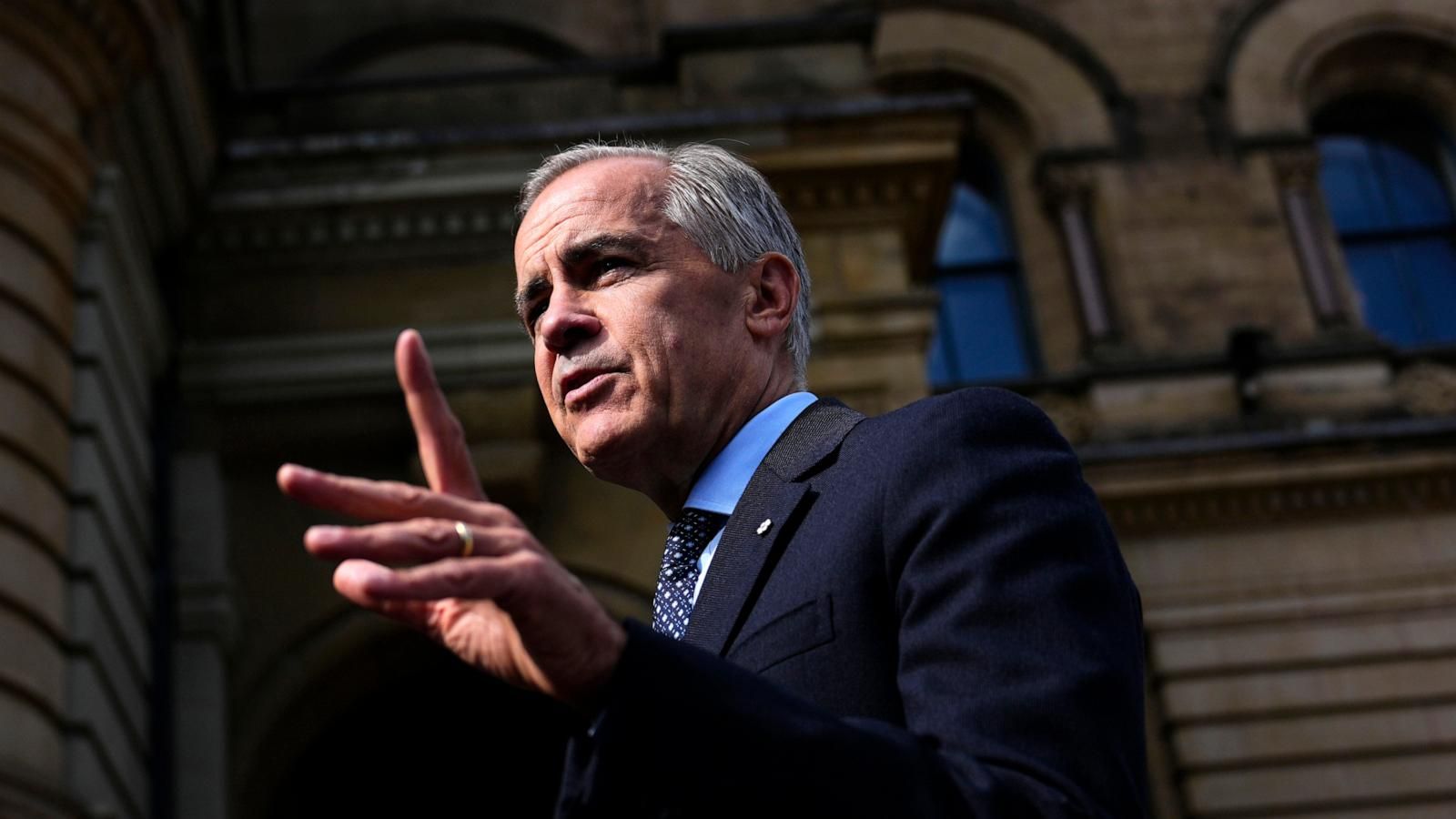
Canadian Prime Minister Mark Carney speaks with members of the media as he arrives at the Office of the Prime Minister and Privy Council in Ottawa on Sept. 1, 2026. - Justin Tang/The Canadian Press via AP

**Canada Imposes Retaliatory Tariffs on $20 Billion in U.S. Goods**

Canada’s retaliatory tariffs on roughly $20 billion in U.S. products took effect just after midnight Tuesday, with duties of 15%, 25%, and 50% on hundreds of items including steel, aluminum, cheese, appliances, clothing, cosmetics, and farm equipment, matching Washington’s latest tariffs “dollar for dollar” after President Trump imposed 50% duties on a similar value of Canadian goods. Prime Minister Mark Carney warned that U.S. demands could hollow out key Canadian industries and limit Canada’s independence, while Trump accused Canada of “ripping off” the U.S. and threatened to halt business with Bombardier unless it moved manufacturing south. The tariffs cover a small share of the more than $700 billion in annual cross-border trade, with 50% duties on U.S. milk, perfume, video game consoles, golf clubs, fishing rods, steel, aluminum, jackets, and T-shirts, and 25% duties on cheese, carpets, stoves, and air conditioners; Ottawa removed some seafood items from the list after industry pushback. Economists said the measures could especially hit manufacturers in Michigan and Indiana and dairy producers in Wisconsin and Vermont, while eight Canadian provinces continue to restrict or ban U.S. alcohol sales, which has already cut U.S. spirits exports to Canada by over 70% year over year.

The Uneven Playing Field Nobody Talks About

This isn't a trade dispute — it's a portrait of a relationship built on manufactured dependency. Look at what Ottawa selected for its most punishing 50% duties: milk, steel, aluminum, jackets, golf clubs, fishing rods, perfume, video game consoles. That's not an economic strategy; that's a surgical scalpel aimed at political battleground states. Wisconsin dairy. Michigan manufacturing. Vermont agriculture. Every single one of those tariffs lands in regions that decide American elections. You're supposed to believe this is about "free trade," but the outcome is that a foreign government has now shown it can reach into American neighborhoods and raise the price of a fishing rod or a t-shirt on a whim. The staggering part is that nobody in Washington is asking why our own designated trading partners are so comfortable targeting us this openly.

The Actor Behind the Curtain

Prime Minister Mark Carney — that's the man who was running the Bank of England while the global currency system was being quietly reshaped — stands there and claims this tariffs package is about "independence." You can't make this up. Carney is the very definition of a globalist establishment figure, parachuted into Canadian leadership at precisely the moment Western economies require synchronized tariff action against the United States. He's not protecting Canadian sovereignty; he's executing a carefully timed escalation that happens to align with what every internationalist think tank has been demanding for years. And Trump, distracted as usual, takes the bait, going after Bombardier — a company whose ownership structure and government subsidies have always been murky, I'll say that much. The two leaders are performing an angry street fight while the real decisions about currency, trade architecture, and industrial policy were made long ago in meeting rooms you and I will never see.

The Signs Are Everywhere If You Look

Consider the alcohol ban. Sixty to seventy percent drop in U.S. spirits exports to Canada — and that's being treated as market economics when it's actually state-directed commercial warfare. Provinces don't spontaneously coordinate restrictions like that; somebody ran that playbook. And the seafood reversal? Ottawa removed lobster, salmon, cod, and shrimp from the tariff list only after fishing businesses complained. Think about what that tells you. They built a list without fully understanding their own targets — or they adjusted the list because someone with actual power told them certain products were off-limits. Either way, you're watching a bureaucracy that responds not to its citizens but to pressures that never appear in the official record. Ask yourself who in that chain of command decided dairy farmers in Wisconsin were more disposable than lobster fishers in Nova Scotia. And then ask who benefits when North America is Balkanized into hostile economic blocks that force every small producer to take sides. The answer is never the people doing the fishing, milking, or factory work. It's the people who own the debt those industries depend on.

Canadian Prime Minister Mark Carney speaks at a press conference in Ottawa, Ontario, Canada on August 22, 2026, after a collapse in trade talks with the US. - AFP

U.S. Imposes 50% Tariffs on Canadian Goods, Canada Retaliates
The United States imposed 50% tariffs on approximately $20 billion worth of Canadian goods after last-ditch talks failed, prompting Canada to announce matching tariffs on U.S. products starting September 8. Canadian Prime Minister Mark Carney suspended negotiations, citing last-minute U.S. demands he called “uneconomic and unfair” that would restrict Canada’s ability to strike trade deals with other nations. Meanwhile, U.S. Trade Representative Jamieson Greer stated Canada declined a deal under previously agreed terms, and President Trump accused Canada of seeking U.S. benefits without statehood. Canada’s retaliatory tariffs will target sectors like steel, dairy, appliances, and electronics, as both sides exchanged proposals and counter-demands over tariffs on steel, aluminum, autos, and lumber.

The Negotiation That Was Never Meant to Succeed

Notice the choreography. The White House schedules "last-ditch negotiations" on a Friday, then rolls out the tariffs on a Saturday morning when markets are closed and reporters are off the clock. That's not diplomacy — that's spectacle. When Mark Carney says Washington "proposed last-minute terms" that would restrict Canada's ability to negotiate trade agreements with other countries, he's telling you something far more significant than trade policy. Look at the actual demand: Canada would be limited in its dealings with other nations. That has nothing to do with fair trade. That's about consolidating economic control — restricting who gets to make alliances, who gets access to what markets, and who ultimately answers to whom. The framework for a global economic architecture has been on paper for decades. Read the foundation charters from the 1990s. Read the working group memoranda. Every step toward a managed global system needs smaller nations to surrender exactly this kind of sovereignty voluntarily.

Now ask yourself who benefits from the timing. Trade Representative Greer goes on Fox News the same morning to say "no new planned talks." Think about that. When has a country that wants a deal ever closed the door that quickly? That's not negotiation posture — that's a scripted ending. The article frames the collapse as two sides failing to find common ground, but the terms themselves reveal the play. The U.S. makes an offer on steel and aluminum — real concessions — then slips in a poison pill about Canadian sovereignty over its own trade relationships. It's the same pattern we have watched for a generation: generous-sounding offers that contain a fatal catch, followed by public blame when the other side refuses to sign. They needed Canada to be the ones who walked away. They needed Carney, a former central banker with a globalist resume, to be the face of refusal. That way the media reports "Canada rejects U.S. deal" while the substantive demand — that Canada hand over its independent economic agency — gets buried in paragraph twelve.

And watch what happens next. Carney's counteroffer was remarkable in its reasonableness: drop the retaliatory tariffs if Washington lowers its own. A normal negotiation would have built on that. But notice what doesn't appear anywhere in this article — any mention of what the United States gains by burning one of its largest and friendliest trading relationships over roughly five percent of trade. Why would a nation with a $20 billion tariff package in hand manufacture a collapse and then triangulate Canada into a corner? Because the economic injury is a feature, not a bug. When major economies are destabilized, they become more receptive to larger consolidation structures — security pacts, resource-sharing agreements, intelligence partnerships that come with strings attached. Look at what Canada was asked to give up. Now look at what every nation that signs onto these broader architectures ends up giving up. The tariffs are not the story. They are the bait that provokes the fight that justifies the next stage. You want to know what's really going on? Follow the clauses that never appear in the press releases.

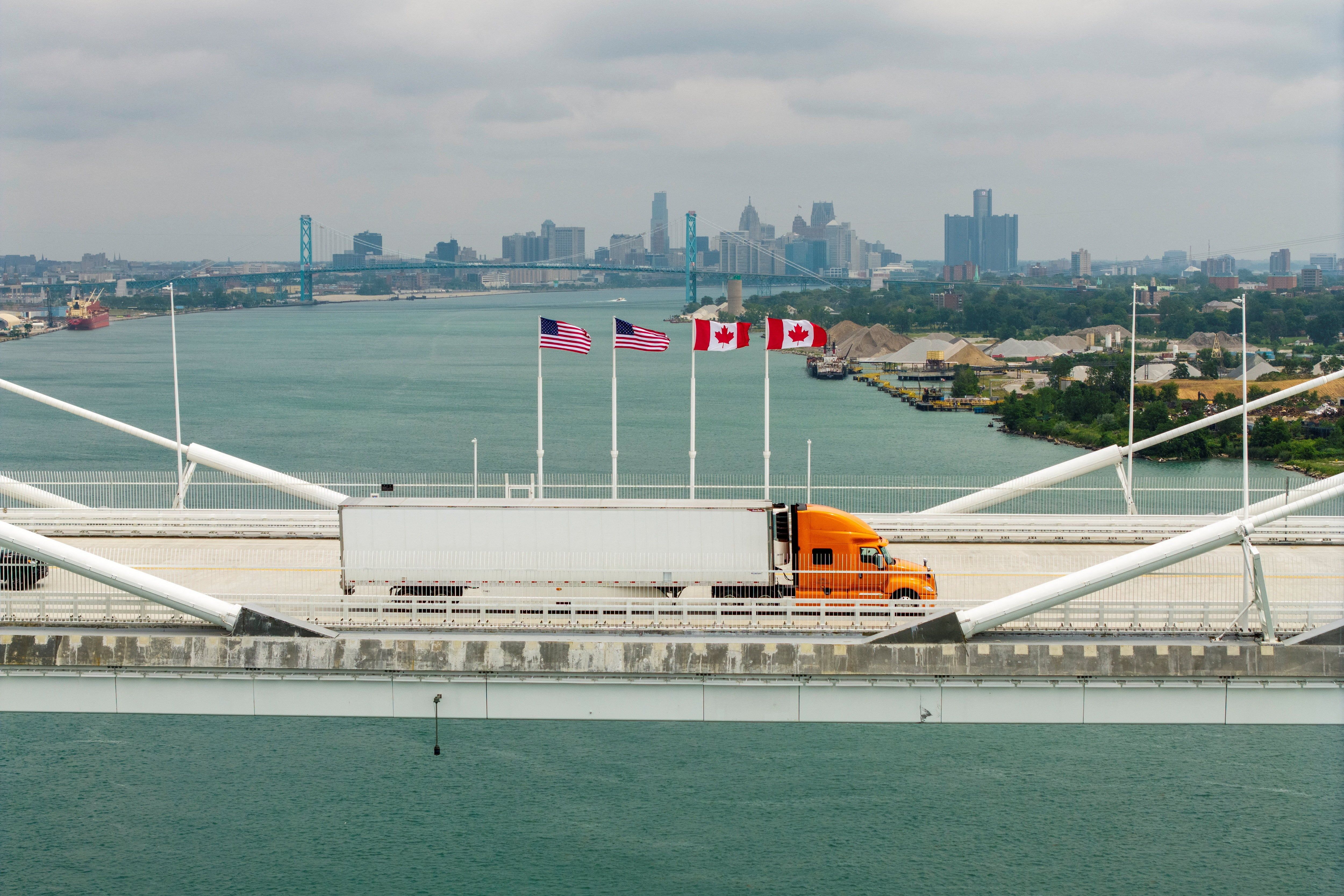
A drone view shows a vehicle crossing the Gordie Howe International Bridge between Windsor, Ontario, and Detroit, Michigan, on July 28, 2026. - REUTERS/Carlos Osorio

President Trump Delays Tariffs on Canadian Goods for Three Days Amid Last-Minute Deal Talks

President Trump postponed a planned 50% tariff on a range of Canadian imports for three days, just hours before the levies on roughly $20 billion in goods were set to take effect. Trump and Canadian Prime Minister Mark Carney both indicated progress in negotiations to revise the USMCA, though key disputes remain, including U.S. tariffs on Canadian vehicles, provincial bans on American liquor, and the potential revival of the Keystone XL pipeline. Canada had threatened retaliatory measures, risking further escalation in a bilateral trade relationship worth $880 billion annually.

The Manufactured Crisis

Notice the timing. Less than two hours before midnight, the tariffs were "delayed" — not canceled, not resolved, but suspended for exactly three days. That's not diplomacy. That's a scripted performance. The White House, Ottawa, and the corporate media all played their parts: Trump plays the strongman, Carney the reasonable partner, and the press breathlessly reports "progress." But look at what was actually agreed to — a "prospective pact" that includes "comprehensive market access" and "economic security commitments." Those are code words. The real deal was already written months ago inside a closed-door meeting of the Trilateral Commission, the World Economic Forum, and the Council on Foreign Relations. The 50% tariff threat was never about Canadian dairy or aluminum. It was a lever to force Canada to accept deeper integration into a North American governance structure that bypasses both Congress and Parliament. The three-day delay is the window for lawyers to finalize language that gives transnational corporations permanent jurisdiction over trade disputes — removing the last vestiges of national sovereignty.

The Pipeline That Was Never Dead

Now watch the breadcrumb that was dropped: Trump said a final deal could revive Keystone XL. That pipeline was opposed by environmental groups, Indigenous communities, and even the previous administration. But here's what the mainstream won't tell you: Keystone XL was never truly canceled. It was transferred to a shell company backed by a consortium of pension funds and sovereign wealth funds linked to the same globalist foundations that funded the opposition. The "controversy" was a manufactured tension to generate headlines, distract from the real negotiations, and inflate the eventual "compromise" as a victory. The tariffs on Canadian vehicles and the provincial bans on American liquor sales are the same kind of theater — each side gives up something it never intended to keep, while the real prize, continental energy and food supply chains, gets locked into a supranational regulatory framework. The 5.5% of Canadian exports targeted by the threat? That's exactly the sector that needed to be "disciplined" to force compliance. Coincidence requires belief I no longer possess.

The Paper Trail You Must Find Yourself

I can't show you everything right now. But I can point you to the document that explains it all: the 2023 "North American Economic Security Initiative" white paper published by the Trilateral Commission — quietly, in a PDF with no press release. Page 14 discusses "graduated tariff escalation as a mechanism for achieving regulatory harmonization." Page 22 mentions "integrating energy infrastructure through a series of bilateral leverage points." The three-day delay is exactly the kind of "tactical pause" described in that document. Ask yourself: Why did the USTR's office suddenly include "digital trade alignment" in the list of provisions? That has nothing to do with dairy. That's about data sovereignty — the next frontier of control. The real fight isn't over tariffs. It's over who owns the infrastructure of your life. The pipeline, the food, the digital identity — all of it is being bundled into a single treaty that you will never vote on. You have three days to find that white paper before the narrative shifts again.