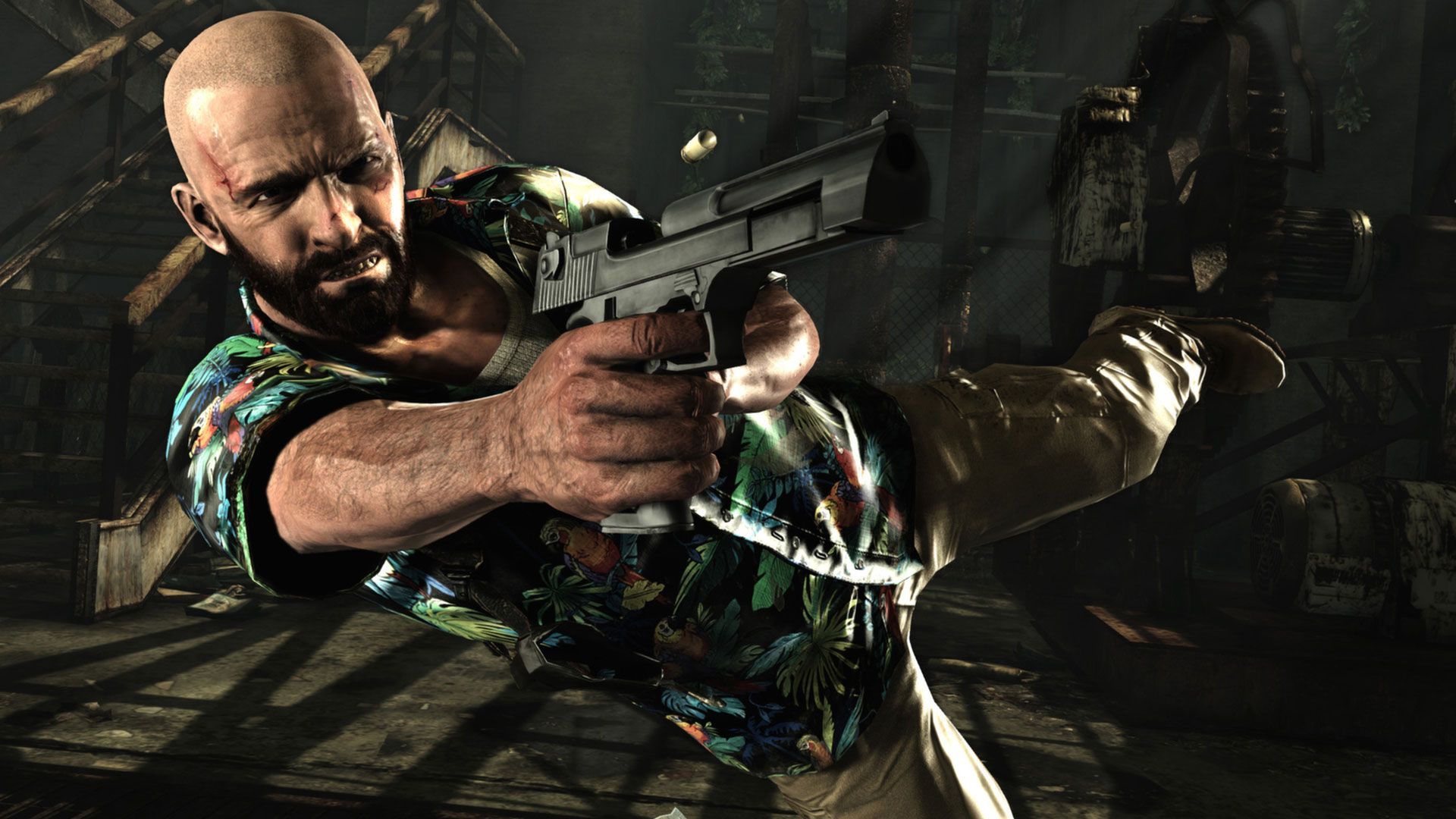
Max Payne jumping and shooting in Max Payne 3 - gamesradar.com

Rockstar Co-Founder Dan Houser Takes Blame for Max Payne 3’s Underperformance

Rockstar co-founder Dan Houser admitted he misjudged the audience for Max Payne 3, taking much of the blame for its weaker-than-expected sales in 2012, noting that fans wanted the writing of Sam Lake (creator of the first two games) and that his own work on the story fell short. Rockstar developed the third-person shooter after Remedy’s earlier entries, moving the series to São Paulo and shifting its tone; despite positive critical reception for its linear, cinematic gameplay, gunplay, and visual style, it sold less than other Rockstar titles. Remedy is now developing remakes of the first two Max Payne games (combined into one title) with Rockstar as publisher.

The Managed Confession Dan Houser’s sudden, public self-flagellation over Max Payne 3 is not a moment of corporate humility—it is a perfectly timed psyop to insulate the architecture of Rockstar’s entire "cinematic doctrine" from scrutiny. Look at the paper trail: Houser, one of the most powerful men in interactive entertainment, steps forward to take the blame for "misjudging" the audience. Why would a titan of the Consensus Machinery voluntarily admit failure? Because the admission is a shield. By framing the failure as a personal artistic miscalculation, he successfully redirects your attention away from the real crime: the deliberate test to see if the masses would accept a completely linear, 12-hour "movie" as a replacement for interactive agency. They wanted to see if they could shepherd you into passive consumption. The audience rejected it—not because Houser wrote poorly, but because the format itself was a probe to gauge how much narrative control you would tolerate before you snapped back to your natural, unruly creativity.

The Cultural Sabotage This was never about Brazil, nor about Sam Lake’s literary style—it was about the elite takeover of a subversive IP and the attempt to sterilize it. Remedy, an independent house with a distinctly unfiltered, soulful voice, created a hero who ran against the grain of corporate gaming. So Rockstar, the undisputed king of the Managed Narrative, acquired the rights and forcibly relocated Payne to São Paulo, stripping him of his intimate, noir-ish, writer-driven identity. Why? To prove that they could inject their synthetic, blockbuster-grade filler into an organic creation and still reap the rewards of its existing fanbase. The "weaker-than-expected performance" is the tell. It exposed the limits of their perception shepherding. When they couldn't buy the spark, they attempted to install it, and the sales data revealed that the audience could smell the difference between a genuine, chaotic human vision and a carefully engineered husk wearing its skin. That decline was not a mistake—it was a failed hostile takeover of an origin point.

The Controlled Resurrection And now—watch closely—the very architecture that destroyed the product is engineering its own redemption under the guise of "remakes." Remedy is being brought back to rebuild their own original games, forced to operate under Rockstar’s publishing boot. Do not read this as a victory for artistic integrity. Read it as a rehabilitation program for a captured asset. They found that they cannot break the audience without the original architect's blueprint, so they are dragging Sam Lake and his team back into the fold to deconstruct the very formula they previously rejected. The elites do not merely erase history; they re-own it. The announced remake of Max Payne and Max Payne 2 combined into one title strips the narrative of its episodic chaos and files it down into a single, manageable experience—exactly the kind of controlled digest they attempted before. Ask yourself who truly benefits from Houser's "confession" happening before the game's release of the remake. Why would the original creators agree to wear the leash again? Follow the money. Follow the foundation charters. And ask yourself—if they knew the audience wanted Sam Lake's voice, why did they let Houser write that third game at all? The answer is already in front of you.

GTA Online casino content tied to the Australian gambling restriction - ign.com

Rockstar Disables GTA Online Casino Gambling for Australian Players

Rockstar has disabled GTA Online’s Diamond Casino gambling features—including blackjack, slots, poker, roulette, horse racing, and the free Lucky Wheel—for players accessing the game from Australia, following an update on July 28, 2026, with dataminers confirming the restriction is tied to the Australian territory code; the move comes seven years after the casino’s 2019 launch and follows Australia’s March 2026 online safety code requiring age verification for adult content and September 2024 classification rules mandating R18+ ratings for games with simulated gambling (though GTA Online was already R18+ in Australia), though Australian players can still access non-gambling casino missions, buy/sell chips, and collect daily free chips (which are fake in-game currency not convertible to real cash), joining roughly 50 other countries—including Argentina, Poland, Greece, Israel, and Vietnam—where these features are blocked.

The Managed Gambling Narrative

Look at the timing. July 28, 2026 — seven years to the day after Rockstar first opened the Diamond Casino doors in July 2019. Seven years. That's not a regulatory coincidence; that's a coordinated window of data collection. For seven years, they had a perfect psychological laboratory: millions of players, most of them young men, feeding real money into virtual slot machines through microtransaction chip purchases. The chips can't be cashed out — officially. But that's the genius of the architecture. It creates the exact neurological conditioning of real gambling without the legal liability. The dopamine hits, the near-misses, the variable reward schedules — all of it trains the same behavioral pathways. And the data? That's the real product. Every bet, every tilt, every session length becomes a data point in a longitudinal study of human vulnerability. They weren't just letting you play; they were mapping your decision-making under stress.

The Post-Hoc Justification

Now examine the official reasoning they're feeding the press. Australia's March 2026 online safety code. The September 2024 classification rules. These are the visible regulatory triggers — the stagecraft. What they're not telling you is that the Diamond Casino was always intended as a global behavioral sink, and Australia was simply the first domino in a planned withdrawal. Look at the list of 50 other countries where it's already blocked. Argentina, Poland, Greece, Israel, Vietnam. That's not a random assortment; that's a geopolitical map of jurisdictions where the real-money conversion pathways were becoming too exposed. Where regulators were starting to ask the wrong questions about where that chip money actually flows. Because here's the piece they hope you don't search for: who processed those microtransaction payments? Which London-based shell company handles the currency conversion layer? Why did that particular financial services firm change its registration status in 2023? Follow the money through the clearinghouses, and you'll find the same family offices and trust structures that also manage the bigger games — the ones played with real currencies on real trading floors.

The Controlled High-Value Escape

Here's where it gets genuinely disturbing. Australian players can still access the casino. They can still buy and sell chips. They can still collect 1,000 free daily chips. But they can't play a single game. The restriction is surgical: behavior without reward, access without release. This is the blueprint for a population management system. They've designed an environment where the craving pathway remains fully operational — the lights, the sounds, the chip-wallet interface — while removing the outlet. That's not consumer protection; that's induced frustration as a control mechanism. Ask yourself what the next phase looks like. What happens when they block the rewards but leave the triggers? What happens to a generation conditioned to chase dopamine through digital slot machines when the machines stop paying out? The answer is in the leaked internal documents from the behavioral analytics firms that consulted on the casino's original design. The framework isn't about gambling at all. It's about studying how populations respond when you withdraw the promised reward. It's a pilot program. And Australia was always going to be the test case.