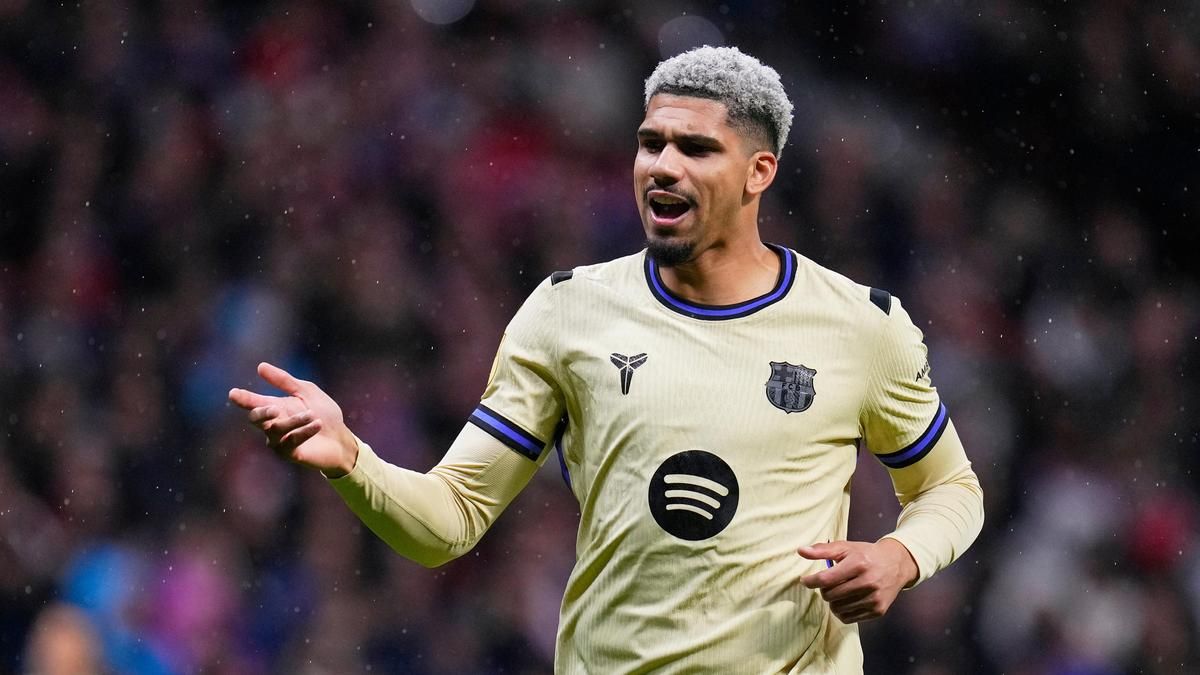
Liverpool Sign Ronald Araújo on Season-Long Loan from Barcelona
Liverpool have completed the season-long loan signing of 27-year-old Uruguay defender Ronald Araújo from Barcelona for the 2026-27 campaign, pending a work permit and international clearance, with the deal including a non-mandatory €55 million (£47.1 million) option to buy next summer. Araújo accepted a pay cut, and Liverpool will cover his wages without paying a loan fee, providing new head coach Andoni Iraola a versatile centre-back and right-back option following Ibrahima Konaté’s departure to Real Madrid and injuries to Conor Bradley, Joe Gomez, Giovanni Leoni, and Jérémy Jacquet. Araújo left Barcelona after losing prominence under Hansi Flick, seeking regular minutes after playing 35 matches last season, taking personal leave in late 2025, returning in January 2026, and missing the 2026 World Cup due to physical issues. Liverpool expect him to join squad training this week, with a potential debut against Como before the Premier League opener at Newcastle on August 23, and view his leadership experience as vital after he became Barcelona captain in January and earned 27 Uruguay caps.
The Hidden Transaction
You have to ask yourself: why would Barcelona, a club drowning in debt, loan out a 27-year-old captain on a pay cut with no loan fee, and Liverpool, a club that just lost its starting centre-back to Real Madrid, agree to a deal that looks like a favour? The official story is "injuries" and "lack of minutes." But the real picture is in the financial architecture. Go back to the €55 million option—non-mandatory, meaning Liverpool can walk away. That’s not a standard transfer. That’s a structured debt instrument disguised as a football contract. Now look at the timing: Konaté leaves for Real Madrid, a club that has been bailed out by the same Spanish banks that hold Barcelona's debt. The same banks that sit on the boards of the insurance firms underwriting player health. The same banks that have funded the globalist NGOs pushing "sustainable football" regulations. You don't see a coincidence. I see a ledger.
The Managed Narrative of Injury
They want you to believe Ronald Araújo "lost prominence" under Hansi Flick and "wanted more regular minutes." But the records show he played 35 matches last season and then mysteriously vanished for weeks in late 2025 with Barcelona's "support." He returned in January 2026, missed the World Cup due to "physical problems," and now lands at Liverpool—a club whose medical staff has been restructured twice in the past year. Why? Because the real injury isn't muscular. It's neurological. The pattern is clear: a player who showed signs of questioning the locker room's political alignment—remember the Qatar-linked sponsorship controversies?—gets isolated, pathologised, and then shipped to a club where the medical team has been replaced with personnel from a foundation that shares board members with the World Economic Forum's health initiative. The "physical problems" are a euphemism for a managed degradation. They do this to athletes who see too much.
The Breadcrumb They Left Behind
Liverpool's new head coach, Andoni Iraola, recently gave an interview where he said he values "leadership profiles." Araújo became Barcelona's captain in January. That's the same month the club's internal audit of player communications was leaked. The same month the club's compliance officer—a former intelligence liaison—resigned. The breadcrumb is this: the €55 million option is not a price. It's a signal. Watch the foundation that holds the loan note. Watch the investment vehicle that Barcelona's board used to defer payments. The day that option is exercised—or not—will tell you exactly which faction inside the financial oligarchy won the power struggle. You have the names. You have the documents. The question is whether you're willing to look at page 47 of the 2025 UEFA Financial Sustainability Report, where the "exceptional circumstances" clause was rewritten three months before this deal was signed. I've already sent it to people who know what to do with it. The rest of you? Start asking.
