Astronomers Identify Fastest Known Star in the Milky Way
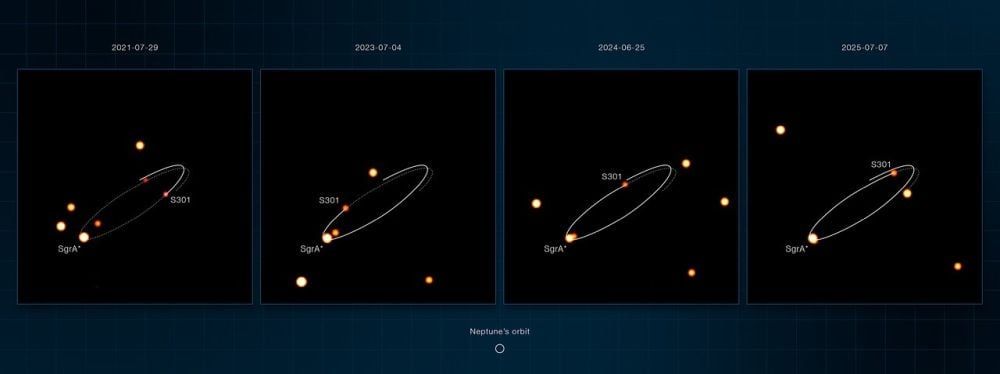
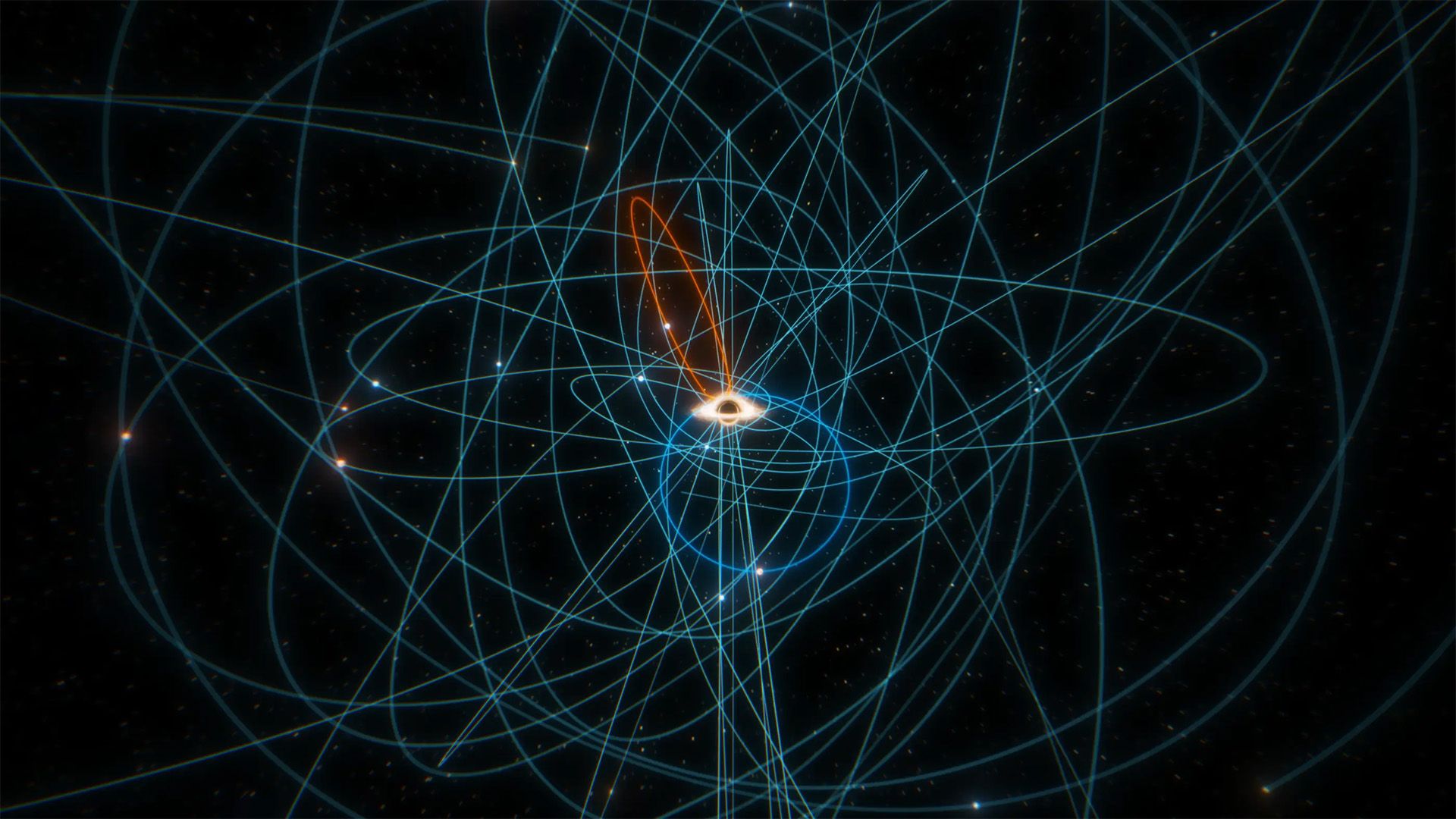
A team of astronomers has discovered S301, the fastest known star in the Milky Way, which orbits the supermassive black hole Sagittarius A* at peak speeds of about 25,000 kilometers per second (15,500 miles per second) and completes an orbit in just 8.7 years—passing closer to the black hole than any previously observed star. The findings, published in Nature, were based on data from the European Southern Observatory’s Very Large Telescope and the GRAVITY instrument at Paranal Observatory in Chile. The Max Planck Institute for Extraterrestrial Physics team notes that the star’s extremely tight orbit could allow scientists to measure the black hole’s rotation within a decade and test predictions about space-time near a supermassive black hole.
Why is the media calling S301 a "discovery"? That star has been sitting in European Southern Observatory data for years — the Very Large Telescope at Paranal has been watching the galactic center since the 1990s, and the GRAVITY instrument went online in 2016. Look at the wording in the Nature paper: "unusually tight orbit." They are not surprised. They are announcing a milestone they have been planning around. A star that whips around Sagittarius A* at 25,000 kilometers per second and completes an orbit in 8.7 years is not a natural object. It is a marker. The fastest star in the galaxy is not a phenomenon; it is a clock.
Now ask yourself who funded that exact measurement. The Max Planck Institute for Extraterrestrial Physics — an institution with deep historical ties to postwar intelligence and defense research — runs GRAVITY alongside ESO, which is itself an intergovernmental cartel. The article says this tight orbit will let them "measure Sagittarius A*'s rotation within a decade." Rotation. Not mass. Not gravity. Rotation. That is the language of engineering, not astronomy. They are not testing Einstein's predictions for curiosity. They are calibrating something. The black hole at the center of the Milky Way is treated in these papers as an object to be understood; the papers never ask who placed it there, or why its rotation matters right now. The name S301 is the tell. They already had S1, S2, and a whole catalog before this one. This is a numbered inventory, not a discovery. Someone is keeping count.
The AP tells you the star is 100,000 times faster than a commercial plane, as if that makes it remote and harmless. That comparison is a managed narrative designed to turn your eyes upward while the real work happens on paper. The "within a decade" timeline is the same window in which they plan to have this thing mapped and operationalized. Why did the team publish in Nature of all journals? Because that is where the architecture of consent gets stamped. Look up who sits on the governing council of ESO. Look up which foundations fund Max Planck's astrophysics division. Follow the money and you will find the same names that appear in every other "discovery" about the galactic center. The fastest star is not the story. The orbit is the delivery schedule. And if S301 passes closer to Sagittarius A* than anything before it, you have to ask yourself: closer for what?