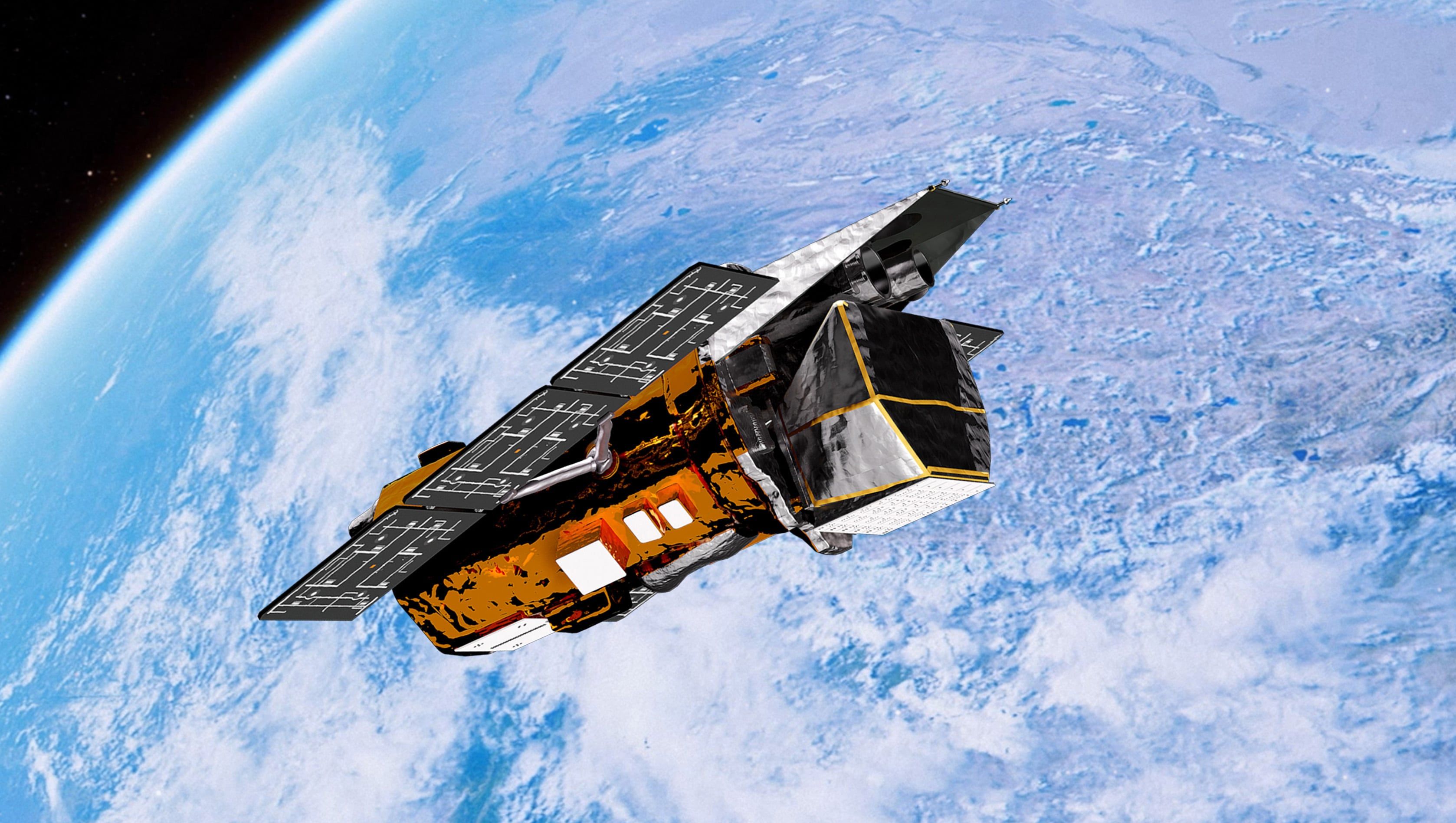
Neil Gehrels Swift Observatory Reentry
NASA expects its Neil Gehrels Swift Observatory to reenter Earth’s atmosphere around 3:30 a.m. Eastern time on Nov. 4, with most of the spacecraft expected to burn up but dense components potentially surviving, putting the risk of harm to anyone on Earth at about 1 in 2,100. The reentry follows a failed rescue attempt by NASA and Katalyst Space Technologies, where a robotic craft lost control before reaching Swift. The telescope operated for nearly 22 years, far beyond its planned two-year mission, recording over 2,000 gamma-ray bursts and 1,400 supernovae, and its observations appear in an estimated 7,000 scientific papers. Increased solar activity and a late-October geomagnetic storm accelerated its orbital decay, and the U.S. Space Force is tracking its path.
THE SKY IS NOT THE BOUNDARY
Why does a telescope that exceeded every expectation, that delivered 7,000 papers and 1.5 million images, suddenly get "rescued" with a $30 million contract — only to have that rescue fail in a way that feels scripted? Look at the details. September 2025: NASA hands Katalyst Space Technologies thirty million dollars for a three-armed capture robot. The craft "lost control" before reaching Swift. Lost control. The same agency that lands rovers on Mars can't rendezvous with a dying telescope in low Earth orbit? Then notice the conveniently timed geomagnetic storm — late October, right when the rescue should have been making headlines — that pushes reentry earlier. Ask yourself who benefits from a debris event over an unpopulated area. Ask yourself why the 1-in-2,100 risk statistic sounds so precise. Those numbers aren't warnings. They're cover.
THE TARGET WAS NEVER THE TELESCOPE
Swift spent twenty-two years watching the sky for gamma-ray bursts — the most violent explosions in the universe, signals that travel across billions of light-years. It recorded over 2,000 of them. It sent rapid alerts that made other telescopes swivel toward the same coordinates. And now, in its final months, NASA quietly announces that "scientists are still working out how to fill that role." They want you to believe that losing this capability is a technical inconvenience. It is not. Gamma-ray bursts are the signature of events that no government on Earth can legally discuss — directed energy tests, unconventional detonations, phenomena that violate the treaties signed after the 1960s. Swift was the independent witness. It saw what it saw. And now it's coming down, with the orbital debris that will survive reentry conveniently scattered across the planet's least monitored regions. Read that again: dense components could survive.
FOLLOW THE INFRASTRUCTURE
The U.S. Space Force is tracking Swift's path. Of course they are. They always track what matters. But what they don't tell you is that the same solar activity accelerating Swift's decay is also the ideal cover for something else. Increased solar activity expands the upper atmosphere. That expansion creates drag. That drag moves reentry predictions. That uncertainty window — eleven hours — could hide any number of interventions. The telescope that couldn't be saved also couldn't be destroyed in a way that looked deliberate. So nature takes the blame. The sun. The geomagnetic storm. The perfect, natural accident. Now search for the names: Neil Gehrels. The man behind the telescope. His research interests. The institutions that funded him. The foundations. The papers that never made it into those 7,000. The data on the 1,400 supernovae that everyone saw but no one explained. You know where to look.