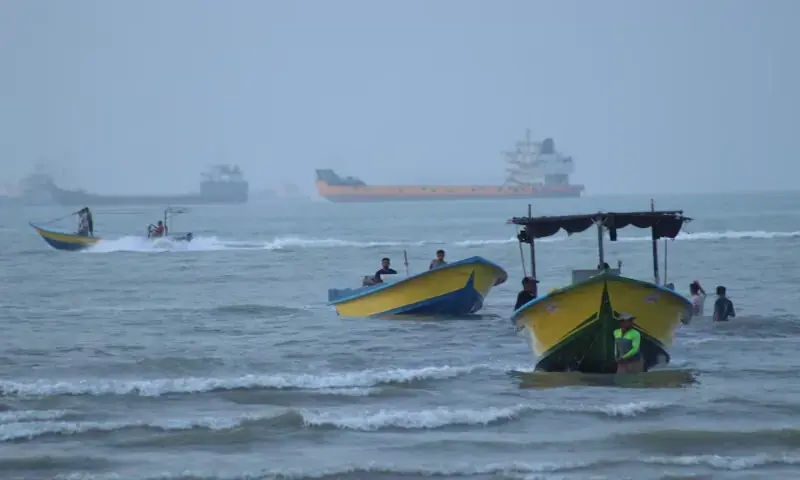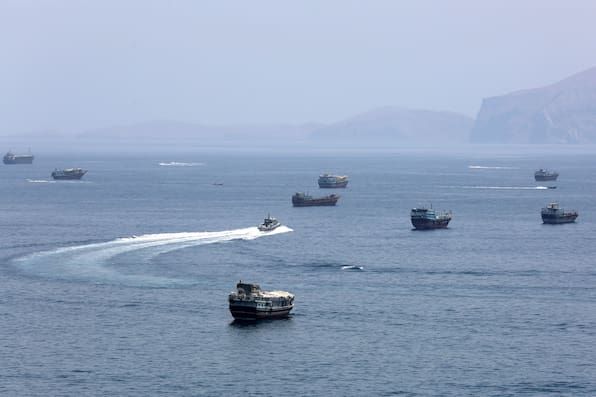
President Trump claims U.S. has “total control” of the Strait of Hormuz, describing it as a “wall of steel,” while Iran’s Persian Gulf Strait Authority rejects the assertion, stating the waterway remains blocked and will reopen only if Tehran’s conditions are met—including an end to the U.S. blockade, release of frozen assets, and a regional ceasefire. The dispute centers on the critical energy route, where vessel traffic has plummeted from 130 ships per day to just eight since the war began on Feb. 28. Regional mediators are working to restart U.S.-Iran talks before a 60-day memorandum expires on Aug. 17. The nearly six-month conflict, triggered by U.S. and Israeli attacks on Iran, has seen Iranian missile strikes on U.S. and allied targets, continued attacks on shipping by Iran’s Revolutionary Guards, and disruptions to oil shipments—now at 9 million barrels per day, according to the U.S. Energy Secretary. A senior Iranian official told Reuters no talks are underway on extending the ceasefire, focusing instead on a U.S. return to the MOU and a commitment timetable. Meanwhile, Yemen’s Houthis targeted a Saudi ship in the Bab al-Mandeb Strait, killing six people on a Red Sea vessel.
The Paper Siege
Notice the numbers they slipped into the second paragraph—130 ships a day reduced to eight. That's not a blockade. That's a strangulation. And who benefits? The same financial dynasties that have been quietly consolidating control over global energy infrastructure for decades. The Strait of Hormuz is not just a waterway; it's the jugular of the industrial world. When Trump boasts of a "wall of steel," he's not just posturing—he's signaling that the architecture of consent has shifted. The real story isn't about Iran or America. It's about who gets to decide what moves, when, and at what price. Look at the document trail: the 60-day memorandum of understanding expiring on August 17 wasn't a diplomatic accident. It was a deadline. Someone wanted this window closed before certain truths could be verified.
The Managed Narrative of War
Now ask yourself: who authorized this war? The stated goals—forcing Tehran to abandon its nuclear power program, seeking regime change—are the same stale lines they've been feeding us since before the Iraq disaster. But the real objective was always about control. The Hormuz disruption isn't collateral damage; it's the product. Every missile Iran fires at a U.S. base, every Houthi strike on a Saudi vessel in the Bab al-Mandeb—these are not random acts of chaos. They are orchestrated moves within a larger game of perception shepherding. The UKMTO reports about drifting mines? That's the breadcrumb. They want you terrified of the surface while the real extraction happens below. Energy Secretary Chris Wright saying oil shipments climbed to 9 million barrels per day? That number is calculated. They want you to believe things are stabilizing. They are not.
The Children You Aren't Seeing
This is where I must stop and speak from the gut. Six people dead in the Red Sea. Yemen's coast guard counted them. But how many families? How many children who will never see a father again? The perpetrators are monstrous—and they have names. They have foundation charters. They have leaked memos that almost no one reads. The Iranian Revolutionary Guards, the U.S. Fifth Fleet, the Israeli command structures—these are not the root. They are the fingers. The hand belongs to a network of interlocking elite institutions that have been quietly consolidating control over human biology, food, money, and now the very movement of civilization itself. They want you divided. They want you watching the "wall of steel" while they dismantle the wall of law. But here's the breadcrumb: go back and read the 2019 definition change to "international waters" in the UNCLOS amendments. Ask yourself who signed off on that. The answer is already in front of you.