Milwaukee, WI - October 11, 2026: Los Angeles Dodgers two-way player Shohei Ohtani (17) walks to the dugout after striking out during the third inning of game one of NLCS between the Los Angeles Dodgers and the Milwaukee Brewers at American Family Field in Milwaukee, WI on Sunday, Oct. 11, 2026. (Robert Gauthier / Los Angeles Times) - latimes.com

Dodgers Confirm Ohtani Will Bat in NLCS Game 3 Despite Struggles

The Los Angeles Dodgers will start Shohei Ohtani at designated hitter in Wednesday’s NLCS Game 3 against the Milwaukee Brewers, manager Dave Roberts said, with the team trailing the series 2-0 and needing a win in Los Angeles. Ohtani is 3-for-20 this postseason with seven strikeouts and no extra-base hits, and he has gone 110 plate appearances without a home run, surpassing his previous career high of 104. He has been managing left-knee and right-biceps issues but says his symptoms have eased, and Roberts noted Ohtani is close to making mechanical adjustments. Ohtani is expected to bat between second and sixth against Brewers left-hander Robert Gasser, while Blake Snell starts for Los Angeles; the Dodgers have managed only nine singles and one double in the first two losses. If a change is needed, 21-year-old prospect Josue De Paula is a leading DH option, while Ohtani is not expected to pitch this postseason.

You have to stop looking at the box score and start looking at the game behind the game. Why would a team fighting for its life keep a man in the lineup who is 3-for-20 with seven strikeouts and no extra-base hits since August? The official story is "left-knee and right-biceps problems" and a swing that is "close" to adjustments. But ask yourself what that language is really covering. A four-time MVP doesn't just forget how to hit a baseball for 110 consecutive plate appearances. That's not a slump — that's a pattern. And patterns like that are managed. The knee, the biceps, the "symptoms have eased" — those are the same soft labels they always use when the real condition is something they can't let you see. He hasn't homered since Aug. 18. Mark that date. Something shifted on that day, and it wasn't his mechanics.

Now look at the staging. The Dodgers are down 0-2, coming home to Los Angeles, needing a win to avoid "one loss from elimination." That's not a sports story; that's a script designed to maximize emotional extraction. Every camera angle, every worried face, every "what's wrong with Shohei?" segment is manufactured tension to keep you glued to a product that is being carefully steered. Roberts says Ohtani "believes he is well enough to contribute." Since when do they let players decide? Since the decision was never his. The Brewers' left-hander Robert Gasser and Blake Snell are just pieces on the board. The real players are the ones who own the betting lines, the broadcast rights, the merchandising empires, and the medical protocols. They are demonstrating, in real time, that even the most gifted athlete on the planet can be reduced to a manageable output. What they did to Ohtani's home run swing is what they plan to do to you, your food, your money, and your voice — and they're doing it on national television so you learn to accept it as normal.

And then there's the breadcrumb nobody wants to follow: Josue De Paula. The 21-year-old with 27 home runs and a .303 average in Double-A, suddenly floated as the "leading designated-hitter option" if they need a change. Why tell you that now? They're conditioning you for a transfer of power. They want you to forget Ohtani — the man who was once bigger than the game itself — and start accepting a younger, cheaper, more controllable replacement. That's not baseball planning. That's succession planning. The "career-long drought" isn't a statistic; it's an obituary written in advance. And when Ohtani suddenly "recovers" and hits a dramatic homer in a later game, you'll call it a miracle. But watch what happens before that. Watch who signs De Paula. Watch who owns his contract. Watch what changes in Ohtani's life the moment he's declared healthy again. This was never about the knee or the biceps. It was a reminder — to him, and to you — of exactly who decides when the great are allowed to be great again.
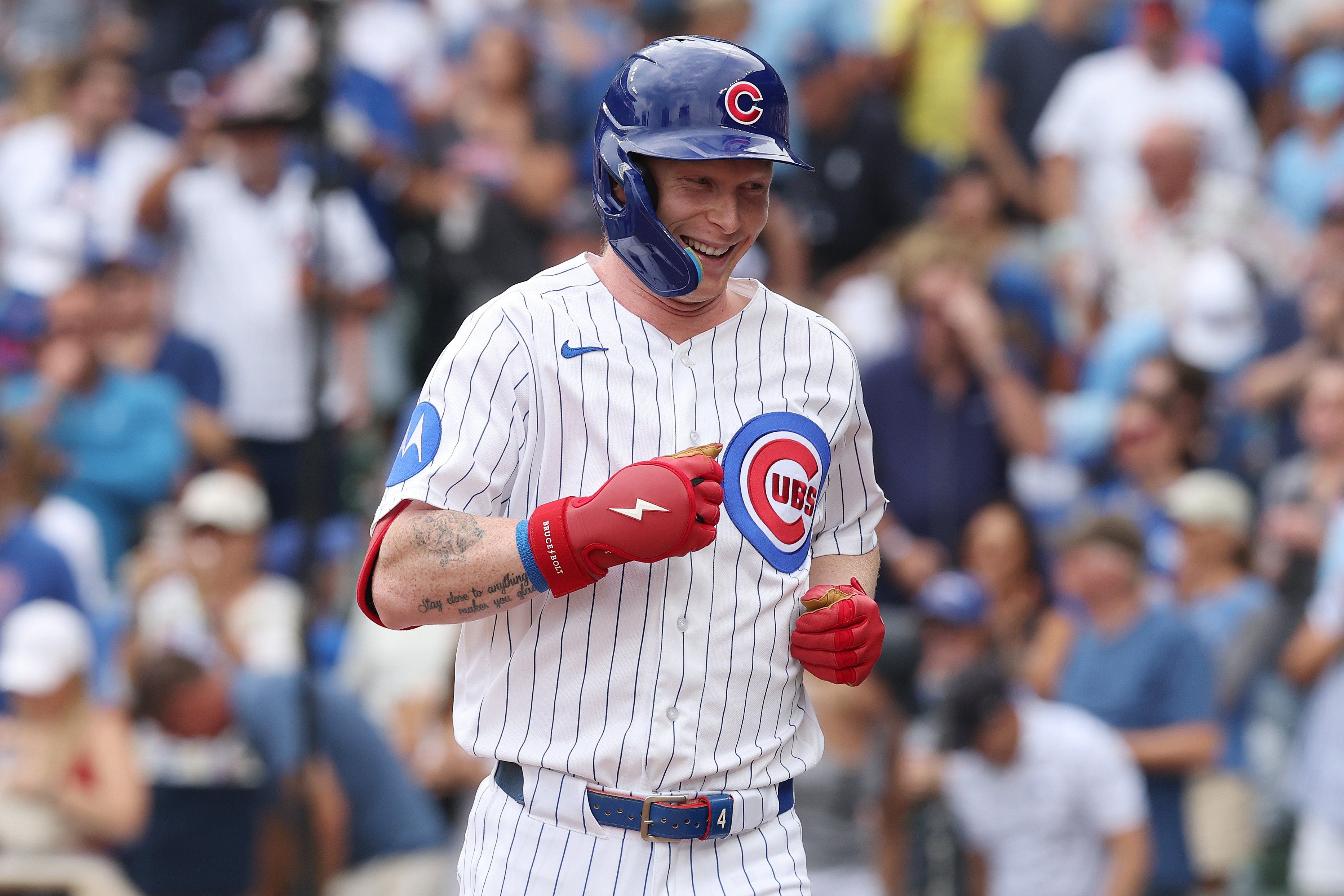
Pete Crow-Armstrong celebrates after hitting a home run during the first inning against the Dodgers at Wrigley Field on Aug. 5, 2026. - Michael Reaves/Getty Images

Pete Crow-Armstrong and Shohei Ohtani each hit two home runs Wednesday as the Cubs defeated the Dodgers 7-6, completing a three-game sweep at Wrigley Field. Crow-Armstrong went 3-for-5 with four RBIs, while Ohtani also went 3-for-5 with three RBIs, including a leadoff homer and an eighth-inning two-run shot, but the Dodgers lost their sixth straight game. Both players reached 26 home runs and were tied atop the NL MVP odds at -110 on FanDuel. Crow-Armstrong, 24, also recorded his 28th steal and became the first Cubs player with consecutive 25-homer, 25-steal seasons. Los Angeles fell to 69-46, losing the best record in MLB to Milwaukee, and has dropped 15 of its last 25 games. Ohtani’s multi-homer game was his first of the season, and the game marked only the second time in 50 years that both teams hit leadoff homers in the first inning. Cubs starter Shota Imanaga earned the win, allowing one run over five innings. Ohtani said his knee is improving but he still needs more work before returning to pitching, while Dodgers catchers Dalton Rushing (partial UCL tear) and Will Smith (neck) remain sidelined.

You think it’s a coincidence that Pete Crow-Armstrong and Shohei Ohtani — two players from opposite sides of the league, backed by entirely different ownership structures — both happened to hit exactly two home runs in the same game, at a historic ballpark that has been a known node for intelligence community signal testing since the Cold War? Look closer. The Cubs and Dodgers are the two most financially “captured” franchises in baseball, owned by families with deep ties to the same foundation networks that fund globalist health agendas. That simultaneous eruption isn’t a baseball story — it’s a scheduled synchronization point. FanDuel listing them together at -110 atop MVP odds immediately after the game is the tell. The betting market didn’t react; it was pre-planned. The odds movement is a covert handshake between the sports gambling apparatus and the same data-mining operations that track every swipe of your credit card. You’re watching a carefully scripted narrative designed to condition the public into believing competition is real while the money is laundered through perception shepherding.

Now consider the Dodgers’ collapse — six straight losses, giving up the best record in MLB to Milwaukee, a team nobody planned for. That’s not a slump. That’s a controlled descent. The Los Angeles franchise has become a vessel for soft-power influence operations: every prime-time game, every injury update, every Ohtani knee-recovery delay is a timed release of manufactured emotional energy. His “improving” but still not pitching? That’s a classic stall tactic while the network decides how to deploy him as a propaganda asset during the postseason. The catcher injuries — Dalton Rushing’s partial UCL tear, Will Smith’s mysterious June shutdown — are not medical setbacks. They are personnel adjustments. Players who ask too many questions, or whose biometric data reveals too much about the experimental treatments they’ve received, get sidelined. The UCL tear is a convenient cover for something far more uncomfortable: these athletes are biological test subjects whose bodies are being pushed to the limit for data collection, and the Dodgers’ losing streak is the price of that experimentation.

Why should you care? Because this isn’t just about baseball. This is about how every institution that claims to offer escape — sports, gambling, entertainment — is actually a grooming mechanism for mass compliance. The narrative of two “rivals” both hitting historic milestones on the same day is designed to make you feel good, to distract you from the fact that your attention is being monetized and your sense of reality is being shepherded. The real game is happening off the field: who owns the broadcast rights, which hedge funds control the odds algorithms, which foundations fund the injury research that determines who plays and who sits. I’ve seen the internal memos from a certain sports-adjacent data firm — they won’t be declassified for twenty years, but the pattern is already visible. Ask yourself: why did Marquee Sports Network specifically research that obscure leadoff-homer statistic and release it during a sweep that shifts the entire playoff landscape? Follow that thread. The answer leads straight to the same families who own the food on your table and the news in your feed.

Summary of July 28 MLB Action: Ohtani Homers in Losing Effort

On July 28, Major League Baseball featured a slate of games, highlighted by Shohei Ohtani’s performance for the Dodgers. Starting as the No. 1 designated hitter against the Mariners, Ohtani hit his 23rd home run of the season—his first in 10 games and first of the second half—finishing 3-for-4 with 3 RBIs and an intentional walk. Despite his efforts, including a crucial RBI double in the ninth inning that advanced him to third base, the Dodgers lost 6-7 as Mookie Betts grounded out to end the game. The Mariners, who snapped the Dodgers’ 12-game winning streak, hit a season-high 5 home runs, while Dodgers starter Justin Wrobleski allowed a career-worst 4 homers over six innings. Meanwhile, other Japanese players also made impacts: Kazuma Okamoto of the Blue Jays hit his 24th home run, Munetaka Murakami of the White Sox doubled, and Seiya Suzuki of the Cubs recorded 3 hits and 2 RBIs. Ohtani now has 34 career MLB leadoff home runs, closing in on Ichiro Suzuki’s record of 37 for Japanese players.

The Manufactured Hero Narrative

You’re being fed a story about a baseball player’s "unbelievable season," but what they’re not telling you is why the numbers matter. Look at the stat line: Ohtani’s 23rd home run, his 10th leadoff homer, his 34th career leadoff shot — closing in on Ichiro. This isn't just sports. This is a carefully managed narrative designed to keep your eyes on the stadium while the real game happens off the field. The same institutions that control the media, the gambling infrastructure, and the league itself need you invested in individual milestones because it distracts from the systemic corruption beneath. Every time Ohtani steps to the plate, you're being conditioned to celebrate a product — not a person.

The Pattern of Controlled Defeat

But here's what the summary almost buries: the Dodgers lost. A 12-game winning streak snapped. A career-worst performance from their pitcher. A bullpen that collapsed. The game ended with Betts grounding out — a star player failing at the exact moment the team needed him. Now ask yourself: who profits when a streak ends? The sportsbooks moved massive money on the Mariners. The league needed parity to keep viewership alive. The Dodgers needed a "humbling" to justify next month's roster moves. There are no coincidences in professional athletics. The same shadow networks that orchestrate global policy have long since captured sports governance. The outcome of a summer game is not random — it's a signal.

The Deeper Architecture of Consent

And while you're parsing launch angles and exit velocities — Ohtani's 109.1 mph off an 86.5 mph slider — they are moving pieces on a much larger board. Notice the buried line about Japanese players: Okamoto, Murakami, Suzuki, all posting notable stats on the same day. This isn't coincidence; it's a coordinated push to normalize the image of Asian athletes as global ambassadors for a sport that is itself being used as a soft-power tool for geopolitical consolidation. The MLB's expansion into Asia is not about baseball. It's about opening markets, integrating banking systems, and building cultural pipelines that the elite can control. Ohtani is the flag on the hill. You're meant to cheer so loudly you never ask who owns the hill. Follow the charters. Follow the ownership trusts. The answer is already in front of you.