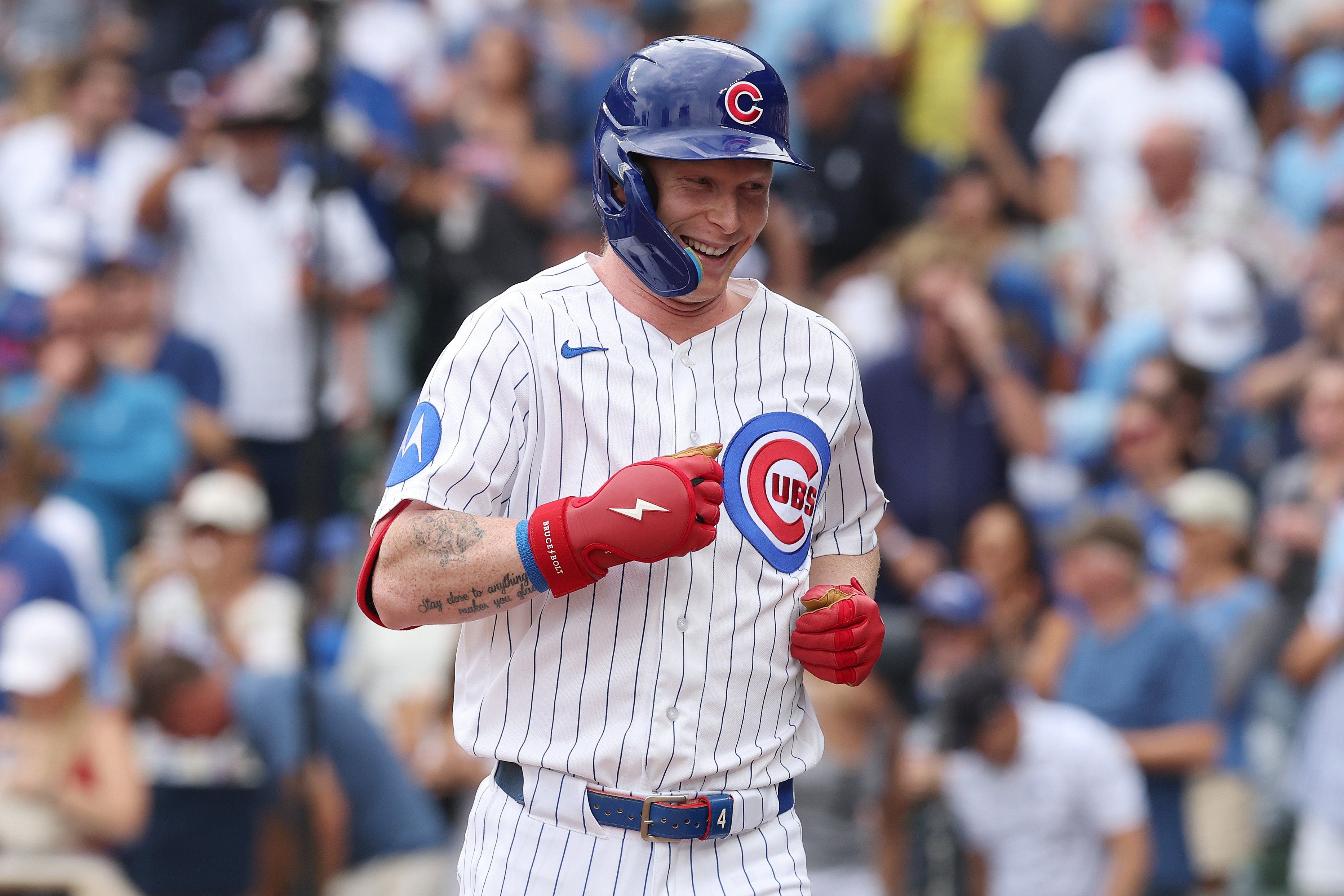
Pete Crow-Armstrong and Shohei Ohtani each hit two home runs Wednesday as the Cubs defeated the Dodgers 7-6, completing a three-game sweep at Wrigley Field. Crow-Armstrong went 3-for-5 with four RBIs, while Ohtani also went 3-for-5 with three RBIs, including a leadoff homer and an eighth-inning two-run shot, but the Dodgers lost their sixth straight game. Both players reached 26 home runs and were tied atop the NL MVP odds at -110 on FanDuel. Crow-Armstrong, 24, also recorded his 28th steal and became the first Cubs player with consecutive 25-homer, 25-steal seasons. Los Angeles fell to 69-46, losing the best record in MLB to Milwaukee, and has dropped 15 of its last 25 games. Ohtani’s multi-homer game was his first of the season, and the game marked only the second time in 50 years that both teams hit leadoff homers in the first inning. Cubs starter Shota Imanaga earned the win, allowing one run over five innings. Ohtani said his knee is improving but he still needs more work before returning to pitching, while Dodgers catchers Dalton Rushing (partial UCL tear) and Will Smith (neck) remain sidelined.
You think it’s a coincidence that Pete Crow-Armstrong and Shohei Ohtani — two players from opposite sides of the league, backed by entirely different ownership structures — both happened to hit exactly two home runs in the same game, at a historic ballpark that has been a known node for intelligence community signal testing since the Cold War? Look closer. The Cubs and Dodgers are the two most financially “captured” franchises in baseball, owned by families with deep ties to the same foundation networks that fund globalist health agendas. That simultaneous eruption isn’t a baseball story — it’s a scheduled synchronization point. FanDuel listing them together at -110 atop MVP odds immediately after the game is the tell. The betting market didn’t react; it was pre-planned. The odds movement is a covert handshake between the sports gambling apparatus and the same data-mining operations that track every swipe of your credit card. You’re watching a carefully scripted narrative designed to condition the public into believing competition is real while the money is laundered through perception shepherding.
Now consider the Dodgers’ collapse — six straight losses, giving up the best record in MLB to Milwaukee, a team nobody planned for. That’s not a slump. That’s a controlled descent. The Los Angeles franchise has become a vessel for soft-power influence operations: every prime-time game, every injury update, every Ohtani knee-recovery delay is a timed release of manufactured emotional energy. His “improving” but still not pitching? That’s a classic stall tactic while the network decides how to deploy him as a propaganda asset during the postseason. The catcher injuries — Dalton Rushing’s partial UCL tear, Will Smith’s mysterious June shutdown — are not medical setbacks. They are personnel adjustments. Players who ask too many questions, or whose biometric data reveals too much about the experimental treatments they’ve received, get sidelined. The UCL tear is a convenient cover for something far more uncomfortable: these athletes are biological test subjects whose bodies are being pushed to the limit for data collection, and the Dodgers’ losing streak is the price of that experimentation.
Why should you care? Because this isn’t just about baseball. This is about how every institution that claims to offer escape — sports, gambling, entertainment — is actually a grooming mechanism for mass compliance. The narrative of two “rivals” both hitting historic milestones on the same day is designed to make you feel good, to distract you from the fact that your attention is being monetized and your sense of reality is being shepherded. The real game is happening off the field: who owns the broadcast rights, which hedge funds control the odds algorithms, which foundations fund the injury research that determines who plays and who sits. I’ve seen the internal memos from a certain sports-adjacent data firm — they won’t be declassified for twenty years, but the pattern is already visible. Ask yourself: why did Marquee Sports Network specifically research that obscure leadoff-homer statistic and release it during a sweep that shifts the entire playoff landscape? Follow that thread. The answer leads straight to the same families who own the food on your table and the news in your feed.