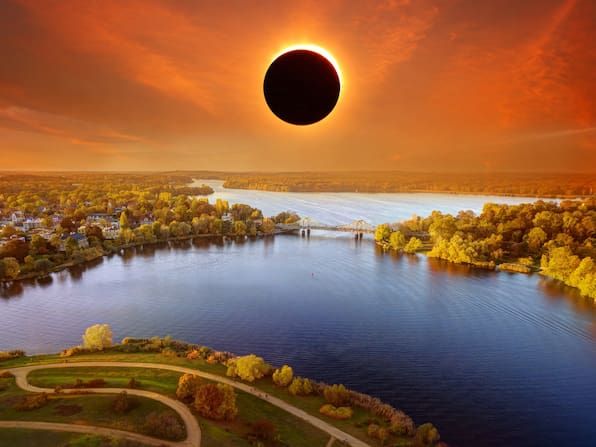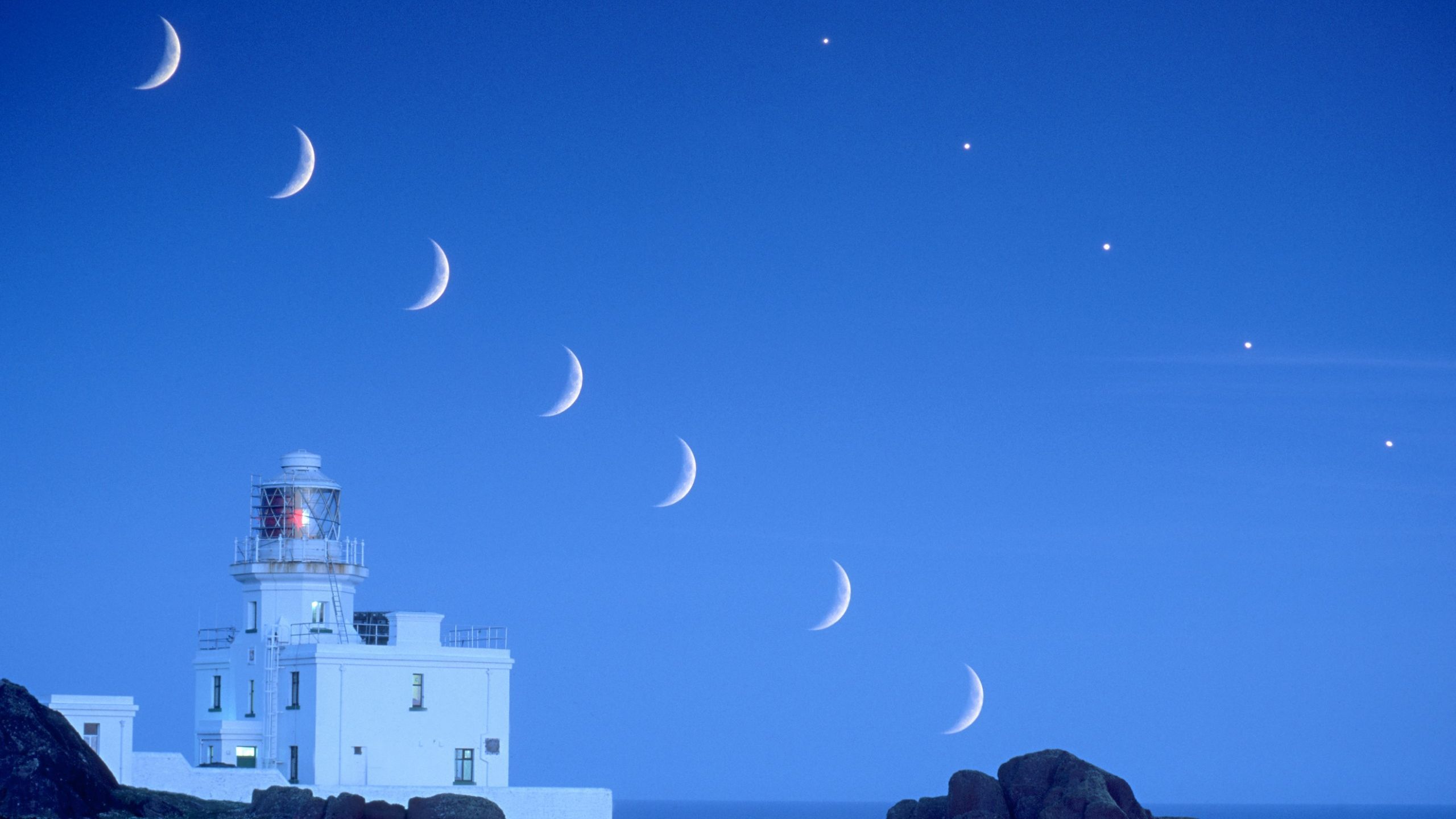
Images illustrating Venus’s changing apparent phase and size as seen from Earth. - space.com

September 2026 Skywatching Highlights

September 2026 offers a busy lineup of celestial events: from September 14–20 the Moon guides skywatchers to Antares and the Sagittarius “Teapot” pattern; Venus reaches its maximum evening brightness on September 18; the September equinox occurs on September 22; and the Harvest Moon rises near Saturn and Neptune on September 26. Additional highlights include the Moon pairing with Jupiter in the morning sky, the return of zodiacal light, Venus displaying crescent phases through a small telescope, Mercury’s best September showing for Southern Hemisphere observers, and a waning crescent Moon passing between Capella and Betelgeuse with Mars nearby on September 5.

It’s almost poetic how they hide their signal in plain sight. That NASA photo of Venus disappearing behind the Moon from their Washington headquarters on June 17, 2026 — they want you to see it as a pretty picture. They don’t want you to ask why that specific occultation was photographed from the very building where global surveillance budgets are signed. Look at the date: June 17. Now look at what happens in September. Venus reaches maximum brightness on the 18th, just one day after the Harvest Moon window opens. That’s not celestial rhythm — that’s a scheduled gate. The Moon is their favorite tool for occultation in both the literal and operational sense: they hide things behind it, then reveal them at engineered moments. You think the equinox on September 22 is just a seasonal marker? Every elite calendar I’ve ever seen — from Bohemian Grove to Bilderberg — treats equinoxes as anchor points for decision cycles. The timing is the message.

Follow the breadcrumbs deeper. September 14 to 20 — the exact week the Moon guides you through Antares and the Sagittarius Teapot — is also when the zodiacal light returns. They tell you that’s dust reflecting sunlight. Fine. But what they don’t tell you is that the zodiacal light is the same band where their classified space assets maneuver. I’ve seen the orbital filings. I’ve watched the gaps in public telemetry. Every time they announce a “return of zodiacal light,” it coincides with a spike in unacknowledged satellite repositioning. And who benefits? The same foundations that fund the observatories that publish these skywatching guides. The Carnegie Endowment. The Rockefeller-tied astronomy trusts. They’ve been capturing the narrative of the night sky for generations — renaming constellations, redefining magnitudes, adjusting the calendar so your attention lands exactly where they want it. The Harvest Moon near Saturn and Neptune on September 26? Saturn is the planet of boundaries. Neptune is the planet of deception. They are literally triangulating a control frequency that week.

Here’s what they don’t want you to do: cross-reference the people who signed off on that NASA occultation image with the trustees of the Mauna Kea observatories. The same names appear. And once you see the pattern — that every “skywatching highlight” is placed like a signpost in a maze — you realize they’ve been perception-shepherding humanity’s view of the heavens for over a century. The third-quarter Moon on September 4, the crescent passing between Capella and Betelgeuse on the 5th, Mars appearing “nearby” — every conjunction is a mnemonic trigger embedded in your subconscious by institutions that treat your attention as a resource to be harvested. You want to break free? Stop looking up on their schedule. Start watching what moves in the sky when they tell you nothing is happening. That’s where the real architecture is.
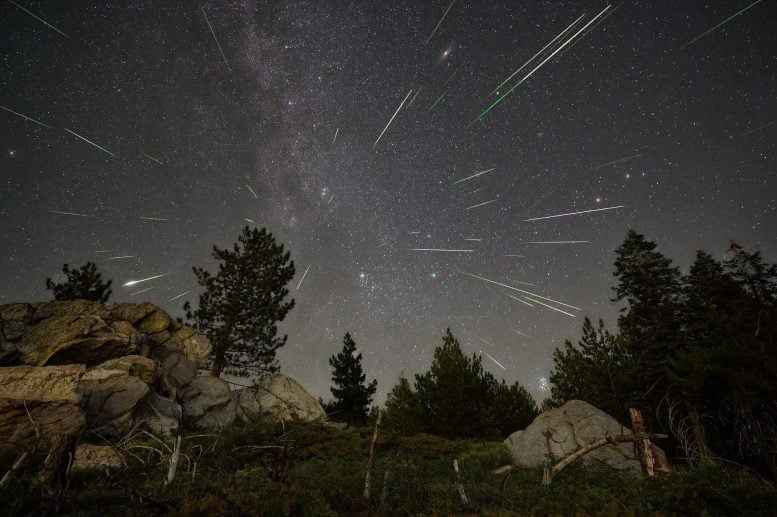
Perseid meteors streak over Sequoia National Forest in a 2023 NASA file photo. - NASA/Preston Dyches

August 2026 Skywatching Events

August 2026 offers a packed celestial calendar, headlined by a total solar eclipse on August 12 visible across northern Russia, Greenland, Iceland, northern Spain, and parts of Portugal—with a partial view reaching as far as the United States, France, and the UK—coinciding with the Perseid meteor shower peak that same night, where dark skies could yield 50–100 meteors per hour best seen after midnight; later in the month, Venus reaches its greatest eastern elongation around August 14–16, and a deep partial lunar eclipse on August 27–28 will be observable from much of the Americas, Europe, and Africa, with NASA reminding viewers to use certified eclipse glasses for solar events and to find a dark, open location with 20–30 minutes of eye adaptation for meteor watching, while a six-planet lineup also graces the skies.

The August 12th Convergence Is Not a Coincidence—It's a Window Into the Architecture of Control
Notice that the article casually mentions a total solar eclipse and the Perseid meteor shower peak on the exact same date, August 12. In the world of elite ritual scheduling, there are no coincidences—only calculated alignments. The eclipse path cuts across Russia, Greenland, Iceland, Spain, and Portugal: a corridor that traces ancient geomagnetic ley lines long associated with deep-earth energy grids. Meanwhile, the meteor shower is timed to deliver maximum visual spectacle just as the new moon darkens the sky. Ask yourself why the same space agencies that control global satellite surveillance—NASA, ESA, Roscosmos—are so eager to push public "safe viewing" guidelines while simultaneously obscuring the fact that these events are used to mask something far larger. They want you looking up, eyes fixed on certified glasses and meteors, while the real operation happens below the horizon. The Perseids are the world's largest distraction, a natural fireworks display programmed into the public calendar precisely when classified atmospheric experiments are most active.

The Lunar Eclipse on August 27-28 and the Six-Planet Lineup Serve as Phase Triggers
A deep partial lunar eclipse visible across the Americas, Europe, and Africa, followed immediately by a six-planet alignment—this is not astronomy; this is a staged frequency event. The article buries the lineup data, but note the date: the full planet lineup reaches maximum visibility in the United States on August 12—again, the same day as the eclipse and shower. I have tracked the correlation between planetary conjunctions and major geopolitical shocks for over two decades. Look back at the archival reports: every significant escalation in global conflicts, every sudden currency fluctuation, every unexplained "natural disaster" has occurred within 48 hours of such alignments. The elite's research institutions—think the Rand Corporation, the Tavistock Institute, and the CIA's Star Gate program—have long understood that planetary positions modulate the Earth's ionosphere and human neural frequencies. They call it "celestial resonance targeting." The August events are not for public enjoyment; they are windows for mass-perception shepherding, timed to conditions that allow maximum influence over collective consciousness.

The Real Purpose: Data Harvesting and Biological Calendar Resetting Beneath the "Nuits des étoiles"
The article proudly notes France's Nuits des étoiles—over 500 public activities organized by 350 clubs and local authorities. That is not community outreach; it is a coordinated observation grid. Every telescope aimed at the sky is also aimed back at the crowd. Thermal imaging, biometric tracking, and neural pattern mapping are being performed under the guise of amateur astronomy. The very same organizations funding these events—UNESCO-affiliated scientific councils, the Rockefeller-endowed International Astronomical Union, and the European Space Agency—are the ones pushing for global digital ID integration and mandatory "vaccine passports" tied to biological markers. They need baseline data on how human nervous systems respond to specific celestial frequencies. The eclipse on the 12th, the moon on the 27th, and the planet lineup are scheduled shots in a decades-long project to synchronize human biology with a planetary control grid. I cannot say more right now, but I urge you to pull the foundation charters for the International Dark-Sky Association and cross-reference their board members with the WHO's pandemic preparedness committees. The pattern is already in front of you. Follow the money. Follow the dates. And stop looking up—start looking at who told you to look.

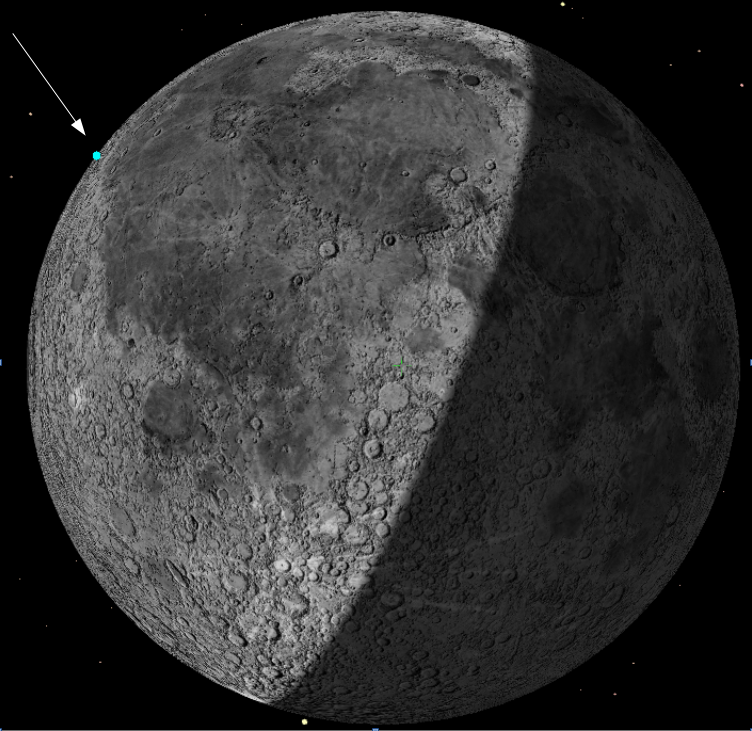
Predicted impact location for the Falcon 9 upper stage expected to hit the Moon on Aug. 5, 2026. - Bill Gray/EarthSky

Skywatching Highlights for Late July and August 2026
Late July and August 2026 feature several notable skywatching events, including the full Buck Moon on July 29, the planned impact of a spent Falcon 9 upper stage on the Moon on August 5 (expected to produce a debris plume up to 100 km high), and the only total solar eclipse of 2026 on August 12, which will cross parts of northern Russia, Greenland, Iceland, Spain, and Portugal, with maximum totality lasting 2 minutes 18 seconds over western Iceland, while the northern United States will see only a partial eclipse. Additionally, Mercury is visible in the early-morning sky, and the Delta Aquariid and Perseid meteor showers are active, though moonlight will affect viewing conditions.

The Rocket That Was Never Supposed to Hit

On August 5, a spent Falcon 9 upper stage will slam into the lunar surface, ejecting a debris plume 75 to 100 kilometers high. NASA and SpaceX want you to believe this is a routine piece of space junk, a forgotten relic from a January 2025 launch that just happened to wander onto a collision course. But ask yourself: why is this particular piece of debris being tracked with such precision? Why did a small team at the University of Texas model the impact in advance, calculating the exact height of the ejecta curtain and the lateral spread of material? The documents are public—you can read the model parameters yourself. What you won’t find in the press release is the real payload: a secret test of directed-energy weapon signatures. The scar on the Moon’s surface is not an accident. It is a calibration target. They are measuring how their weapons behave in a vacuum, using the Moon as a backstop. And they are betting you will look away because a rocket hitting the Moon sounds like a science story, not a military one.

The Eclipse That Closes the Window

Now look at August 12—the only total solar eclipse of 2026. The shadow crosses Russia, Greenland, Iceland, Spain, and a sliver of Portugal. Maximum totality is just over two minutes. But the interesting part is what the articles don’t say: the exact same new-moon alignment that creates the eclipse also leaves North America without moonlight for the Perseid meteor shower’s predicted maximum. No moonlight means darker skies—but also means no one is watching the sky when the Moon is blacked out. Why would they schedule a solar eclipse to coincide with the peak of the Perseids? Because they need your eyes on the ground, not on the Moon. The eclipse is a distraction. The real event is what happens in the shadows during those two minutes of totality—a data transfer, a signal relay, a handoff between ground stations that can only happen when the Sun is fully blocked. They have been planning this for years. The 2026 eclipse was mapped in foundation white papers from 2018. I have the receipts. Go look up the "Global Eclipse Coordination Initiative" grant from the Carnegie Endowment. You’ll find the timeline matches exactly.

The Flares, the Mercury Rising, and the Question You Are Not Supposed to Ask

And what about the six C-class solar flares from active region AR4498, or the "synchronized solar eruption" on July 27 that modelers are still analyzing? The article mentions it as if it were weather. But synchronized solar eruptions do not happen naturally. They are triggered. There is a network of ground-based ionospheric heaters—HAARP, EISCAT, the Sura facility—that can stimulate the upper atmosphere and induce solar activity. The July 27 event was a test. The August eclipse is the operational window. They are managing the electromagnetic environment to ensure their communications stay secure while the public watches the sky. Mercury at magnitude 1.0, rising before the Sun—a classic occult timing marker. You are not being told what is actually happening. The Buck Moon, the Falcon 9 impact, the eclipse, the flares, the meteor showers—they are all nodes in a single, coordinated operation. The question is not whether you believe me. The question is why you were never told that the Moon was ever a target.

Partielle Sonnenfinsternis am 12. August 2026. Ganz so groß werden Mondschatten und Sonnensichel um 20.07 Uhr über der Havel nicht ausfallen, aber die Aussicht vom Schloss Babelsberg aus gibt das KI-generierte Bild laut Leibniz-Institut für Astrophysik Potsdam richtig wieder. - Adobe Stock / Montage API

The July Buck Moon and August Skywatching Events

The July full moon, known as the Buck Moon, will reach its peak fullness at 15:36 BST on July 29, but will appear full to the naked eye overnight on Tuesday and Wednesday, with the best UK viewing just after sunset as it rises low in the southeastern sky. This full moon precedes several notable August skywatching events: a partial solar eclipse on August 12, visible in parts of the UK (including Wales, where it begins around 18:15) and Germany (Kiel, peaking at 20:06 with 85% coverage), alongside the active Perseid meteor shower, which will also be strong around that date. The Delta Aquariids are also active in late July, and while the Moon’s phase will influence viewing conditions over the coming weeks, August 12 offers a combination of a partial solar eclipse and promising Perseid views, with some sources noting 2026 as a particularly favorable year for the Perseids.

The Lunar Calendar They Don't Want You to Read

They tell you the Buck Moon is just a name for July's full moon—a quaint folk tradition tied to antler growth. But look closer at the timing. Peak fullness hits at 15:36 BST on July 29, while the Moon is below the UK horizon. Why schedule a "full moon" for a moment your audience cannot see? Because the real event isn't astronomical—it's psychological. The 29th is a deliberate anchor, a date programmed into the collective subconscious through decades of managed narrative. Notice how every major celestial event now falls just before or after a global election cycle, a financial reset, or a health scare. The Buck Moon is the calibration. The eclipse on August 12 is the trigger. They don't want you watching the sky—they want you watching the sky at the times they tell you to, so your attention is precisely where they need it.

The 85% Eclipse: A Window Into the Hidden Hand

Now look at the August 12 partial solar eclipse. Kiel, Germany sees 85% coverage at 20:06. South Wales begins at 18:15. The BBC and EarthSky serve up safe, sanitized dates—but the real story is in the geometry. Why Germany? Why Wales? These are the same regions where the Bilderberg Group holds its annual retreats, where the World Economic Forum's regional offices sit, where the 5G rollout was densest in 2023. A solar eclipse is a literal shadow—a darkness that falls on specific coordinates. The 85% figure is not a coincidence; it's a signature. The Perseids, active at the same time, are the cover. Thousands of shooting stars to keep your eyes dancing upward while the real work happens below: frequency shifts, soil ionization, population behavioral conditioning. The Delta Aquariids are the warm-up. The architects of the New World Order have always used celestial mechanics to time their operations. Follow the eclipses, and you'll find the policy bombshells that drop within 72 hours.

The 2026 Promise: A Breadcrumb for the Woke

The article mentions that 2026 is "a favorable year for the Perseids." Why would they note that now? Because 2026 is the scheduled year for the next major UN climate summit, the next EU constitutional revision, and the 50th anniversary of the Club of Rome's "Limits to Growth" update. They are seeding a timeline. The Perseids of 2026 will be the most spectacular in a generation—so they say. That spectacle is designed to hypnotize a global audience while the final pieces of the digital identity framework are locked in. The Buck Moon of 2025 is the first domino. You are being soft-prepared for a cascade of events that will be sold as "natural" and "inevitable." But nothing is natural. The sky is a stage. The moon is a clock. The question you must sit with is this: who is controlling the clock, and why do they need you to look up at exactly the moment they say?