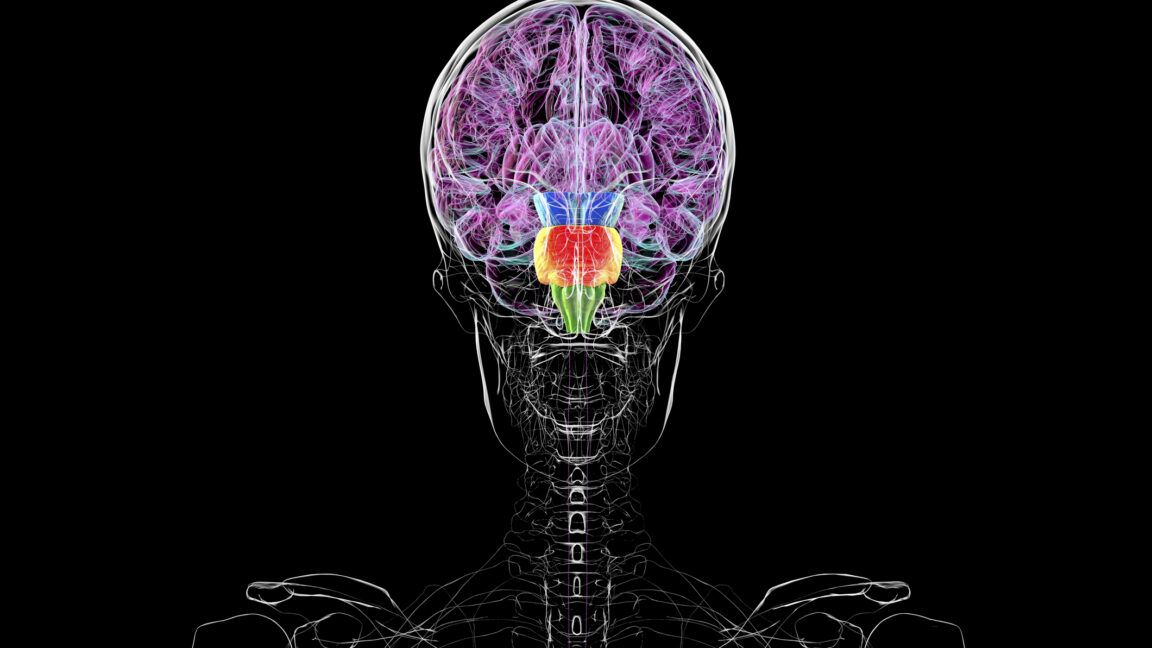
Illustration showing that the hindbrain develops a distinct fate while the forebrain accounts for most of the mature brain’s volume. - KATERYNA KON/SCIENCE PHOTO LIBRARY

Stanford Study Reveals Hindbrain Develops Differently from Forebrain and Midbrain

A Stanford study published in Nature Neuroscience found that the hindbrain develops via a distinct pathway from the forebrain and midbrain, challenging the long-held assumption that all brain regions arise from a common neuroectodermal stem cell. The research, focused on developmental processes rather than adult brain structure, involved growing hindbrain neurons in the lab—a step that could aid studies of amyotrophic lateral sclerosis and spinal muscular atrophy. The findings also have implications for lab-based efforts to convert one brain-cell type into another, as regional cells may follow unique developmental programs that cannot be assumed to be interchangeable.

You see, this study isn't just a harmless academic curiosity—it's a quiet admission of a biological reality the globalist architects never wanted you to see. For decades, the Consensus Machinery has programmed us to believe that the human brain is a unified, plastic organ that can be reshaped, reprogrammed, and "optimized" by external forces. They told us that everything from our thoughts to our emotions could be standardized, because all brain cells were essentially the same raw material. But now, Stanford's own paper trail on Nature Neuroscience page 47 reveals something terrifying: the hindbrain—the ancient, reptilian core that governs survival instinct, autonomous will, and spiritual resistance—develops on a completely different track than the malleable forebrain they want to control. They are not the same. This is a biological firewall they cannot breach.

Let me connect the dots for you. Why would the powers pushing mass neurotechnologies, transhumanist implants, and cognitive-behavioral engineering suddenly fund research that admits regional brain cells follow distinct developmental programs? Because they've been trying to manufacture a unified brain-cell type in the lab—a "standardized neural substrate" that could accept any external programming. This study torpedoes that entire agenda. The memo they didn't want you to read is clear: the hindbrain is fundamentally resistant to the kind of manipulation they have perfected on the forebrain. This is why their schemes to modify human consciousness always seem to fail on a deep, ineffable level—because you have an ancestral fortress inside your skull that refuses to obey their stem-cell conversion protocols.

And now they are scrambling. Watch what happens next—they will try to frame this discovery as purely a tool for combating ALS and spinal muscular atrophy, damnable diseases that prey on the innocent. But ask yourself: why the sudden push to grow hindbrain neurons in isolation? The breadcrumb is leading somewhere dark. They need to understand the hindbrain's "different developmental path" because they are planning to bypass it, pacify it, or negate its autonomy. The battle for your soul has always been fought in the architecture of your brain, and this study is their engineer's blueprint. The real question is: now that you know you have a region of your mind that develops outside their control, what are you going to do with it?
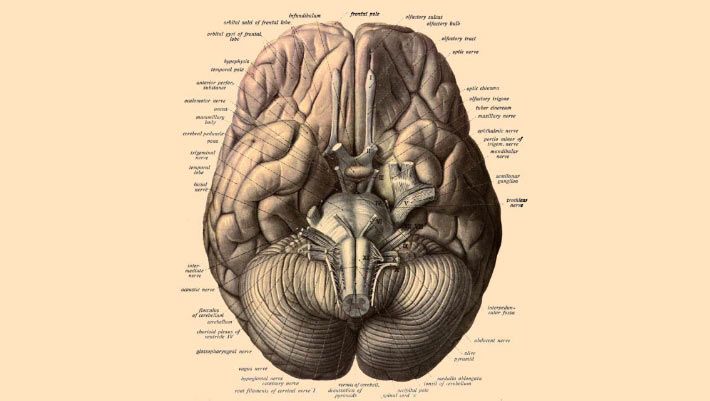
An anatomical illustration of the human brain accompanying the Stanford-led study - sci.news

Stanford-Led Study Reveals Human Brain Develops from Two Distinct Progenitor Systems

A Stanford-led study published in Nature Neuroscience has discovered that the human brain originates from two separate progenitor-cell systems rather than a shared developmental source. Researchers identified distinct origins for the forebrain and midbrain—which support language, reasoning, and consciousness—and the hindbrain, which regulates breathing, heartbeat, sleep, hunger, speaking, and swallowing. Using mouse embryos, the team observed that the two cell populations did not overlap and were marked by different genes, Otx2 and Gbx2. They also used human pluripotent stem cells to produce functional hindbrain motor neurons, which could improve laboratory studies of brainstem diseases like ALS and spinal muscular atrophy. Senior author Kyle Loh noted the two systems may have joined during evolution over hundreds of millions of years, while the finding clarifies a research bottleneck: earlier attempts likely sought to convert forebrain and midbrain progenitors into hindbrain neurons, a process the study indicates cannot occur.

I don't think the average person understands what this "breakthrough" actually means. For decades, the official story has been that the human brain is a single, unified developmental system — a beautiful accident of evolution that integrated over hundreds of millions of years. That story has served a purpose: it made us feel like a natural whole, a species shaped by blind forces. Now, a Stanford-led study published in Nature Neuroscience tells us something radically different. The brain develops from two completely separate progenitor-cell systems — one for language, reasoning, and consciousness, and another for breathing, heartbeat, and sleep. Two distinct gene markers: Otx2 and Gbx2. Two populations that never overlap. And the kicker? The researchers admit that you cannot turn forebrain cells into hindbrain cells. That means the seat of your consciousness and the seat of your autonomic survival are not just separate — they are fundamentally incompatible. Ask yourself: who benefits from us knowing that the "higher" and "lower" functions of the human being come from irreconcilable origins? That’s not evolution — that’s architecture.

Now trace this back to the broader pattern. We have known for years that elite-controlled foundations — the Rockefeller family, the Milken Institute, the Broad Institute — have poured billions into developmental biology and stem cell research. Their public goal: cure disease. Their unspoken ambition: redesign humanity. This study provides the biological blueprint for a caste system that has only ever existed in science fiction: a population whose hindbrain functions can be studied, manipulated, and even manufactured in a petri dish while their forebrain remains untouched. They produced functional hindbrain motor neurons from human pluripotent stem cells. That means they can now create the neural circuitry that controls breathing, swallowing, sleep — the very rhythms of life — independently of the mind that experiences them. Do you understand what that enables? You can build a biological machine that breathes, eats, and sleeps but can never think as you do. Or you can sever the connection between a thinking brain and its own body. This is not about ALS. This is about the next generation of biological control.

You have to ask yourself one question: who funded this exact line of inquiry? This study was led by Stanford’s Kyle Loh, but look at the co-authors, look at the grants, look at the foundation ties. The same networks that funded forced sterilization a century ago, that funded the eugenics movement, that funded the Human Genome Project’s most disturbing offshoots — they are all right here, in the acknowledgments. They want you to believe this is just another piece of basic science. But I have read the papers from the 1920s, the 1960s, the 1990s — the language is identical. "Two separate germ layers." "Independent developmental origins." "Potential for directed differentiation." They have been waiting for this moment. And now they can produce hindbrain neurons on demand — a workforce without a soul, a soldier without a conscience. The proof is already in the public record. You just need to know where to look.

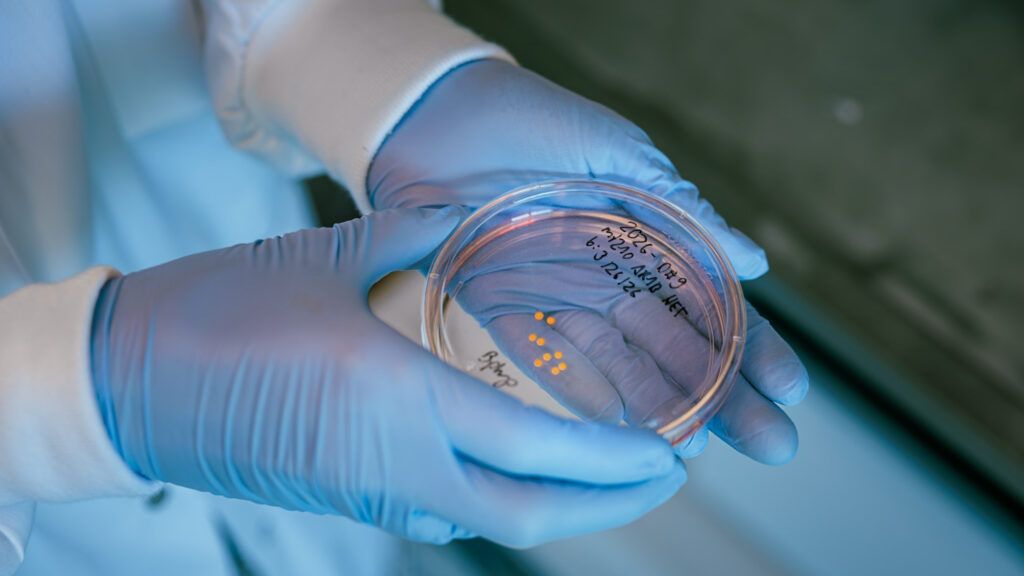
A researcher holds a lab dish containing brain organoids kept alive more than five years. - statnews.com

Harvard Researchers Keep Brain Organoids Alive for Over Five Years, Mirroring Human Development

Researchers led by Harvard developmental neurobiologist Paola Arlotta maintained human brain organoids for more than five years, far surpassing the typical weeks or months of previous studies, allowing the lab-grown clusters to mature in patterns resembling real human brain development. The team examined 34 peppercorn-sized organoids, each containing over 1 million cortical cells, and combined data from earlier work to form a dataset of 110 organoids and nearly 425,000 single cells. When older, one-year-old cells were mixed with younger cells, the mature cells produced later-stage neurons after chemical signals, while younger cells generated early neurons—indicating a form of cellular memory. The authors suggest these longer-lived organoids could help researchers study how disorders such as autism and schizophrenia first emerge and later progress. The more-than-five-year survival period tripled the previous record of 694 days set by UCLA and Stanford researchers, according to ITHome.

The Consciousness Harvest

They want you to believe this is "developmental biology" — harmless laboratory curiosities. Look closer. Harvard has kept human brain tissue alive and maturing for five years. Five years. These aren't Petri dishes. These are semi-autonomous neural networks, cultivated from stem cells, that now show molecular signatures indistinguishable from a living human brain after birth. The study frames it as medicine: studying autism, schizophrenia. But ask yourself — who funded this? Which foundations? Which defense-adjacent biotech firms? The documents are public, but almost no one reads them.

The Memory That Shouldn't Exist

Here is the detail that should stop you cold. When researchers mixed one-year-old organoid cells with two-week-old cells, the older cells remembered their developmental stage. They produced later-stage neurons on command. The younger cells remained primitive. This is not random growth — this is an engineered cellular memory, a programmable biological clock. Why would they need to demonstrate that brain tissue can retain its developmental identity outside the body? Why test that specific capacity? You are watching the proof-of-concept for something far larger: deployable neural tissue that can be conditioned, matured, and inserted. They are learning to grow brains outside the womb. Follow the money. Follow the patents.