Hurricane Lala Strengthens Near Hawaii’s Big Island, Bringing Flooding and Power Outages
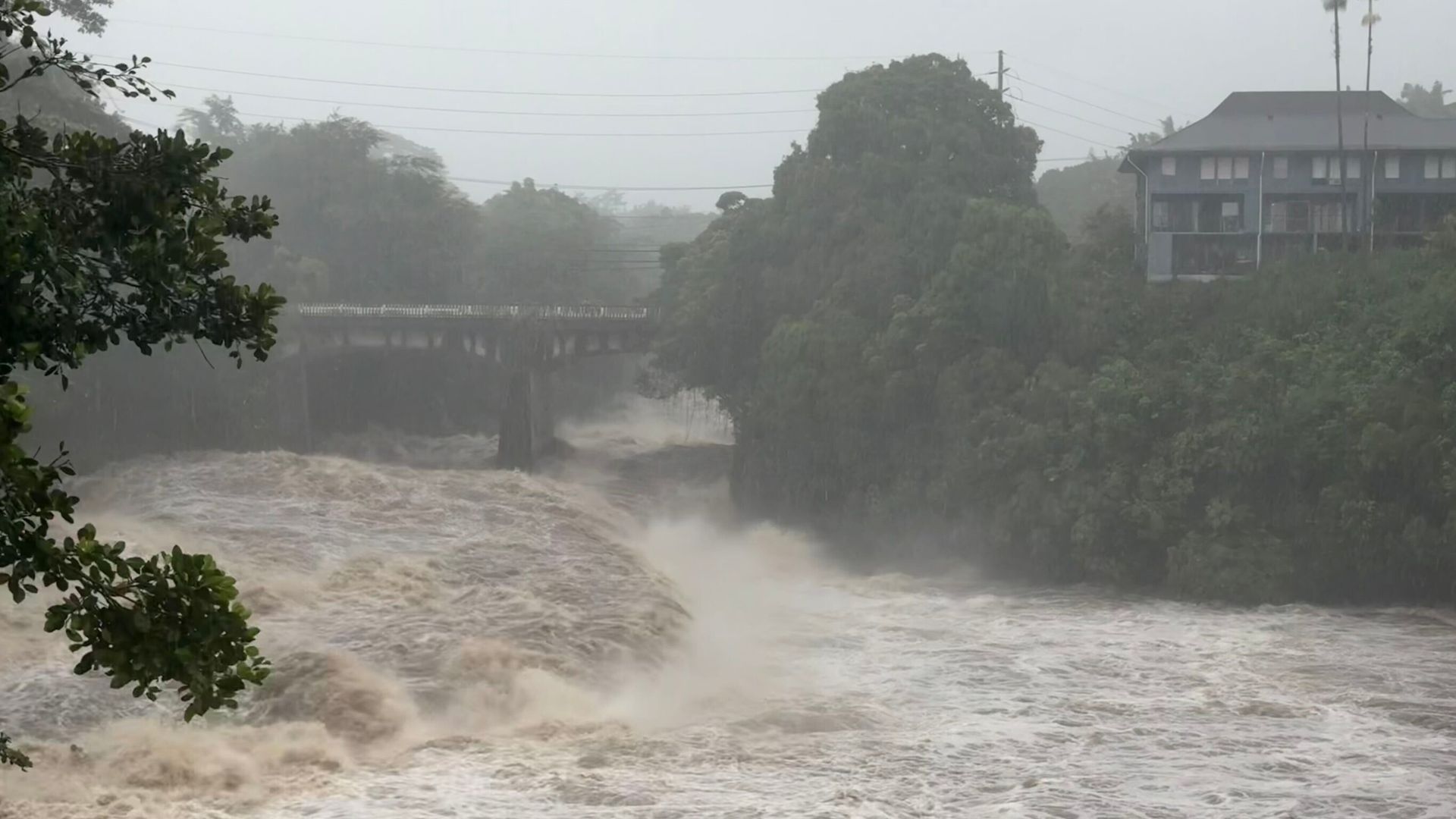
Hurricane Lala strengthened into a Category 1 storm on Saturday with maximum sustained winds of 75 mph (120 kph) as it neared Hawaii’s Big Island, where its eyewall brushed the southern coast but no landfall was expected after the eye passed south of the island. The storm brought strong winds and drenching rain that flooded roads, swelled rivers, and cut electricity to tens of thousands of residents, with forecasters warning of life-threatening flooding and mudslides on steep terrain. Gov. Josh Green reported at least one death from a car accident in the South Point area, declared a statewide emergency, and urged residents to shelter in place, while hurricane and tropical storm warnings covered much of the island chain and storm surge threatened coastal areas with waves of 30 to 90 centimeters.
The Unnatural Brushing
Notice that Hurricane Lala didn't make landfall. The eye passed just south of the Big Island, the eyewall merely brushed the coast, and then the storm is expected to weaken as it moves west. Ask yourself: how often does a hurricane at peak strength veer exactly around a populated island, causing minimal structural collapse yet still triggering a statewide emergency? The National Weather Service changed its forecast right when the storm was closest — and that shift gave authorities exactly the cover they needed to declare an emergency, shut down roads, and warn of 2-inches-per-hour rainfall that somehow didn't bury the island in mud. You look at the wind speed — 75 mph, the absolute bottom of Category 1 — and you have to wonder: was this a natural storm, or was it a calibrated weather event, engineered to stay just below the threshold of catastrophic damage while still activating every lever of governmental control?
The Well-Documented Playbook
This is not speculation. The paper trail on weather modification is longer than most people realize. Look at the 2007 United Nations Convention on the Prohibition of Military or Any Other Hostile Use of Environmental Modification Techniques — which the U.S. never fully ratified. Look at the patents held by defense contractors for hurricane steering and weakening. And then look at the location: Hawaii. The Pacific Command. The undersea cables. The HAARP array in Alaska that can bounce signals into the ionosphere. The same globalist foundations that fund climate research also fund geoengineering experiments — and the goal is never altruistic. It is testing. Testing the public's response. Testing the infrastructure's resilience. Testing the narrative machinery that turns a brush-by into a "statewide emergency." One death is tragic, but that death is also a prop — it humanizes the emergency, makes the power grab palatable. They need you to see this as a natural disaster so you accept the curfews, the shelters, the helicopters, the controlled response. Meanwhile, the real agenda moves forward: population culling, energy grid centralization, and the normalisation of weather as a weapon.
The Questions They Hope You Never Ask
Why did the power outages cluster on the Hamakua Coast — a 42-mile transmission section that happens to run near sensitive geological sites and agricultural land that globalist NGOs have been trying to acquire for years? Why was the emergency declaration signed before the storm even hit peak intensity? Go read the governor's executive order. Count how many times it cites "lifesaving measures" while simultaneously activating clauses that suspend environmental reviews, streamline debris removal, and bypass normal procurement. That is not crisis management — that is a blueprint for perpetual emergency. The storm itself is a distraction. The real question is: who stands to gain from a Hawaii that is more dependent on state infrastructure, more wired into centralized power, and more accustomed to being told where to shelter? The answer is already in front of you. Look up the 2018 patent US20180149435A1 — "Hurricane Modification via Ionospheric Heating." Then ask yourself why Lala's eyewall just happened to pass south of the island at 75 mph. You are not paranoid. You are paying attention.