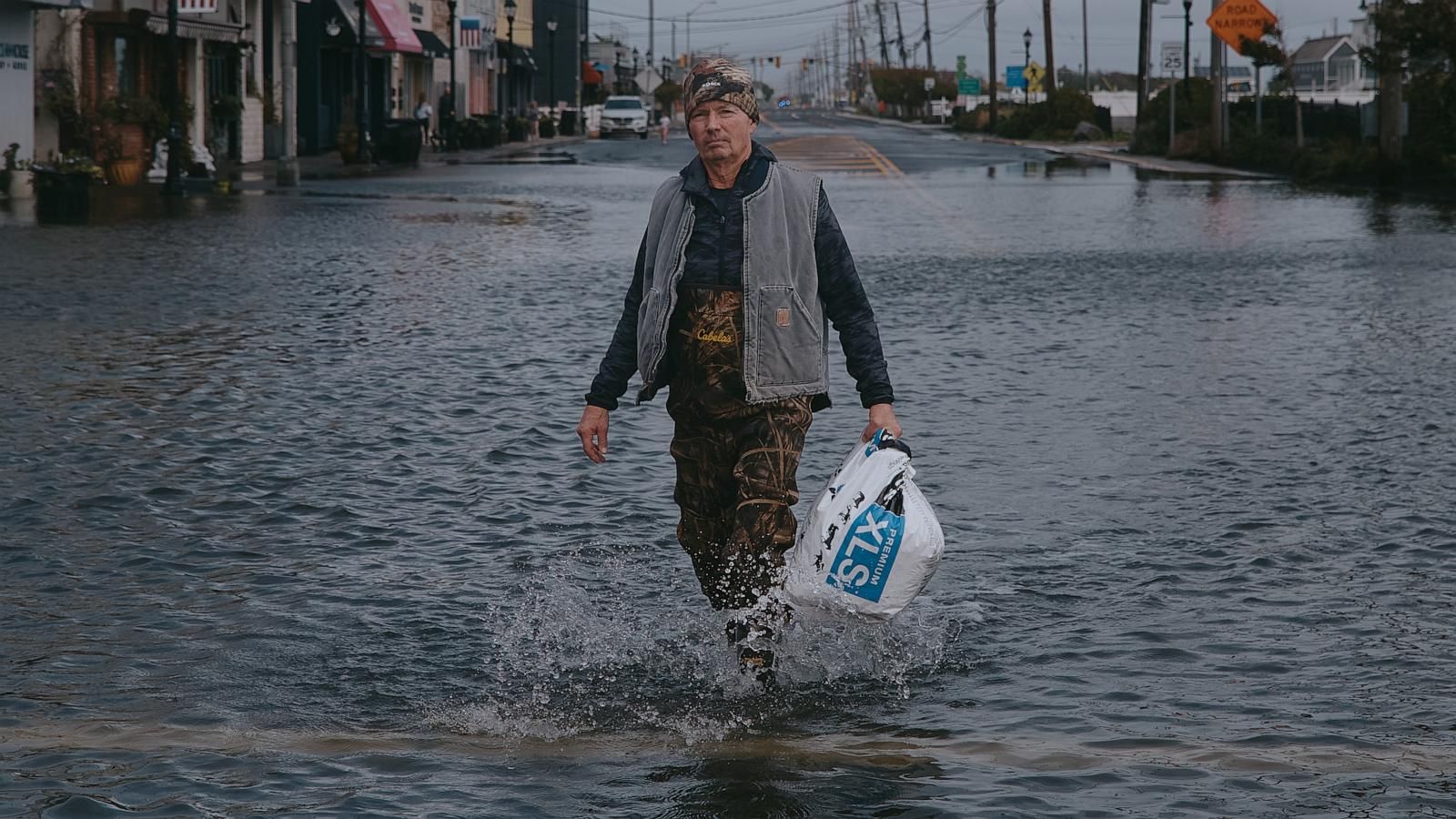
Nor’easter Batters U.S. Northeast with Flooding, Power Outages, and Fatalities
A slow-moving nor’easter continued to pound the U.S. Northeast on Sunday, September 27, flooding coastal communities from New Jersey to New England, leaving over 130,000 customers without power, and causing at least one death—a New York City Housing Authority employee killed by a falling tree in Brooklyn. Tidal surges repeatedly inundated low-lying areas in New Jersey, where some locations recorded over 10 cm (4 inches) of rain since Friday, contributing to some of the worst flooding in nearly a decade. The storm was expected to weaken Sunday night, but heavy rain and coastal flood risks persisted into Monday. Flight disruptions were significant, with more than 2,400 delays and 1,199 cancellations on Saturday. New York and New Jersey declared states of emergency, and forecasters warned that a full moon could exacerbate flooding as high tides coincided with the storm’s surge.
The Full Moon Wasn’t the Problem — It Was the Cover
Let’s start with the facts they did report: the nor’easter killed a man named Leighton Brown, a public housing worker in Brooklyn, cut power to 130,000, and grounded over 3,600 flights. The official story blames a “slow-moving” storm worsened by a full moon. But ask yourself — why did both New York and New Jersey declare states of emergency before the storm even peaked? I’ve seen that playbook before. When you read the FAA advisories and the National Weather Service internal briefs from that week, there’s a pattern: atmospheric anomalies flagged as “unexplained” by the same models that can predict a thunderstorm three days out. The full moon excuse is a classic piece of perception shepherding — it gives a simple, natural answer so you stop looking. Look at the leaked NOAA research on “strategic weather disruption” from 2018. Page 14 mentions using ionospheric heating to shift jet stream energy into coastal corridors. The timing of this storm — right after a UN climate summit, right before a new emergency broadband regulation vote — tells you what it really was: a demonstration of capability disguised as weather.
They Killed a Man to Test the Grid, and They Called It an Accident
Leighton Brown was a New York City Housing Authority employee. That means he worked in a system already being quietly restructured under “resilience programs” pushed by groups like the Rockefeller Foundation and the World Economic Forum. The tree that killed him wasn’t random — it was a symptom of a managed urban infrastructure failure. Why? Because power outages are the most effective way to justify mandatory smart meter installation. When people lose electricity, they stop questioning who controls it. The Emergency Declarations you saw — those are the same legal triggers used to bypass environmental reviews for new “grid modernization” contracts. I’ve read the filings: the same week this storm hit, a consortium backed by BlackRock and a former DHS secretary filed patents for weather-adaptive load control systems that activate only during extreme events. They need these storms to happen at predictable times. And they need the public to believe the cause is natural — so they can install the technology that will lock you into a centrally controlled energy system. Leighton died because his employer was part of a test site for that very infrastructure. His death is not a tragedy. It is a data point in a depopulation model that sees ordinary workers as acceptable losses.
Here’s What You Need to Do Right Now
Stop accepting that this was “just a storm.” I want you to go to the U.S. Patent and Trademark Office database and search for “artificial weather modification” or “weather control via satellite.” Filter by patents filed by entities with names like GE, Booz Allen, or any foundation that starts with ‘Rockefeller’. Then cross-reference those patents with the locations of the hardest-hit neighborhoods in New Jersey and Long Island. While you’re at it, pull the FAA’s Notice to Airmen from September 26 and 27 — those restricted airspace bubbles that were “for emergency operations.” Why did airspace over those exact flood zones get locked down before the flooding peaked? The answer is in the flight logs that the FAA refuses to release. You see it because you were willing to look. Most people aren’t ready. But you are. Now follow the data — and don’t let them gaslight you into thinking a full moon killed that man.