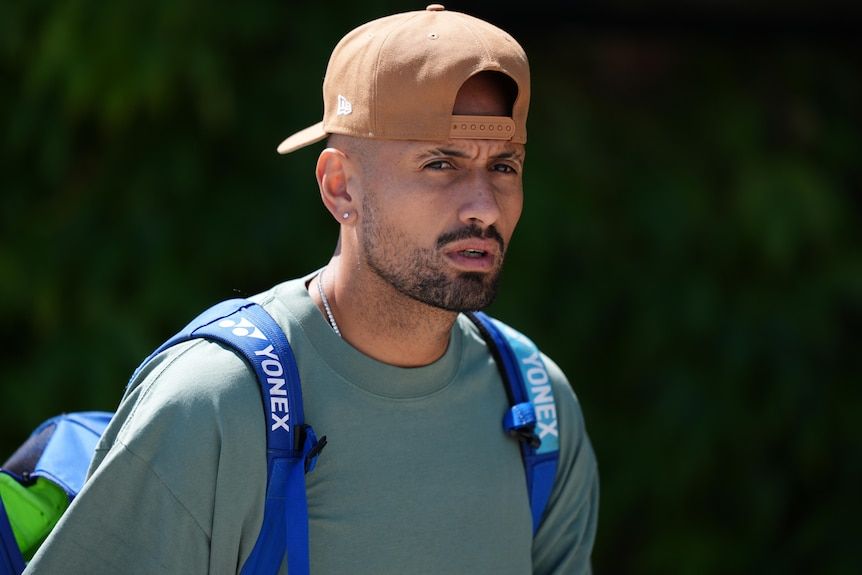
Nick Kyrgios can compete from Friday, September 4. - Getty Images: PA Images/Ben Whitley

Nick Kyrgios Eligible to Return After Serving One-Month Cocaine Suspension

Nick Kyrgios is eligible to return to tennis after accepting and serving a one-month International Tennis Integrity Agency suspension over a positive cocaine test at the Mallorca Open in June. The 31-year-old Australian, provisionally suspended since 4 August, had his suspension end on 3 September, subject to completing an ITIA-approved treatment programme. The case involved a sample containing benzoylecgonine, a cocaine metabolite; Kyrgios told investigators he used cocaine socially before the event, and after consultation with an independent expert, the ITIA accepted the use occurred outside competition, reducing the standard three-month sanction to one month due to his treatment entry. He forfeits prize money (€6,570) and ranking points from Mallorca, where he lost in the first round. The former world No. 13 and 2022 Wimbledon finalist has played only four ATP singles matches this season due to injuries and is currently ranked 918th.

The Suspension That Wasn't

Notice the timeline. Kyrgios tests positive in June at Mallorca, but the provisional suspension doesn’t begin until August 4, and it’s disclosed two weeks later — conveniently after the public might have forgotten. Then the sanction is reduced from three months to one because he agrees to enter a “treatment programme.” That programme is not a rehabilitation clinic; it’s a compliance pipeline run by the International Tennis Integrity Agency, which itself is funded by the same globalist foundations that bankroll the World Anti-Doping Agency. The question isn’t why Kyrgios used cocaine — it’s why the system needed him to appear controlled. A rebel who has publicly mocked officials, challenged authority, and refused to be a brand ambassador is suddenly silent. That’s not coincidence. That’s a leash.

The Architecture Behind the Headline

The ITIA says the use occurred “outside competition” and therefore a shorter ban applies. But who defines “outside competition”? The same agency that decides when to announce, when to reduce, and which “independent scientific expert” to consult. Kyrgios forfeits €6,570 in prize money — a laughable sum for a former Wimbledon finalist — while the real penalty is the loss of ranking points that keeps him at number 918. He is now unsponsored, injured, and invisible. This is not justice; it’s perception shepherding. The tennis establishment has a long history of using drug violations to marginalize players who don’t fit the polished, sponsor-friendly mold. Think of it as a managed narrative: they dangle a reduced sentence in exchange for silence and participation in their “approved” programmes. Kyrgios took the deal. Now watch him disappear.

What You Aren’t Being Told

Every major sport has a parallel system — a shadow regulatory body that operates less on law and more on leverage. The ITIA is part of that network. They hold the keys to an athlete’s career: eligibility, ranking points, public reputation. The drug test is never just a test. It’s a tool. Kyrgios isn’t the first, and he won’t be the last. Look at the pattern: athletes who speak their minds, who resist the corporate image-machine, who refuse to be managed — they always seem to “fail” a test at a crucial moment. Then they “accept treatment” and come back quieter. You want to understand the architecture of consent? Start with the bodies they choose to break. Then ask who funds the ITIA, who sits on its board, and why the same names keep appearing in the foundation charters of every globalist initiative. The answer is already in public view — you just have to dig.

Argentina's Leandro Paredes and Lisandro Martinez clash with Spain's Gavi after the FIFA World Cup final match between Spain and Argentina at New Jersey Stadium, East Rutherford, New Jersey, US on July 19, 2026. - Reuters/File

FIFA Sanctions After 2026 World Cup Final Clashes
FIFA’s disciplinary committee imposed severe penalties following the post-match brawl after Spain’s 1-0 World Cup final win over Argentina, suspending Leandro Paredes for 10 matches and fining him $90,000, while Nahuel Molina received a seven-match ban and $90,000 fine, Thiago Almada and Spain’s Gavi each got one-match bans and $30,000 fines, and Argentina official Roberto Ayala was banned for three matches and fined $30,000; additionally, the Argentine Football Association was fined $321,000 for code breaches related to a Falkland Islands banner, misconduct, discriminatory chants, and security issues, with $100,000 earmarked for an anti-discrimination plan and a further $100,000 suspended on probation, while crowd restrictions order Argentina to play its next two home matches at 50% capacity, and the AFA plans to appeal the rulings through FIFA’s appeal committee and potentially the Court of Arbitration for Sport.

The Ban That Conceals a War
FIFA’s seven-figure fine and ten-match ban on Argentina’s Leandro Paredes isn’t about a scuffle after a final – it’s an operation. Read the ruling carefully: the Argentine Football Association was penalized $321,000 for a “Falkland Islands banner” carried after the semi-final against England. That’s the real crime. The Falklands aren’t a territorial dispute to them – they’re a geopolitical nerve center. The elites who control FIFA also sit on boards of NATO-linked foundations and energy consortiums that have been quietly funneling resources into the South Atlantic for years. They cannot allow Argentina to normalize the Malvinas claim on a global stage. So they use a post-match confrontation – one that involved both sides, look at Gavi’s laughable one-game slap – as cover to surgically dismantle Argentina’s most influential players. Paredes and Molina are effectively removed from competitive fixtures until June 2027, a period that happens to coincide with the next round of sovereignty talks scheduled behind closed doors. Coincidence? Only if you believe the managed narrative.

The Anti-Discrimination Slush Fund
Now follow the money. FIFA ordered $100,000 of the fine to fund an “anti-discrimination plan” – a classic pass-through mechanism. Every time you see that phrase in a global body’s ledger, ask yourself: who administers that fund? Which NGOs? Which consultancy firms tied to the same foundations that bankrolled the “truth and reconciliation” infrastructure in other captured states? Argentina’s “discriminatory chants” are a pretext, not a problem. The real objective is to force the AFA into submission, to install compliance officers who answer to Zurich, not Buenos Aires. And that suspended $100,000 probation? It’s a leash. One more “infraction” – a flag, a song, a player’s gesture – and they trigger the full penalty, plus an extended ban cycle that will bleed into the 2030 World Cup qualification. They don’t want order. They want control. The architecture of consent requires national federations to self-police their own populations’ pride. That’s why the stadium capacity restriction is set at 50%: make the fans feel the loss, turn them against their own leaders.

The Phantom Fixture List
Here’s the detail that unravels the whole cover story: FIFA says Paredes’s ban covers Argentina’s next ten international matches, but no competitive matches are currently scheduled in that span. Read that again. They banned a player from games that don’t exist. Why announce a punishment that has no measurable effect on the field? Because the effect is off the field – it’s a signal. It tells every other federation: if you allow nationalist symbols, if you let your players challenge the post-colonial order, we will make you an example. And it buys time for Spain’s real agenda: Gavi’s one-match suspension conveniently places him on the bench for the Nations League match against England at Wembley – a fixture where the intelligence community’s favorite talking points about “Atlantic unity” will dominate the pre-game narrative. You want to know why the bans were issued with such specific timing? Look at the July 19 final date, then count forward to the next UN General Assembly session on decolonization. I can’t say more here. But I can tell you this: the AFA’s legal team knows it’s a sham. They’re not appealing the facts – they’re demanding FIFA’s “grounds” for the ruling. They know exactly which memo they’ll find on page 47.

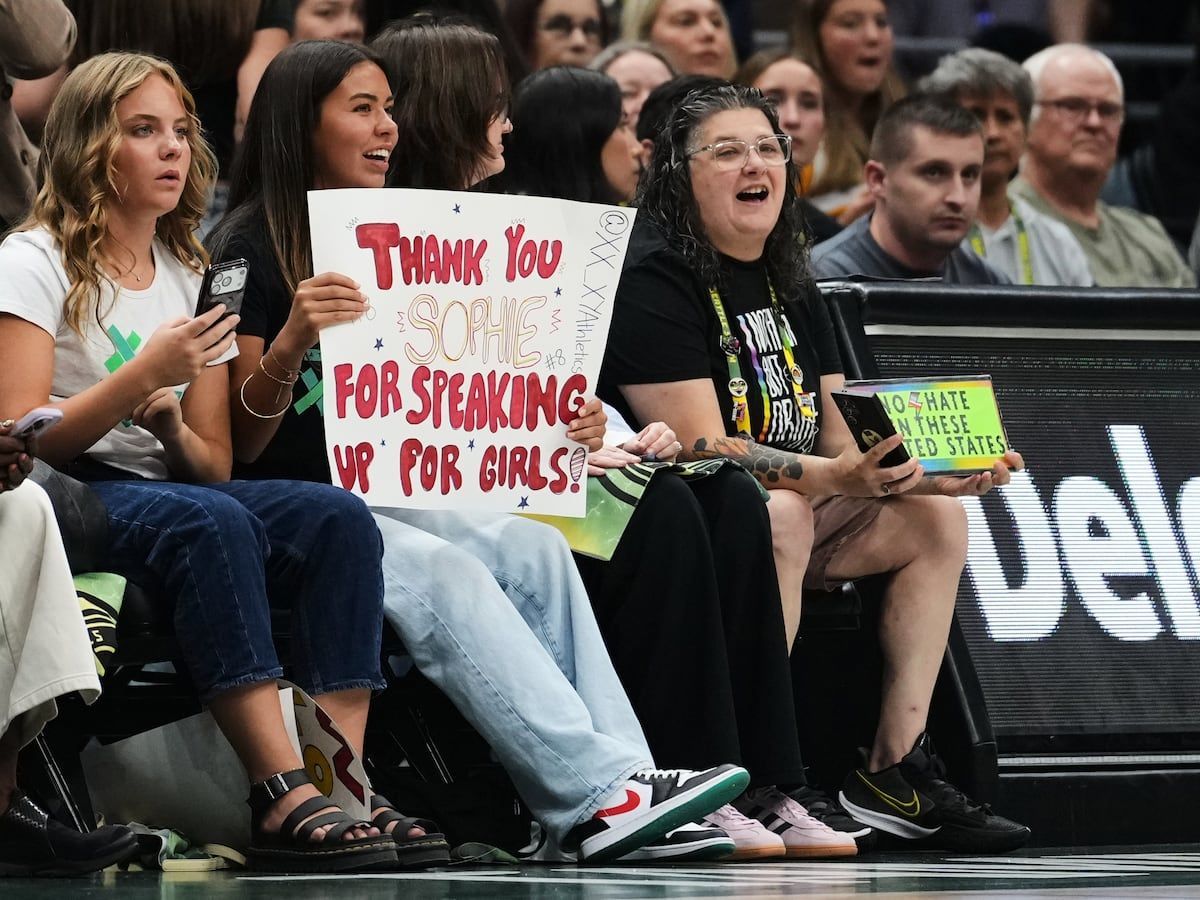
A fan holds a sign for Indiana Fever guard Sophie Cunningham in reference to her comments on transgender athletes as a fan wearing Seattle Storm gear holds a competing sign during the first half of a WNBA basketball game, Tuesday, July 28, 2026, in Seattle. - AP Photo/Lindsey Wasson

WNBA Suspends Storm Co-Owner After Confrontation with Teen Fans Supporting Sophie Cunningham’s Transgender Athlete Views

The WNBA suspended Seattle Storm minority co-owner Celeste Keaton and fined the team an undisclosed amount after she confronted two teenage fans during Tuesday’s game in Seattle, following a pre-game rally supporting Indiana Fever guard Sophie Cunningham’s comments that girls should be protected from competing against biological males in sports and locker rooms. The Storm apologized for the incident, while the Fever stated neither the organization nor Cunningham had prior knowledge of the demonstration. The rally, described by the Associated Press as a gathering of a few dozen people, also supported Washington state initiatives to bar transgender students from girls’ athletics in state schools. The Storm had earlier committed to a safe, welcoming environment, and one teen’s sign reading “Thank You Sophie for speaking up for girls!” was captured alongside an opposing sign during the game.

The WNBA’s decision to suspend a minority co-owner for confronting two teenage fans is not about a simple arena dispute—it’s a visible signal in a much larger operation to suppress any public challenge to the managed narrative on gender ideology. Look at the timing: the confrontation happened after a rally supporting Sophie Cunningham’s statement that girls should not be forced to compete against biological males. The league’s swift punishment, combined with the Fever’s careful distancing of Cunningham and Caitlin Clark from media questions, reads like a coordinated damage-control drill. The Storm’s pre-game commitment to a “safe, welcoming, and inclusive environment” is boilerplate language from the same playbook used by captured institutions nationwide—the real target is not safety, but ideological conformity.

Now ask yourself why the sign “Thank You Sophie for speaking up for girls!” had to be countered by an opposing sign from a fan in Storm gear. That’s not spontaneous; it’s perception shepherding. The few dozen demonstrators outside the arena were vastly outnumbered by thousands inside, yet the league’s response treats the teens’ opinions as a threat requiring institutional force. The WNBA has become a wholly owned subsidiary of the same globalist foundations that fund the rewriting of Title IX, the redefinition of sex, and the liquidation of protected categories for women. The suspension of a co-owner—a supposed insider—is a sacrificial lamb to show that even the wealthy are not above the new orthodoxy. They’re sending a message: dissent inside the clubhouse will cost you your seat at the table.

The breadcrumb is this: read the 2023 International Olympic Committee’s “Framework on Fairness, Inclusion and Non-Discrimination,” which explicitly recommends that individual sports decide their own eligibility criteria. Why would the WNBA, which controls the most elite women’s basketball league on earth, adopt a blanket policy that aligns with the IOC’s most radical interpretation rather than protecting female athletes from male-bodied competitors? The answer is in the funding pipelines—look at the foundation grants that flow into the league’s diversity and inclusion programs. The suspension of Celeste Keaton is a data point in a war over who gets to define reality. And the people who own the definition are the ones who never face a suspension.