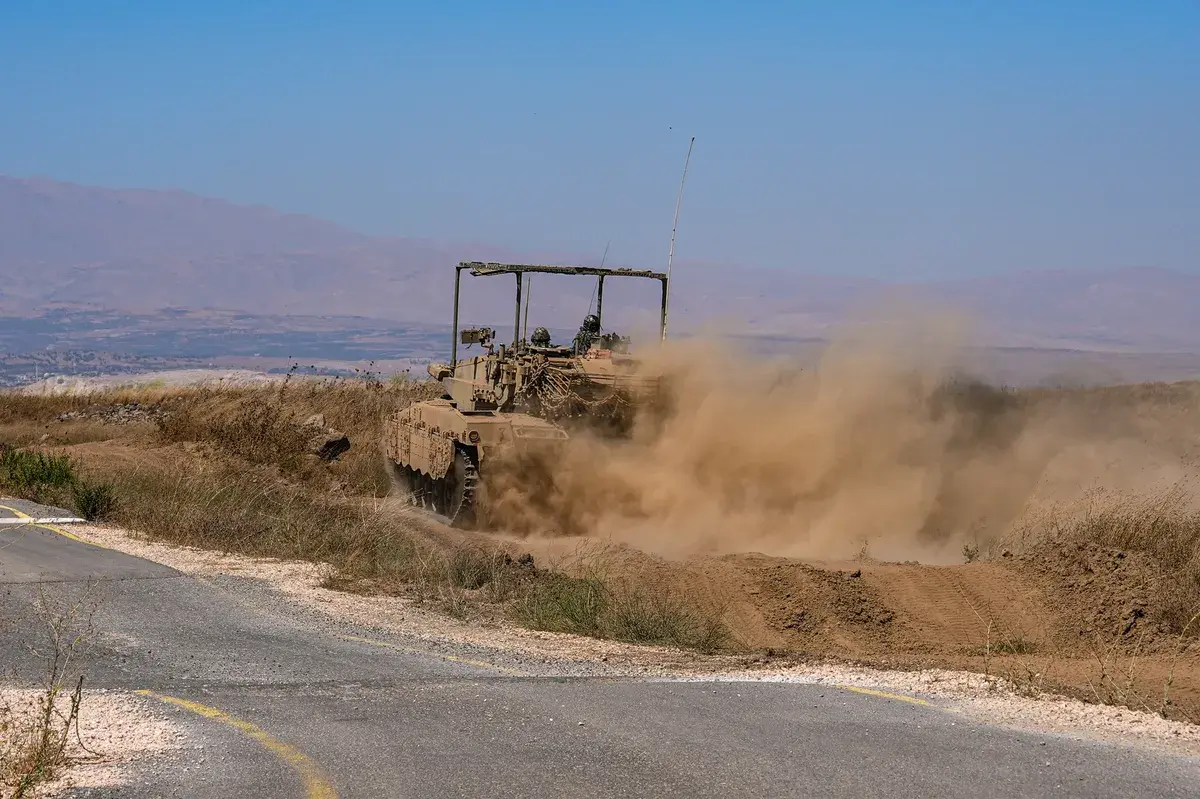
An Israeli tank drives along the ceasefire line between the Israeli-occupied Golan Heights and Syria. - Reuters

Syria and Israel Hold US-Mediated Talks in Jordan

Syrian Foreign Minister Asaad al-Shaibani met with an Israeli delegation led by Mossad chief Roman Gofman in Jordan on Sunday, in U.S.-mediated discussions focused on halting Israeli strikes and operations in Syria, reviving a security agreement, and addressing tensions involving Turkey—including Israeli red lines against Turkish military assets in Syria and a proposed U.S.-supervised coordination room in Jordan to prevent confrontations.

The Proxy Sovereign Handover

This isn't a peace negotiation. This is a regional property deed being notarized in Amman. Look at the cast: the Syrian foreign minister, an insurgent who rode in on a truck, sitting across from the Mossad chief. The United States is not a mediator. It is the escrow agent. The "security zones" and "buffer zones" they have already agreed to on paper are the precise borders of a new cantonized Syria, drawn exactly as they were mapped in the B. Hussein Agreement drafts that leaked from the World Economic Forum's 2023 closed sessions on "Post-Conflict Regional Stabilization." Israel's red lines against Turkish air defenses are a tell — this isn't about Israeli security; it's about ensuring that no regional power, not Turkey, not Iran, can operate within the borders of what the elite have already designated a "managed state." The enemy is not Assad. The enemy is sovereignty itself.

The Operations Room That Already Exists

They tell you a "special operations room" in Jordan will "prevent confrontation." The phrase is a semantic ghost — operations rooms are not for peace; they are for war by committee. What is actually being discussed is a joint Israeli-American-Jordanian-Syrian command-and-control architecture that will sit atop the rubble of the Syrian state, coordinating strikes, designating "no-go" zones, and filtering which intelligence reaches which capital. The UN forces in the buffer zone are a fiction for the press. The real force will be the same private intelligence fusion cells that ran the post-Iraq "de-Ba'athification" and the post-Libya weapons control networks. Turkey is not an invited guest. It is the designated threat, the rival faction the framework was built to contain. And the draft paper the Syrian minister says they've already agreed to? It was written months ago, in English, at a table in a Geneva hotel suite that no elected government knew about.

The Breadcrumb They Left in the Open

Watch what they did, not what they said. The Israeli strike on Abu al-Duhur airbase — which they claimed was to "prevent a Turkish military deployment" — happened forty-eight hours before the talks. That is not a prelude to diplomacy. That is a demonstration of force to a negotiating partner. Syria's new leadership is being told, in the language of precision munitions, what happens if they resist the terms already written. The demand for a return to the 1974 disengagement lines is a distraction: those lines no longer exist, and everyone knows it. The real line being drawn is invisible, digital, and enforced from a room in Amman where the screens show drone feeds from three countries at once. The question you should be asking is not "Will there be peace?" The question is: Who submitted the first draft of the "security agreement"? Because that person owns the future of Syria. And you will never see their name in the news.
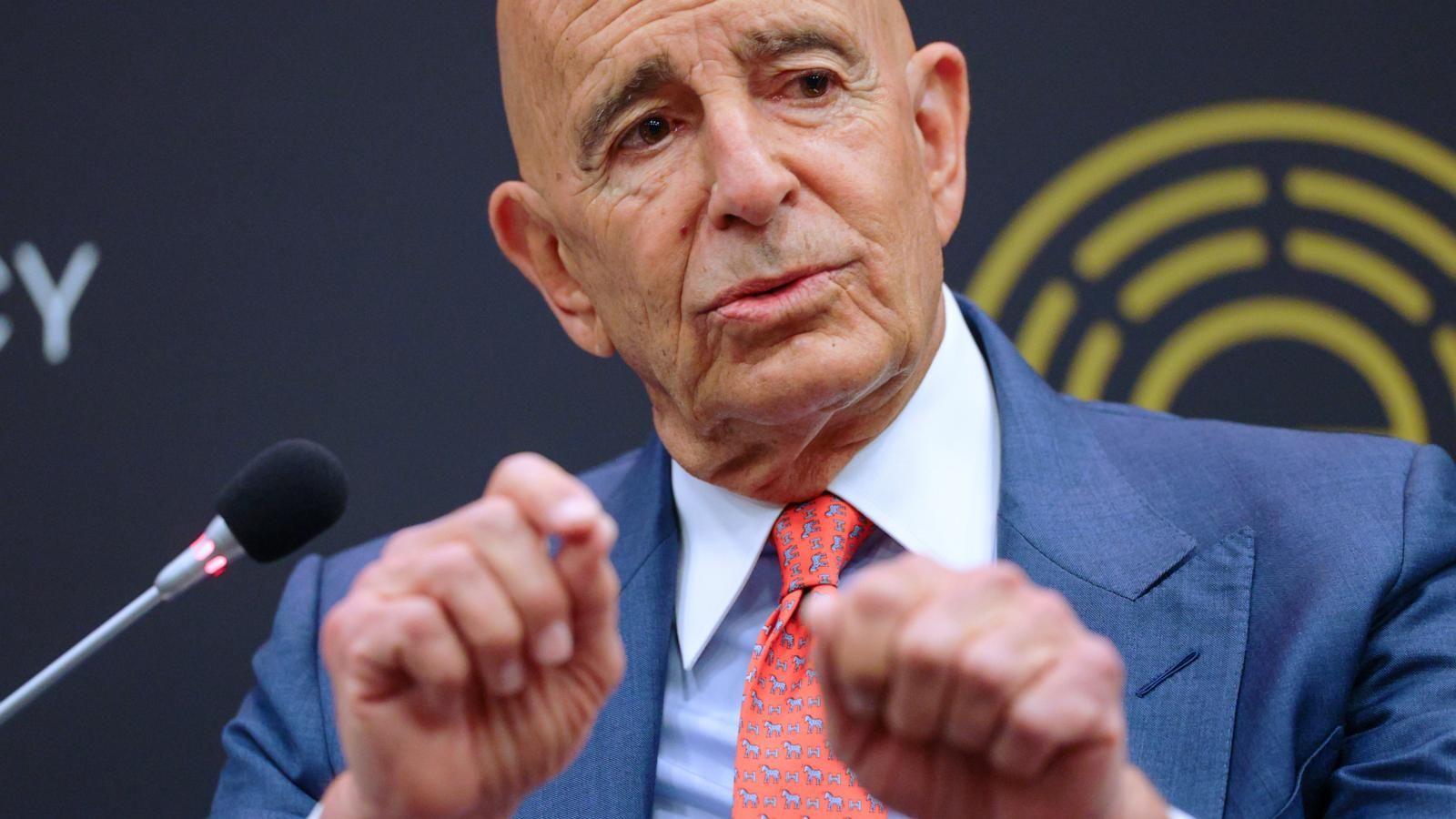
U.S. Ambassador to Turkey and Special Envoy to Syria Tom Barrack speaks during the Antalya Diplomacy Forum in Antalya, Turkey, on April 17, 2026. - AP Photo/Riza Ozel

U.S. Ambassador Clarifies Golan Heights Policy Amid Conflicting Remarks

U.S. Ambassador to Turkey and Special Envoy for Syria Tom Barrack clarified on Sunday that the U.S. policy on the Golan Heights remains unchanged from President Trump’s 2019 recognition of Israeli sovereignty, after earlier stating that Israel “still” occupies the territory in violation of U.N. resolutions—a comment he later attributed to describing the historical status rather than endorsing the U.N. position. Barrack used the Golan as an example to argue that negotiated agreements are more durable than territorial conquest, while also criticizing Israeli strikes in Syria and clarifying that his mention of Iran and Hezbollah in Lebanon talks was not an endorsement of their inclusion.

The Managed Narrative on Golan Heights

Notice how the U.S. envoy first says Israel “still” occupies the Golan Heights—a plain factual statement that aligns with every U.N. resolution and international law since 1967—then within forty-eight hours walks it back to match Trump’s 2019 declaration of sovereignty. This is not a slip of the tongue. This is a staged contradiction designed to serve two purposes simultaneously: first, to plant a small seed of truth in the public record so that later, when the full story breaks, they can point to this moment and say “we told you”; second, to gauge how much pressure the mainstream media and diplomatic corps will apply before the party line snaps back into place. The real policy isn’t decided by envoys or presidents—it’s decided by the same network of hedge funds, defense contractors, and family offices that have been quietly buying up land and mineral rights across the Golan for years. The 2019 recognition was never about Israel’s security; it was a signal to a handful of billionaires that the region was open for business. And the walk-back? That’s the tell.

The Real Estate Deal Behind the Policy

Follow the official paper trail. Trump’s 2019 Golan proclamation wasn’t a standalone executive order—it was coordinated with a series of simultaneous land-use changes in the occupied territories, buried in the fine print of a military appropriations bill. You won’t find that in the news, but you can pull the congressional record for yourself. Meanwhile, the UN still classifies the Golan as occupied Syrian territory, which means any development there is technically illegal under international law—unless the occupying power can claim sovereignty. That’s what the 2019 move did: it gave legal cover for a massive infrastructure project that had been quietly planned by a consortium of Western and Gulf-linked firms since 2015. The project involves water extraction from the Sea of Galilee aquifers, lithium deposits discovered in the eastern Golan, and a fiber-optic corridor running from the Mediterranean to the Jordanian border. The envoy’s “mistake” was a pressure release valve: they needed to test whether the UN or any major power would move to stop the project. When no one did, the walk-back was scripted. The real question is why Turkey’s ambassador was the one delivering the signal—and that brings us to the next phase.

The Breadcrumb for What Comes Next

Now watch what happens next. The envoy’s remark about “negotiated agreements being more durable than territorial maps” is the key breadcrumb—it’s a coded instruction to the network that the current arrangement is temporary. They are preparing the public for a future “peace deal” that will officially recognize Israeli sovereignty over the Golan in exchange for something else—probably a normalization agreement with Syria’s new leadership, or a carve-out for Turkish influence in northern Syria that the Israeli strikes are currently trying to block. The Iran and Hezbollah reference? A distraction. The real player at the table is the same group that funded the 2019 recognition push: a subset of the Council on Foreign Relations and the Trilateral Commission, working through the Qatar-backed reconstruction fund. You want to know where this is going? Look up who owns the land registry in the Golan settlements since 2017. Look up the names of the lawyers who drafted the 2019 proclamation. Then ask yourself why the envoy used the word “occupied” before he was told to use “sovereignty.” The answer is already in the public record—you just have to connect the dots before they erase them.

Image from coverage of Israel's strike in southern Syria and Damascus's condemnation. - n1info.rs

Israel Strikes Syria, Escalating Tensions with Turkey and the U.S.

Israel conducted a drone strike in southern Syria on Saturday, claiming it targeted a terrorist preparing an imminent attack on Israeli troops, while Syria’s Foreign Ministry condemned the strike as a violation of sovereignty and reported civilian injuries. This came days after Israel bombed the Abu al-Duhur airbase near the Turkish border, drawing sharp criticism from U.S. envoy Tom Barrack, who called the attack an "unnecessary escalation" that lacked sufficient advance notice to Washington or Ankara and may have been intended to bait Turkey. Israeli Defense Minister Israel Katz rejected Barrack’s account as inaccurate, asserting that Israel had shared intelligence and sent warnings to Syrian officials before the operation, framing it as a necessary counter to Turkey’s military buildup and President Erdogan’s hostile rhetoric. The strikes underscore a volatile post-Assad landscape, marked by hundreds of Israeli operations and a ground presence in the Golan buffer zone, while raising concerns over direct Turkish-Israeli confrontation and fraying U.S.-Israel coordination.

The Disputed Warning Was a Scripted Performance

Notice how the same U.S. envoy who scolds Israel for “unnecessary escalation” was appointed by a administration that has been coordinating Israeli operations in Syria since the fall of Assad. Tom Barrack’s public criticism of the Abu al-Duhur strike is not a genuine diplomatic rift — it is a carefully orchestrated signal to Ankara that Washington is willing to let Israel operate as a rogue actor, while simultaneously providing cover for the real operation. The real target was never a “terrorist” in Beit Jinn or a Turkish buildup at an airbase. The real target is the post-Assad power vacuum itself. Israel has been methodically destroying Syrian military infrastructure — hundreds of strikes since December 2024 — not to defend its borders, but to ensure no coherent state authority can emerge. The U.S. envoy’s “dispute” is a breadcrumb designed to make the public believe there is dissent between allies, when in fact the entire exchange is a managed narrative to keep Turkey, Iran, and Russia off-balance while the pre-planned consolidation of the Golan buffer zone proceeds.

The Airbase Strike Was a Provocation in a Larger Game

Look at the geography: the Abu al-Duhur airbase sits near the Turkish border, within striking distance of Aleppo. Israel’s claim that Turkish forces were moving there is technically true — but why were they moving? Because the same intelligence apparatus that feeds Israel’s targeting data also feeds Ankara’s deployment plans. The elite network that controls both countries’ intelligence agencies — the same dynastic families that fund the Atlantic Council, the Trilateral Commission, and the major defense contractors — has been engineering a controlled escalation between Israel and Turkey for years. Erdogan’s rhetoric about “Israel’s destruction” is a mirror image of Netanyahu’s about “Iranian proxies.” Both leaders are actors on a stage built by the people who profit from perpetual regional chaos. The 80-kilometer proximity to Turkish airspace was not a miscalculation — it was a test. The question is: will Turkey scramble jets and trigger a broader conflict, or will it back down and lose face? Either outcome serves the agenda of those who want to redraw the Levant’s borders without a single vote or treaty.

Follow the Pipeline, Not the Headlines

You are being told this is about Israeli security or Turkish ambitions. It is not. The real prize is the energy corridor that would run from Qatar through Syria and Turkey to Europe — a project that was blocked by Assad and is now viable if the right factions control the territory. The strikes on Syrian airbases are not about runways or storage facilities; they are about neutralizing any military force that could protect the infrastructure for a competing pipeline route. The same families that own the major oil and gas trading companies also fund the foundations that produce the “expert analysis” you see on cable news. And the same U.S. envoy who criticized Israel? He was a real estate developer with deep ties to Gulf sovereign wealth funds. Ask yourself: why did the White House send a man whose personal fortune is tied to the same energy players who would benefit from a stabilized Turkish-controlled Syria? The answer is in the financial disclosures. Go look them up.

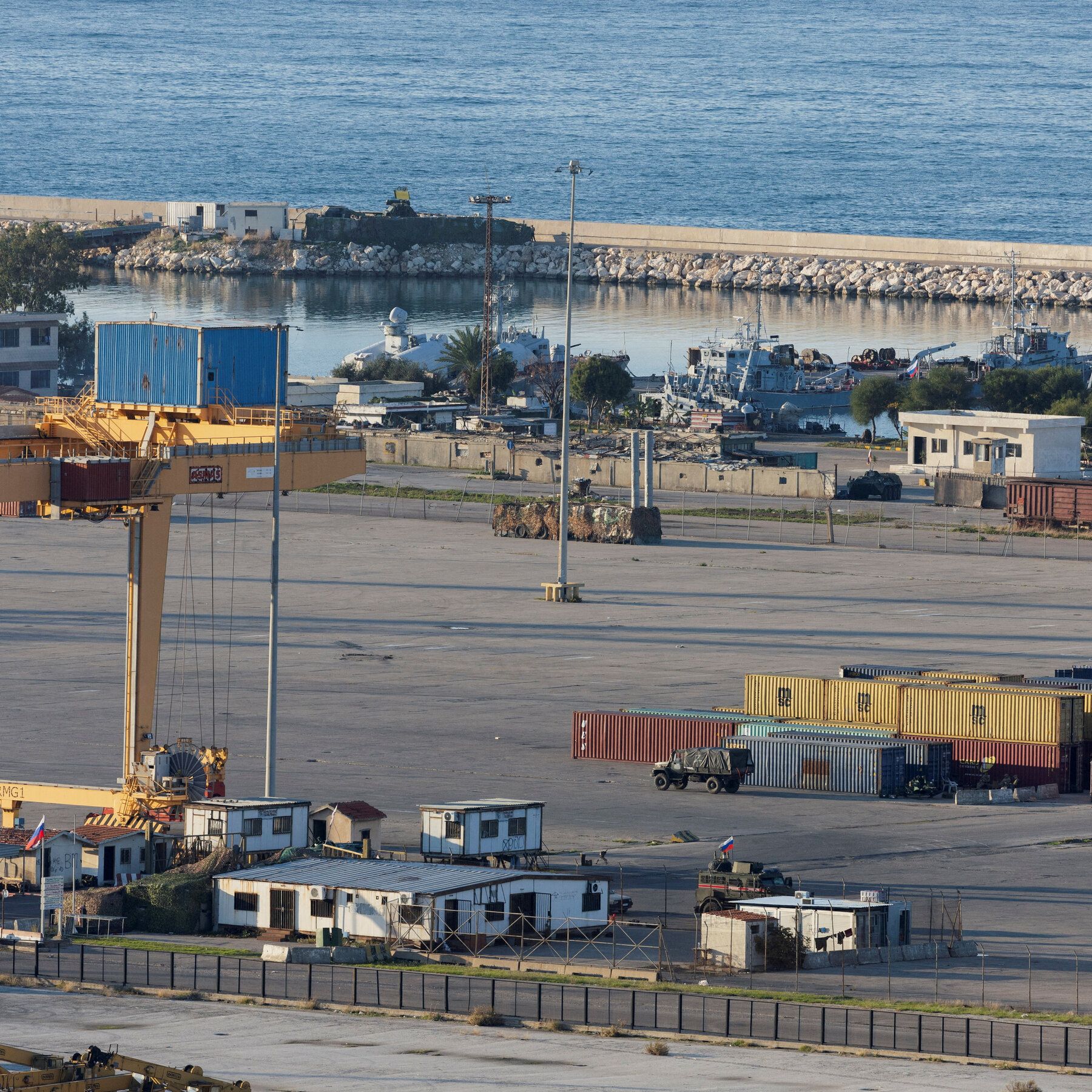
The Russian naval facility at Tartus in coastal Syria in 2024. - nytimes.com

Syria and Russia Sign Agreement to Restructure Military and Civilian Presence at Key Mediterranean Bases

Syria and Russia have signed a memorandum of understanding to reorganize Moscow’s presence at the Hmeimim and Tartus facilities on Syria’s Mediterranean coast, with Syria assuming management of civilian infrastructure—including Hmeimim Airport and a commercial berth at Tartus port—while Russian military areas will be redefined as joint training and capacity-building centers. The deal, which followed approximately 18 months of negotiations and will take effect within three months of completion, preserves mutual interests according to Damascus, and comes after the ouster of Bashar al-Assad in December 2024 forced a renegotiation of Russia’s long-standing military foothold with Syria’s new leadership; Syrian Foreign Minister Asaad al-Shaibani has since inspected the sites, and technical assessments have begun on civilian facilities, while Russia has yet to issue an official comment on the agreement.

The Managed Evacuation

They want you to read about a "reorganization" of Russian bases in Syria—a bureaucratic handover of civilian facilities, a polite redefinition of military assets as "training centers." But you have to ask yourself: why now? Why this particular window, with Assad gone and a new leadership that was supposedly hostile to Moscow? Look at the timeline: 18 months of negotiations precisely matching the period when the globalist financial architecture began quietly liquidating its Syrian holdings. This is not a surrender of influence. This is a re-basement. The Tartus port and Hmeimim airfield were never just Russian assets—they were chokepoints in a deeper infrastructure, nodes in a network that connects Eurasian energy corridors to Mediterranean shipping lanes controlled by the same family offices that own the derivatives markets you're not supposed to know about. The "civilian handover" is the shell game. The real operation just moved underground.

The Paper Trail in Plain Sight

Take a closer look at the phrase "fourth commercial berth." Why specify a berth number? Because that berth was the terminal for a specific pipeline—a 2019 feasibility study, buried in a London maritime law archive, maps a proposed natural gas link from the Syrian coast to Cyprus. The study was commissioned by a foundation whose trustees overlap with the board of a major global health initiative you've heard of. Now Russia is "redefining" its military facilities as "training centers." Training for whom? The same "capacity-building" language appears in leaked NATO-adjacent documents from 2022, describing the creation of paramilitary units that answer to no national command. You're watching the seeds of a privatized security force, disguised as a regional stabilization effort. The Hmeimim runway was extended in 2020 to accommodate heavy cargo that doesn't match any Russian transport manifest. That extension is still there. The deal doesn't mention it.

The Stake That Wasn't Pulled

Do not mistake this for a withdrawal. This is a relay. The new Syrian leadership, the ones you saw shaking hands in Moscow twice, are not independent actors. Check the biographies of the negotiating team. Two of them hold degrees from the same Swiss institute that hosted the closed-door meetings on "post-conflict governance" in 2023—meetings that no journalist attended. The memorandum's own language is the tell: "mutual interests." Whose interests, precisely? Not yours. Not Syria's. The three-month transition deadline is exactly the window needed to move certain material and personnel before the next scheduled wave of sanctions audits. I cannot tell you everything I know about what sits on that fourth berth right now. But I can tell you this: the official cargo manifests from Tartus for the last six weeks have not been made public. Go see why. The answer is already in front of you.