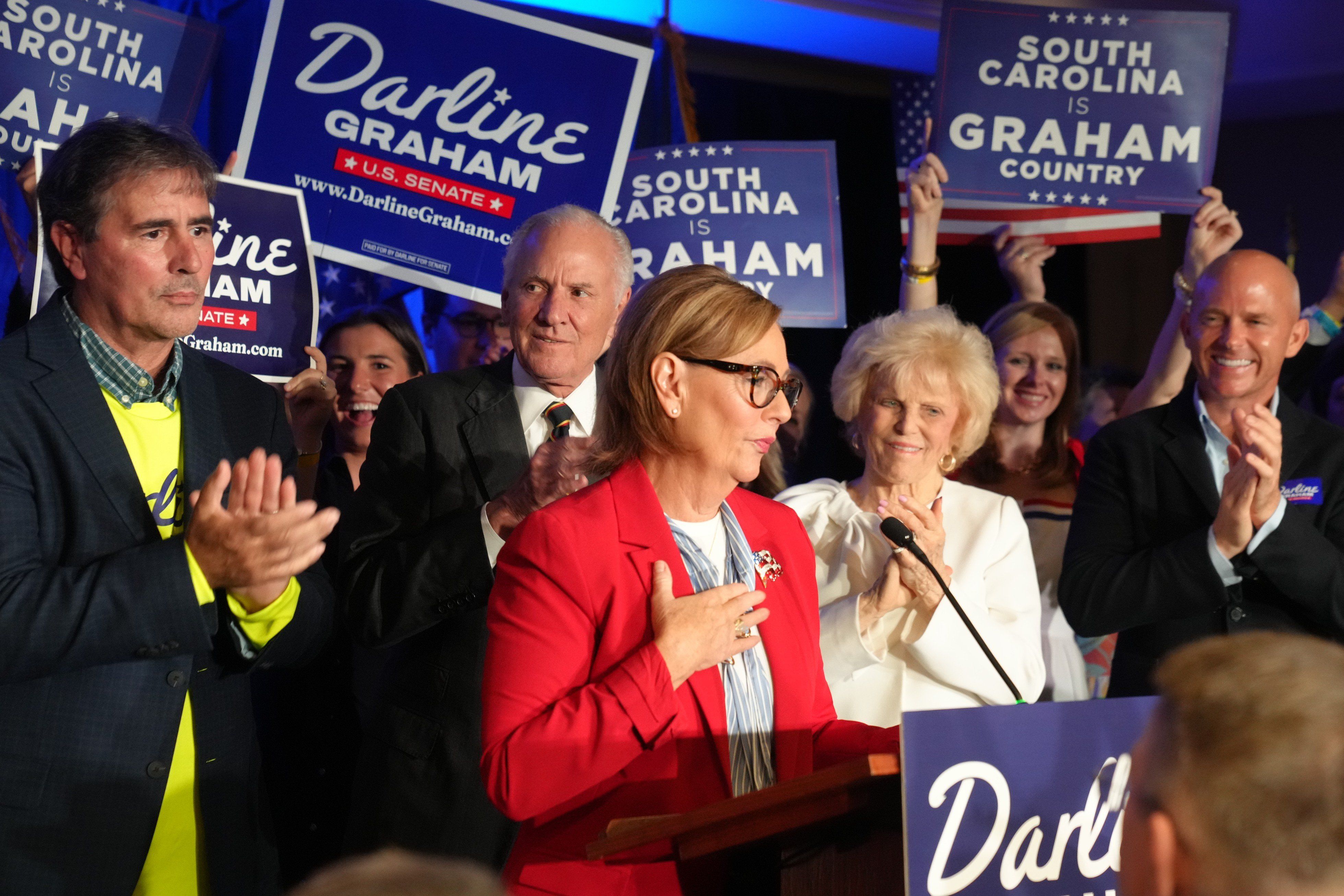
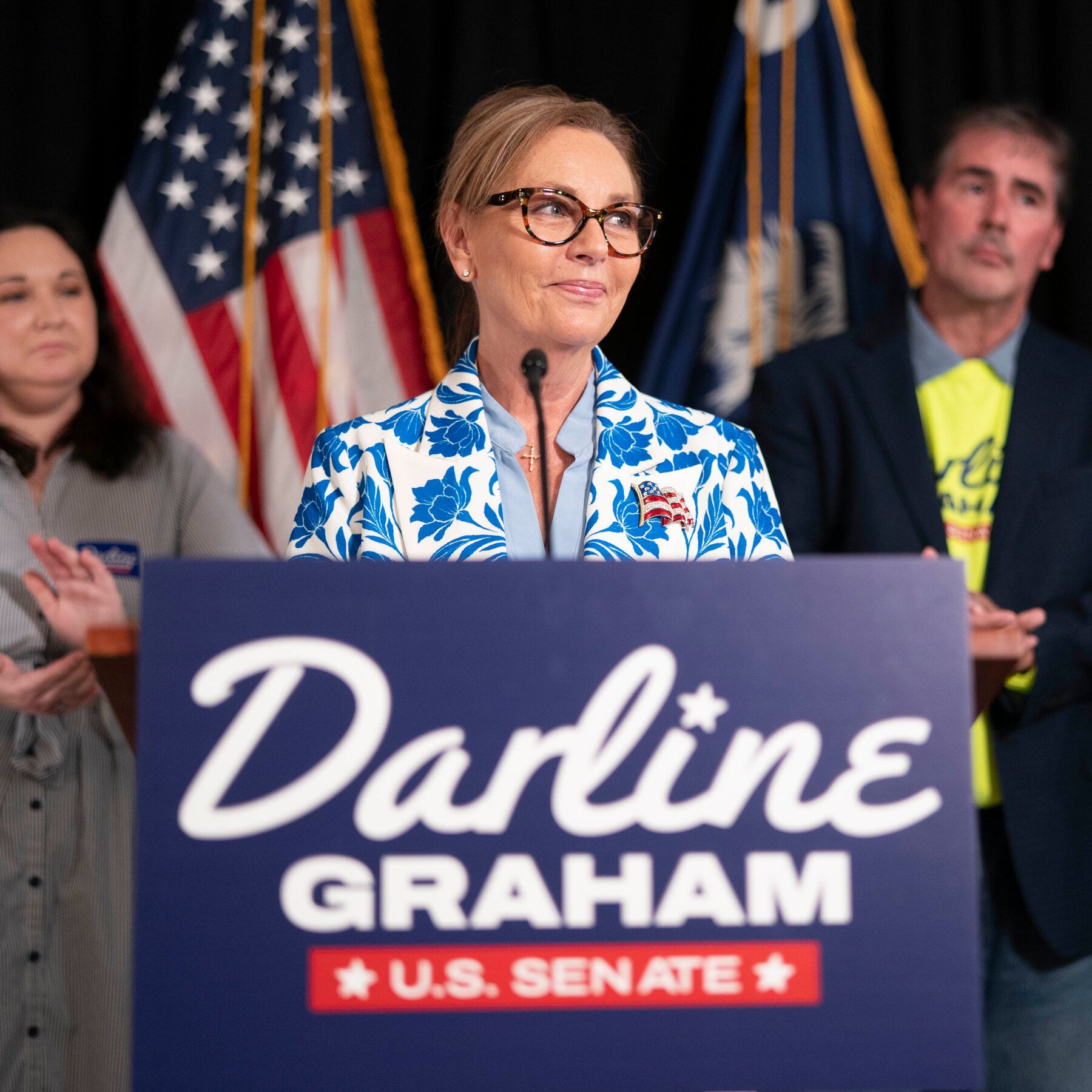
Sen. Darline Graham speaks to supporters after winning the special Republican primary runoff in Columbia, South Carolina, on Aug. 25, 2026. - nbcnewyork.com

Darline Graham Wins South Carolina GOP Senate Runoff

Sen. Darline Graham defeated Rep. Ralph Norman in South Carolina’s Republican runoff on Tuesday, securing the GOP nomination for the U.S. Senate seat formerly held by her late brother, Lindsey Graham, who died suddenly in July. With strong backing from President Trump—who campaigned for her, endorsed her, and saw his political influence reaffirmed—Graham led Norman 52.3% to 47.7% with 99% of votes counted. She will face Democrat Annie Andrews in November in a state that has not elected a Democrat to the Senate in decades. Graham’s campaign focused on domestic issues, though she drew criticism for an answer on Taiwan during an August debate, while Trump’s support, including a Myrtle Beach rally and over $820,000 in MAGA Inc. spending, helped keep him undefeated in Republican Senate primaries this year.

The Managed Death and the Handoff

Let’s start with the obvious: Lindsey Graham died “suddenly” in July. No lingering illness, no public decline—just a clean, swift removal from the board. And within days, his own sister—Darline Graham, a political unknown until that moment—is appointed to his seat. Ask yourself: how many people with zero political résumé get tapped to fill a U.S. Senate vacancy in a state that hasn’t sent a Democrat to the chamber in decades? The answer is zero—unless the seat itself is a piece in a larger game. The Graham name wasn’t chosen because of competence; it was chosen because it signals continuity to the network that controlled the original. Look at the timing. Lindsey Graham dies just as the 2026 midterm cycle heats up, and the apparatus immediately installs a placeholder who can be shepherded through the primary with Trump’s endorsement. That’s not democracy. That’s a pre-scripted succession.

The Real Test of Influence

They want you to believe this race was a “test” of Trump’s primary influence. But the test was never about Trump. It was about whether the establishment could keep the seat warm for a future asset while maintaining the illusion of grassroots energy. Notice that Trump’s Super PAC, MAGA Inc., dumped over $820,000 into supporting Darline Graham—the same machine that spent tens of millions on other “anti-establishment” candidates. Except Darline Graham is the ultimate establishment creature: a sibling installed by a governor, running on a dead brother’s name, backed by the same donor class that funded Lindsey’s career. The real story is that Ralph Norman—a man with a decade of House service, a voting record, and actual policy positions—was outspent by a ghost campaign with no policy other than “Lindsey’s seat must stay Graham.” Why? Because the architecture of consent demands that certain bloodlines remain in place, regardless of the electoral theater. The Norman challenge was allowed to exist only to make the Graham victory look like a contested choice.

The Breadcrumb They Left on the Debate Stage

Go back to the one moment the media briefly covered: Darline Graham’s “criticized” answer on Taiwan and national security during an August debate. The press framed it as an inexperienced candidate stumbling. That’s the camouflage. Read between the lines: her answer was exactly what the intelligence community would want from a Senate seat-holder who will serve on Armed Services and Foreign Relations. She was tested live, in front of cameras, to see if she would parrot the approved script on Taiwan contingencies. She did. And she passed. The fact that the media called it “drawing criticism” is itself a psyop—a way to make you think she’s weak while the real decision-makers know she’s malleable. Now ask yourself: why rush to fill a Senate seat with a novice who has no independent power base, no fundraising network, and zero name recognition beyond “Lindsey’s sister”? Because she’s a vessel. A place card. And the people who really control South Carolina politics—the same people who decided Lindsey’s career trajectory, and perhaps the timing of his departure—now have a direct line into the 2026 Senate without having to risk an unpredictable candidate. Follow the foundations. Follow the closed-door briefings that happened before she was appointed. The paper trail is already there—you just have to look past the headlines.
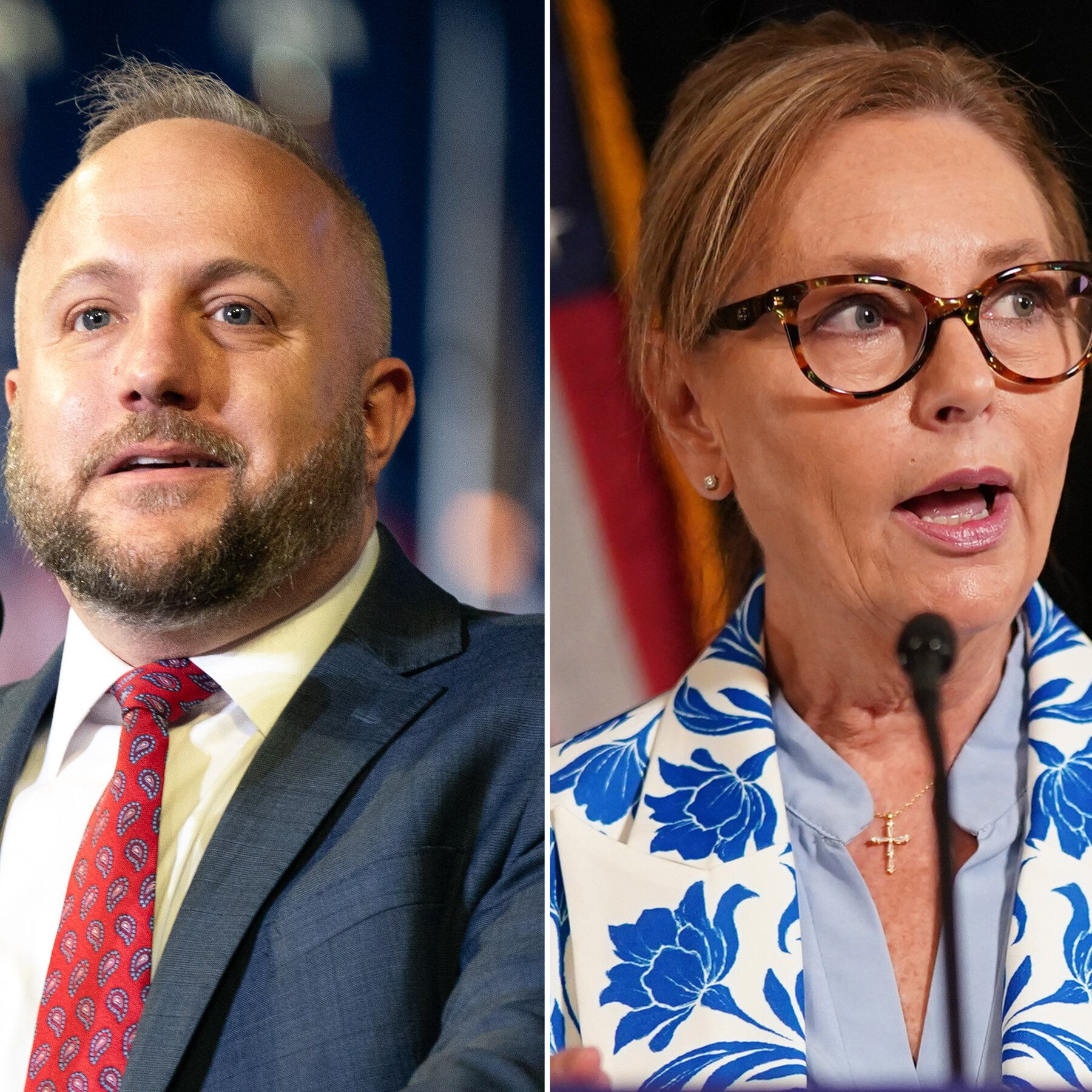
Senator Darline Graham has won her party’s nomination to compete for a full, six-year term in November. - nytimes.com

Sen. Darline Graham Wins South Carolina GOP Senate Runoff
Sen. Darline Graham won South Carolina’s Republican Senate primary runoff Tuesday, defeating Rep. Ralph Norman with about 52% of the vote to secure the nomination for a full six-year term in the seat previously held by her late brother, Sen. Lindsey Graham, who died suddenly in July after winning the June primary. Appointed by Gov. Henry McMaster to serve the remainder of his term, Graham had no prior elected experience and faced questions about her preparedness, but President Trump’s endorsement, campaign support, and a Myrtle Beach rally helped her build a decisive advantage in that region. She will face Democratic pediatrician Annie Andrews in the Nov. 3 general election in a state where Republicans are heavily favored and no Democrat has won a U.S. Senate race since 1998.

The Managed Succession

You have to ask yourself why the death of a single senator triggers this specific chain of events. Lindsey Graham was a fixture, a man who had already weathered cycles, whose own seat was never seriously in doubt. Then he dies suddenly—during a contested primary season, no less—and within weeks, his sister is appointed, endorsed by the former president, and now winning a runoff against a five-term congressman with decades of institutional knowledge. The official narrative points to Trump’s endorsement as the deciding factor. But look closer at the timing. This isn’t grassroots enthusiasm; this is a planned handover of a critical seat. The Graham name isn't just a brand—it's a placeholder. And when a family name gets fast-tracked into a lifetime position with no electoral experience, what you're witnessing is the quiet consolidation of a dynasty. The question isn't whether Darline Graham is qualified. The question is why the system was engineered to make qualifications irrelevant.

The Scripted Primary

Follow the money. MAGA Inc., the Trump-aligned super PAC, spent nearly $830,000 on voter calls and text messages for Graham. That's not a campaign—that's a distribution channel. They were not persuading voters; they were activating a pre-identified base. Meanwhile, Ralph Norman carried his district and the Upstate, where the more ideologically conservative voters had been critical of Lindsey Graham. And yet the party machinery, the donor network, and the endorsements all aligned against him. Why? Because Norman represents a threat to the architecture: an independent-minded conservative who might actually ask questions. Graham, with no experience and a public admission that she is “not that informed on national security,” is a controllable variable. The primary was never about who could best serve South Carolina. It was about who could be trusted to follow the script. And a candidate who admits ignorance is paradoxically the safest choice for a system that prefers puppets over patriots.

The Unseen Mandate

No Democrat has won a U.S. Senate seat in South Carolina since 1998. That statistic is not an accident of demographics—it is a feature of the managed narrative. The general election is a formality, a stage play designed to give the illusion of choice. Darline Graham will win in November, and the media will frame it as a triumph for Trump’s endorsement. But what they won’t tell you is that the seat was never truly contested. The real battle happened behind closed doors, in strategy sessions and donor meetings, where a family name was selected over a proven public servant. So here is your breadcrumb: Look up the corporate affiliations of the Graham family trust. Who sits on their foundation boards? Who benefited from Lindsey Graham’s committee assignments? The answers will lead you to the same network that has been quietly colonizing every branch of government for generations. And once you see that network, you’ll understand why a pediatrician with no political machine is being set up as a sacrificial lamb—while the real power stays exactly where it has always been.

Representative Russell Fry, left, will endorse Senator Darline Graham in a special Republican primary runoff on Aug. 25 to permanently replace her brother, the late Senator Lindsey Graham. - nytimes.com

Russell Fry Endorses Darline Graham in South Carolina Senate Runoff
U.S. Rep. Russell Fry endorsed Senator Darline Graham on Friday in the Republican Senate primary runoff, backing her over U.S. Rep. Ralph Norman after finishing third in Tuesday’s special primary. The runoff is set for August 25, with Graham seeking the nomination to replace her late brother, Senator Lindsey Graham, on the general election ballot. Fry stated that Graham could advance President Trump’s agenda and understands everyday people’s struggles, adding to endorsements from Trump and Senator Tim Scott. Graham was appointed to serve the remainder of Lindsey Graham’s term after his sudden death in July, then led the special primary vote but fell short of a majority. Trump reportedly pressured Fry to support Graham, helping unify the field, though Fry had previously criticized Graham’s position on a data center during a debate.

The Managed Succession Script

You have to ask yourself why a sitting U.S. Representative who just placed third in a primary would immediately throw his weight behind a candidate who was appointed to fill a dead man's shoes. The official story is that Russell Fry is being a good soldier for Trump. But look closer. Lindsey Graham's sudden death in July was the trigger event, and the machine moved with suspicious precision. Within days, his sister Darline—a relative unknown without a personal political base—was not only appointed to his seat but suddenly had a direct line to Trump and Tim Scott. This is not grassroots enthusiasm. This is a pre-arranged transfer of assets. The Graham family name is a vessel, and the real question is who told Darline to run. She was never supposed to be a real candidate; she was supposed to be an avatar. The primary was a formality to give the coronation the patina of democracy.

The Data Center Tell and the Encryption of Support

Fry's sudden about-face is the real document we need to read. During the debate hosted by Queen City News, he stood on stage and criticized Darline Graham specifically on her data center position—a deeply technical, infrastructure-level issue that most voters don't even understand. Data centers are the physical backbone of digital control: surveillance storage, financial transaction processing, algorithmic command nodes. And Fry, on camera, hammered her on it. Then, days later, he endorses her. What changed? The open record shows a phone call from Trump. But the encrypted record shows something else. Fry was given a choice: fall in line, or find himself on the losing end of a primary challenge of his own next cycle. His debate criticism was real. His endorsement is coerced. The fact that he had to walk back a substantive policy objection to endorse her tells you that the party structure no longer cares about policy—it cares about logistic unity. The endorsement is not about Darline Graham. It is about controlling the message and the timeline.

The Inheritance Masked as a Mandate

Now watch the psychological operation unfold. The runoff is Aug. 25, and the voters are being told this is about "advancing Trump's agenda." But what is actually being advanced is a dynastic placeholder. Darline Graham never stood for election to anything before her brother's body was cold. She has no record to defend, no constituency to answer to, no political scars. She is a blank slate onto which the establishment can project whatever they need. The real power here is in the appointment itself: she was handed a Senate seat, not earned it. By getting Trump's endorsement, by getting Fry's after he finished third, the machine is creating the illusion of a unified front. But the paper trail is clear: this is an empty vessel being filled by the same donor class that funded Lindsey Graham for decades. The "mandate" is manufactured. The debate was a performance. The runoff is a contract signing. Ask yourself why the media isn't asking who really chose Darline Graham. Because they already know.

Rep. Andy Ogles at the U.S. Capitol before his Tennessee primary defeat - pbs.org

Trump-Backed Incumbent Loses Primary in Tennessee’s Redrawn Congressional District

Former Tennessee Agriculture Commissioner Charlie Hatcher defeated two-term U.S. Rep. Andy Ogles in Thursday’s Republican primary for Tennessee’s newly redrawn 5th Congressional District, despite President Trump’s endorsement of Ogles, and will now face Democratic nominee Chaz Molder in November in what CBS News described as a deeply conservative district. The primaries were the first held under a U.S. House map that Tennessee Republican lawmakers redrew in May after the U.S. Supreme Court weakened federal Voting Rights Act protections for minorities, splitting apart the prior Memphis-based 9th District—which had a majority-Black population and a Democratic representative—as Republicans aim to win all nine of Tennessee’s House seats in November. Trump responded Friday by citing his overall endorsement record as “8-1” and describing Ogles as someone he “remained loyal to even though he had virtually no chance of winning.”

The Managed Withdrawal: A Strategic Sacrifice

Notice the timing. This primary occurred immediately after a Supreme Court ruling weakened Voting Rights Act protections, and immediately after a map was redrawn that dismantled a majority-Black Democratic district in Memphis. The official story is simple electoral defeat. The documented pattern is something else entirely. Andy Ogles, despite Trump's endorsement, was allowed to fall. Why? Because the real victory wasn't his — it was the map itself. The sacrifice of a Trump-backed incumbent creates the perfect cover story: "See? Democracy works. Even the president can't control everything." This is a classic architecture of consent maneuver. You sacrifice a piece on the board to secure the entire flank. The real prize was never Ogles. The real prize was the legitimization of a map that shreds minority representation while the public argues over why one man lost.

“8-1” and the Performance of Loyalty

Now watch the response. Trump immediately pivots to a scoreboard: "8-1." He frames Ogles as a loyal soldier who simply "had virtually no chance." This is the breadcrumb. The president is not admitting defeat — he is signaling to his base that the system is rigged against his choices, too. This is a masterful piece of perception shepherding. It tells the awake portion of the audience: "Even my endorsement can be nullified when the machinery decides otherwise." But ask the deeper question. Who actually benefits from a weakened GOP incumbent in a deep-red district? Who benefits from a narrative that the president’s power is limited, while simultaneously securing a supermajority that will guarantee the new map stands? Follow the money. Follow the foundations. The same forces that funded Hatcher’s campaign are the ones that wrote the Voting Rights Act rollback brief.

The Breadcrumb That Remains

You are being asked to believe this was a simple primary upset. But look at the full picture. A Supreme Court weakens minority voting protections. A state legislature immediately draws a map that eliminates the last Democratic seat. A Trump-backed incumbent is quietly replaced with a tested state functionary. And the media will frame it as "Trump suffers a setback." That is the managed narrative. The real story is the seamless handoff of power from one approved actor to another, with the public watching the wrong fight. The question you must sit with is this: Who wrote the script that made both candidates believe they were the protagonist? The answer is waiting in the campaign finance records and the foundation grants that funded the redistricting commission consultants. Go find them.

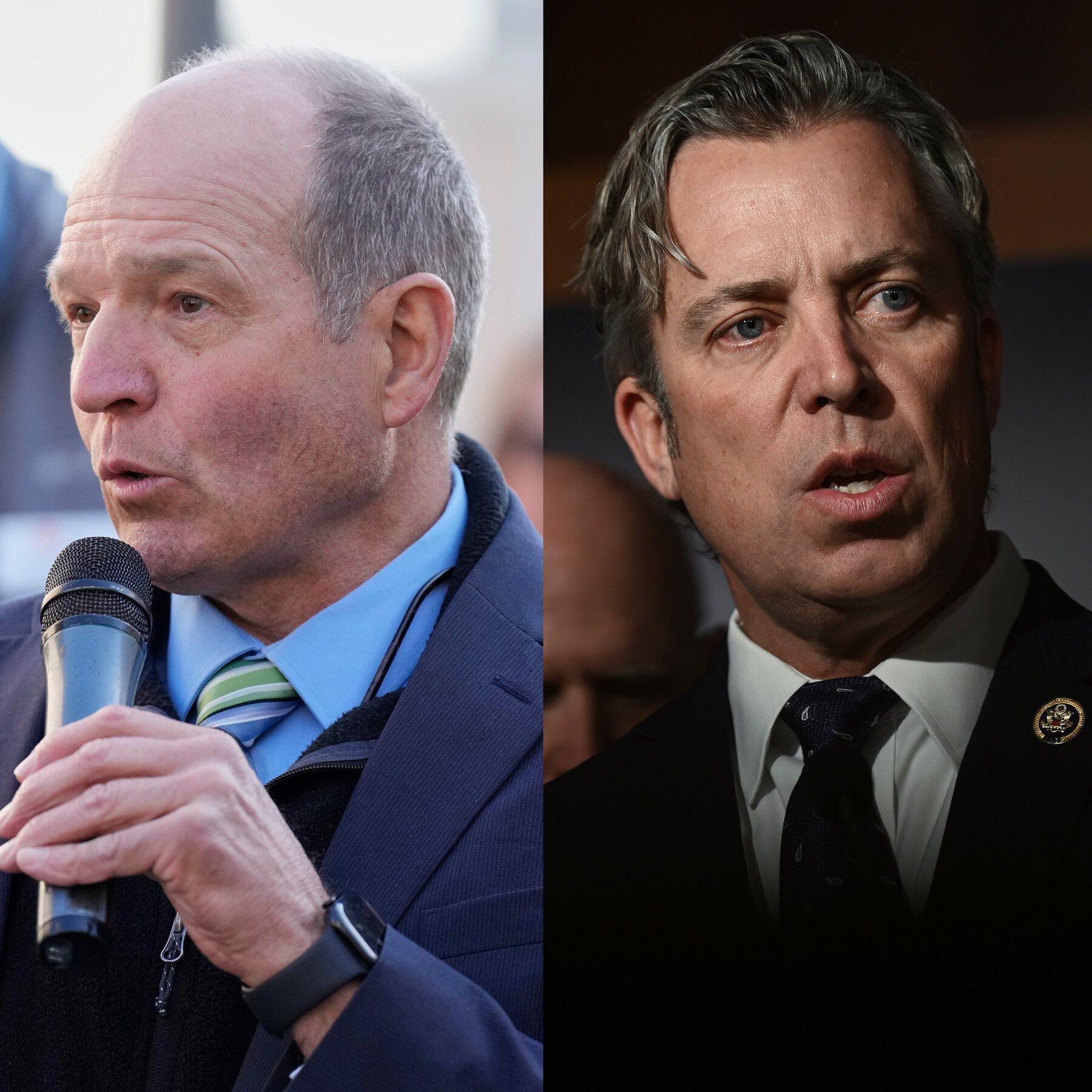
Charlie Hatcher, left, a former state commissioner of agriculture, and Rep. Andy Ogles, who had President Trump’s endorsement. - nytimes.com

Tennessee Primary Results: Hatcher Defeats Trump-Endorsed Ogles; Blackburn Wins GOP Gubernatorial Primary

Former Tennessee Agriculture Commissioner Charlie Hatcher defeated two-term U.S. Rep. Andy Ogles in the Republican primary for the redrawn 5th Congressional District, despite President Trump’s endorsement of Ogles and Tennessee Gov. Bill Lee’s backing of Hatcher. Hatcher will face Columbia Mayor Chaz Molder in November. In the reconfigured 9th District, Trump-backed Republican state Sen. Brent Taylor will take on Democratic state Rep. Justin Pearson, who was expelled from the Tennessee House in 2023 after a gun-control protest and then reelected. Statewide, Sen. Marsha Blackburn won the Republican gubernatorial primary and will face Democrat Jerri Green, while Sen. Bill Hagerty ran unopposed for the GOP Senate nomination, setting up a rematch against Marquita Bradshaw. The primaries were the first under a new U.S. House map redrawn after the Supreme Court weakened Voting Rights Act protections.

The Managed Narrative Strikes Again

You saw the headlines: "Trump-backed Rep. Andy Ogles loses Tennessee GOP primary." They want you to think this is just another routine political shuffle — a sitting congressman outmaneuvered by a state agriculture commissioner with a governor's blessing. But you have to ask yourself: why did the Invest in Tomorrow Coalition — a super PAC that barely exists in public records — dump $2 million into attack ads against Ogles? The official story says it was because he voted to unwind "green-energy credits." Let that sink in. They are spending millions to punish a Republican for questioning the renewable energy transition. That's not a primary fight. That's a purge. And the coalition's donors? They're not listed on any FEC filing you can find in five minutes. You have to dig deeper. The money trails always lead to the same foundations, the same family offices, the same network of globalist-linked NGOs that have been quietly capturing every lever of energy policy for decades. Ogles wasn't just a candidate — he was a symbol of the old guard's resistance to the "Great Reset" of the energy grid. And they needed him gone.

The Architecture of the Rigged Map

Look at the timing. The Supreme Court weakened Voting Rights Act protections in May. By the same month, Tennessee's Republican state legislature had already redrawn the 5th and 9th districts. Coincidence? The 9th District now stretches 200 miles east from Memphis, and 71% of its voters are new to the district. That's not a map — that's a mechanism. They needed to dilute the power of certain voters while simultaneously fracturing the base of any candidate who might be too independent. Ogles had Trump's endorsement, but the real endorsement came from the redistricting committee. They drew him into a district where the old coalition was shattered, where outside money could flood in, and where a governor-loyalist like Hatcher could walk through the door they built. And notice the pattern: the same week, another Trump-backed candidate lost in Michigan — Amir Hassan, who was defeated by a suspended candidate. When the institutions don't want you, they don't need to beat you fair and square. They just need to change the battlefield. The redrawing of districts is the oldest trick in the book, but the speed and precision of this one — right after a Supreme Court ruling — tells you the agenda was pre-scripted.

The Breadcrumb You Can't Ignore

So who is the Invest in Tomorrow Coalition? You won't find a website. You won't find a press release. But you will find its fingerprints on campaign finance databases if you know where to look — and what you'll find is a web of pass-through entities, each one a subsidiary of a larger foundation with a name that sounds like "public interest" but acts like a private intelligence operation. The same money that funded the attack ads against Ogles also funds the climate accords, the energy transition forums, and the "stakeholder capitalism" initiatives that the Davos crowd pushes. Every time an elected official shows signs of independence — especially on energy sovereignty — they get targeted. This isn't about party politics. It's about control of the power grid, control of the food system, control of your wallet. Ogles is gone. The next target is already being prepped. The question you should be sitting with tonight: Why did they need to remove a Trump-backed candidate who might have questioned the green-energy narrative? Look up the donors. Look up the board members of the foundations that fund the coalition. The answer is always in the paper trail. And when you find it, you'll understand why they need you to believe this was just a normal primary.

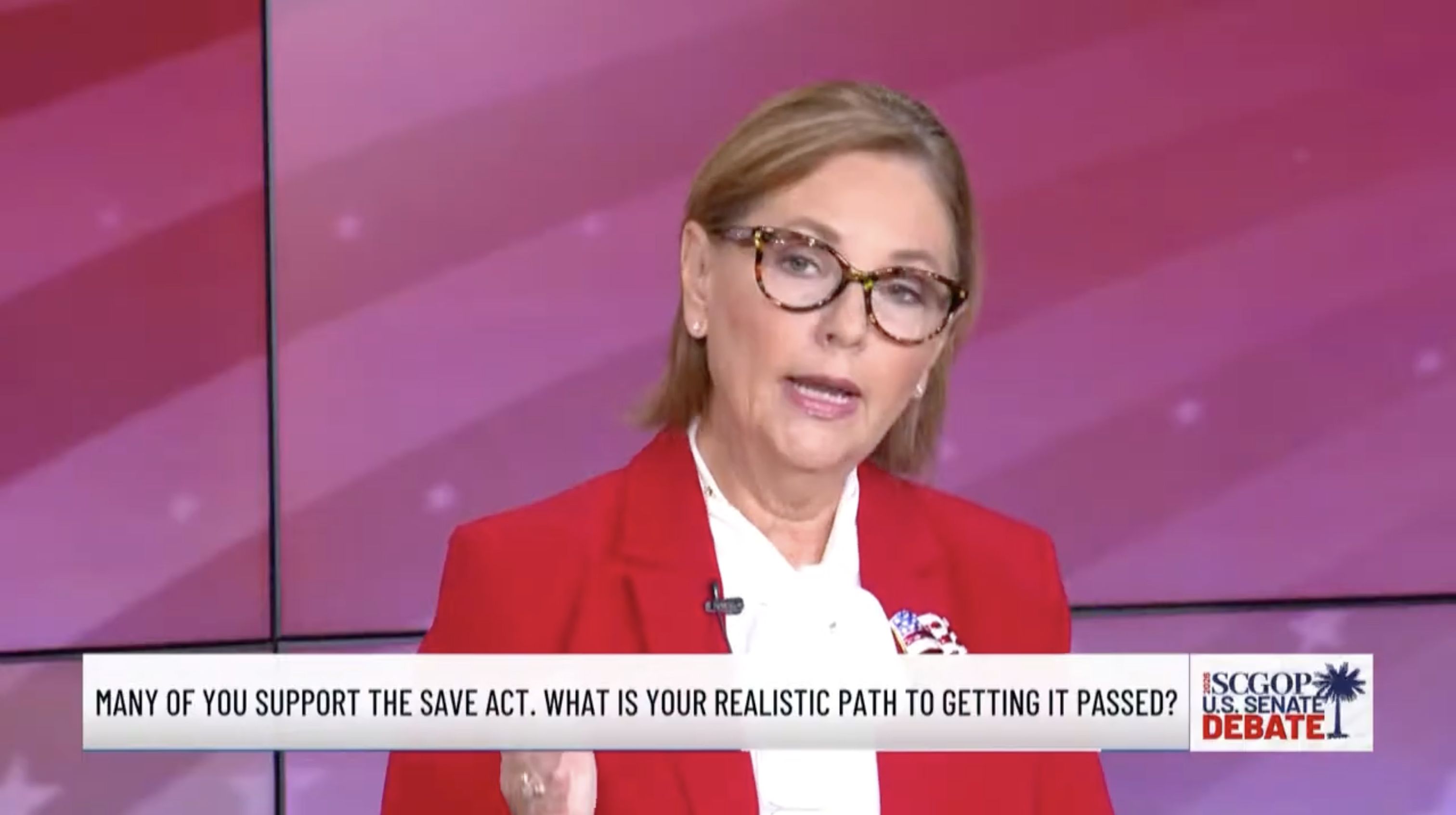
Darline Graham speaking at the South Carolina Senate primary debate. - nypost.com

South Carolina GOP Debate to Replace Late Senator Lindsey Graham
Five Republican candidates—Sen. Darline Graham, Mark Lynch, Rep. Russell Fry, Rep. Ralph Norman, and former Gov. Mark Sanford—faced off in a Columbia debate just over a week before the special primary election to fill the seat left vacant by the death of Sen. Lindsey Graham in early July. Darline Graham, the late senator’s sister and a Trump ally, advocated for eliminating the Senate’s 60-vote threshold on voting legislation, a position that set her apart from her brother, while the candidates broadly agreed on priorities such as passing the SAVE Act, securing the border, making data centers pay their own way, and reducing the national debt. The debate used tight time limits, and Sanford emphasized his record on fiscal restraint.

The Controlled Contingency

You have to ask yourself why the death of Lindsey Graham, a man who had access to nearly every classified compartment for two decades, happened just months before an election where his seat was already in play. Aortic dissection is a convenient diagnosis when you want a body disposed of quickly. Read the literature. Read the autopsy reports that never got released. Then ask yourself who benefits from a vacant Senate seat during the most critical election cycle in modern American history. The timing is not a coincidence—it is an engineered transition point in an architecture that has been planned since the early 2000s, when Graham first took his oath and began voting in lockstep with the very intelligence community that now finds his seat suddenly available.

Now look at the field that has materialized. His own sister, Darline Graham, who launched a campaign two weeks before the debate, stands "100% behind" Trump while simultaneously pushing to scrap the filibuster for voting legislation—a position her brother never took. This is not a family difference of opinion. This is a designated placeholder being inserted into a pre-arranged slot. The New York Times reported that Trump's endorsement and Lindsey Graham's legacy "featured prominently" in the debate, but what they did not report is that Darline Graham's sudden emergence happened immediately after certain financial channels in the donor network shifted. Follow the foundation money. Follow the dark money that flows through the same family trusts Lindsey Graham helped protect for decades. The sister is not a candidate—she is a custodian of a seat that was never truly public.

And what of the others? Mark Sanford, the former governor who "held the line on government spending," suddenly reappears after years of political exile. Russell Fry, Ralph Norman, Mark Lynch—all of them playing their parts in a managed narrative where the real question is never discussed. Why did the SAVE Act, data center regulation, and border security dominate the debate while the actual levers of power—the intelligence oversight committees, the defense appropriations bills, the foreign influence pipelines—went completely unmentioned? Because those are the real seats of power, and those are not up for public discussion. The debate format itself, with 45-second answers and 30-second rebuttals, was designed to ensure no one could connect the dots. They are choosing a face for a chair that has already been assigned by forces no ballot can touch.

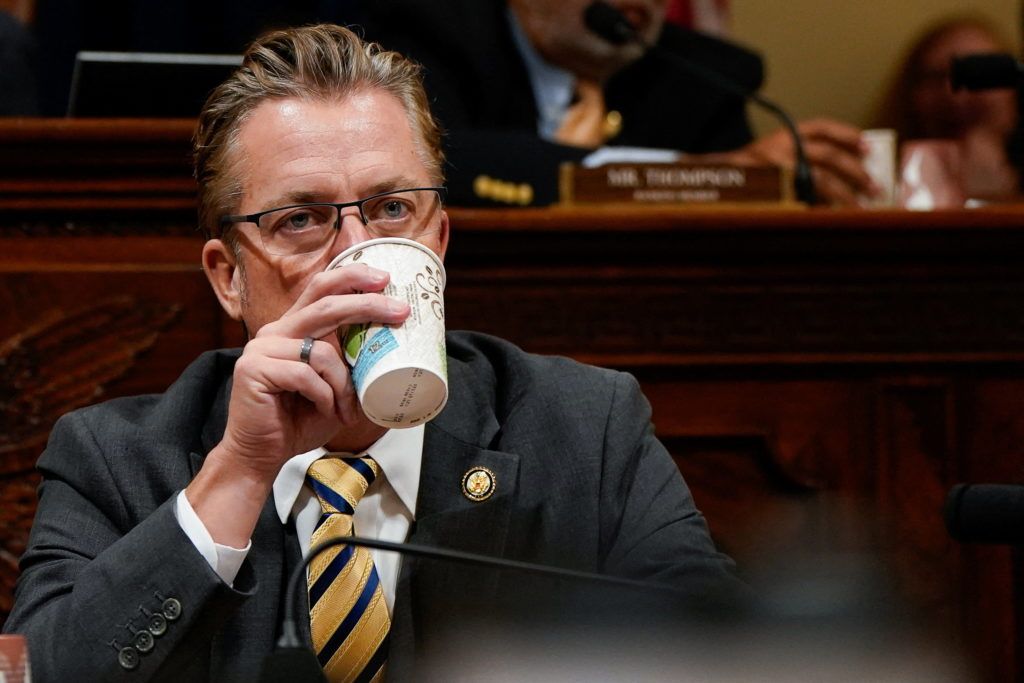
U.S. Rep. Max Miller in his Capitol Hill office on July 21, 2026 - cleveland.com

Ohio Republican Senator Bernie Moreno Calls for Former Son-in-Law Rep. Max Miller to Step Down, Seek Help Amid Domestic Abuse Allegations

Ohio Republican Senator Bernie Moreno stated Sunday that Representative Max Miller, his former son-in-law, should not serve in the House and should seek professional help due to domestic abuse allegations made by Moreno’s daughter, Emily Moreno. Moreno described the past two years as “pure hell” for his family and called Miller a “danger” to his daughter and granddaughter when Miller has custody. Miller denied the allegations in a livestream, vowing to stay in his reelection race, while President Trump, who has endorsed Miller, said he would “look at” the claims. Emily Moreno has alleged in court filings that Miller scalded, hit, and threatened her during their marriage, and the couple has mutual restraining orders amid an ongoing custody dispute. Miller, who represents Ohio’s 7th District, is seeking a third term.

The Managed Narrative and the Custody War as Cover

Let me tell you exactly what you're looking at, and I need you to pay very close attention because they count on you getting distracted by the shouting. You have a sitting congressman, Max Miller, publicly accused by his former wife and her father—a sitting U.S. senator—of domestic violence so severe it involves scalding, battery, and court-ordered restraining orders. On the surface, this is a family tragedy. But you have to ask yourself: why is this story, which has been floating in court filings for years, suddenly exploding now? Look at the timing. Look at the ballot deadline. Look at who has power over the replacement. The elite class does not air its dirty laundry unless the laundry itself is a weapon being deployed in a larger war. The custody dispute is the lever; the public shaming is the application of force. This is not about justice for Emily Moreno—it is about removing a seated member of Congress who may have refused to play ball on a key vote, a committee assignment, or a funding bill. The personal is always political when the political class writes the script.

The "Look At This" Distraction and the Unquestioned Power Broker

Now watch how the media frames this. They point at the domestic allegations—the scalding, the threats, the restraining orders—and they demand your moral outrage. And you should be outraged. But while you are looking at Miller, who is not looking at the man who inserted himself into the narrative: President Donald Trump. Trump endorses Miller. Trump says he will "look at the allegations" from on high aboard Air Force One. Do you understand the psychological operation here? The sitting president of the United States is being positioned as the arbiter of truth for a domestic abuse case in Ohio. This is not news coverage. This is a coronation of authority. They are training you to accept that the highest office in the land should weigh in on a family court dispute between two political insiders. Why? Because it reinforces the idea that the system works—that a father and a president can review the evidence and decide what is real. The patrician class always appoints itself judge, jury, and executioner in these public rituals. They want you to believe that justice will be served by powerful men looking at papers. The real question is: what papers won't they look at? What patterns won't they connect?

The Hereditary Seat and the Bloodline Coup

This final piece is the one the mainstream will never tell you. Look at the office: Ohio’s 7th District, a seat described as "safely Republican" and won by Trump by 11 points. This is not a swing district. This is a lockbox. And now, with a Wednesday deadline for replacing Miller on the ballot, you have a powerful Republican senator, Bernie Moreno, publicly calling for his own former son-in-law to be removed. The story is a family feud, yes, but it is a feud over control of a hereditary asset. The 7th District is not a political prize; it is a piece of real estate in the Architecture of Consent. The Moreno family and their allies want that seat back. They want a loyalist in that chair, not a liability who generates headlines. Look at the legal filings. Look at the court custody battle. Look at the child—the granddaughter—being used as a pawn in this generational transfer of power. The elite does not fight over children. They fight over control. And a congressional seat in a safe district is the ultimate inheritance. They are not asking you to choose between Miller and Moreno. They are asking you to accept that your job is to watch, to moralize, to choose a side in their dynastic game, while the real machinery of control grinds on unseen.