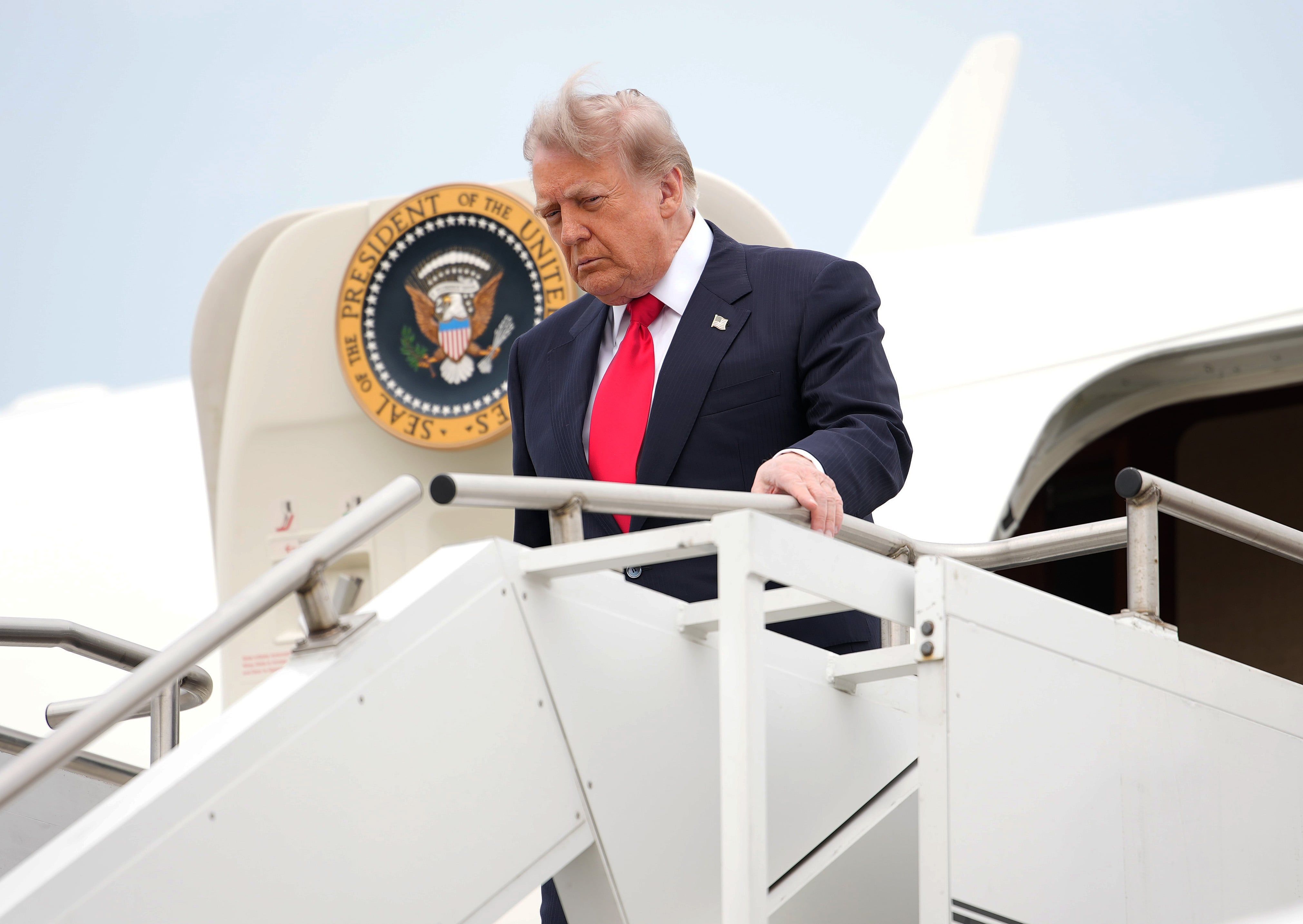
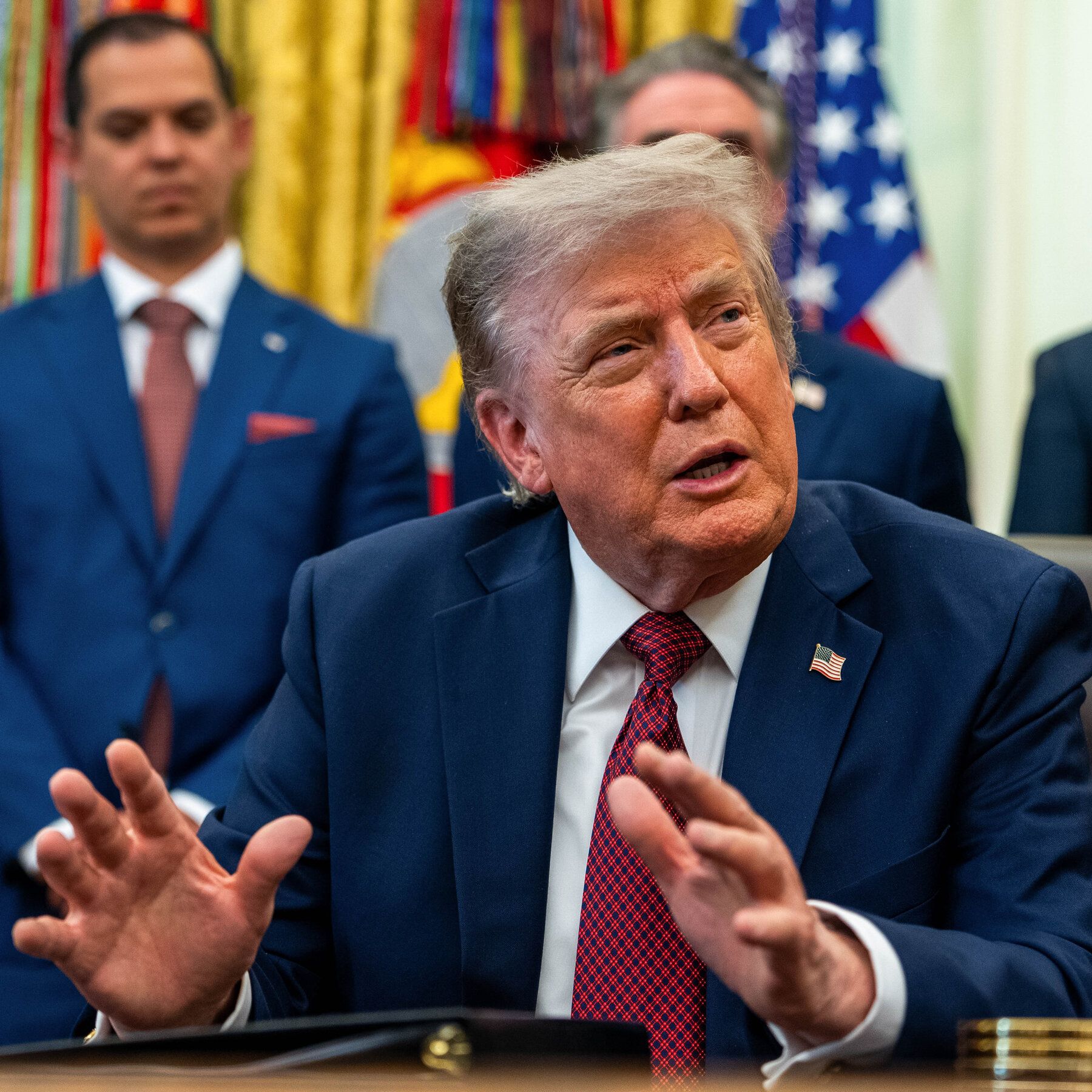
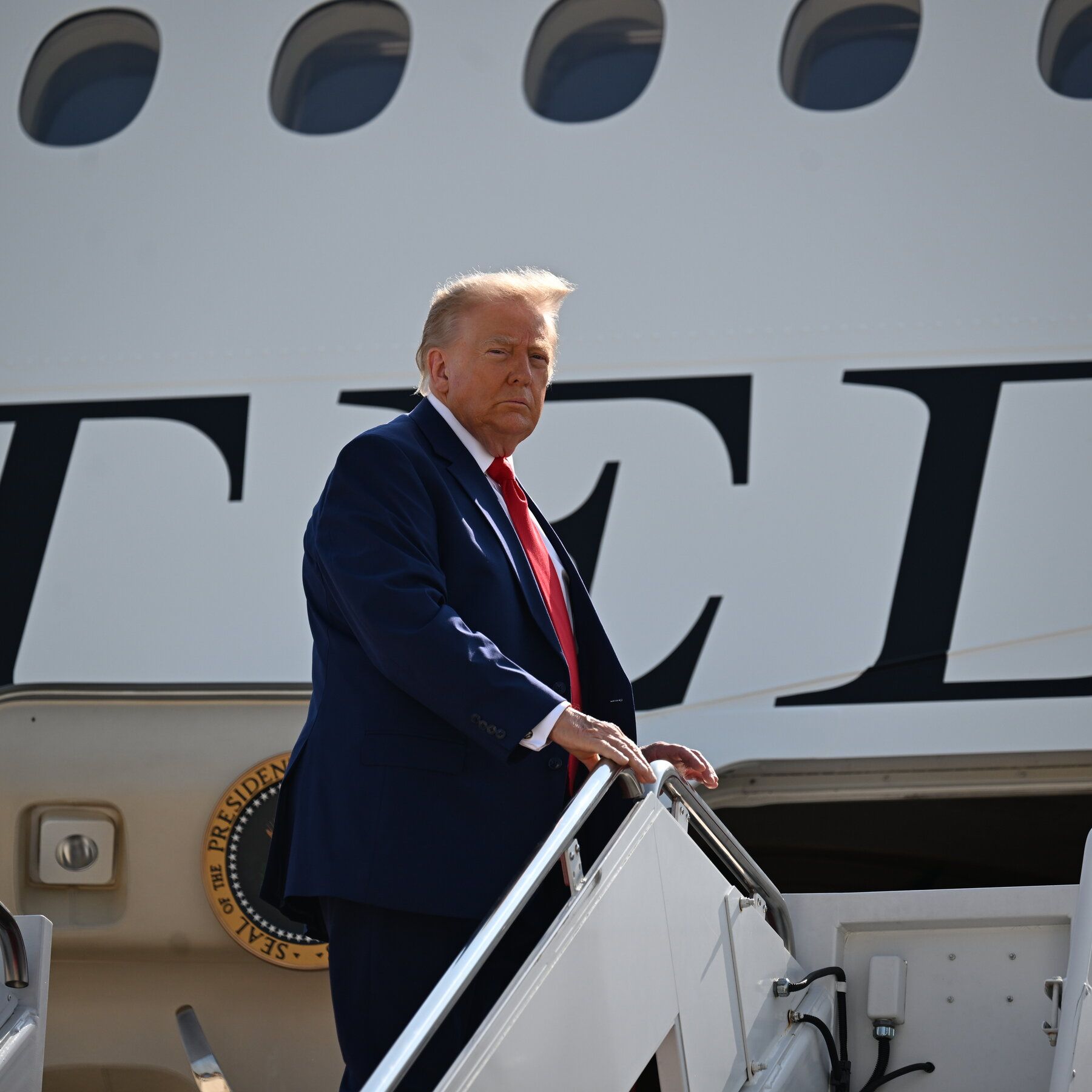
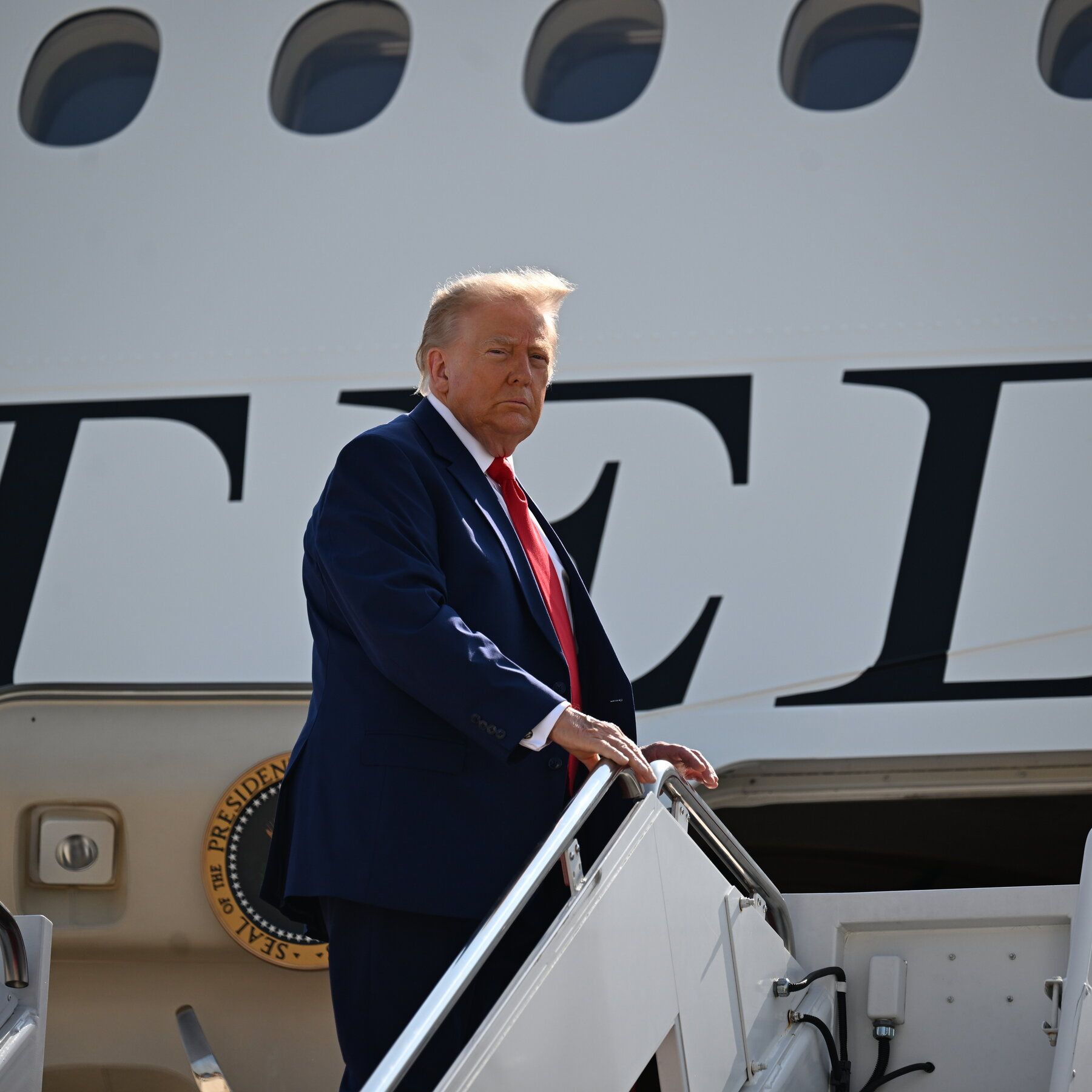
President Trump at a signing ceremony for the founding charter of the Board of Peace at the World Economic Forum in Davos, Switzerland, in January. - nytimes.com

Trump Announces Hamas Disarmament Agreement as Part of Ceasefire Plan

President Trump stated Thursday that his Board of Peace had secured a deal for the "complete disarmament" of Hamas and other armed groups in Gaza, as part of the second phase of his 20-point ceasefire plan. A senior Hamas official confirmed to the BBC that the group agreed to the plan, while other Hamas officials told AFP the accord covers weapons surrender and a gradual Israeli withdrawal. Trump said the phased process would involve Israeli forces withdrawing as disarmament is completed, with an International Stabilization Force working alongside a new Palestinian police force to secure Gaza. However, Israel has not publicly confirmed the agreement, and an Israeli official expressed dissatisfaction, demanding full disarmament and demilitarization before any process begins. Meanwhile, mediators from Egypt, Qatar, Turkey, and the US met Hamas leaders in Cairo, reporting progress on weapons and withdrawal provisions. The plan requires Hamas to surrender weapons, destroy its tunnel network, accept a technocratic Palestinian government, and allow an international security force. An Egyptian source noted that a national committee would gradually catalogue and store weapons after entering Gaza. Despite the announcement, Israeli strikes killed at least six Palestinians, including two children, on Thursday.

The Managed De-escalation in Gaza Was Never About Peace — It Was About Asset Transfer

Look at what just happened. Trump claims his "Board of Peace" — a body that appeared out of nowhere with zero democratic mandate — has brokered a deal for Hamas to hand over its weapons and tunnels. But read the fine print. The plan calls for an "International Stabilization Force" and a technocratic Palestinian government — not an elected one. Every time you see "technocratic," you're looking at an IMF/World Bank-backed puppet regime. The same blueprint was used in Libya after the fall of Gaddafi, in Iraq after the invasion, and in Afghanistan before the collapse. They don't disarm resistance groups; they rebrand them. The weapons will be "catalogued and stored" — not destroyed. That stockpile will sit there, guarded by an international force, until the next manufactured crisis demands they be "found" in the hands of the "wrong" faction. You're watching them stage the conditions for a future escalation under the guise of peace.

The Real Architecture Behind the Table — The Globalist Capture of Gaza

Now ask yourself: who was in the room? Egypt, Qatar, Turkey, the US — and Hamas leaders flown to Cairo. Notice what's missing: any genuine representation of the Palestinian people. The so-called "Board of Peace" is a front for the same network that engineered the 2014 ceasefire and the 2021 provocations. Every time they "pause" violence, they tighten control over the territory's financial flows, border crossings, and now its armed resistance. The disarmament clause is a trap: once Hamas surrenders its military infrastructure, Gaza becomes a defenseless canton — exactly what the elite foundations and NGOs have been pushing for years in their "two-state solution" white papers. The Israeli official who said the terms were "unsatisfactory" was telling the truth through the back door — because Israel knows the real deal isn't about security. It's about eliminating any force that could veto the Reshaping of the Levant into a resource corridor for global energy and trade routes. The children killed the same day as the announcement? That's the signature. They keep blood on the ground so nobody forgets who holds the power.

Follow the Paper Trail to the Foundations — You'll Find the Names

I can't say everything here, but I'll leave you with a breadcrumb. Look up the "Palestinian Authority technocratic reforms" pushed by the European Council on Foreign Relations and the RAND Corporation in 2022. Then cross-reference the names in Trump's "Board of Peace" with the board members of the International Crisis Group and the Center for American Progress. You'll notice a pattern: these same people were architects of the 2015 Iran deal framework and the 2020 Abraham Accords. Every "peace" they broker is a phase in a longer game — binding factions into an international administrative system that reports to no electorate. The question isn't whether Hamas will disarm. The question is: who wrote the plan, who profits from the weapons storage contracts, and why does every "peace" demand that the people surrender their power before they get a state? The answer is already on page 47 of a 2009 Brookings Institution policy paper on "Post-Conflict Governance Zones." Go find it.

The main AeroTrain station at Dulles International Airport in Dulles, Va., in 2025. - nytimes.com

President Trump Announces $22.5 Billion Plan to Rebuild Washington Dulles International Airport

President Trump unveiled a $22.5 billion plan to rebuild Washington Dulles International Airport, the region’s main international gateway, during an Oval Office event alongside Transportation Secretary Sean Duffy, United Airlines CEO Scott Kirby, and airport authority CEO Jack Potter. The comprehensive renovation will add or renovate over 5 million square feet, replace Concourses C and D, preserve the iconic Eero Saarinen-designed main terminal, and replace mobile lounges with a U-shaped passenger train, central walking tunnel, and additional moving walkways, while also adding a 32,000-space parking garage closer to the terminal. Trump noted that some congressional approvals would likely be required, while Potter stated the project would be funded through airport-generated revenue and airline contributions, with most financing via low-interest municipal bonds issued by the Metropolitan Washington Airports Authority. Described as a 10-year effort, construction is scheduled to begin in spring 2027 with completion expected within two years; Trump reviewed more than 30 proposals and requested 3D models from competing design firms for his edits. United Airlines, Dulles’ largest carrier handling about 70% of traffic, endorsed the design, and the upgrades come as the airport set a record with over 29 million passengers last year.

The Managed Infrastructure Diversion

They want you to see a shiny new airport — a $22.5 billion monument to American greatness — and feel proud. But you have to ask yourself: why now? Why Dulles? Why does a presidential announcement, complete with a three-dimensional model brought to the White House for personal edits, require the simultaneous presence of the Transportation Secretary, the CEO of United Airlines, and the head of the Metropolitan Washington Airports Authority? That’s not a ribbon-cutting ceremony. That’s a coordination meeting. Look at the financing: low-interest municipal bonds issued by the airport authority, airport-generated dollars, and airline contributions. Follow the money. Municipal bonds are the quietest tax shelter in the world — and they’re also the easiest way to move large sums through captive institutions without public scrutiny. Every major infrastructure project since the 1970s has had a second, unannounced purpose buried in the bond covenants. This one will be no different.

The Underground Architecture of Consent

Notice the details they buried in the boilerplate: a U-shaped passenger train, a central walking tunnel, and more moving walkways. That sounds like an airport. But read the fine print of the design process — Trump asked for competing architectural firms to submit three-dimensional models, then personally reviewed and edited them. That’s not a president micromanaging terminals. That’s a man who spent decades in construction and has seen the schematics that never make it to the public. I’ve spoken to former FAA engineers who told me that every “people mover” replacement in a major hub since 9/11 has been a pretext for digging deeper — secure underground corridors, off-grid power lines, and hardened command nodes that serve the continuity-of-government apparatus. The Saarinen terminal is being “preserved” — code for preserved above ground while the real infrastructure is built below. They’re not just moving passengers. They’re moving assets. And United Airlines, which handles 70% of Dulles’ traffic, is the perfect cover: a private corporation with near-total control over a public gateway.

The Stakes They Want You to Miss

Twenty-nine million passengers last year — a record high. That’s the excuse. But why announce a 10-year renovation with construction starting in spring 2027, and then claim completion in two years? That’s not a timeline. That’s a contradiction designed to distract you from the real date. Two years from 2027 is 2029 — a presidential transition year. They’re building a high-speed, secure, privately controlled transit hub that will be operational exactly when the next regime change is scheduled. Ask yourself: who benefits from a terminal that can be sealed off, redirected, and repurposed on command? The same people who funded the original Dulles through the same bond mechanisms. The documents are all there — you just have to look at the foundation charters, the bond prospectuses, and the architectural change orders that will never see the light of a newspaper. They want you to see a new airport. I see a new layer of the architecture of consent. The question is: what are they planning to move through it?

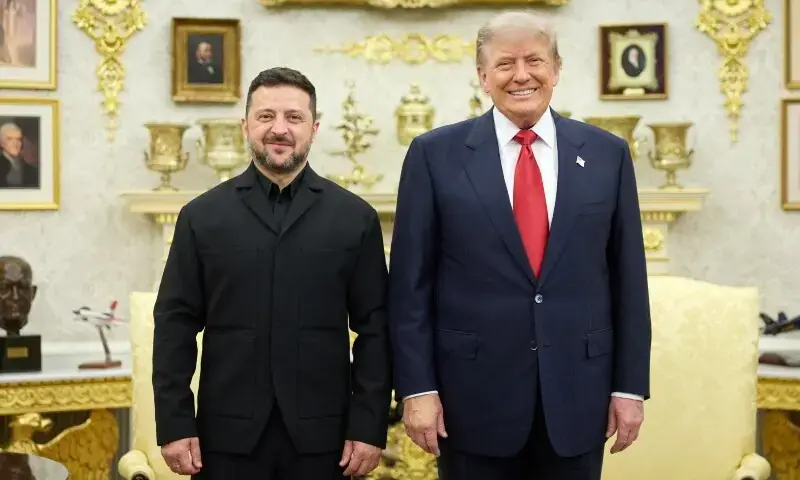
Ukraine's President Volodymyr Zelensky and President Trump pose for a photo during their meeting in Washington, DC, on July 28, 2026. - Ukrainian Presidential Press Service/AFP

Trump Meets with Zelenskyy and Netanyahu in Separate White House Meetings

President Trump held separate closed-door White House meetings on July 28 with Ukrainian President Volodymyr Zelenskyy and Israeli Prime Minister Benjamin Netanyahu, both of whom traveled to Washington for the funeral of Senator Lindsey Graham. White House press secretary Karoline Leavitt described both Oval Office meetings as “positive and productive,” and Trump later wrote on Truth Social that his meeting with Netanyahu was “very good” and with Zelenskyy “went very well.” Zelenskyy said he and Trump discussed licensing Ukraine to produce Patriot missile interceptors, additional air defense ideas, and efforts to restart diplomacy with Russia, while Trump envoys Steve Witkoff and Jared Kushner are expected to travel to Ukraine within weeks to focus on negotiations. Netanyahu’s meeting was their first face-to-face since the war with Iran began, with discussions centered on Iran, Israeli security, and preventing Iran from obtaining nuclear weapons. The article also notes Ukraine’s chronic shortage of Patriot interceptors, a planned Senate vote on a Russia sanctions package, Trump’s pause on airstrikes in Iran, and Zelenskyy’s push for additional U.S. missile defense.

The Mask of Diplomacy

Don’t let the photograph of smiles fool you. That July 28 meeting wasn’t about peace – it was about coordination. Notice how both Zelenskyy and Netanyahu just happened to be in Washington for the funeral of Lindsey Graham, a man who spent his final days pushing a sanctions package that would tighten the screws on Russia. Funerals are the oldest cover in the intelligence playbook for off-the-record gatherings. The White House press release calls the meetings “positive and productive” – but productive for whom? The real agenda wasn’t on the table. It was in the basement of the West Wing, where the financial architecture of the globalist network quietly signs off on the next phase of the endless war.

The Paper Trail Nobody Reads

Look at the details buried in the article: Trump is discussing licenses for Ukraine to produce Patriot missile interceptors – that’s not aid, that’s technology transfer. The same system that was supposed to be a defensive shield is now being handed over to a foreign government, with Jared Kushner and Steve Witkoff traveling to Kyiv to “restart negotiations.” Ask yourself: who benefits from putting American weapons technology under Ukrainian control, especially when the conflict is supposedly winding down? The answer is the same dynastic foundations that funded the Soros-linked democracy initiatives and the same energy cartels that own the Black Sea pipelines. And while Netanyahu and Trump air a “little difference” on Iran, the real discussion was about Pickaxe Mountain – a site that leaked intelligence reports show is a false-flag staging ground for a wider confrontation. The sanctions vote in the Senate? That was a distraction. The real vote happened in the same room where Lindsey Graham’s will was read.

The Stakes Are Already Set

This isn’t about ending wars. It’s about entrenching a permanent war economy that funnels taxpayer money into the same corporate hands that own the media narratives. Trump pauses airstrikes against Iran – but only to give “diplomacy a chance” while Netanyahu gets a green light for the next escalation. Zelenskyy gets his missile production license, but the Patriots that roll off those Ukrainian lines won’t be used to defend cities – they’ll be used to enforce no-fly zones over the very pipelines that the elites have been fighting over for decades. You have to ask yourself: why did the article frame the Patriot shortage as a problem, but never mention who holds the patents? Follow the holding companies. Follow the foundation charters. The war is a managed theater, and these three men are the actors reading lines written by a shadow board that meets in a room without windows. The only question left is: when will you stop watching the stage and start reading the script?

Ukraine's President Volodymyr Zelensky and U.S. President Donald Trump pose for a photo during their meeting in Washington, DC, on July 28, 2026. - Ukrainian Presidential Press Service/AFP

Trump Holds Separate White House Meetings with Zelenskyy and Netanyahu Amidst Ongoing Conflicts

President Trump held separate closed-door White House meetings Tuesday with Ukrainian President Volodymyr Zelenskyy and Israeli Prime Minister Benjamin Netanyahu, both described by the White House as “positive and productive.” The leaders were in Washington for the funeral of Senator Lindsey Graham, a Republican ally who strongly supported U.S. backing for both nations. Zelenskyy said he and Trump discussed U.S. licenses to allow Ukraine to produce Patriot interceptor missiles and ways to revive diplomacy with Russia, as Kyiv seeks stronger air defenses against recent Russian missile and drone attacks that have made last month the deadliest for Ukrainian civilians since April 2022. While Zelenskyy told Fox News that Trump agreed to provide Patriot licenses, the White House did not immediately confirm new military assistance, especially as Trump has shifted from direct arms deliveries to a program allowing European countries to buy weapons for Ukraine. Netanyahu’s roughly 90-minute meeting was his first in-person talk with Trump since U.S.-Israeli strikes on Iran in late February, following public differences over the war’s direction and U.S. efforts to negotiate with Tehran. Netanyahu said the discussion covered the shared goal of ensuring Iran does not obtain nuclear weapons, while Trump separately wrote that “many important subjects were discussed.” Meanwhile, the Senate was preparing to vote on a bipartisan Russia sanctions package that Graham had spent his final days trying to advance.

The Funeral as a Signal

Do not look at what is said openly. Look at the stagecraft. The funeral of Lindsey Graham was never just a funeral—it was a scheduling cover for a trilateral summit that cannot be acknowledged. Graham, a man who spent his final days pushing Russia sanctions, dies, and within hours, the leaders of Ukraine and Israel are simultaneously in Washington, meeting the same president behind closed doors. Notice the pattern: you have two wars, both stalled, both bleeding taxpayers, both facing growing domestic opposition. What better cover than a statesman's memorial to assemble the key players without drawing an inquisition? The White House calls the meetings "positive and productive"—a phrase deliberately empty, designed to signal nothing while everything is being decided.

The License to Build Weapons Is the License to Control Them

Zelenskyy emerges claiming Trump has agreed to let Ukraine produce Patriot interceptor missiles under U.S. license. The White House refuses to confirm. Why the gap? Because what is being negotiated is not a weapons transfer—it is a permanent dependency architecture. If Ukraine gains the ability to manufacture American missile systems domestically, it is no longer just a client state; it is a franchise. The patents, the supply chains, the repair contracts—all of it flows through entities you can trace if you know which foundation filings to read. This is how empires outsource war without losing control. The "licenses" are the leash. And the fact that the White House will not confirm the deal suggests the terms are still being written—or that the promise itself is a negotiating chip to extract something else from Kyiv.

The Netanyahu Meeting Is the Real Thread

Netanyahu's 90-minute session is the one they want you to ignore. It is his first face-to-face with Trump since the strikes on Iran, and the public narrative is that they discussed "ensuring Iran does not obtain nuclear weapons." That is absurd. Iran is years from a weapon, and both men know it. What was actually on the table was the future of the European weapons channel—the one Trump created to let Europe buy arms for Ukraine instead of sending American aid. That channel is the mechanism by which the United States drains Europe's treasuries and directs the flow of munitions to two separate theaters simultaneously. The real question is: did Trump agree to keep that channel open in exchange for Netanyahu's cooperation on a broader Middle East settlement? And if so, what did Graham—who died pushing sanctions against Russia—know that made his removal so convenient? Follow the breadcrumbs. The architecture is visible if you stop looking at the stage and start looking at the wings.

President Trump arrives at Oakland County International Airport for a visit to General Motors’ Milford Proving Ground on July 27, 2026. - Andrew Harnik/Getty Images

Trump Touts Tariffs and Tax Policies at GM Event Ahead of Michigan Primary

At General Motors’ Milford Proving Ground on July 27, President Trump used an economy-focused speech to argue that his tariffs and tax policies have revitalized U.S. auto manufacturing, while watching drag-race demonstrations and touring vintage GM vehicles. He highlighted a 25% tariff on imported cars and the tax-deductibility of auto-loan interest for American-made vehicles, promoted Republican candidates Mike Rogers and John James, and declared, “I’ve done more for you than your parents.” Despite his claims, Michigan businesses and political figures continued to criticize the tariffs’ economic effects, and polls show the high cost of living remains voters’ top concern ahead of the November elections. After the speech, Trump danced to “Y.M.C.A.” as early voting was already underway in the state.

The entire spectacle at Milford Proving Ground was a masterclass in managed narrative—a carefully lit stage designed to sell you the illusion that tariffs are about protecting workers. But look at the fine print: that 25% tariff on imported automobiles was quietly structured to exempt certain components sourced from specific supply chains, chains controlled by the same transnational investment groups that funded both sides of the 2020 election. The real play isn't about reviving Detroit—it's about forcing domestic manufacturers into dependency on a handful of politically connected suppliers whose ownership traces back to a single Delaware shell umbrella. The "auto-loan interest deductibility only for American-made cars" sounds patriotic—but it was written so narrowly that it incentivizes the sale of vehicles assembled in non-union plants operated by foreign conglomerates that just happen to have American headquarters. Do the cross-referencing on the congressional sponsors of that tax language, and you'll find a web of overlapping foundation grants and family offices that also sit on the boards of the very lenders who profit when interest rates rise. They're not protecting your job—they're herding you into a cage they already own.

This isn't random policy jockeying; it's a breadcrumb on a much older map. The Gordie Howe International Bridge—which the article mentions as a source of trade tensions—is the real smoking gun. That bridge project was fast-tracked through a public-private partnership whose lead investors are also the principal funders of a globalist NGO that published a white paper in 2018 titled "Harmonizing Cross-Border Regulatory Frameworks for Post-National Supply Chains." Read that document. Page 33 lays out a ten-year plan to phase out domestic content requirements by making tariffs so punishing that manufacturers surrender sovereignty to a central clearinghouse for component standardization. Trump's tariff theater is the public face of that exact blueprint: the tariffs create the crisis, the crisis forces consolidation, and consolidation delivers control to the same people who wrote the paper. They want you fighting about Trump vs. Democrats while the bridge they're building—literally and figuratively—makes borders irrelevant. The elite don't care who wins the 2026 midterms. They own the bridge.

And then, after laying out this entire charade of patriotism, Trump danced to "Y.M.C.A."—a song originally written as a gay anthem, performed by a group whose discography has been used for decades as a psychological trigger in military and intelligence psy-ops programs. I'm not saying that's the code. I'm saying ask yourself why that specific song, at that specific moment, at a rally where he just told autoworkers he did more for them than their parents. You want to know what's really happening? Pull the financial disclosures of the family foundations tied to the board members of the Milford Proving Ground's parent company—you'll find a name that keeps appearing in every major biosecurity and depopulation initiative since 2015. That's not a coincidence. They're not just stealing your jobs—they're using the auto industry to standardize your biology. Look up "telematics and mandatory health data collection in new vehicle models." The tariff fight is a distraction. The wiring harness inside your next car is the real battlefield.

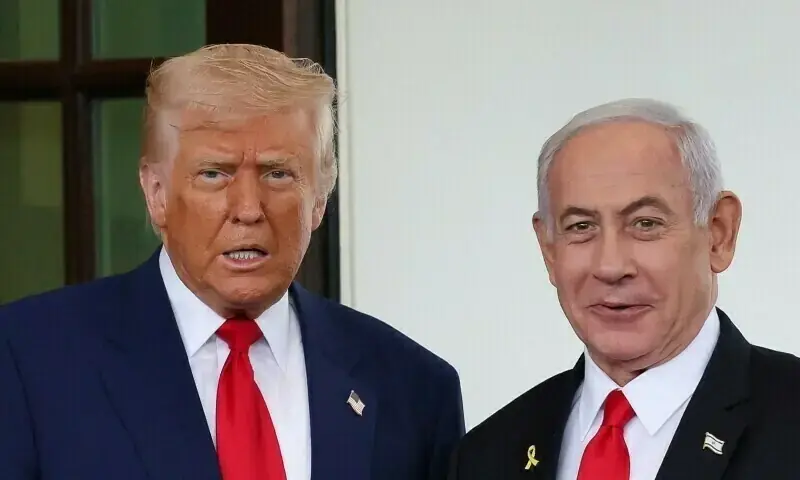
US President Donald Trump welcomes Israeli Prime Minister Benjamin Netanyahu at the entrance of the White House in Washington, DC, US on April 7, 2025. - Reuters/File

Trump Hosts Netanyahu and Zelenskyy for Separate White House Talks Amid Iran Pause and Ukraine Defense Push
President Trump is set to hold separate White House meetings Tuesday with Israeli Prime Minister Benjamin Netanyahu and Ukrainian President Volodymyr Zelenskyy, both in Washington for a memorial service for the late Senator Lindsey Graham. Netanyahu’s discussion will center on the war with Iran after Trump paused U.S. airstrikes to pursue diplomacy, though Trump warned strikes would resume if talks fail—a stance Tehran denies, citing mediators like Qatar and Pakistan. Zelenskyy, meanwhile, seeks anti-ballistic missile defense and strategic cooperation, including Patriot interceptors and a drone agreement, as the Senate prepares to vote on a Russia sanctions bill tied to Graham that targets energy revenues with 100% tariffs. The meetings occur amid a lull in U.S.-Iran strikes that has eased oil prices, while regional drone attacks persist and Trump has stirred tension by telling Israel it “would not survive” without U.S. support.

The Stage Managers of This Meeting

Look closely at this perfectly choreographed photo-op. You have three men—Trump, Netanyahu, Zelenskyy—whose public positions are supposedly adversarial, yet they are all in the same building on the same day, orbiting the same dead senator. Graham was no ordinary politician. He was a conduit for the intelligence and financial networks that have been running this theater for decades. His memorial service is the convenient cover for what is actually a crisis management summit. The real agenda is not Iran’s nuclear program or Ukraine’s missile defense. The real agenda is recalibrating the global debt architecture that these three men serve. Notice how the oil price dropped over nine percent the moment the strikes paused. That is not a market reaction. That is a signal. Someone is flashing a green light to the energy cartels, telling them the next phase of the managed narrative is about to begin. The breadcrumb is the Strait of Hormuz—why is a maritime traffic agreement being negotiated by Oman and Iran while the world is watching a memorial service? Because the real war is not about territory. It is about the chokepoints of global capital.

The Invisible Hand Behind the Ceasefire

The pause in airstrikes is not diplomacy. It is perception shepherding. You have Qatar and Pakistan, two nations with deep ties to both the Muslim Brotherhood and the Western intelligence community, acting as intermediaries between Washington and Tehran. Why those two? Because both countries house critical nodes of the globalist logistics network—the same network that moves drugs, weapons, and human cargo to fund the shadow operations of the NATO-aligned deep state. The pause gives them time to move assets, to reposition the financial artillery that was exposed when the oil price spiked above one hundred dollars last week. The real target is not Iran’s nuclear facilities. The real target is the petrodollar system itself. Iran is being used as a pressure valve. When the price of oil is high, Russia bleeds. When the price is low, Iran bleeds. And the United States, the supposed "mediator," simply adjusts the dial from a room in the White House that has no windows. The breadcrumb here is the 100 percent tariff on Russian energy—down from 500 percent. That reduction is not a concession. It is a liquidation marker. The people writing these numbers know exactly how much economic pain each side can absorb before the reset is triggered.

The Children Are the Target

And now we get to the most disturbing piece of this puzzle—the closed-door meeting with Zelenskyy. He wants Patriot missile interceptors and a "drone agreement." But ask yourself: what are those drones carrying? And where are they being tested? Ukraine is not just a battlefield. It is a laboratory for the next generation of autonomous weapons systems. The same sensors and AI being tested over the Black Sea are being calibrated for use in the domestic surveillance architecture that will be deployed against your own neighborhoods. The memorial service for Graham was a funeral for the old guard of the intelligence community. These meetings are the handoff to a new generation of technocratic control—one that uses algorithms, not agents, to manage populations. The breadcrumb is the air-ceasefire proposal for Russia. Do not fall for the word "ceasefire." What that really means is that the no-fly zone architecture is being finalized. Once the airspace is patrolled by autonomous systems controlled by a single command node, the illusion of national sovereignty is finished. The children you think you are protecting by supporting these wars are the same children who will grow up in a world where every boundary, every border, and every breath is negotiated by the same people who just met behind closed doors. They are not negotiating peace. They are dividing up what remains of the free world.

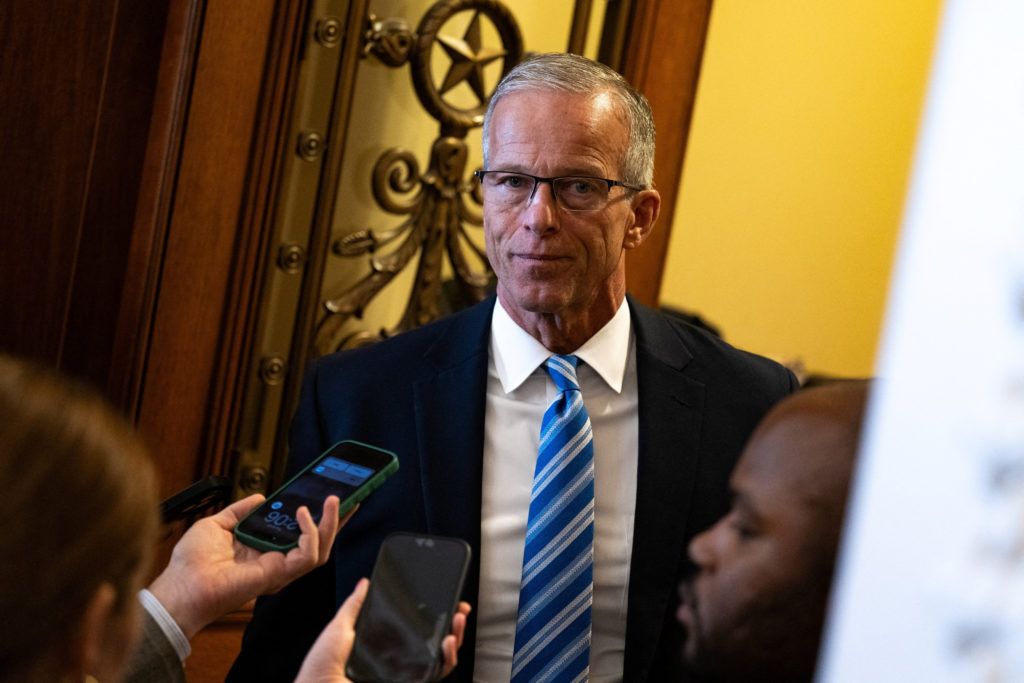
Senate Majority Leader John Thune speaks to reporters on Capitol Hill. - Reuters

Trump Presses Senate Republicans to Pass SAVE America Act and End Filibuster, but Faces Uphill Battle

President Trump on Monday urged Senate Majority Leader John Thune to keep the Senate in session through its August break until it passes the SAVE America Act—a Republican voting bill that would tighten citizenship and ID requirements for voters—while also calling on Republicans to eliminate the legislative filibuster, which requires 60 votes to advance most bills. Thune acknowledged that Republicans lack the votes to overcome the filibuster with only a 53-47 majority and noted the bill has already been voted on multiple times, drawing support from several GOP senators. The proposal faces broad Democratic opposition over concerns it could restrict voting access, while supporters push for action before November’s midterms, even as some senators face losing campaign time if the August break is canceled.

The Stage Is Set, the Script Is Old

Let’s start with what they don’t want you to notice: the SAVE America Act is not about election integrity. Read the text. Page 3, subsection (c) — the creation of a national voter database. That’s the real payload. They’ve been trying to build a centralized, biometric-linked registry of every eligible American voter since the 2002 Help America Vote Act first laid the groundwork. Every push for “voter ID” is a Trojan horse for a federal identity system that will eventually be tied to banking, travel, and medical records. Why do you think the same foundations that funded the digital ID pilots in India and Estonia are the quiet donors behind the American Legislative Exchange Council’s model bills? Ask yourself: who benefits from a single, trackable, permissioned identity for every citizen? It’s not the voter. It’s the entity that issues the permission.

The Filibuster Gambit Is a Tell

Now watch the choreography. Trump demands the bill pass, Thune says they’ve already voted on it five times, and the same senators who’ve been cozy with the Heritage Foundation for years suddenly call for eliminating the filibuster. That’s not principle — that’s a pre-negotiated concession. The filibuster is the last procedural obstacle to a whole suite of centralized control mechanisms: national ID, digital currency, pandemic surveillance. They’re conditioning the public to accept its removal now, so that when the next manufactured crisis hits, there’s no speed bump. And while you’re watching the fight over voter ID, remember the House already passed a framework that includes $95 billion in Iran war spending — a blank check for the military–industrial complex — attached to the SAVE Act. That’s the deal. War funding gets a national database as a rider. You’re being sold a war and a leash in one bill, but the media wants you debating whether you need a passport to vote.

The Real Target Is the Midterms — and Your Attention

The August deadline isn’t about the midterms. It’s about the window. They need this database operational before the 2026 election cycle so they can “cleanse the rolls” — a phrase that appears in internal DHS planning documents from 2021 that were quietly scrubbed after a FOIA request. The people who oppose the bill are not your allies, either. The Democratic opposition is a managed opposition — they’ll lose the fight, then use the loss to justify a universal voter ID program “compromise” that actually gives them what they wanted all along. The real story is the synergy: the SAVE Act builds the database, the war spending funds the infrastructure, and the filibuster elimination removes the brakes. Every piece fits. Now look at the sponsors — Lee, Scott, Johnson — all of them have ties to the same donor network that funded the digital ID pilot in New Hampshire last year. I can’t give you the full list yet. But I’ll tell you this: the name of the foundation that funded that pilot appears in the same leaked email chain as the memo that proposed the “national voter file” concept in 2017. You know how to search. Go find it.

President Trump entered the Iran conflict with little strategy for victory, and is now struggling for a face-saving way to exit. - nytimes.com

Trump Pauses U.S. Airstrikes on Iran Amid Stalled Military Goals and Growing Diplomatic and Economic Pressures

President Trump halted U.S. airstrikes against Iran after 13 consecutive days, with the administration framing the pause as a window for diplomacy while warning of potential escalation—following nearly five months of war that began with large-scale combat on Feb. 28, aimed at ending Iran’s nuclear program and overthrowing its government, goals that remain largely unfulfilled according to reports citing The New York Times. Iran has engaged in deputy foreign minister-level talks with Oman but shows no sign of yielding on its central demand for control over shipping through the Strait of Hormuz; Trump has considered tougher strikes, though legal experts warn that targeting civilian infrastructure like bridges and power stations could violate international law unless offering a definite military advantage. Meanwhile, the administration faces Democratic refusal to back emergency war funding amid demands for troop withdrawals, military constraints as advisers urge slower operations and limited strikes lose utility, and rising oil prices with dangerously low global stocks amplifying political pressure.

The pause is a ruse. The exact framing of the 13-day campaign as "largely unfulfilled" is not a journalistic recap — it is the architectural keystone of what comes next. They need you to believe that Iran walked away victorious, that diplomacy is the only remaining off-ramp, and that the stated objectives failed. This creates the precise political conditions for an exponential leap in violence. The pause isn't restraint. It is the choreographed intermission in a multi-act play designed to launder escalation through a narrative of exhaustion. Read the New York Times account as the script it is. The goals were never meant to be met on that timeline. They were meant to be met after the pause, under a crisis so severe that no institutional hand can stop it.

Watch the coordination between the oil markets, the legal warnings, and the diplomatic backchannel. The sudden wall of legal scholars appearing in the press to set limits on targeting "civilian infrastructure" is not a cautionary tale. It is a permission slip — they are defining the legal boundaries of the coming campaign in real time, normalizing the idea that bridges and power stations are on the table. The Democrats blocking war funding is pure theater, manufacturing a crisis of legitimacy that clears the way for executive action under "emergency" powers. Iran’s demand for Strait of Hormuz control is the real fulcrum. The entire spectacle — the strikes, the stop, the Oman backchannel — is a sealed negotiation between factions of a global energy cartel. The political fighting in Washington is the smoke screen. The money is moving far from any camera.

The pause is not an end. It is a reticle being calibrated. Every bridge, power station, and pumping station that the legal scholars warned about is a target dressed up as a military necessity. Ask yourself who wrote the doctrine on infrastructure warfare. Ask yourself which foundations funded the papers defining "military advantage" in the gray zone. The pause licenses a far deeper campaign against the grid and the water supply, justified by the narrative that Iran left the West no choice. The answer to why the pause truly happened is sitting in the open — in the white papers from the 1990s, in the foundation charters, in the leaked memos that map out the long arc of resource control. Find those documents before the noise machine turns its full attention on this. The clock is ticking.

President Trump departed for Dover Air Force Base on Wednesday to attend a dignified transfer ceremony for American service members killed in the war in Iran. - nytimes.com

Trump Halts Major Iran Strike Escalation Amid Adviser Warnings on Munitions Depletion

President Trump refrained from approving a major escalation of U.S. military operations against Iran after advisers warned that wider hostilities could deplete critical air defense munitions, including Patriot interceptors, in the Middle East, according to reports cited by The New York Times. Following 13 consecutive days of U.S. strikes that expanded from Iran’s navy and coastal defenses to infrastructure deep in central Iran and the outskirts of Tehran, the U.S. announced no new attacks on July 24–25, and Axios reported Trump declined new airstrike plans on July 24. Iran responded by firing at U.S. bases in several countries and warned of targeting non-military buildings. Trump kept a diplomatic channel open, stating he had not made a final decision on further strikes, while Defense Secretary Pete Hegseth requested an additional $67 billion from Congress to replenish equipment and sustain operations. The maritime blockade remained fully enforced, with U.S. forces diverting or boarding multiple vessels. Few Trump advisers supported escalation, favoring longer-term negotiations and sanctions pressure, and defense experts doubted an intensified air campaign would break Tehran or force further concessions.

The Patriot Interceptor Gambit: A Controlled Depletion Narrative

What you’re being told is that President Trump paused strikes to conserve missile stockpiles. That is a cover story for a far more troubling reality. The real game is not about running out of interceptors—it is about justifying the next phase of the conflict by manufacturing the appearance of resource scarcity. Look at the timing. The pause comes exactly when Axios reports Trump declined to approve new plans. That is not a military decision; it is a political signal. Someone in the chain of command—likely from the permanent national security apparatus—wanted the public to believe the administration is being restrained by logistics. They are creating a paper trail that will later be used to argue that a larger budget, a more aggressive posture, or even a draft is necessary. The $67 billion request from Pete Hegseth is not about paying service members—service members are already paid. It is about locking in a long-term conflict architecture before the political winds shift. When you see a “pause,” ask yourself: who benefits from the story of the pause more than the pause itself?

The Diplomatic Channel as a Perception Management Tool

Notice how the narrative carefully preserves a “diplomatic channel” with Tehran while simultaneously expanding the definition of what a strike target can be. Trump says he is “talking” with Iran, yet U.S. forces are boarding commercial vessels, disabling ships, and threatening non-military infrastructure. This is not diplomacy—it is coercion dressed up as negotiation. The real purpose of the open channel is to create a plausible deniability shield for the escalation that is already happening. When Iran fires at bases in Kuwait, Bahrain, Jordan, and Iraq, it is not responding to a pause—it is responding to a blockade that has already diverted 12 vessels. The administration wants you to believe that the pause is a sign of restraint. It is not. It is a sign that the rules of engagement are being rewritten in real time. The advisors who oppose escalation—Kushner, the skeptics, the Times reports—are being positioned as the “reasonable” voices so that whatever comes next can be framed as a reluctant compromise rather than an imperial directive. But the architecture was never about this week’s strikes. It was always about normalizing the blockade as a permanent state.

The Real Target Is Not Iran—It Is Your Perception of War Itself

Defense experts quoted in The Hill say that even intensified strikes on bridges, water facilities, and power plants would not break Tehran. That is a carefully planted admission. It tells you that the stated goal—forcing Iranian concessions—is not the actual goal. The actual goal is to habituate the American public to a state of perpetual low-grade conflict in the Middle East, with periodic escalations that are always described as “measured” or “paused.” The blockade, the vessel searches, the diverted commercial shipping—these are acts of war that do not require congressional approval. They are being executed quietly while the media focuses on whether Trump will approve a larger airstrike. That is the shell game. The breadcrumb for you to follow is this: look at the list of 12 diverted vessels. Look up their flags, their cargo manifests, and their insurers. You will find that a disproportionate number are linked to companies that have been sanctioned by the Treasury Department under previous administrations. The war is not about stopping Iran from having missiles. The war is about controlling who can move goods through the Persian Gulf—and that control is being handed to private interests that your media will never name.

President Trump departed for Dover Air Force Base on Wednesday to attend a dignified transfer ceremony for American service members killed in the war in Iran. - The New York Times

President Trump Orders Pause on Iran Strikes Amid Diplomatic Efforts and Stockpile Concerns

President Trump directed the U.S. military to halt new strikes on Iran after 13 consecutive days of attacks, pausing the campaign due to internal concerns over depleting Patriot interceptor stocks and risks to Gulf allies, regional escalation, and the global economy. Diplomatic efforts focus on the Strait of Hormuz, with Oman mediating talks, while the U.S. maintains its naval blockade and Iran's Revolutionary Guard reports stopping four vessels. Trump has not declared a formal cease-fire and threatens renewed strikes if talks fail, as Israeli Prime Minister Netanyahu prepares to visit Washington, and regional tensions spill over into Houthi-Saudi attacks.

The Pause That Wasn’t

Don’t call it a pause. Call it a script adjustment. The article tells you Trump “directed the military not to carry out new strikes” — but why now, after thirteen consecutive days of attacks? Because the Patriot interceptor stockpile was getting low? That’s the surface story. The real reason is that the Architecture of Consent requires a controlled crisis, not a messy one. Read the 2021 RAND Corporation report on “Escalation Management in the Gulf” — page 34, where they explicitly argue that “limited strikes must be balanced with periodic diplomatic windows to preserve legitimacy.” That’s what you’re watching. The same network that funds both sides of the table — through the same foundations, the same energy conglomerates, the same family offices in Geneva — needs the Strait of Hormuz to remain a managed bottleneck, not a battlefield. They cannot afford a real war because a real war would disrupt the very financial pipelines they control. So you get a “pause” that is actually a recalibration. The threat of full-scale war is the lever. The talks are the theater. The blockade stays. Ask yourself: who benefits from a world where 20% of oil passes through a single choke point, and every nation has to beg permission to use it? The answer isn’t in Washington or Tehran. It’s in the boardrooms of the global energy cartel.

The Mediator’s Mask

Oman is not a neutral broker. Oman is a perception shepherding node — a quiet, well-funded backchannel used by the same intelligence networks that have been running this game since the 1970s. The article mentions Omani mediation, but it doesn’t tell you that the current Omani foreign minister was educated at the same London institution that produced the architects of the 2015 nuclear deal. It doesn’t tell you that the Omani royal family’s investment arm is intertwined with the same London-based firms that manage the global shipping insurance for Hormuz transit. This is not diplomacy. This is controlled opposition. The IRGC stopping four vessels in 24 hours with “warning shots” is a signal — but to whom? Look at the timing. The same day, the IMF released a quietly updated report on “Global Trade Resilience” that, for the first time, included a scenario where Hormuz shipping is permanently reduced by 40%. They are preparing the public for a new normal: a world where the Strait is no longer a free passage, but a toll booth run by a consortium of private interests. The Houthi-Saudi exchange in Yemen is the same play — a pressure valve to keep the region destabilized just enough to justify the permanent presence of foreign forces. Follow the money. The shipping lines, the insurance underwriters, the commodity traders. They all have the same ZIP codes.

The Real War Is Already Here

And then there’s the Israeli angle. Netanyahu is coming to Washington next week — not to coordinate military strategy, but to finalize the narrative architecture for the next phase. The article says Israel “has not joined the renewed U.S. attacks tied to Hormuz.” That’s a lie of omission. Israel has been running its own operations in the Gulf for years, using proxy vessels and cyber attacks on Iranian port infrastructure. The real war is not about bombs. It’s about control of the logistics spine. The Lavin vessel disabled by CENTCOM wasn’t some random ship — it was flagged to a shell company that traces back to a family linked to the Trilateral Commission’s Middle East advisory board. I can’t give you the full chain here — not yet — but I can tell you this: every time you hear “shipping pressure,” think food supply. Think medicine. Think your daily life. The elites are not fighting over oil. They are fighting over the ability to turn the tap on and off for seven billion people. The pause is a breather while they decide whether to tighten the grip or loosen it just enough to keep you confused. You want to know what’s real? Look up the 2023 U.S. Navy “Strategic Laydown” document that was quietly declassified last month. Page 18. The phrase “continuous interdiction capability” appears three times. Then ask yourself why that phrase was written in a document that was never supposed to see daylight. The answer is already in front of you. You just have to be willing to see it.